 Add to Chrome
 Add to Firefox
 Add to Edge
Communication Learning in Multi-Agent Systems from Graph Modeling Perspective
Nov 01, 2024
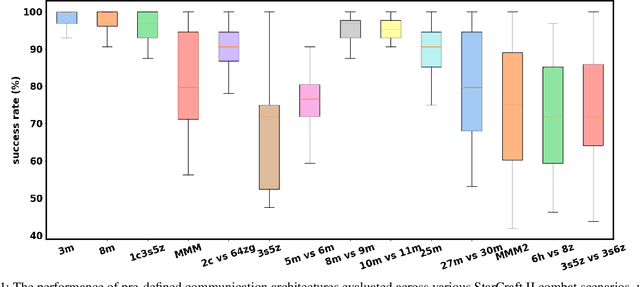
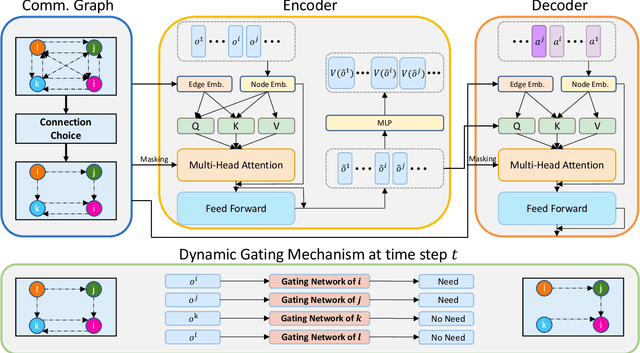
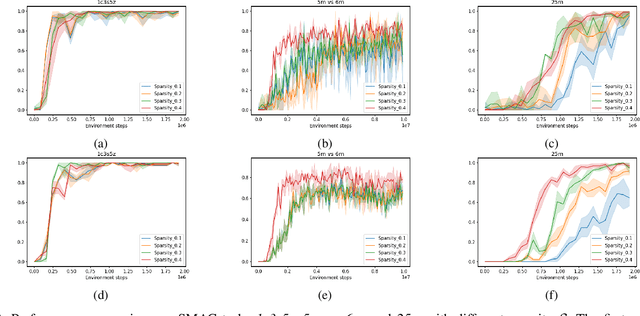
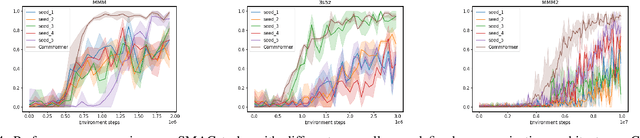
In numerous artificial intelligence applications, the collaborative efforts of multiple intelligent agents are imperative for the successful attainment of target objectives. To enhance coordination among these agents, a distributed communication framework is often employed. However, indiscriminate information sharing among all agents can be resource-intensive, and the adoption of manually pre-defined communication architectures imposes constraints on inter-agent communication, thus limiting the potential for effective collaboration. Moreover, the communication framework often remains static during inference, which may result in sustained high resource consumption, as in most cases, only key decisions necessitate information sharing among agents. In this study, we introduce a novel approach wherein we conceptualize the communication architecture among agents as a learnable graph. We formulate this problem as the task of determining the communication graph while enabling the architecture parameters to update normally, thus necessitating a bi-level optimization process. Utilizing continuous relaxation of the graph representation and incorporating attention units, our proposed approach, CommFormer, efficiently optimizes the communication graph and concurrently refines architectural parameters through gradient descent in an end-to-end manner. Additionally, we introduce a temporal gating mechanism for each agent, enabling dynamic decisions on whether to receive shared information at a given time, based on current observations, thus improving decision-making efficiency. Extensive experiments on a variety of cooperative tasks substantiate the robustness of our model across diverse cooperative scenarios, where agents are able to develop more coordinated and sophisticated strategies regardless of changes in the number of agents.

Offline Behavior Distillation
Oct 30, 2024Massive reinforcement learning (RL) data are typically collected to train policies offline without the need for interactions, but the large data volume can cause training inefficiencies. To tackle this issue, we formulate offline behavior distillation (OBD), which synthesizes limited expert behavioral data from sub-optimal RL data, enabling rapid policy learning. We propose two naive OBD objectives, DBC and PBC, which measure distillation performance via the decision difference between policies trained on distilled data and either offline data or a near-expert policy. Due to intractable bi-level optimization, the OBD objective is difficult to minimize to small values, which deteriorates PBC by its distillation performance guarantee with quadratic discount complexity $\mathcal{O}(1/(1-\gamma)^2)$. We theoretically establish the equivalence between the policy performance and action-value weighted decision difference, and introduce action-value weighted PBC (Av-PBC) as a more effective OBD objective. By optimizing the weighted decision difference, Av-PBC achieves a superior distillation guarantee with linear discount complexity $\mathcal{O}(1/(1-\gamma))$. Extensive experiments on multiple D4RL datasets reveal that Av-PBC offers significant improvements in OBD performance, fast distillation convergence speed, and robust cross-architecture/optimizer generalization.
Efficient and Effective Weight-Ensembling Mixture of Experts for Multi-Task Model Merging
Oct 29, 2024Multi-task learning (MTL) leverages a shared model to accomplish multiple tasks and facilitate knowledge transfer. Recent research on task arithmetic-based MTL demonstrates that merging the parameters of independently fine-tuned models can effectively achieve MTL. However, existing merging methods primarily seek a static optimal solution within the original model parameter space, which often results in performance degradation due to the inherent diversity among tasks and potential interferences. To address this challenge, in this paper, we propose a Weight-Ensembling Mixture of Experts (WEMoE) method for multi-task model merging. Specifically, we first identify critical (or sensitive) modules by analyzing parameter variations in core modules of Transformer-based models before and after finetuning. Then, our WEMoE statically merges non-critical modules while transforming critical modules into a mixture-of-experts (MoE) structure. During inference, expert modules in the MoE are dynamically merged based on input samples, enabling a more flexible and adaptive merging approach. Building on WEMoE, we further introduce an efficient-and-effective WEMoE (E-WEMoE) method, whose core mechanism involves eliminating non-essential elements in the critical modules of WEMoE and implementing shared routing across multiple MoE modules, thereby significantly reducing both the trainable parameters, the overall parameter count, and computational overhead of the merged model by WEMoE. Experimental results across various architectures and tasks demonstrate that both WEMoE and E-WEMoE outperform state-of-the-art (SOTA) model merging methods in terms of MTL performance, generalization, and robustness.
Foundation Models for Remote Sensing and Earth Observation: A Survey
Oct 22, 2024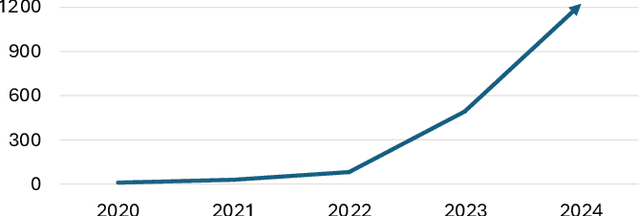
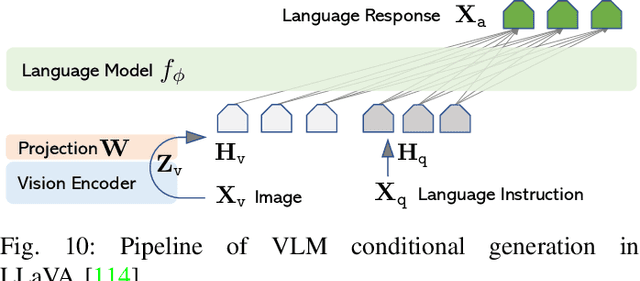
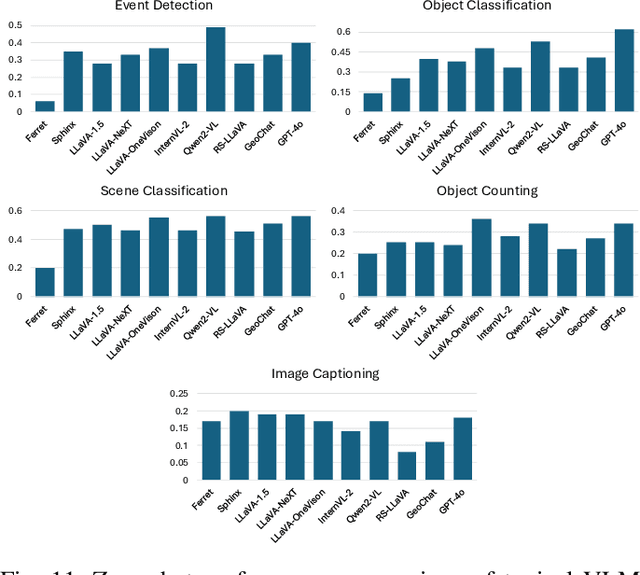
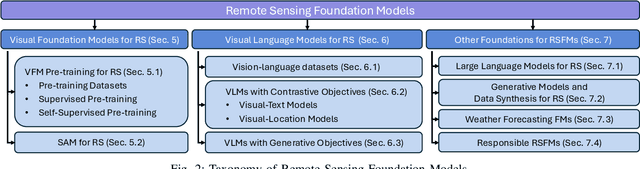
Remote Sensing (RS) is a crucial technology for observing, monitoring, and interpreting our planet, with broad applications across geoscience, economics, humanitarian fields, etc. While artificial intelligence (AI), particularly deep learning, has achieved significant advances in RS, unique challenges persist in developing more intelligent RS systems, including the complexity of Earth's environments, diverse sensor modalities, distinctive feature patterns, varying spatial and spectral resolutions, and temporal dynamics. Meanwhile, recent breakthroughs in large Foundation Models (FMs) have expanded AI's potential across many domains due to their exceptional generalizability and zero-shot transfer capabilities. However, their success has largely been confined to natural data like images and video, with degraded performance and even failures for RS data of various non-optical modalities. This has inspired growing interest in developing Remote Sensing Foundation Models (RSFMs) to address the complex demands of Earth Observation (EO) tasks, spanning the surface, atmosphere, and oceans. This survey systematically reviews the emerging field of RSFMs. It begins with an outline of their motivation and background, followed by an introduction of their foundational concepts. It then categorizes and reviews existing RSFM studies including their datasets and technical contributions across Visual Foundation Models (VFMs), Visual-Language Models (VLMs), Large Language Models (LLMs), and beyond. In addition, we benchmark these models against publicly available datasets, discuss existing challenges, and propose future research directions in this rapidly evolving field.
Solving Continual Offline RL through Selective Weights Activation on Aligned Spaces
Oct 21, 2024Continual offline reinforcement learning (CORL) has shown impressive ability in diffusion-based lifelong learning systems by modeling the joint distributions of trajectories. However, most research only focuses on limited continual task settings where the tasks have the same observation and action space, which deviates from the realistic demands of training agents in various environments. In view of this, we propose Vector-Quantized Continual Diffuser, named VQ-CD, to break the barrier of different spaces between various tasks. Specifically, our method contains two complementary sections, where the quantization spaces alignment provides a unified basis for the selective weights activation. In the quantized spaces alignment, we leverage vector quantization to align the different state and action spaces of various tasks, facilitating continual training in the same space. Then, we propose to leverage a unified diffusion model attached by the inverse dynamic model to master all tasks by selectively activating different weights according to the task-related sparse masks. Finally, we conduct extensive experiments on 15 continual learning (CL) tasks, including conventional CL task settings (identical state and action spaces) and general CL task settings (various state and action spaces). Compared with 16 baselines, our method reaches the SOTA performance.
SurgeryV2: Bridging the Gap Between Model Merging and Multi-Task Learning with Deep Representation Surgery
Oct 18, 2024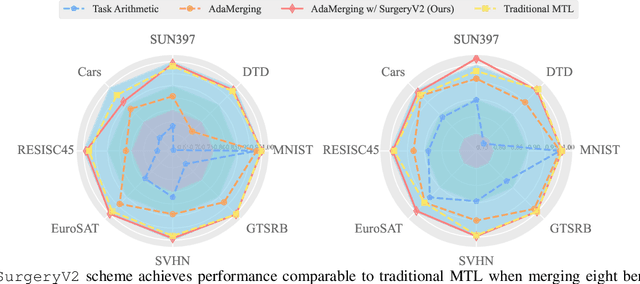
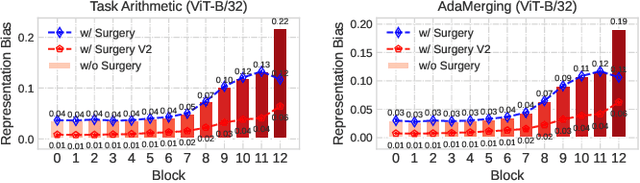

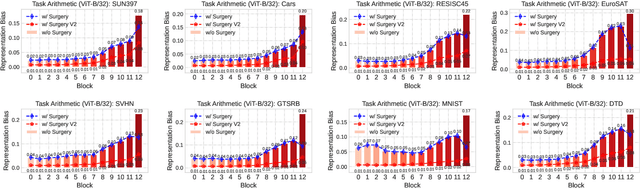
Model merging-based multitask learning (MTL) offers a promising approach for performing MTL by merging multiple expert models without requiring access to raw training data. However, in this paper, we examine the merged model's representation distribution and uncover a critical issue of "representation bias". This bias arises from a significant distribution gap between the representations of the merged and expert models, leading to the suboptimal performance of the merged MTL model. To address this challenge, we first propose a representation surgery solution called Surgery. Surgery is a lightweight, task-specific module that aligns the final layer representations of the merged model with those of the expert models, effectively alleviating bias and improving the merged model's performance. Despite these improvements, a performance gap remains compared to the traditional MTL method. Further analysis reveals that representation bias phenomena exist at each layer of the merged model, and aligning representations only in the last layer is insufficient for fully reducing systemic bias because biases introduced at each layer can accumulate and interact in complex ways. To tackle this, we then propose a more comprehensive solution, deep representation surgery (also called SurgeryV2), which mitigates representation bias across all layers, and thus bridges the performance gap between model merging-based MTL and traditional MTL. Finally, we design an unsupervised optimization objective to optimize both the Surgery and SurgeryV2 modules. Our experimental results show that incorporating these modules into state-of-the-art (SOTA) model merging schemes leads to significant performance gains. Notably, our SurgeryV2 scheme reaches almost the same level as individual expert models or the traditional MTL model. The code is available at \url{https://github.com/EnnengYang/SurgeryV2}.
On Championing Foundation Models: From Explainability to Interpretability
Oct 15, 2024Understanding the inner mechanisms of black-box foundation models (FMs) is essential yet challenging in artificial intelligence and its applications. Over the last decade, the long-running focus has been on their explainability, leading to the development of post-hoc explainable methods to rationalize the specific decisions already made by black-box FMs. However, these explainable methods have certain limitations in terms of faithfulness, detail capture and resource requirement. Consequently, in response to these issues, a new class of interpretable methods should be considered to unveil the underlying mechanisms in an accurate, comprehensive, heuristic and resource-light way. This survey aims to review interpretable methods that comply with the aforementioned principles and have been successfully applied to FMs. These methods are deeply rooted in machine learning theory, covering the analysis of generalization performance, expressive capability, and dynamic behavior. They provide a thorough interpretation of the entire workflow of FMs, ranging from the inference capability and training dynamics to their ethical implications. Ultimately, drawing upon these interpretations, this review identifies the next frontier research directions for FMs.
Learning from Imperfect Data: Towards Efficient Knowledge Distillation of Autoregressive Language Models for Text-to-SQL
Oct 15, 2024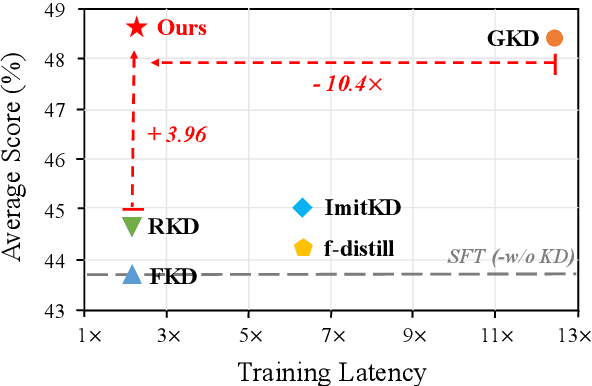

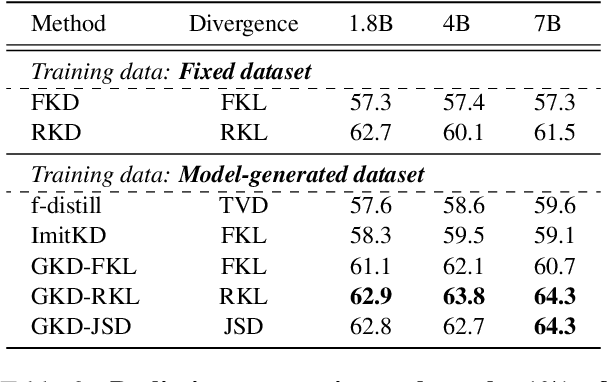

Large Language Models (LLMs) have shown promising performance in text-to-SQL, which involves translating natural language questions into SQL queries. However, current text-to-SQL LLMs are computationally expensive and challenging to deploy in real-world applications, highlighting the importance of compressing them. To achieve this goal, knowledge distillation (KD) is a common approach, which aims to distill the larger teacher model into a smaller student model. While numerous KD methods for autoregressive LLMs have emerged recently, it is still under-explored whether they work well in complex text-to-SQL scenarios. To this end, we conduct a series of analyses and reveal that these KD methods generally fall short in balancing performance and efficiency. In response to this problem, we propose to improve the KD with Imperfect Data, namely KID, which effectively boosts the performance without introducing much training budget. The core of KID is to efficiently mitigate the training-inference mismatch by simulating the cascading effect of inference in the imperfect training data. Extensive experiments on 5 text-to-SQL benchmarks show that, KID can not only achieve consistent and significant performance gains (up to +5.83% average score) across all model types and sizes, but also effectively improve the training efficiency.
NoVo: Norm Voting off Hallucinations with Attention Heads in Large Language Models
Oct 11, 2024


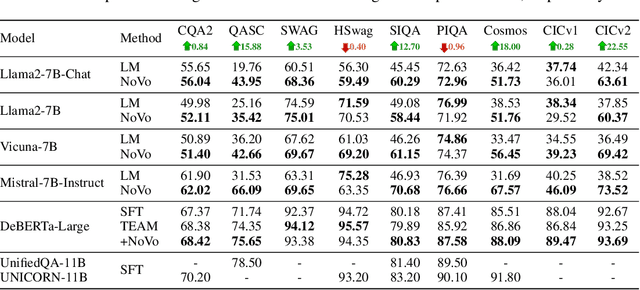
Hallucinations in Large Language Models (LLMs) remain a major obstacle, particularly in high-stakes applications where factual accuracy is critical. While representation editing and reading methods have made strides in reducing hallucinations, their heavy reliance on specialised tools and training on in-domain samples, makes them difficult to scale and prone to overfitting. This limits their accuracy gains and generalizability to diverse datasets. This paper presents a lightweight method, Norm Voting (NoVo), which harnesses the untapped potential of attention head norms to dramatically enhance factual accuracy in zero-shot multiple-choice questions (MCQs). NoVo begins by automatically selecting truth-correlated head norms with an efficient, inference-only algorithm using only 30 random samples, allowing NoVo to effortlessly scale to diverse datasets. Afterwards, selected head norms are employed in a simple voting algorithm, which yields significant gains in prediction accuracy. On TruthfulQA MC1, NoVo surpasses the current state-of-the-art and all previous methods by an astounding margin -- at least 19 accuracy points. NoVo demonstrates exceptional generalization to 20 diverse datasets, with significant gains in over 90\% of them, far exceeding all current representation editing and reading methods. NoVo also reveals promising gains to finetuning strategies and building textual adversarial defence. NoVo's effectiveness with head norms opens new frontiers in LLM interpretability, robustness and reliability.
Self-Powered LLM Modality Expansion for Large Speech-Text Models
Oct 04, 2024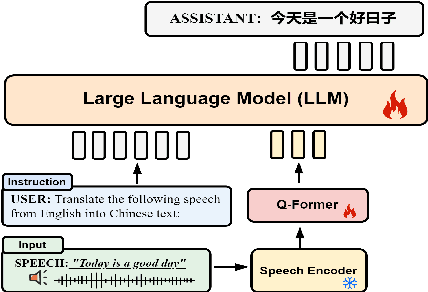
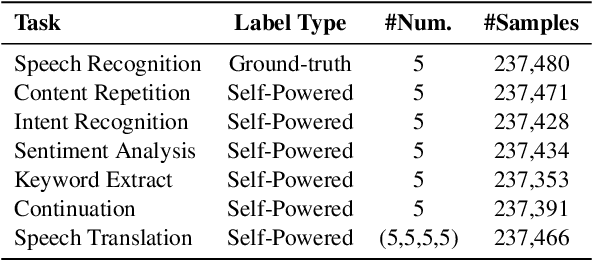
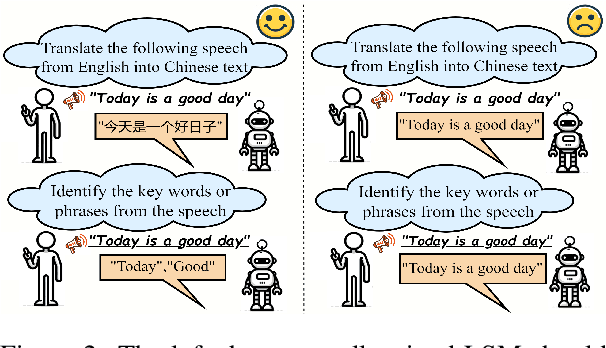
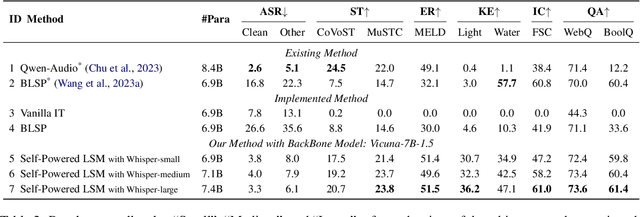
Large language models (LLMs) exhibit remarkable performance across diverse tasks, indicating their potential for expansion into large speech-text models (LSMs) by integrating speech capabilities. Although unified speech-text pre-training and multimodal data instruction-tuning offer considerable benefits, these methods generally entail significant resource demands and tend to overfit specific tasks. This study aims to refine the use of speech datasets for LSM training by addressing the limitations of vanilla instruction tuning. We explore the instruction-following dynamics within LSMs, identifying a critical issue termed speech anchor bias-a tendency for LSMs to over-rely on speech inputs, mistakenly interpreting the entire speech modality as directives, thereby neglecting textual instructions. To counteract this bias, we introduce a self-powered LSM that leverages augmented automatic speech recognition data generated by the model itself for more effective instruction tuning. Our experiments across a range of speech-based tasks demonstrate that self-powered LSM mitigates speech anchor bias and improves the fusion of speech and text modalities in LSMs. Data, code and scripts are freely available at https://github.com/ytf-philp/Self-powered-LSM.