 Add to Chrome
 Add to Firefox
 Add to Edge
SimWorlds: A Multi-Agent System for Dynamic 3D Scene Creation
Jul 02, 2026
LLM agents are increasingly used to translate natural language into 3D scenes in a procedural way, but existing systems focus on static output. Dynamic 4D scenes from text alone, in which liquids flow, particles emit, rigid bodies cascade, and articulated mechanisms move, remain largely unexplored despite their value as editable content and as physics-grounded training data for video generation and embodied AI. Two challenges set the dynamic case apart from static text-to-scene work: an agent must jointly coordinate spatial layout, multiple physics solvers, temporal sequencing, camera, and lighting in a single coherent scene, and verifying motion correctness from rendered video is fundamentally harder than judging a single image. We present SimWorlds: a multi-agent framework that produces dynamic, editable 4D scenes from text, with Blender-specific procedural knowledge, a planner-coder-reviewer workflow driving a fixed ordered sequence of construction stages, a layered scene protocol enforced by a deterministic verifier, and a runtime-state inspection tool suite that catches mechanism failures the rendered image cannot reveal. We also introduce 4DBuildBench, a benchmark for assessing both visual fidelity and physical consistency of the procedural dynamic 3D scenes generated from text prompts. Experiments show that SimWorlds outperforms prior dynamic Blender generation baselines.

MemoBench: Benchmarking World Modeling in Dynamically Changing Environments
Jul 01, 2026Video generation models aspire to simulate dynamic environments, and several benchmarks now evaluate memory consistency across frames. However, most assess consistency only while the target remains in view, and the few that force objects out of view evaluate static scenes where nothing changes during occlusion. To bridge this gap, we introduce MemoBench, a diagnostic benchmark built around the disappear-and-reappear paradigm in dynamically changing environments: a target object undergoes a physical process, disappears from view, and must be correctly recovered in its updated state upon reappearance. We curate 360 ground-truth clips spanning synthetic and real-world scenes, and design an evaluation suite combining automated metrics with VQA-based assessment across four diagnostic pillars. Evaluation of eight state-of-the-art models reveals key insights and open challenges regarding memory consistency under the disappear-and-reappear paradigm.
Visual Aesthetic Benchmark: Can Frontier Models Judge Beauty?
May 12, 2026Multimodal large language models (MLLMs) are now routinely deployed for visual understanding, generation, and curation. A substantial fraction of these applications require an explicit aesthetic judgment. Most existing solutions reduce this judgment to predicting a scalar score for a single image. We first ask whether such scores faithfully capture comparative preference: in a controlled study with eight expert annotators, score-derived rankings align poorly with the same annotators' direct comparisons, while direct ranking yields substantially higher inter-annotator agreement on best- and worst-image labels. Motivated by this finding, we introduce the Visual Aesthetic Benchmark (VAB), which casts aesthetic evaluation as comparative selection over candidate sets with matched subject matter. VAB contains 400 tasks and 1,195 images across fine art, photography, and illustration, with labels derived from the consensus of 10 independent expert judges per task. Evaluating 20 frontier MLLMs and six dedicated visual-quality reward models, we find that the strongest system identifies both the best and the worst image correctly across three random permutations of the candidate order in only 26.5% of tasks, far below the 68.9% achieved by human experts. Fine-tuning a 35B-parameter model on 2,000 expert examples brings its accuracy close to that of a 397B-parameter open-weight model, suggesting that the comparative signal in VAB is transferable. Together, these results expose a clear and measurable gap between current multimodal models and expert aesthetic judgment, and VAB provides the first set-based, expert-grounded testbed on which that gap can be tracked and closed.
Total-Editing: Head Avatar with Editable Appearance, Motion, and Lighting
May 26, 2025Face reenactment and portrait relighting are essential tasks in portrait editing, yet they are typically addressed independently, without much synergy. Most face reenactment methods prioritize motion control and multiview consistency, while portrait relighting focuses on adjusting shading effects. To take advantage of both geometric consistency and illumination awareness, we introduce Total-Editing, a unified portrait editing framework that enables precise control over appearance, motion, and lighting. Specifically, we design a neural radiance field decoder with intrinsic decomposition capabilities. This allows seamless integration of lighting information from portrait images or HDR environment maps into synthesized portraits. We also incorporate a moving least squares based deformation field to enhance the spatiotemporal coherence of avatar motion and shading effects. With these innovations, our unified framework significantly improves the quality and realism of portrait editing results. Further, the multi-source nature of Total-Editing supports more flexible applications, such as illumination transfer from one portrait to another, or portrait animation with customized backgrounds.
When Large Language Models Meet Vector Databases: A Survey
Feb 06, 2024This survey explores the synergistic potential of Large Language Models (LLMs) and Vector Databases (VecDBs), a burgeoning but rapidly evolving research area. With the proliferation of LLMs comes a host of challenges, including hallucinations, outdated knowledge, prohibitive commercial application costs, and memory issues. VecDBs emerge as a compelling solution to these issues by offering an efficient means to store, retrieve, and manage the high-dimensional vector representations intrinsic to LLM operations. Through this nuanced review, we delineate the foundational principles of LLMs and VecDBs and critically analyze their integration's impact on enhancing LLM functionalities. This discourse extends into a discussion on the speculative future developments in this domain, aiming to catalyze further research into optimizing the confluence of LLMs and VecDBs for advanced data handling and knowledge extraction capabilities.
A Community Detection and Graph Neural Network Based Link Prediction Approach for Scientific Literature
Jan 04, 2024

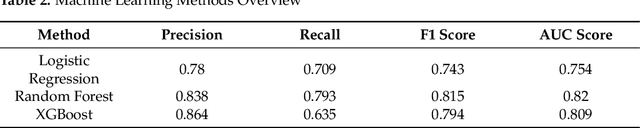

This study introduces an innovative approach that integrates community detection algorithms with Graph Neural Network (GNN) models to enhance link prediction in scientific literature networks. We specifically focus on the utilization of the Louvain community detection algorithm to uncover latent community structures within these networks, which are then incorporated into GNN architectures to predict potential links. Our methodology demonstrates the importance of understanding community dynamics in complex networks and leverages the strengths of both community detection and GNNs to improve predictive accuracy. Through extensive experiments on bipartite graphs representing scientific collaborations and citations, our approach not only highlights the synergy between community detection and GNNs but also addresses some of the prevalent challenges in link prediction, such as scalability and resolution limits. The results suggest that incorporating community-level information can significantly enhance the performance of GNNs in link prediction tasks. This work contributes to the evolving field of network science by offering a novel perspective on integrating advanced machine learning techniques with traditional network analysis methods to better understand and predict the intricate patterns of scientific collaborations.
A Comprehensive Survey on Vector Database: Storage and Retrieval Technique, Challenge
Oct 18, 2023A vector database is used to store high-dimensional data that cannot be characterized by traditional DBMS. Although there are not many articles describing existing or introducing new vector database architectures, the approximate nearest neighbor search problem behind vector databases has been studied for a long time, and considerable related algorithmic articles can be found in the literature. This article attempts to comprehensively review relevant algorithms to provide a general understanding of this booming research area. The basis of our framework categorises these studies by the approach of solving ANNS problem, respectively hash-based, tree-based, graph-based and quantization-based approaches. Then we present an overview of existing challenges for vector databases. Lastly, we sketch how vector databases can be combined with large language models and provide new possibilities.