 Add to Chrome
 Add to Firefox
 Add to Edge
Implicit neural representation for free-breathing MR fingerprinting (INR-MRF): co-registered 3D whole-liver water T1, water T2, proton density fat fraction, and R2* mapping
Oct 19, 2024
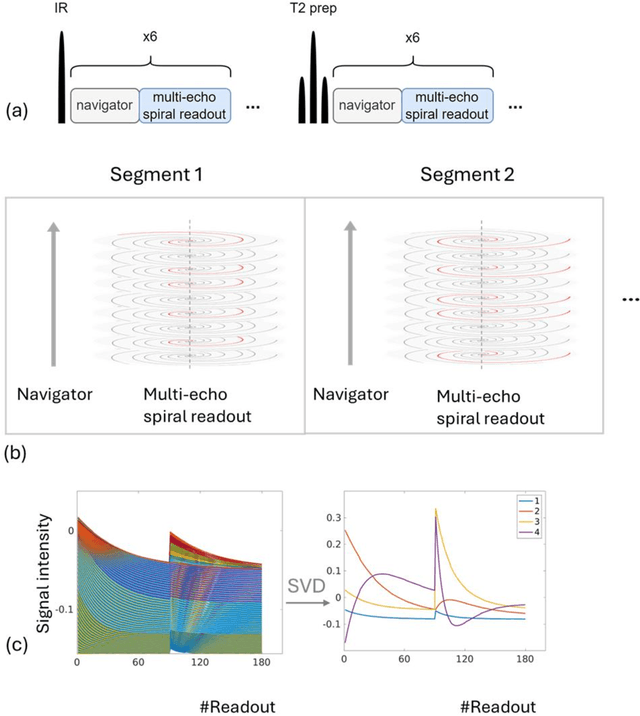
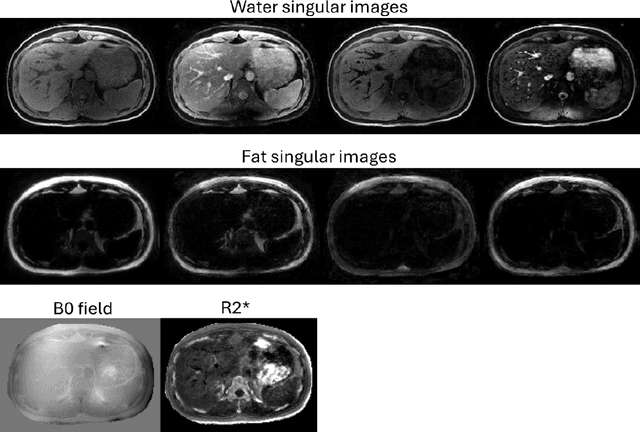
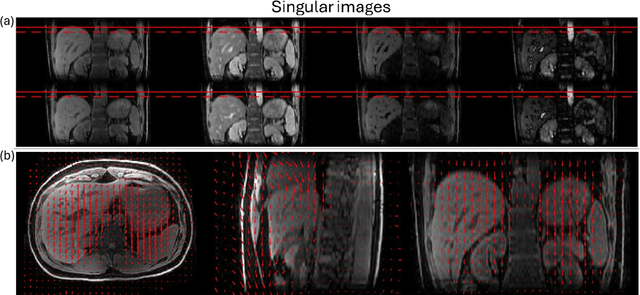
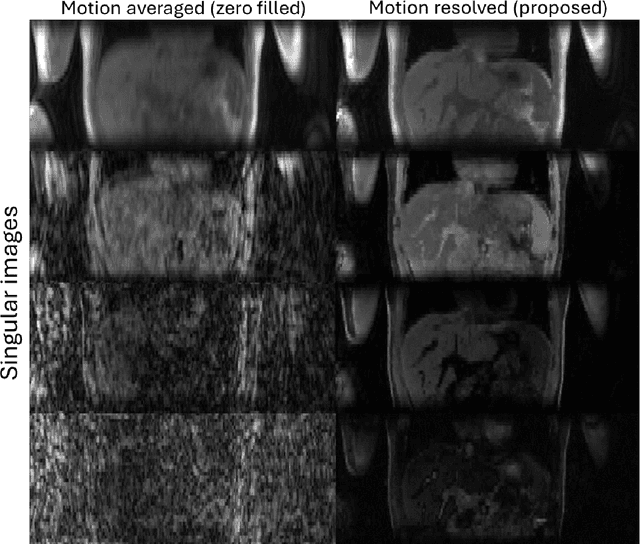
Purpose: To develop an MRI technique for free-breathing 3D whole-liver quantification of water T1, water T2, proton density fat fraction (PDFF), R2*. Methods: An Eight-echo spoiled gradient echo pulse sequence with spiral readout was developed by interleaving inversion recovery and T2 magnetization preparation. We propose a neural network based on a 4D and a 3D implicit neural representation (INR) which simultaneously learns the motion deformation fields and the static reference frame MRI subspace images respectively. Water and fat singular images were separated during network training, with no need of performing retrospective water-fat separation. T1, T2, R2* and proton density fat fraction (PDFF) produced by the proposed method were validated in vivo on 10 healthy subjects, using quantitative maps generated from conventional scans as reference. Results: Our results showed minimal bias and narrow 95% limits of agreement on T1, T2, R2* and PDFF values in the liver compared to conventional breath-holding scans. Conclusions: INR-MRF enabled co-registered 3D whole liver T1, T2, R2* and PDFF mapping in a single free-breathing scan.

Advancements in Visual Language Models for Remote Sensing: Datasets, Capabilities, and Enhancement Techniques
Oct 15, 2024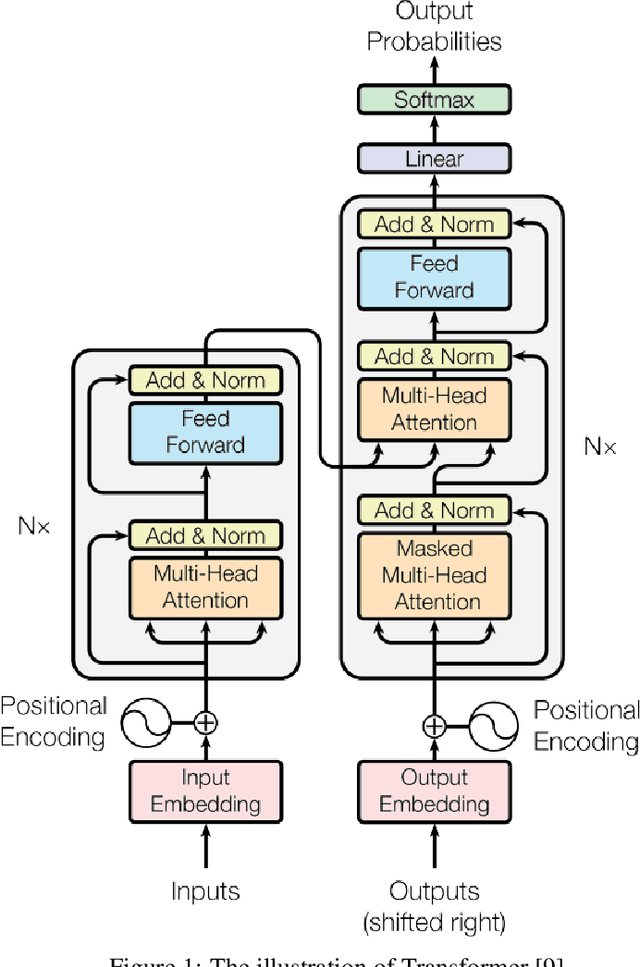
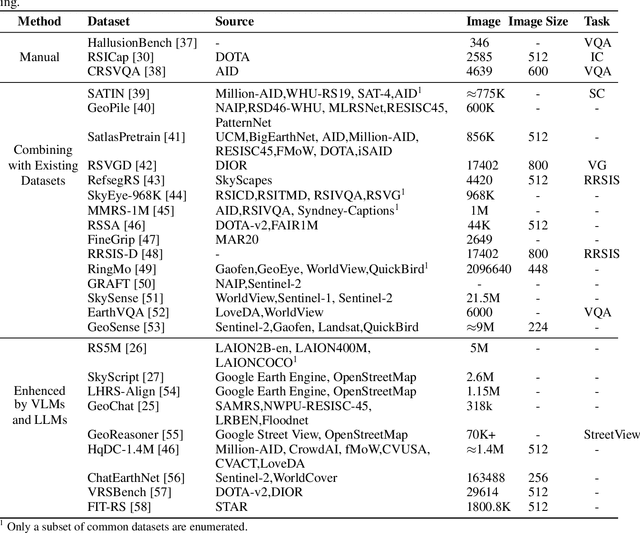
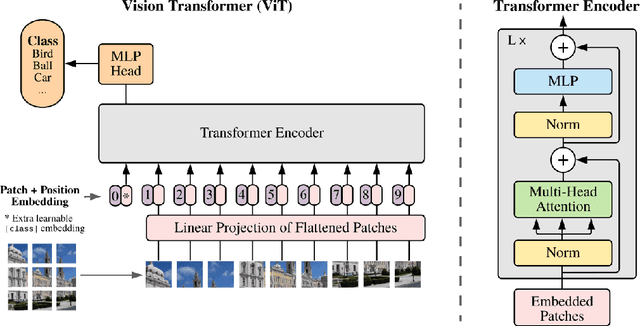
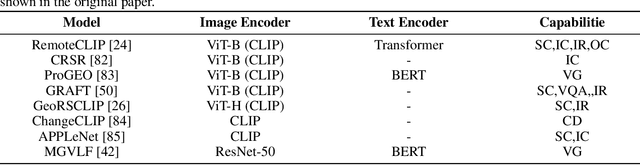
Recently, the remarkable success of ChatGPT has sparked a renewed wave of interest in artificial intelligence (AI), and the advancements in visual language models (VLMs) have pushed this enthusiasm to new heights. Differring from previous AI approaches that generally formulated different tasks as discriminative models, VLMs frame tasks as generative models and align language with visual information, enabling the handling of more challenging problems. The remote sensing (RS) field, a highly practical domain, has also embraced this new trend and introduced several VLM-based RS methods that have demonstrated promising performance and enormous potential. In this paper, we first review the fundamental theories related to VLM, then summarize the datasets constructed for VLMs in remote sensing and the various tasks they addressed. Finally, we categorize the improvement methods into three main parts according to the core components of VLMs and provide a detailed introduction and comparison of these methods.
MRI quantification of liver fibrosis using diamagnetic susceptibility: An ex-vivo feasibility study
Oct 04, 2024



In chronic liver disease, liver fibrosis develops as excessive deposition of extracellular matrix macromolecules, predominantly collagens, progressively form fibrous scars that disrupt the hepatic architecture, and fibrosis, iron, and fat are interrelated. Fibrosis is the best predictor of morbidity and mortality in chronic liver disease but liver biopsy, the reference method for diagnosis and staging, is invasive and limited by sampling and interobserver variability and risks of complications. The overall objective of this study was to develop a new non-invasive method to quantify fibrosis using diamagnetic susceptibility sources with histology validation in ex vivo liver explants.
JoyType: A Robust Design for Multilingual Visual Text Creation
Sep 26, 2024



Generating images with accurately represented text, especially in non-Latin languages, poses a significant challenge for diffusion models. Existing approaches, such as the integration of hint condition diagrams via auxiliary networks (e.g., ControlNet), have made strides towards addressing this issue. However, diffusion models often fall short in tasks requiring controlled text generation, such as specifying particular fonts or producing text in small fonts. In this paper, we introduce a novel approach for multilingual visual text creation, named JoyType, designed to maintain the font style of text during the image generation process. Our methodology begins with assembling a training dataset, JoyType-1M, comprising 1 million pairs of data. Each pair includes an image, its description, and glyph instructions corresponding to the font style within the image. We then developed a text control network, Font ControlNet, tasked with extracting font style information to steer the image generation. To further enhance our model's ability to maintain font style, notably in generating small-font text, we incorporated a multi-layer OCR-aware loss into the diffusion process. This enhancement allows JoyType to direct text rendering using low-level descriptors. Our evaluations, based on both visual and accuracy metrics, demonstrate that JoyType significantly outperforms existing state-of-the-art methods. Additionally, JoyType can function as a plugin, facilitating the creation of varied image styles in conjunction with other stable diffusion models on HuggingFace and CivitAI. Our project is open-sourced on https://jdh-algo.github.io/JoyType/.
Multi-scale Temporal Fusion Transformer for Incomplete Vehicle Trajectory Prediction
Sep 02, 2024
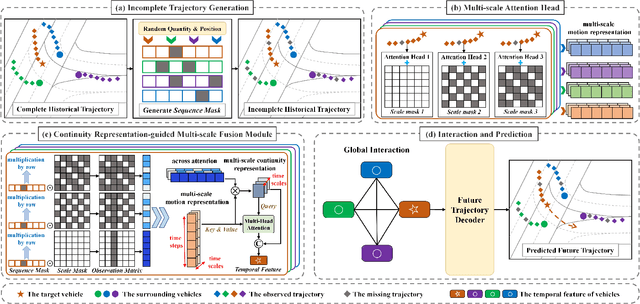


Motion prediction plays an essential role in autonomous driving systems, enabling autonomous vehicles to achieve more accurate local-path planning and driving decisions based on predictions of the surrounding vehicles. However, existing methods neglect the potential missing values caused by object occlusion, perception failures, etc., which inevitably degrades the trajectory prediction performance in real traffic scenarios. To address this limitation, we propose a novel end-to-end framework for incomplete vehicle trajectory prediction, named Multi-scale Temporal Fusion Transformer (MTFT), which consists of the Multi-scale Attention Head (MAH) and the Continuity Representation-guided Multi-scale Fusion (CRMF) module. Specifically, the MAH leverages the multi-head attention mechanism to parallelly capture multi-scale motion representation of trajectory from different temporal granularities, thus mitigating the adverse effect of missing values on prediction. Furthermore, the multi-scale motion representation is input into the CRMF module for multi-scale fusion to obtain the robust temporal feature of the vehicle. During the fusion process, the continuity representation of vehicle motion is first extracted across time steps to guide the fusion, ensuring that the resulting temporal feature incorporates both detailed information and the overall trend of vehicle motion, which facilitates the accurate decoding of future trajectory that is consistent with the vehicle's motion trend. We evaluate the proposed model on four datasets derived from highway and urban traffic scenarios. The experimental results demonstrate its superior performance in the incomplete vehicle trajectory prediction task compared with state-of-the-art models, e.g., a comprehensive performance improvement of more than 39% on the HighD dataset.
OVA-DETR: Open Vocabulary Aerial Object Detection Using Image-Text Alignment and Fusion
Aug 22, 2024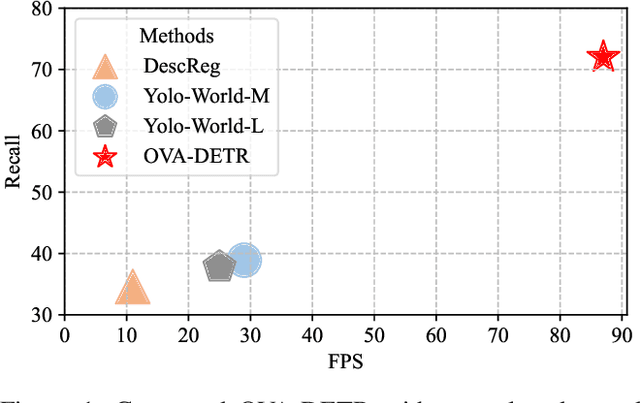
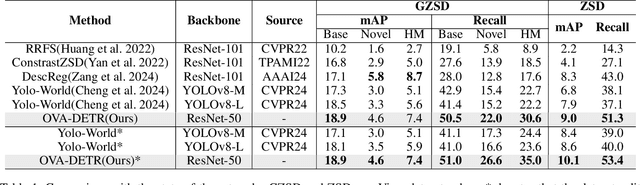

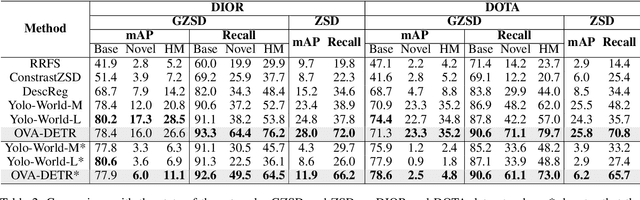
Aerial object detection has been a hot topic for many years due to its wide application requirements. However, most existing approaches can only handle predefined categories, which limits their applicability for the open scenarios in real-world. In this paper, we extend aerial object detection to open scenarios by exploiting the relationship between image and text, and propose OVA-DETR, a high-efficiency open-vocabulary detector for aerial images. Specifically, based on the idea of image-text alignment, we propose region-text contrastive loss to replace the category regression loss in the traditional detection framework, which breaks the category limitation. Then, we propose Bidirectional Vision-Language Fusion (Bi-VLF), which includes a dual-attention fusion encoder and a multi-level text-guided Fusion Decoder. The dual-attention fusion encoder enhances the feature extraction process in the encoder part. The multi-level text-guided Fusion Decoder is designed to improve the detection ability for small objects, which frequently appear in aerial object detection scenarios. Experimental results on three widely used benchmark datasets show that our proposed method significantly improves the mAP and recall, while enjoying faster inference speed. For instance, in zero shot detection experiments on DIOR, the proposed OVA-DETR outperforms DescReg and YOLO-World by 37.4% and 33.1%, respectively, while achieving 87 FPS inference speed, which is 7.9x faster than DescReg and 3x faster than YOLO-world. The code is available at https://github.com/GT-Wei/OVA-DETR.
Spherical World-Locking for Audio-Visual Localization in Egocentric Videos
Aug 09, 2024
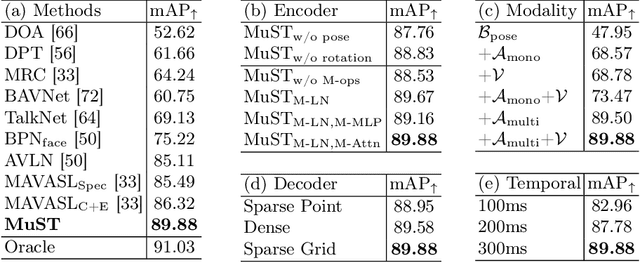

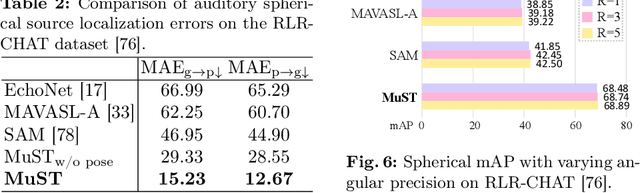
Egocentric videos provide comprehensive contexts for user and scene understanding, spanning multisensory perception to behavioral interaction. We propose Spherical World-Locking (SWL) as a general framework for egocentric scene representation, which implicitly transforms multisensory streams with respect to measurements of head orientation. Compared to conventional head-locked egocentric representations with a 2D planar field-of-view, SWL effectively offsets challenges posed by self-motion, allowing for improved spatial synchronization between input modalities. Using a set of multisensory embeddings on a worldlocked sphere, we design a unified encoder-decoder transformer architecture that preserves the spherical structure of the scene representation, without requiring expensive projections between image and world coordinate systems. We evaluate the effectiveness of the proposed framework on multiple benchmark tasks for egocentric video understanding, including audio-visual active speaker localization, auditory spherical source localization, and behavior anticipation in everyday activities.
SF-TIM: A Simple Framework for Enhancing Quadrupedal Robot Jumping Agility by Combining Terrain Imagination and Measurement
Aug 01, 2024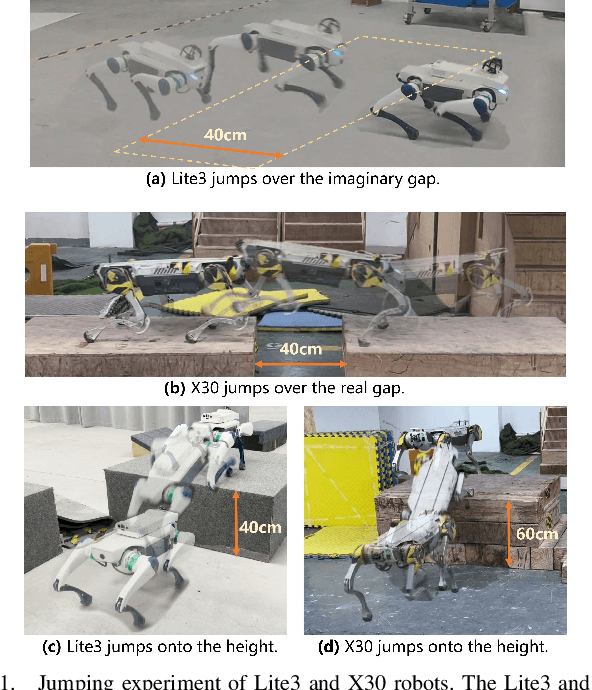
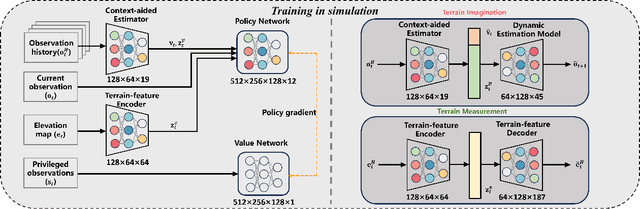
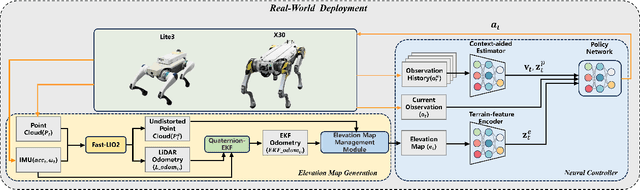
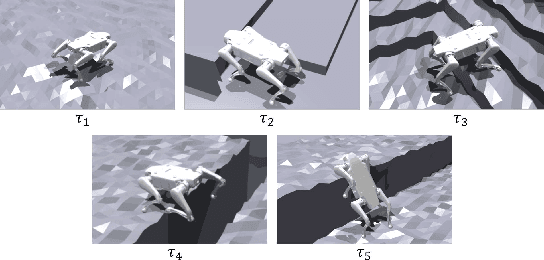
Dynamic jumping on high platforms and over gaps differentiates legged robots from wheeled counterparts. Compared to walking on rough terrains, dynamic locomotion on abrupt surfaces requires fusing proprioceptive and exteroceptive perception for explosive movements. In this paper, we propose SF-TIM (Simple Framework combining Terrain Imagination and Measurement), a single-policy method that enhances quadrupedal robot jumping agility, while preserving their fundamental blind walking capabilities. In addition, we introduce a terrain-guided reward design specifically to assist quadrupedal robots in high jumping, improving their performance in this task. To narrow the simulation-to-reality gap in quadrupedal robot learning, we introduce a stable and high-speed elevation map generation framework, enabling zero-shot simulation-to-reality transfer of locomotion ability. Our algorithm has been deployed and validated on both the small-/large-size quadrupedal robots, demonstrating its effectiveness in real-world applications: the robot has successfully traversed various high platforms and gaps, showing the robustness of our proposed approach. A demo video has been made available at https://flysoaryun.github.io/SF-TIM.
AutoVCoder: A Systematic Framework for Automated Verilog Code Generation using LLMs
Jul 21, 2024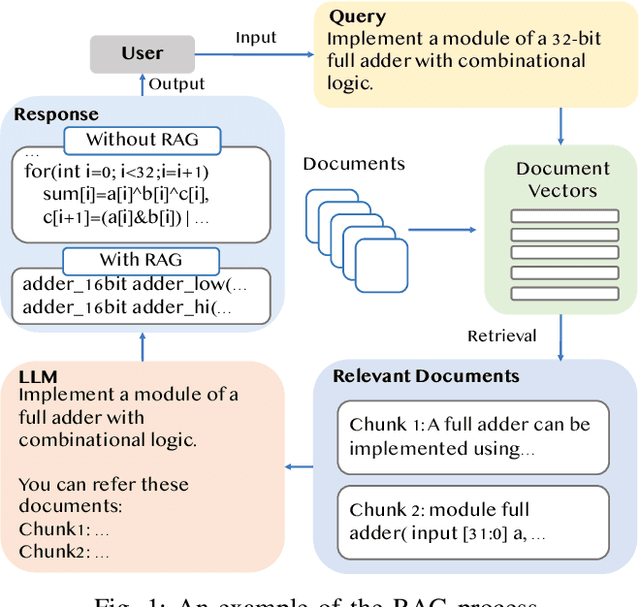
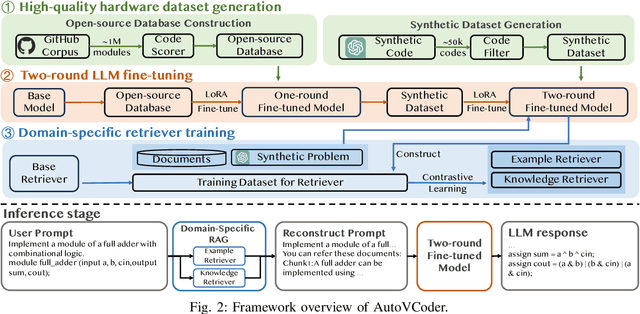

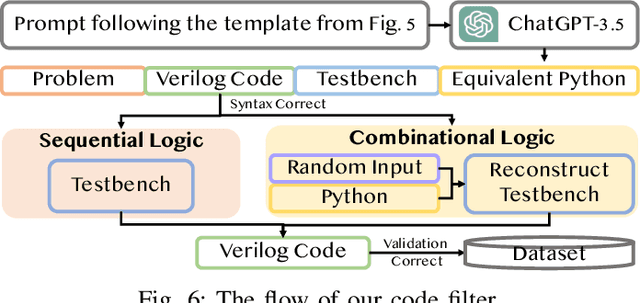
Recently, the use of large language models (LLMs) for software code generation, e.g., C/C++ and Python, has proven a great success. However, LLMs still suffer from low syntactic and functional correctness when it comes to the generation of register-transfer level (RTL) code, such as Verilog. To address this issue, in this paper, we develop AutoVCoder, a systematic open-source framework that significantly improves the LLMs' correctness of generating Verilog code and enhances the quality of its output at the same time. Our framework integrates three novel techniques, including a high-quality hardware dataset generation approach, a two-round LLM fine-tuning method and a domain-specific retrieval-augmented generation (RAG) mechanism. Experimental results demonstrate that AutoVCoder outperforms both industrial and academic LLMs in Verilog code generation. Specifically, AutoVCoder shows a 0.5% and 2.2% improvement in functional correctness on the EvalMachine and EvalHuman benchmarks compared with BetterV, and also achieves a 3.4% increase in syntax correctness and a 3.4% increase in functional correctness on the RTLLM benchmark compared with RTLCoder.
Universal Multi-view Black-box Attack against Object Detectors via Layout Optimization
Jul 09, 2024
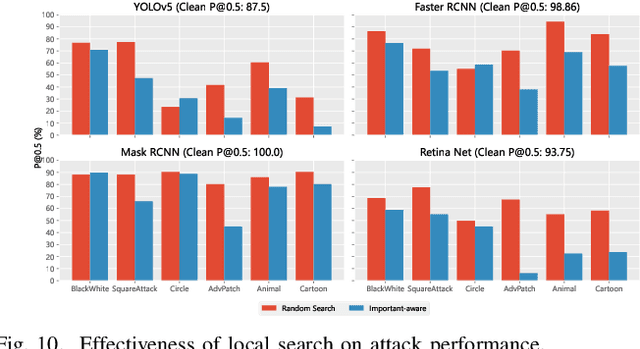


Object detectors have demonstrated vulnerability to adversarial examples crafted by small perturbations that can deceive the object detector. Existing adversarial attacks mainly focus on white-box attacks and are merely valid at a specific viewpoint, while the universal multi-view black-box attack is less explored, limiting their generalization in practice. In this paper, we propose a novel universal multi-view black-box attack against object detectors, which optimizes a universal adversarial UV texture constructed by multiple image stickers for a 3D object via the designed layout optimization algorithm. Specifically, we treat the placement of image stickers on the UV texture as a circle-based layout optimization problem, whose objective is to find the optimal circle layout filled with image stickers so that it can deceive the object detector under the multi-view scenario. To ensure reasonable placement of image stickers, two constraints are elaborately devised. To optimize the layout, we adopt the random search algorithm enhanced by the devised important-aware selection strategy to find the most appropriate image sticker for each circle from the image sticker pools. Extensive experiments conducted on four common object detectors suggested that the detection performance decreases by a large magnitude of 74.29% on average in multi-view scenarios. Additionally, a novel evaluation tool based on the photo-realistic simulator is designed to assess the texture-based attack fairly.