 Add to Chrome
 Add to Firefox
 Add to Edge
Set Prediction Guided by Semantic Concepts for Diverse Video Captioning
Dec 25, 2023


Diverse video captioning aims to generate a set of sentences to describe the given video in various aspects. Mainstream methods are trained with independent pairs of a video and a caption from its ground-truth set without exploiting the intra-set relationship, resulting in low diversity of generated captions. Different from them, we formulate diverse captioning into a semantic-concept-guided set prediction (SCG-SP) problem by fitting the predicted caption set to the ground-truth set, where the set-level relationship is fully captured. Specifically, our set prediction consists of two synergistic tasks, i.e., caption generation and an auxiliary task of concept combination prediction providing extra semantic supervision. Each caption in the set is attached to a concept combination indicating the primary semantic content of the caption and facilitating element alignment in set prediction. Furthermore, we apply a diversity regularization term on concepts to encourage the model to generate semantically diverse captions with various concept combinations. These two tasks share multiple semantics-specific encodings as input, which are obtained by iterative interaction between visual features and conceptual queries. The correspondence between the generated captions and specific concept combinations further guarantees the interpretability of our model. Extensive experiments on benchmark datasets show that the proposed SCG-SP achieves state-of-the-art (SOTA) performance under both relevance and diversity metrics.

Dataset Distillation via Adversarial Prediction Matching
Dec 14, 2023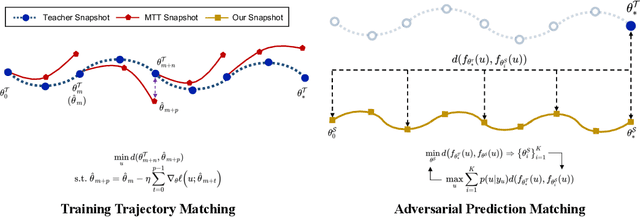
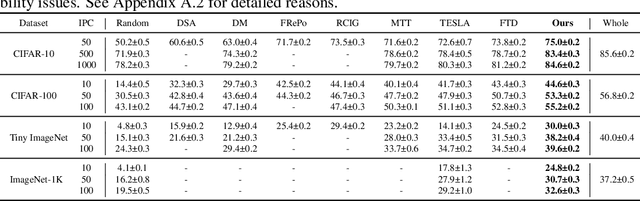

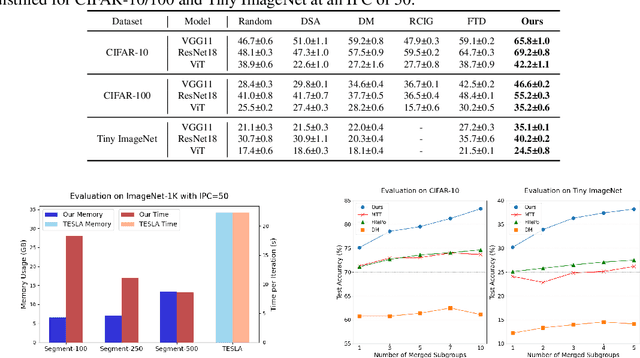
Dataset distillation is the technique of synthesizing smaller condensed datasets from large original datasets while retaining necessary information to persist the effect. In this paper, we approach the dataset distillation problem from a novel perspective: we regard minimizing the prediction discrepancy on the real data distribution between models, which are respectively trained on the large original dataset and on the small distilled dataset, as a conduit for condensing information from the raw data into the distilled version. An adversarial framework is proposed to solve the problem efficiently. In contrast to existing distillation methods involving nested optimization or long-range gradient unrolling, our approach hinges on single-level optimization. This ensures the memory efficiency of our method and provides a flexible tradeoff between time and memory budgets, allowing us to distil ImageNet-1K using a minimum of only 6.5GB of GPU memory. Under the optimal tradeoff strategy, it requires only 2.5$\times$ less memory and 5$\times$ less runtime compared to the state-of-the-art. Empirically, our method can produce synthetic datasets just 10% the size of the original, yet achieve, on average, 94% of the test accuracy of models trained on the full original datasets including ImageNet-1K, significantly surpassing state-of-the-art. Additionally, extensive tests reveal that our distilled datasets excel in cross-architecture generalization capabilities.
Point Cloud Self-supervised Learning via 3D to Multi-view Masked Autoencoder
Nov 17, 2023
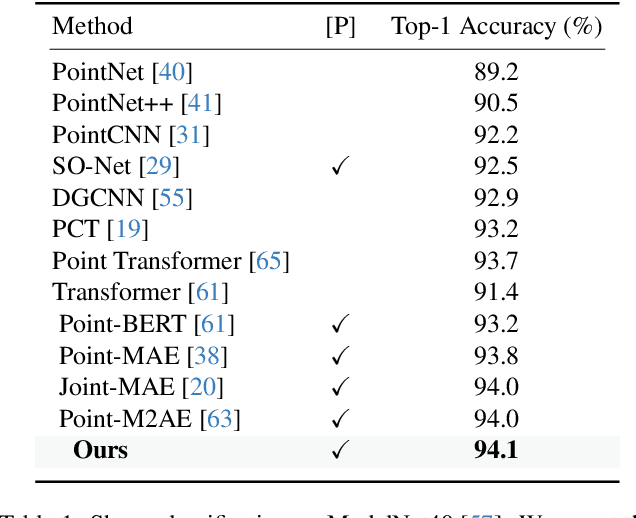

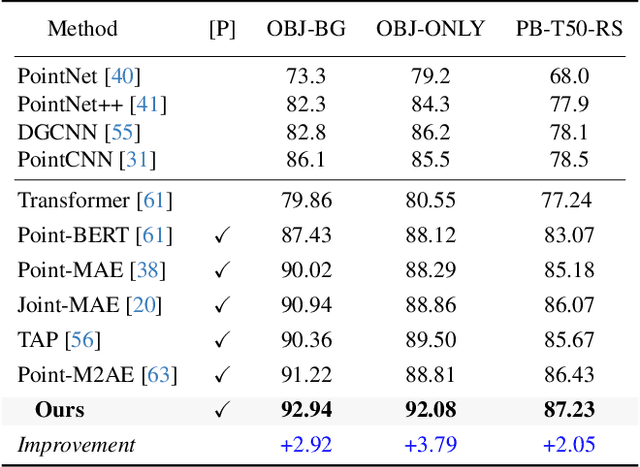
In recent years, the field of 3D self-supervised learning has witnessed significant progress, resulting in the emergence of Multi-Modality Masked AutoEncoders (MAE) methods that leverage both 2D images and 3D point clouds for pre-training. However, a notable limitation of these approaches is that they do not fully utilize the multi-view attributes inherent in 3D point clouds, which is crucial for a deeper understanding of 3D structures. Building upon this insight, we introduce a novel approach employing a 3D to multi-view masked autoencoder to fully harness the multi-modal attributes of 3D point clouds. To be specific, our method uses the encoded tokens from 3D masked point clouds to generate original point clouds and multi-view depth images across various poses. This approach not only enriches the model's comprehension of geometric structures but also leverages the inherent multi-modal properties of point clouds. Our experiments illustrate the effectiveness of the proposed method for different tasks and under different settings. Remarkably, our method outperforms state-of-the-art counterparts by a large margin in a variety of downstream tasks, including 3D object classification, few-shot learning, part segmentation, and 3D object detection. Code will be available at: https://github.com/Zhimin-C/Multiview-MAE
Method for Text Entity Linking in Power Distribution Scheduling Oriented to Power Distribution Network Knowledge Graph
Nov 15, 2023The proposed method for linking entities in power distribution dispatch texts to a power distribution network knowledge graph is based on a deep understanding of these networks. This method leverages the unique features of entities in both the power distribution network's knowledge graph and the dispatch texts, focusing on their semantic, phonetic, and syntactic characteristics. An enhanced model, the Lexical Semantic Feature-based Skip Convolutional Neural Network (LSF-SCNN), is utilized for effectively matching dispatch text entities with those in the knowledge graph. The efficacy of this model, compared to a control model, is evaluated through cross-validation methods in real-world power distribution dispatch scenarios. The results indicate that the LSF-SCNN model excels in accurately linking a variety of entity types, demonstrating high overall accuracy in entity linking when the process is conducted in English.
ZoomTrack: Target-aware Non-uniform Resizing for Efficient Visual Tracking
Oct 16, 2023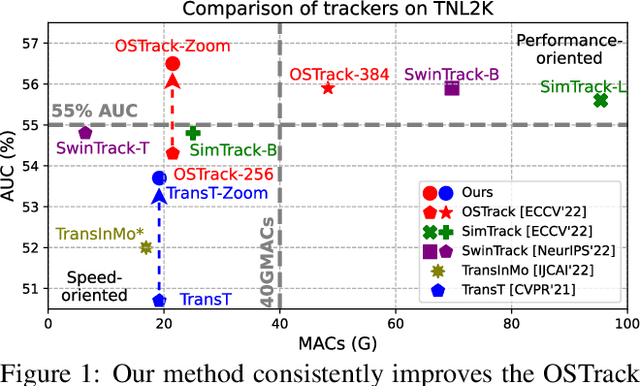
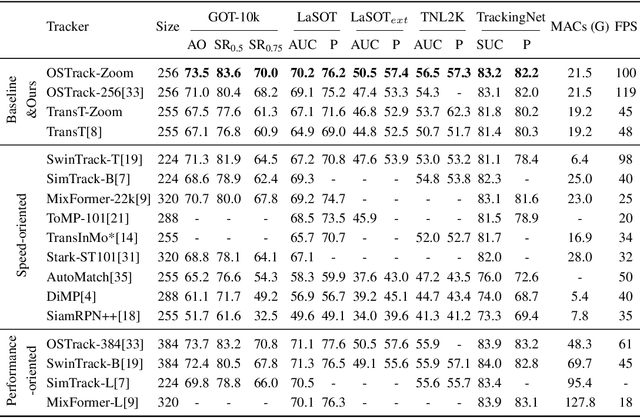
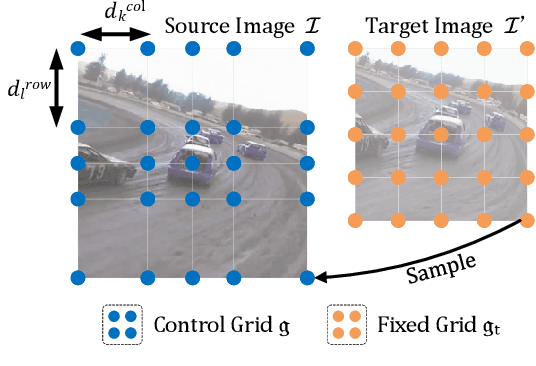
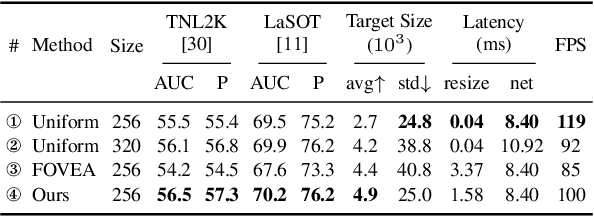
Recently, the transformer has enabled the speed-oriented trackers to approach state-of-the-art (SOTA) performance with high-speed thanks to the smaller input size or the lighter feature extraction backbone, though they still substantially lag behind their corresponding performance-oriented versions. In this paper, we demonstrate that it is possible to narrow or even close this gap while achieving high tracking speed based on the smaller input size. To this end, we non-uniformly resize the cropped image to have a smaller input size while the resolution of the area where the target is more likely to appear is higher and vice versa. This enables us to solve the dilemma of attending to a larger visual field while retaining more raw information for the target despite a smaller input size. Our formulation for the non-uniform resizing can be efficiently solved through quadratic programming (QP) and naturally integrated into most of the crop-based local trackers. Comprehensive experiments on five challenging datasets based on two kinds of transformer trackers, \ie, OSTrack and TransT, demonstrate consistent improvements over them. In particular, applying our method to the speed-oriented version of OSTrack even outperforms its performance-oriented counterpart by 0.6% AUC on TNL2K, while running 50% faster and saving over 55% MACs. Codes and models are available at https://github.com/Kou-99/ZoomTrack.
Automatic Animation of Hair Blowing in Still Portrait Photos
Sep 25, 2023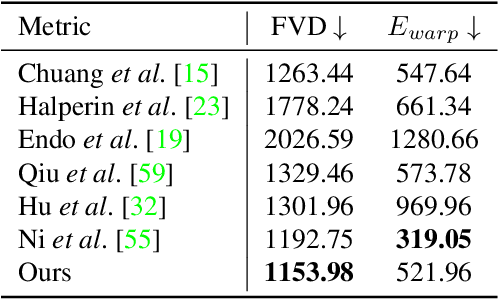
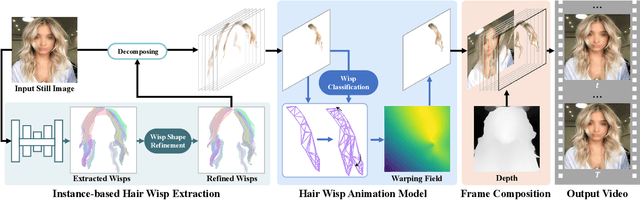
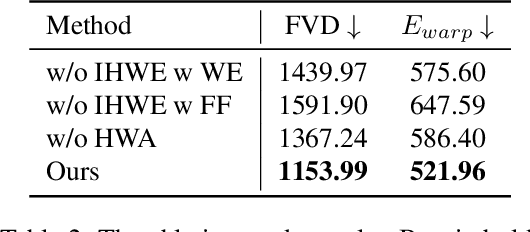
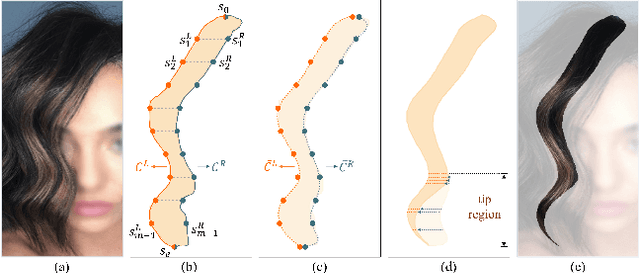
We propose a novel approach to animate human hair in a still portrait photo. Existing work has largely studied the animation of fluid elements such as water and fire. However, hair animation for a real image remains underexplored, which is a challenging problem, due to the high complexity of hair structure and dynamics. Considering the complexity of hair structure, we innovatively treat hair wisp extraction as an instance segmentation problem, where a hair wisp is referred to as an instance. With advanced instance segmentation networks, our method extracts meaningful and natural hair wisps. Furthermore, we propose a wisp-aware animation module that animates hair wisps with pleasing motions without noticeable artifacts. The extensive experiments show the superiority of our method. Our method provides the most pleasing and compelling viewing experience in the qualitative experiments and outperforms state-of-the-art still-image animation methods by a large margin in the quantitative evaluation. Project url: \url{https://nevergiveu.github.io/AutomaticHairBlowing/}
Early Classification for Dynamic Inference of Neural Networks
Sep 23, 2023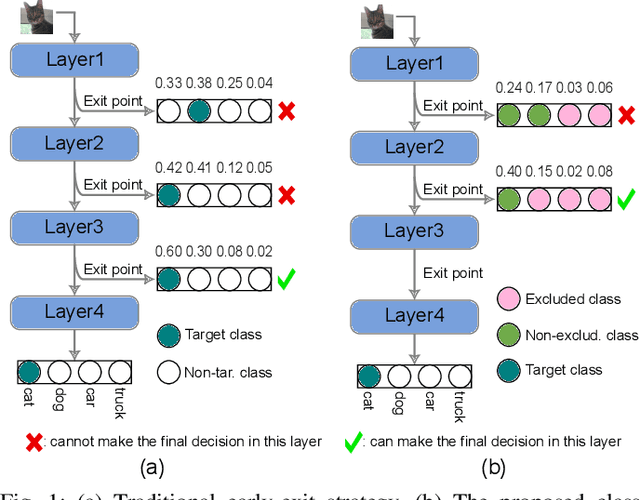
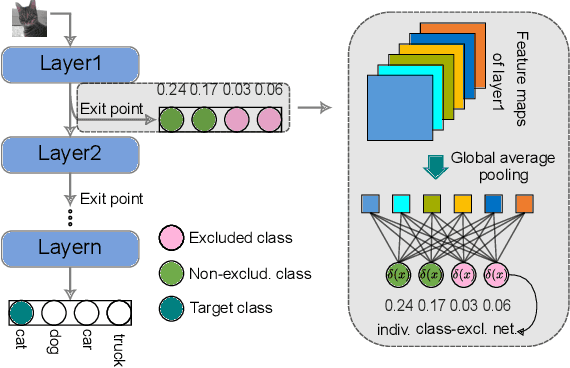
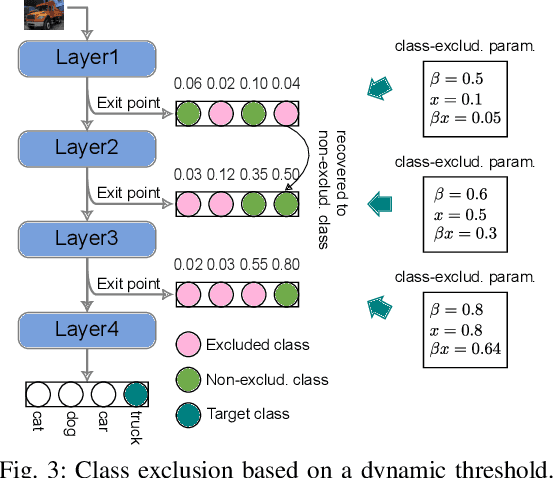
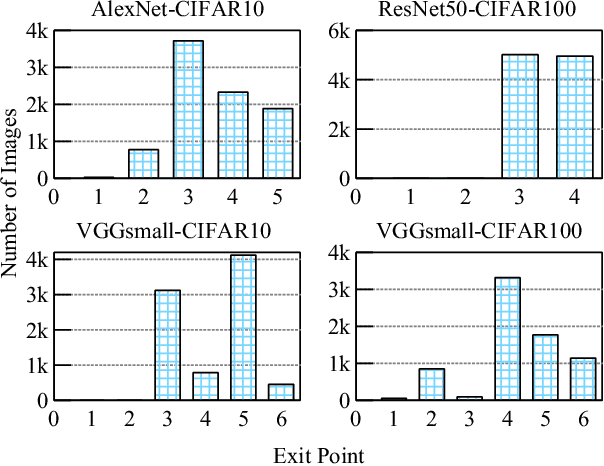
Deep neural networks (DNNs) have been successfully applied in various fields. In DNNs, a large number of multiply-accumulate (MAC) operations is required to be performed, posing critical challenges in applying them in resource-constrained platforms, e.g., edge devices. Dynamic neural networks have been introduced to allow a structural adaption, e.g., early-exit, according to different inputs to reduce the computational cost of DNNs. Existing early-exit techniques deploy classifiers at intermediate layers of DNNs to push them to make a classification decision as early as possible. However, the learned features at early layers might not be sufficient to exclude all the irrelevant classes and decide the correct class, leading to suboptimal results. To address this challenge, in this paper, we propose a class-based early-exit for dynamic inference. Instead of pushing DNNs to make a dynamic decision at intermediate layers, we take advantages of the learned features in these layers to exclude as many irrelevant classes as possible, so that later layers only have to determine the target class among the remaining classes. Until at a layer only one class remains, this class is the corresponding classification result. To realize this class-based exclusion, we assign each class with a classifier at intermediate layers and train the networks together with these classifiers. Afterwards, an exclusion strategy is developed to exclude irrelevant classes at early layers. Experimental results demonstrate the computational cost of DNNs in inference can be reduced significantly.
Logic Design of Neural Networks for High-Throughput and Low-Power Applications
Sep 19, 2023


Neural networks (NNs) have been successfully deployed in various fields. In NNs, a large number of multiplyaccumulate (MAC) operations need to be performed. Most existing digital hardware platforms rely on parallel MAC units to accelerate these MAC operations. However, under a given area constraint, the number of MAC units in such platforms is limited, so MAC units have to be reused to perform MAC operations in a neural network. Accordingly, the throughput in generating classification results is not high, which prevents the application of traditional hardware platforms in extreme-throughput scenarios. Besides, the power consumption of such platforms is also high, mainly due to data movement. To overcome this challenge, in this paper, we propose to flatten and implement all the operations at neurons, e.g., MAC and ReLU, in a neural network with their corresponding logic circuits. To improve the throughput and reduce the power consumption of such logic designs, the weight values are embedded into the MAC units to simplify the logic, which can reduce the delay of the MAC units and the power consumption incurred by weight movement. The retiming technique is further used to improve the throughput of the logic circuits for neural networks. In addition, we propose a hardware-aware training method to reduce the area of logic designs of neural networks. Experimental results demonstrate that the proposed logic designs can achieve high throughput and low power consumption for several high-throughput applications.
FAIR: Frequency-aware Image Restoration for Industrial Visual Anomaly Detection
Sep 13, 2023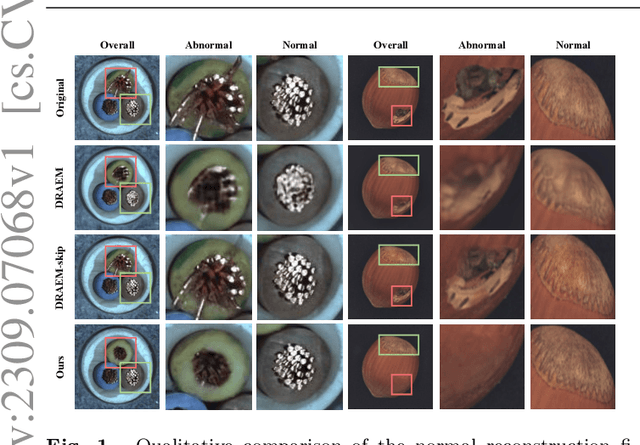
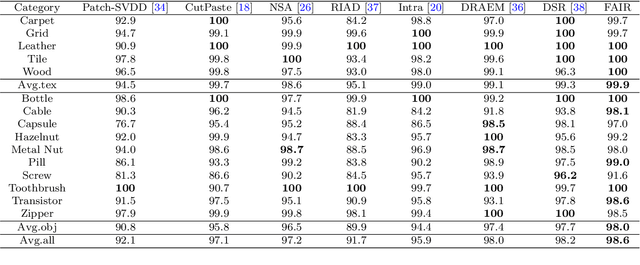
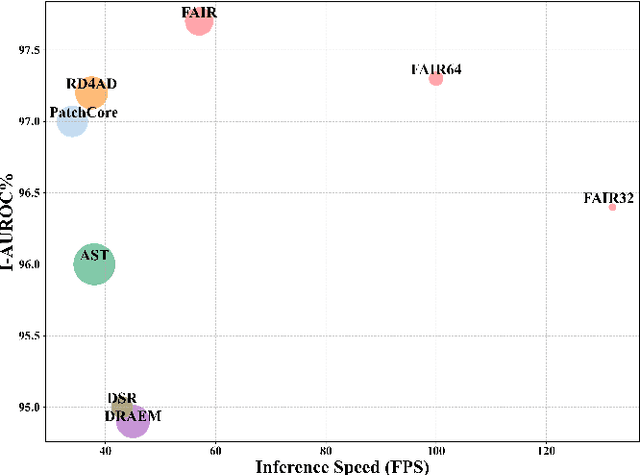
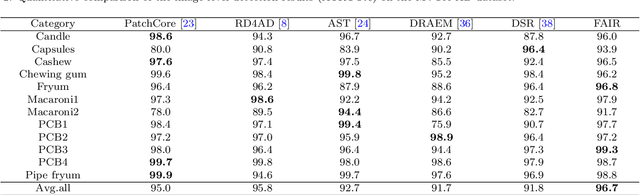
Image reconstruction-based anomaly detection models are widely explored in industrial visual inspection. However, existing models usually suffer from the trade-off between normal reconstruction fidelity and abnormal reconstruction distinguishability, which damages the performance. In this paper, we find that the above trade-off can be better mitigated by leveraging the distinct frequency biases between normal and abnormal reconstruction errors. To this end, we propose Frequency-aware Image Restoration (FAIR), a novel self-supervised image restoration task that restores images from their high-frequency components. It enables precise reconstruction of normal patterns while mitigating unfavorable generalization to anomalies. Using only a simple vanilla UNet, FAIR achieves state-of-the-art performance with higher efficiency on various defect detection datasets. Code: https://github.com/liutongkun/FAIR.
On Exact Bayesian Credible Sets for Classification and Pattern Recognition
Aug 21, 2023The current definition of a Bayesian credible set cannot, in general, achieve an arbitrarily preassigned credible level. This drawback is particularly acute for classification problems, where there are only a finite number of achievable credible levels. As a result, there is as of today no general way to construct an exact credible set for classification. In this paper, we introduce a generalized credible set that can achieve any preassigned credible level. The key insight is a simple connection between the Bayesian highest posterior density credible set and the Neyman--Pearson lemma, which, as far as we know, hasn't been noticed before. Using this connection, we introduce a randomized decision rule to fill the gaps among the discrete credible levels. Accompanying this methodology, we also develop the Steering Wheel Plot to represent the credible set, which is useful in visualizing the uncertainty in classification. By developing the exact credible set for discrete parameters, we make the theory of Bayesian inference more complete.