 Add to Chrome
 Add to Firefox
 Add to Edge
GiT: Towards Generalist Vision Transformer through Universal Language Interface
Mar 14, 2024
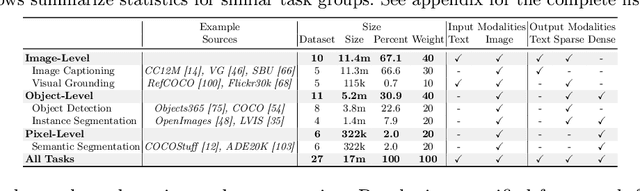


This paper proposes a simple, yet effective framework, called GiT, simultaneously applicable for various vision tasks only with a vanilla ViT. Motivated by the universality of the Multi-layer Transformer architecture (e.g, GPT) widely used in large language models (LLMs), we seek to broaden its scope to serve as a powerful vision foundation model (VFM). However, unlike language modeling, visual tasks typically require specific modules, such as bounding box heads for detection and pixel decoders for segmentation, greatly hindering the application of powerful multi-layer transformers in the vision domain. To solve this, we design a universal language interface that empowers the successful auto-regressive decoding to adeptly unify various visual tasks, from image-level understanding (e.g., captioning), over sparse perception (e.g., detection), to dense prediction (e.g., segmentation). Based on the above designs, the entire model is composed solely of a ViT, without any specific additions, offering a remarkable architectural simplification. GiT is a multi-task visual model, jointly trained across five representative benchmarks without task-specific fine-tuning. Interestingly, our GiT builds a new benchmark in generalist performance, and fosters mutual enhancement across tasks, leading to significant improvements compared to isolated training. This reflects a similar impact observed in LLMs. Further enriching training with 27 datasets, GiT achieves strong zero-shot results over various tasks. Due to its simple design, this paradigm holds promise for narrowing the architectural gap between vision and language. Code and models will be available at \url{https://github.com/Haiyang-W/GiT}.

Adaptive Hierarchical Certification for Segmentation using Randomized Smoothing
Feb 13, 2024Common certification methods operate on a flat pre-defined set of fine-grained classes. In this paper, however, we propose a novel, more general, and practical setting, namely adaptive hierarchical certification for image semantic segmentation. In this setting, the certification can be within a multi-level hierarchical label space composed of fine to coarse levels. Unlike classic methods where the certification would abstain for unstable components, our approach adaptively relaxes the certification to a coarser level within the hierarchy. This relaxation lowers the abstain rate whilst providing more certified semantically meaningful information. We mathematically formulate the problem setup and introduce, for the first time, an adaptive hierarchical certification algorithm for image semantic segmentation, that certifies image pixels within a hierarchy and prove the correctness of its guarantees. Since certified accuracy does not take the loss of information into account when traversing into a coarser hierarchy level, we introduce a novel evaluation paradigm for adaptive hierarchical certification, namely the certified information gain metric, which is proportional to the class granularity level. Our evaluation experiments on real-world challenging datasets such as Cityscapes and ACDC demonstrate that our adaptive algorithm achieves a higher certified information gain and a lower abstain rate compared to the current state-of-the-art certification method, as well as other non-adaptive versions of it.
Good Teachers Explain: Explanation-Enhanced Knowledge Distillation
Feb 05, 2024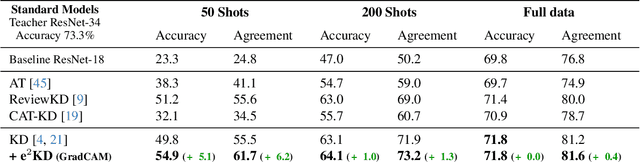
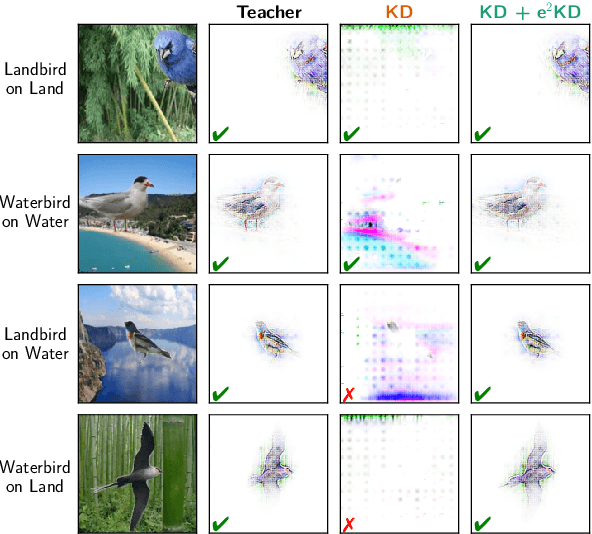
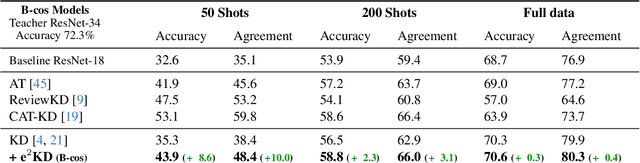
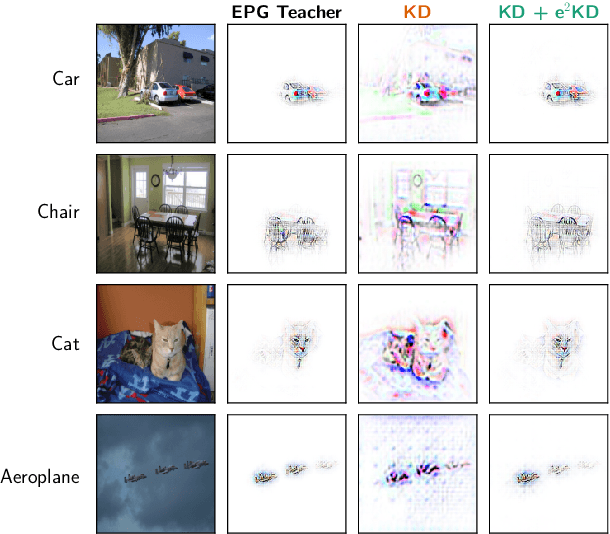
Knowledge Distillation (KD) has proven effective for compressing large teacher models into smaller student models. While it is well known that student models can achieve similar accuracies as the teachers, it has also been shown that they nonetheless often do not learn the same function. It is, however, often highly desirable that the student's and teacher's functions share similar properties such as basing the prediction on the same input features, as this ensures that students learn the 'right features' from the teachers. In this work, we explore whether this can be achieved by not only optimizing the classic KD loss but also the similarity of the explanations generated by the teacher and the student. Despite the idea being simple and intuitive, we find that our proposed 'explanation-enhanced' KD (e$^2$KD) (1) consistently provides large gains in terms of accuracy and student-teacher agreement, (2) ensures that the student learns from the teacher to be right for the right reasons and to give similar explanations, and (3) is robust with respect to the model architectures, the amount of training data, and even works with 'approximate', pre-computed explanations.
Sports-QA: A Large-Scale Video Question Answering Benchmark for Complex and Professional Sports
Jan 07, 2024Reasoning over sports videos for question answering is an important task with numerous applications, such as player training and information retrieval. However, this task has not been explored due to the lack of relevant datasets and the challenging nature it presents. Most datasets for video question answering (VideoQA) focus mainly on general and coarse-grained understanding of daily-life videos, which is not applicable to sports scenarios requiring professional action understanding and fine-grained motion analysis. In this paper, we introduce the first dataset, named Sports-QA, specifically designed for the sports VideoQA task. The Sports-QA dataset includes various types of questions, such as descriptions, chronologies, causalities, and counterfactual conditions, covering multiple sports. Furthermore, to address the characteristics of the sports VideoQA task, we propose a new Auto-Focus Transformer (AFT) capable of automatically focusing on particular scales of temporal information for question answering. We conduct extensive experiments on Sports-QA, including baseline studies and the evaluation of different methods. The results demonstrate that our AFT achieves state-of-the-art performance.
SSB: Simple but Strong Baseline for Boosting Performance of Open-Set Semi-Supervised Learning
Nov 17, 2023
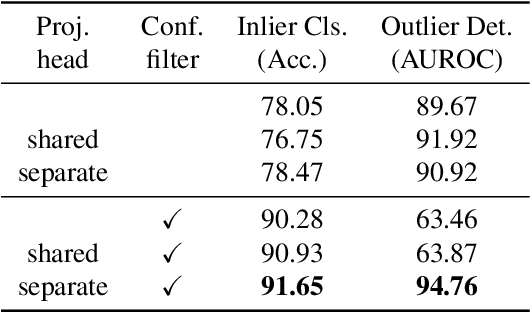
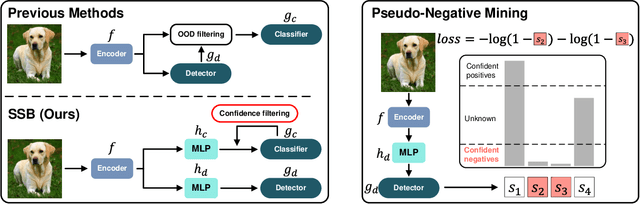
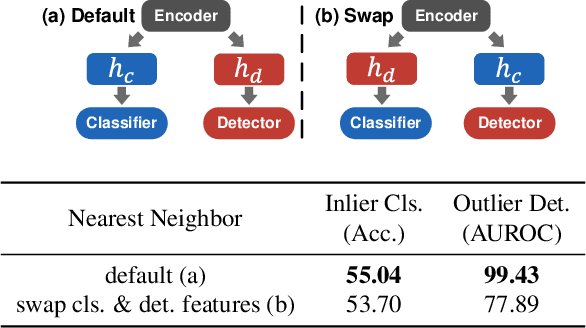
Semi-supervised learning (SSL) methods effectively leverage unlabeled data to improve model generalization. However, SSL models often underperform in open-set scenarios, where unlabeled data contain outliers from novel categories that do not appear in the labeled set. In this paper, we study the challenging and realistic open-set SSL setting, where the goal is to both correctly classify inliers and to detect outliers. Intuitively, the inlier classifier should be trained on inlier data only. However, we find that inlier classification performance can be largely improved by incorporating high-confidence pseudo-labeled data, regardless of whether they are inliers or outliers. Also, we propose to utilize non-linear transformations to separate the features used for inlier classification and outlier detection in the multi-task learning framework, preventing adverse effects between them. Additionally, we introduce pseudo-negative mining, which further boosts outlier detection performance. The three ingredients lead to what we call Simple but Strong Baseline (SSB) for open-set SSL. In experiments, SSB greatly improves both inlier classification and outlier detection performance, outperforming existing methods by a large margin. Our code will be released at https://github.com/YUE-FAN/SSB.
Wakening Past Concepts without Past Data: Class-Incremental Learning from Online Placebos
Oct 24, 2023Not forgetting old class knowledge is a key challenge for class-incremental learning (CIL) when the model continuously adapts to new classes. A common technique to address this is knowledge distillation (KD), which penalizes prediction inconsistencies between old and new models. Such prediction is made with almost new class data, as old class data is extremely scarce due to the strict memory limitation in CIL. In this paper, we take a deep dive into KD losses and find that "using new class data for KD" not only hinders the model adaption (for learning new classes) but also results in low efficiency for preserving old class knowledge. We address this by "using the placebos of old classes for KD", where the placebos are chosen from a free image stream, such as Google Images, in an automatical and economical fashion. To this end, we train an online placebo selection policy to quickly evaluate the quality of streaming images (good or bad placebos) and use only good ones for one-time feed-forward computation of KD. We formulate the policy training process as an online Markov Decision Process (MDP), and introduce an online learning algorithm to solve this MDP problem without causing much computation costs. In experiments, we show that our method 1) is surprisingly effective even when there is no class overlap between placebos and original old class data, 2) does not require any additional supervision or memory budget, and 3) significantly outperforms a number of top-performing CIL methods, in particular when using lower memory budgets for old class exemplars, e.g., five exemplars per class.
HowToCaption: Prompting LLMs to Transform Video Annotations at Scale
Oct 07, 2023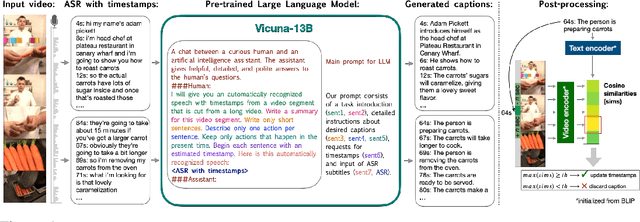
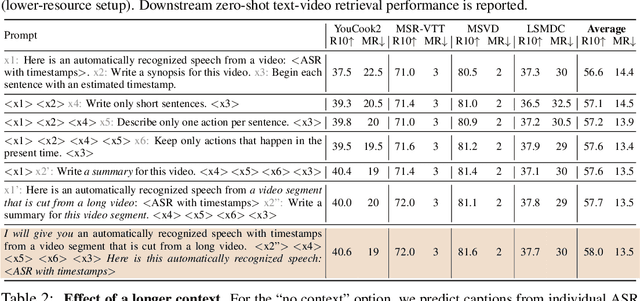
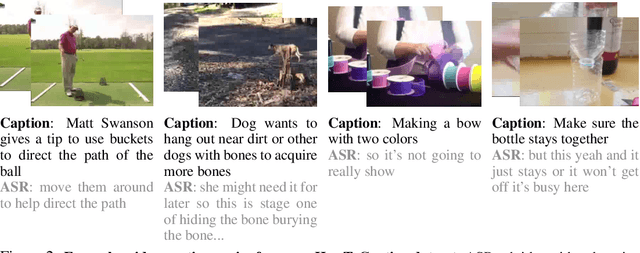

Instructional videos are an excellent source for learning multimodal representations by leveraging video-subtitle pairs extracted with automatic speech recognition systems (ASR) from the audio signal in the videos. However, in contrast to human-annotated captions, both speech and subtitles naturally differ from the visual content of the videos and thus provide only noisy supervision for multimodal learning. As a result, large-scale annotation-free web video training data remains sub-optimal for training text-video models. In this work, we propose to leverage the capability of large language models (LLMs) to obtain fine-grained video descriptions aligned with videos. Specifically, we prompt an LLM to create plausible video descriptions based on ASR narrations of the video for a large-scale instructional video dataset. To this end, we introduce a prompting method that is able to take into account a longer text of subtitles, allowing us to capture context beyond a single sentence. To align the captions to the video temporally, we prompt the LLM to generate timestamps for each produced caption based on the subtitles. In this way, we obtain human-style video captions at scale without human supervision. We apply our method to the subtitles of the HowTo100M dataset, creating a new large-scale dataset, HowToCaption. Our evaluation shows that the resulting captions not only significantly improve the performance over many different benchmark datasets for text-video retrieval but also lead to a disentangling of textual narration from the audio, boosting performance in text-video-audio tasks.
DARTH: Holistic Test-time Adaptation for Multiple Object Tracking
Oct 03, 2023Multiple object tracking (MOT) is a fundamental component of perception systems for autonomous driving, and its robustness to unseen conditions is a requirement to avoid life-critical failures. Despite the urge of safety in driving systems, no solution to the MOT adaptation problem to domain shift in test-time conditions has ever been proposed. However, the nature of a MOT system is manifold - requiring object detection and instance association - and adapting all its components is non-trivial. In this paper, we analyze the effect of domain shift on appearance-based trackers, and introduce DARTH, a holistic test-time adaptation framework for MOT. We propose a detection consistency formulation to adapt object detection in a self-supervised fashion, while adapting the instance appearance representations via our novel patch contrastive loss. We evaluate our method on a variety of domain shifts - including sim-to-real, outdoor-to-indoor, indoor-to-outdoor - and substantially improve the source model performance on all metrics. Code: https://github.com/mattiasegu/darth.
Unsupervised Open-Vocabulary Object Localization in Videos
Sep 18, 2023
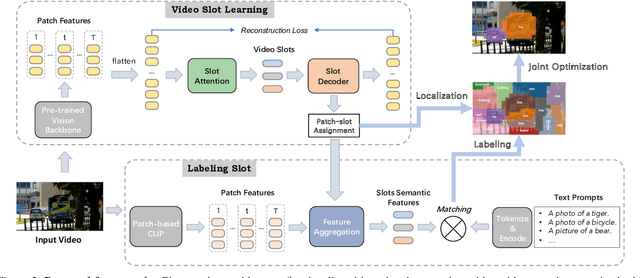
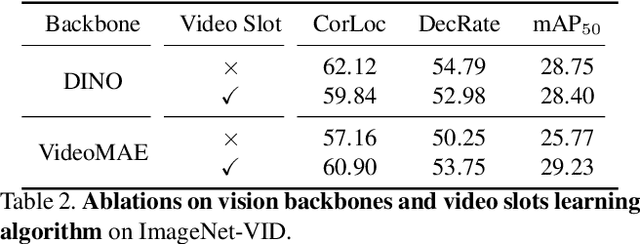
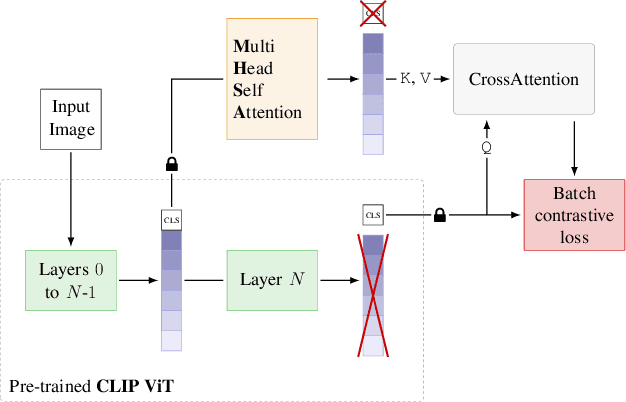
In this paper, we show that recent advances in video representation learning and pre-trained vision-language models allow for substantial improvements in self-supervised video object localization. We propose a method that first localizes objects in videos via a slot attention approach and then assigns text to the obtained slots. The latter is achieved by an unsupervised way to read localized semantic information from the pre-trained CLIP model. The resulting video object localization is entirely unsupervised apart from the implicit annotation contained in CLIP, and it is effectively the first unsupervised approach that yields good results on regular video benchmarks.
In-Style: Bridging Text and Uncurated Videos with Style Transfer for Text-Video Retrieval
Sep 16, 2023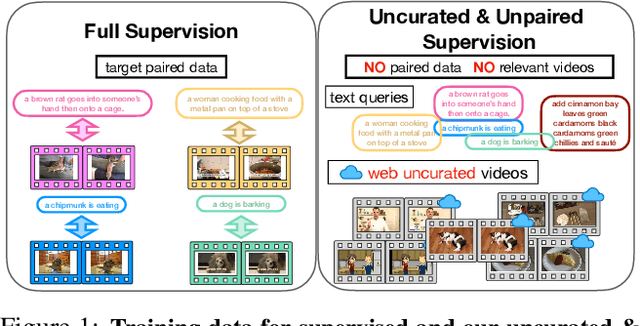

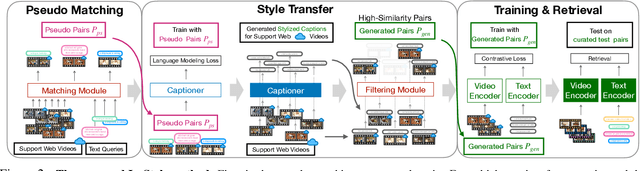
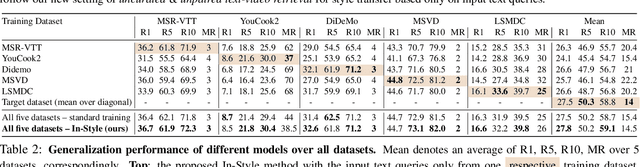
Large-scale noisy web image-text datasets have been proven to be efficient for learning robust vision-language models. However, when transferring them to the task of video retrieval, models still need to be fine-tuned on hand-curated paired text-video data to adapt to the diverse styles of video descriptions. To address this problem without the need for hand-annotated pairs, we propose a new setting, text-video retrieval with uncurated & unpaired data, that during training utilizes only text queries together with uncurated web videos without any paired text-video data. To this end, we propose an approach, In-Style, that learns the style of the text queries and transfers it to uncurated web videos. Moreover, to improve generalization, we show that one model can be trained with multiple text styles. To this end, we introduce a multi-style contrastive training procedure that improves the generalizability over several datasets simultaneously. We evaluate our model on retrieval performance over multiple datasets to demonstrate the advantages of our style transfer framework on the new task of uncurated & unpaired text-video retrieval and improve state-of-the-art performance on zero-shot text-video retrieval.