 Add to Chrome
 Add to Firefox
 Add to Edge
music
Papers and Code
Assessing the Effectiveness of Membership Inference on Generative Music
Dec 25, 2025
Generative AI systems are quickly improving, now able to produce believable output in several modalities including images, text, and audio. However, this fast development has prompted increased scrutiny concerning user privacy and the use of copyrighted works in training. A recent attack on machine-learning models called membership inference lies at the crossroads of these two concerns. The attack is given as input a set of records and a trained model and seeks to identify which of those records may have been used to train the model. On one hand, this attack can be used to identify user data used to train a model, which may violate their privacy especially in sensitive applications such as models trained on medical data. On the other hand, this attack can be used by rights-holders as evidence that a company used their works without permission to train a model. Remarkably, it appears that no work has studied the effect of membership inference attacks (MIA) on generative music. Given that the music industry is worth billions of dollars and artists would stand to gain from being able to determine if their works were being used without permission, we believe this is a pressing issue to study. As such, in this work we begin a preliminary study into whether MIAs are effective on generative music. We study the effect of several existing attacks on MuseGAN, a popular and influential generative music model. Similar to prior work on generative audio MIAs, our findings suggest that music data is fairly resilient to known membership inference techniques.

Aliasing-Free Neural Audio Synthesis
Dec 23, 2025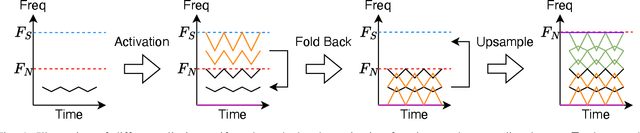
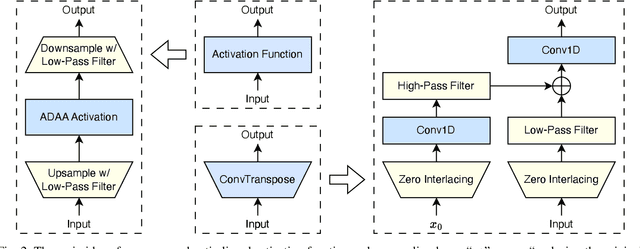
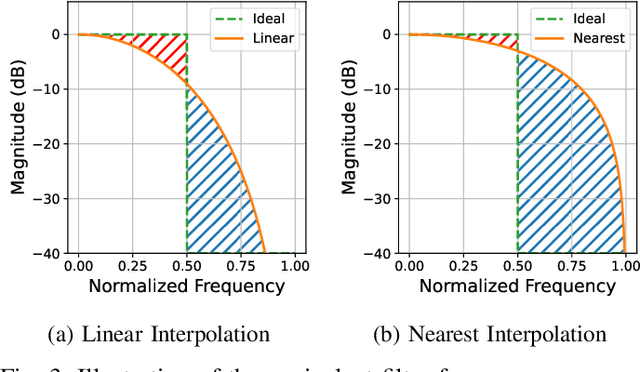
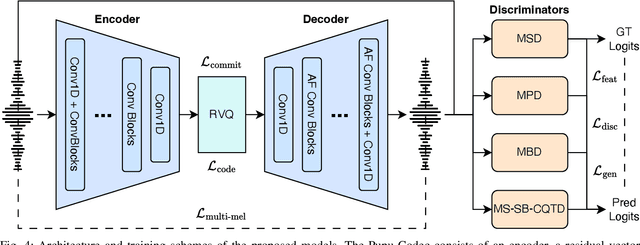
Neural vocoders and codecs reconstruct waveforms from acoustic representations, which directly impact the audio quality. Among existing methods, upsampling-based time-domain models are superior in both inference speed and synthesis quality, achieving state-of-the-art performance. Still, despite their success in producing perceptually natural sound, their synthesis fidelity remains limited due to the aliasing artifacts brought by the inadequately designed model architectures. In particular, the unconstrained nonlinear activation generates an infinite number of harmonics that exceed the Nyquist frequency, resulting in ``folded-back'' aliasing artifacts. The widely used upsampling layer, ConvTranspose, copies the mirrored low-frequency parts to fill the empty high-frequency region, resulting in ``mirrored'' aliasing artifacts. Meanwhile, the combination of its inherent periodicity and the mirrored DC bias also brings ``tonal artifact,'' resulting in constant-frequency ringing. This paper aims to solve these issues from a signal processing perspective. Specifically, we apply oversampling and anti-derivative anti-aliasing to the activation function to obtain its anti-aliased form, and replace the problematic ConvTranspose layer with resampling to avoid the ``tonal artifact'' and eliminate aliased components. Based on our proposed anti-aliased modules, we introduce Pupu-Vocoder and Pupu-Codec, and release high-quality pre-trained checkpoints to facilitate audio generation research. We build a test signal benchmark to illustrate the effectiveness of the anti-aliased modules, and conduct experiments on speech, singing voice, music, and audio to validate our proposed models. Experimental results confirm that our lightweight Pupu-Vocoder and Pupu-Codec models can easily outperform existing systems on singing voice, music, and audio, while achieving comparable performance on speech.
An Fluid Antenna Array-Enabled DOA Estimation Method: End-Fire Effect Suppression
Dec 22, 2025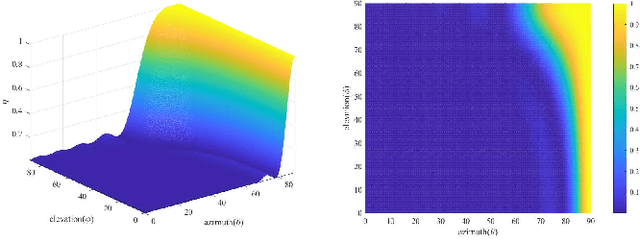
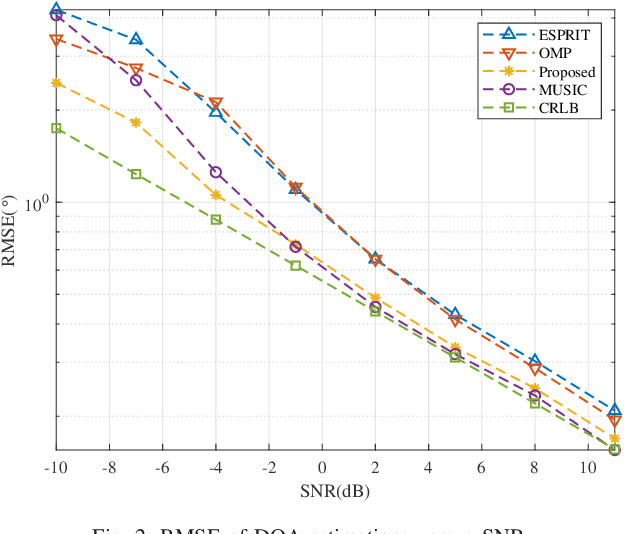
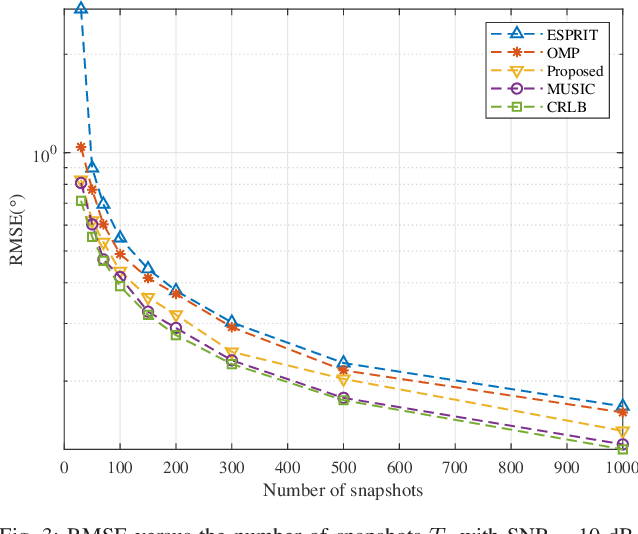
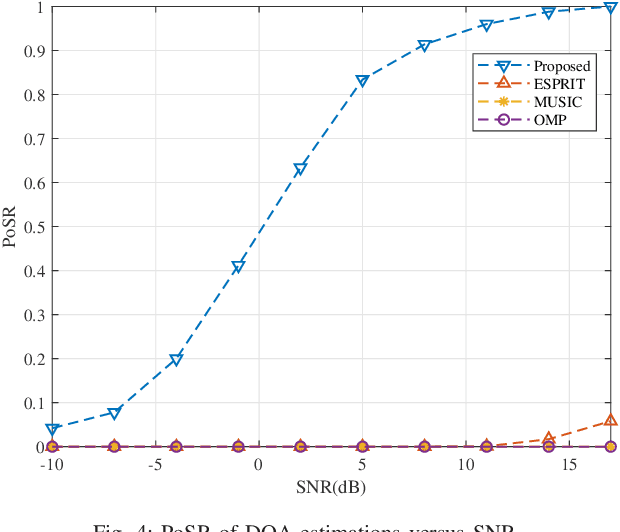
Direction of Arrival (DOA) estimation serves as a critical sensing technology poised to play a vital role in future intelligent and ubiquitous communication systems. Despite the development of numerous mature super-resolution algorithms, the inherent end-fire effect problem in fixed antenna arrays remains inadequately addressed. This work proposed a novel array architecture composed of fluid antennas. By exploiting the spatial reconfigurability of their positions to equivalently modulate the array steering vector and integrating it with the classical MUSIC algorithm, this approach achieved high-precision DOA estimation. Simulation results demonstrated that the proposed method delivers outstanding estimation performance even in highly challenging end-fire regions.
Pushing the Frontier of Audiovisual Perception with Large-Scale Multimodal Correspondence Learning
Dec 22, 2025We introduce Perception Encoder Audiovisual, PE-AV, a new family of encoders for audio and video understanding trained with scaled contrastive learning. Built on PE, PE-AV makes several key contributions to extend representations to audio, and natively support joint embeddings across audio-video, audio-text, and video-text modalities. PE-AV's unified cross-modal embeddings enable novel tasks such as speech retrieval, and set a new state of the art across standard audio and video benchmarks. We unlock this by building a strong audiovisual data engine that synthesizes high-quality captions for O(100M) audio-video pairs, enabling large-scale supervision consistent across modalities. Our audio data includes speech, music, and general sound effects-avoiding single-domain limitations common in prior work. We exploit ten pairwise contrastive objectives, showing that scaling cross-modality and caption-type pairs strengthens alignment and improves zero-shot performance. We further develop PE-A-Frame by fine-tuning PE-AV with frame-level contrastive objectives, enabling fine-grained audio-frame-to-text alignment for tasks such as sound event detection.
Automatic Adaptation to Concept Complexity and Subjective Natural Concepts: A Cognitive Model based on Chunking
Dec 21, 2025A key issue in cognitive science concerns the fundamental psychological processes that underlie the formation and retrieval of multiple types of concepts in short-term and long-term memory (STM and LTM, respectively). We propose that chunking mechanisms play an essential role and show how the CogAct computational model grounds concept learning in fundamental cognitive processes and structures (such as chunking, attention, STM and LTM). First are the in-principle demonstrations, with CogAct automatically adapting to learn a range of categories from simple logical functions, to artificial categories, to natural raw (as opposed to natural pre-processed) concepts in the dissimilar domains of literature, chess and music. This kind of adaptive learning is difficult for most other psychological models, e.g., with cognitive models stopping at modelling artificial categories and (non-GPT) models based on deep learning requiring task-specific changes to the architecture. Secondly, we offer novel ways of designing human benchmarks for concept learning experiments and simulations accounting for subjectivity, ways to control for individual human experiences, all while keeping to real-life complex categories. We ground CogAct in simulations of subjective conceptual spaces of individual human participants, capturing humans subjective judgements in music, with the models learning from raw music score data without bootstrapping to pre-built knowledge structures. The CogAct simulations are compared to those obtained by a deep-learning model. These findings integrate concept learning and adaptation to complexity into the broader theories of cognitive psychology. Our approach may also be used in psychological applications that move away from modelling the average participant and towards capturing subjective concept space.
Tempo as the Stable Cue: Hierarchical Mixture of Tempo and Beat Experts for Music to 3D Dance Generation
Dec 21, 2025Music to 3D dance generation aims to synthesize realistic and rhythmically synchronized human dance from music. While existing methods often rely on additional genre labels to further improve dance generation, such labels are typically noisy, coarse, unavailable, or insufficient to capture the diversity of real-world music, which can result in rhythm misalignment or stylistic drift. In contrast, we observe that tempo, a core property reflecting musical rhythm and pace, remains relatively consistent across datasets and genres, typically ranging from 60 to 200 BPM. Based on this finding, we propose TempoMoE, a hierarchical tempo-aware Mixture-of-Experts module that enhances the diffusion model and its rhythm perception. TempoMoE organizes motion experts into tempo-structured groups for different tempo ranges, with multi-scale beat experts capturing fine- and long-range rhythmic dynamics. A Hierarchical Rhythm-Adaptive Routing dynamically selects and fuses experts from music features, enabling flexible, rhythm-aligned generation without manual genre labels. Extensive experiments demonstrate that TempoMoE achieves state-of-the-art results in dance quality and rhythm alignment.
AutoSchA: Automatic Hierarchical Music Representations via Multi-Relational Node Isolation
Dec 20, 2025Hierarchical representations provide powerful and principled approaches for analyzing many musical genres. Such representations have been broadly studied in music theory, for instance via Schenkerian analysis (SchA). Hierarchical music analyses, however, are highly cost-intensive; the analysis of a single piece of music requires a great deal of time and effort from trained experts. The representation of hierarchical analyses in a computer-readable format is a further challenge. Given recent developments in hierarchical deep learning and increasing quantities of computer-readable data, there is great promise in extending such work for an automatic hierarchical representation framework. This paper thus introduces a novel approach, AutoSchA, which extends recent developments in graph neural networks (GNNs) for hierarchical music analysis. AutoSchA features three key contributions: 1) a new graph learning framework for hierarchical music representation, 2) a new graph pooling mechanism based on node isolation that directly optimizes learned pooling assignments, and 3) a state-of-the-art architecture that integrates such developments for automatic hierarchical music analysis. We show, in a suite of experiments, that AutoSchA performs comparably to human experts when analyzing Baroque fugue subjects.
MACE-Dance: Motion-Appearance Cascaded Experts for Music-Driven Dance Video Generation
Dec 20, 2025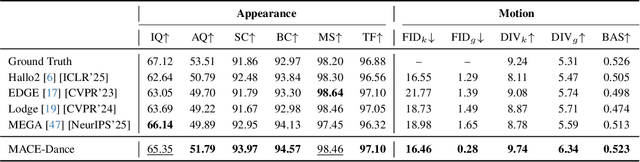
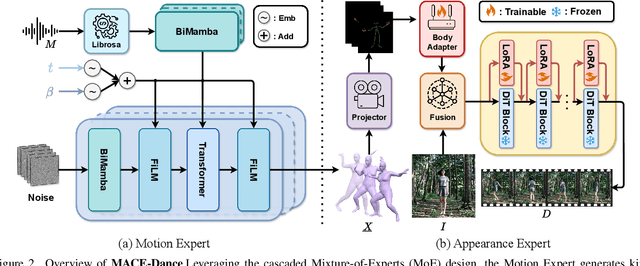
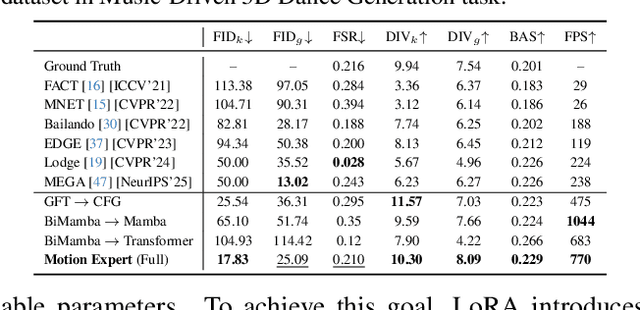
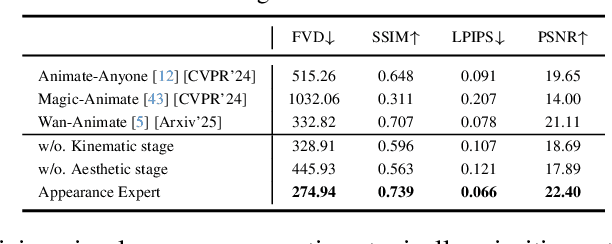
With the rise of online dance-video platforms and rapid advances in AI-generated content (AIGC), music-driven dance generation has emerged as a compelling research direction. Despite substantial progress in related domains such as music-driven 3D dance generation, pose-driven image animation, and audio-driven talking-head synthesis, existing methods cannot be directly adapted to this task. Moreover, the limited studies in this area still struggle to jointly achieve high-quality visual appearance and realistic human motion. Accordingly, we present MACE-Dance, a music-driven dance video generation framework with cascaded Mixture-of-Experts (MoE). The Motion Expert performs music-to-3D motion generation while enforcing kinematic plausibility and artistic expressiveness, whereas the Appearance Expert carries out motion- and reference-conditioned video synthesis, preserving visual identity with spatiotemporal coherence. Specifically, the Motion Expert adopts a diffusion model with a BiMamba-Transformer hybrid architecture and a Guidance-Free Training (GFT) strategy, achieving state-of-the-art (SOTA) performance in 3D dance generation. The Appearance Expert employs a decoupled kinematic-aesthetic fine-tuning strategy, achieving state-of-the-art (SOTA) performance in pose-driven image animation. To better benchmark this task, we curate a large-scale and diverse dataset and design a motion-appearance evaluation protocol. Based on this protocol, MACE-Dance also achieves state-of-the-art performance. Project page: https://macedance.github.io/
Efficient Optimization of Hierarchical Identifiers for Generative Recommendation
Dec 20, 2025SEATER is a generative retrieval model that improves recommendation inference efficiency and retrieval quality by utilizing balanced tree-structured item identifiers and contrastive training objectives. We reproduce and validate SEATER's reported improvements in retrieval quality over strong baselines across all datasets from the original work, and extend the evaluation to Yambda, a large-scale music recommendation dataset. Our experiments verify SEATER's strong performance, but show that its tree construction step during training becomes a major bottleneck as the number of items grows. To address this, we implement and evaluate two alternative construction algorithms: a greedy method optimized for minimal build time, and a hybrid method that combines greedy clustering at high levels with more precise grouping at lower levels. The greedy method reduces tree construction time to less than 2% of the original with only a minor drop in quality on the dataset with the largest item collection. The hybrid method achieves retrieval quality on par with the original, and even improves on the largest dataset, while cutting construction time to just 5-8%. All data and code are publicly available for full reproducibility at https://github.com/joshrosie/re-seater.
Physics of Language Models: Part 4.1, Architecture Design and the Magic of Canon Layers
Dec 19, 2025Understanding architectural differences in language models is challenging, especially at academic-scale pretraining (e.g., 1.3B parameters, 100B tokens), where results are often dominated by noise and randomness. To overcome this, we introduce controlled synthetic pretraining tasks that isolate and evaluate core model capabilities. Within this framework, we discover CANON LAYERS: lightweight architectural components -- named after the musical term "canon" -- that promote horizontal information flow across neighboring tokens. Canon layers compute weighted sums of nearby token representations and integrate seamlessly into Transformers, linear attention, state-space models, or any sequence architecture. We present 12 key results. This includes how Canon layers enhance reasoning depth (e.g., by $2\times$), reasoning breadth, knowledge manipulation, etc. They lift weak architectures like NoPE to match RoPE, and linear attention to rival SOTA linear models like Mamba2/GDN -- validated both through synthetic tasks and real-world academic-scale pretraining. This synthetic playground offers an economical, principled path to isolate core model capabilities often obscured at academic scales. Equipped with infinite high-quality data, it may even PREDICT how future architectures will behave as training pipelines improve -- e.g., through better data curation or RL-based post-training -- unlocking deeper reasoning and hierarchical inference.