 Add to Chrome
 Add to Firefox
 Add to Edge
Fundamental Analysis of Scalable Fluid Antenna Systems: Identifiability Limits, Information Theory, and Joint Processing
Apr 01, 2026
Unlike fixed-position arrays with static observation entropy, the scalable fluid antenna system (S-FAS) can dynamically adjust its aperture to form different observation spaces with configuration-dependent entropy budgets. This reconfigurability requires an information-theoretic framework beyond traditional algebraic identifiability analysis. This paper establishes an observation entropy framework for S-FAS, which unifies the derivation of identifiability limits, the diagnosis of processing bottlenecks, and system design optimization. For an S-FAS with mutual coupling suppression, we derive a complete capacity hierarchy among compressed, extended, and jointly stacked configurations. The entropy framework reveals that sequential two-stage processing suffers from an information bottleneck that restricts achievable capacity, while the noise entropy ratio can be used to distinguish fundamental performance limits from algorithmic deficiencies. A joint MUSIC algorithm is proposed to approach the theoretical joint capacity bound. Extensive Monte Carlo simulations, validated by both algebraic and information-theoretic criteria, verify the derived capacity hierarchy and identifiability boundaries.

An Fluid Antenna Array-Enabled DOA Estimation Method: End-Fire Effect Suppression
Dec 22, 2025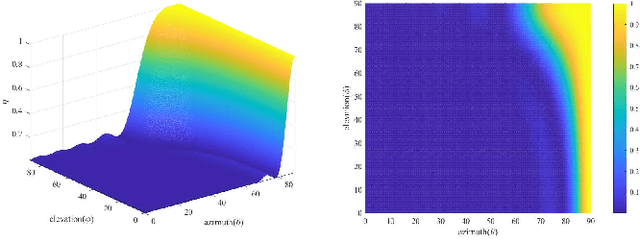
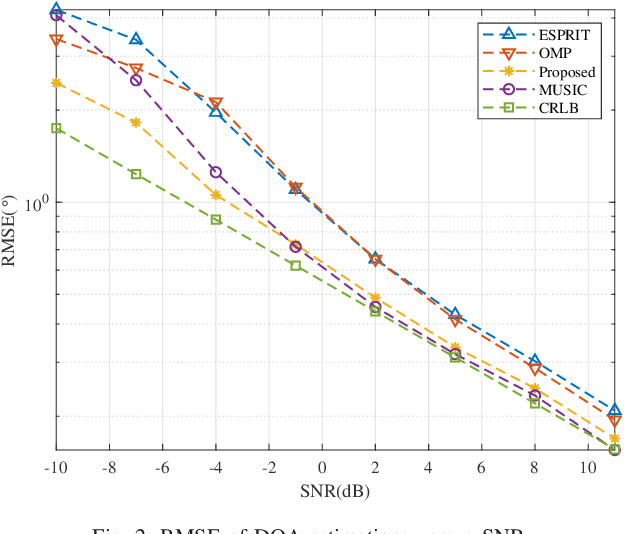
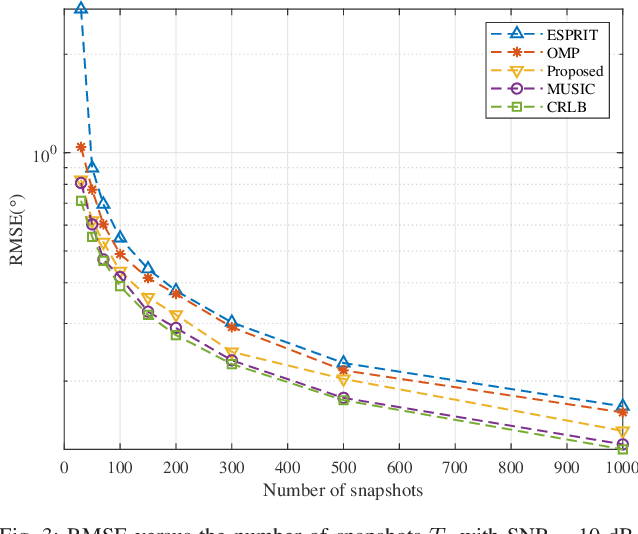
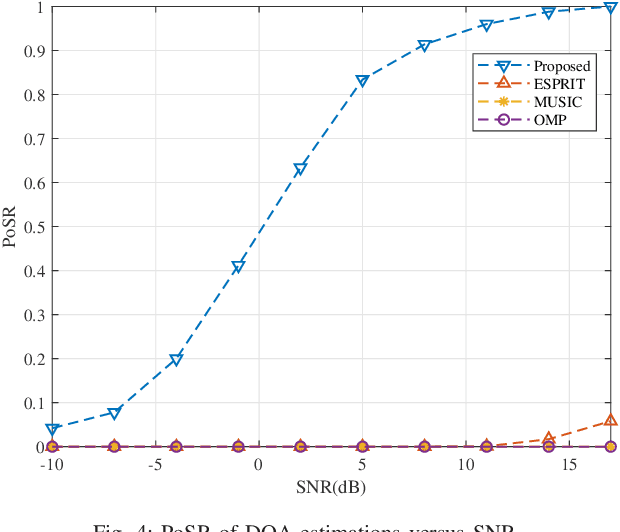
Direction of Arrival (DOA) estimation serves as a critical sensing technology poised to play a vital role in future intelligent and ubiquitous communication systems. Despite the development of numerous mature super-resolution algorithms, the inherent end-fire effect problem in fixed antenna arrays remains inadequately addressed. This work proposed a novel array architecture composed of fluid antennas. By exploiting the spatial reconfigurability of their positions to equivalently modulate the array steering vector and integrating it with the classical MUSIC algorithm, this approach achieved high-precision DOA estimation. Simulation results demonstrated that the proposed method delivers outstanding estimation performance even in highly challenging end-fire regions.
Reimagining Wireless Connectivity: The FAS-RIS Synergy for 6G Smart Cities
Dec 22, 2025Fluid antenna system (FAS) represents the concept of treating antenna as a reconfigurable physical-layer resource to broaden system design and network optimization and inspire next-generation reconfigurable antennas. FAS can unleash new degree of freedom (DoF) via antenna reconfigurations for novel spatial diversity. Reconfigurable intelligent surfaces (RISs) on the other hand can reshape wireless propagation environments but often face limitations from double path-loss and minimal signal processing capability when operating independently. This article envisions a transformative FAS-RIS integrated architecture for future smart city networks, uniting the adaptability of FAS with the environmental control of RIS. The proposed framework has five key applications: FAS-enabled base stations (BSs) for large-scale beamforming, FAS-equipped user devices with finest spatial diversity, and three novel RIS paradigms -- fluid RIS (FRIS) with reconfigurable elements, FAS-embedded RIS as active relays, and enormous FAS (E-FAS) exploiting surface waves on facades to re-establish line-of-sight (LoS) communication. A two-timescale control mechanism coordinates network-level beamforming with rapid, device-level adaptation. Applications spanning from simultaneous wireless information and power transfer (SWIPT) to integrated sensing and communications (ISAC), with challenges in co-design, channel modeling, and optimization, are discussed. This article concludes with simulation results demonstrating the robustness and effectiveness of the FAS-RIS system.
Intelligent Sky Mirrors: SAC-Driven MF-RIS Optimization for Secure NOMA in Low-Altitude Economy
Dec 22, 2025Low-altitude economy (LAE) has become a key driving force for smart cities and economic growth. To address spectral efficiency and communication security challenges in LAE, this paper investigates secure energy efficiency (SEE) maximization using intelligent sky mirrors, UAV-mounted multifunctional reconfigurable intelligent surfaces (MF-RIS) assisting nonorthogonal multiple access (NOMA) systems. These aerial mirrors intelligently amplify legitimate signals while simultaneously generating jamming against eavesdroppers. We formulate a joint optimization problem encompassing UAV trajectory, base station power allocation, RIS phase shifts, amplification factors, and scheduling matrices. Given the fractional SEE objective and dynamic UAV scenarios, we propose a two-layer optimization scheme: SAC-driven first layer for trajectory and power management, and channel alignment-based second layer for phase optimization. Simulations demonstrate that our proposed scheme significantly outperforms benchmark approaches.