 Add to Chrome
 Add to Firefox
 Add to Edge
autonomous cars
Autonomous cars are self-driving vehicles that use artificial intelligence (AI) and sensors to navigate and operate without human intervention, using high-resolution cameras and lidars that detect what happens in the car's immediate surroundings. They have the potential to revolutionize transportation by improving safety, efficiency, and accessibility.
Papers and Code
Distance Estimation to Support Assistive Drones for the Visually Impaired using Robust Calibration
Mar 31, 2025
Autonomous navigation by drones using onboard sensors, combined with deep learning and computer vision algorithms, is impacting a number of domains. We examine the use of drones to autonomously assist Visually Impaired People (VIPs) in navigating outdoor environments while avoiding obstacles. Here, we present NOVA, a robust calibration technique using depth maps to estimate absolute distances to obstacles in a campus environment. NOVA uses a dynamic-update method that can adapt to adversarial scenarios. We compare NOVA with SOTA depth map approaches, and with geometric and regression-based baseline models, for distance estimation to VIPs and other obstacles in diverse and dynamic conditions. We also provide exhaustive evaluations to validate the robustness and generalizability of our methods. NOVA predicts distances to VIP with an error <30cm and to different obstacles like cars and bicycles with a maximum of 60cm error, which are better than the baselines. NOVA also clearly out-performs SOTA depth map methods, by upto 5.3-14.6x.

DrivingSphere: Building a High-fidelity 4D World for Closed-loop Simulation
Nov 18, 2024

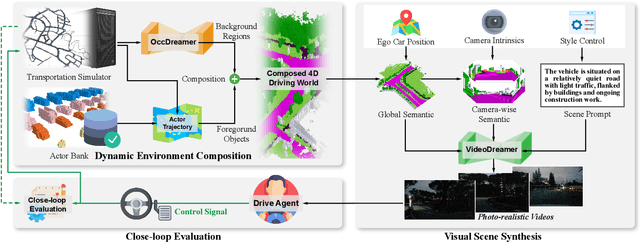

Autonomous driving evaluation requires simulation environments that closely replicate actual road conditions, including real-world sensory data and responsive feedback loops. However, many existing simulations need to predict waypoints along fixed routes on public datasets or synthetic photorealistic data, \ie, open-loop simulation usually lacks the ability to assess dynamic decision-making. While the recent efforts of closed-loop simulation offer feedback-driven environments, they cannot process visual sensor inputs or produce outputs that differ from real-world data. To address these challenges, we propose DrivingSphere, a realistic and closed-loop simulation framework. Its core idea is to build 4D world representation and generate real-life and controllable driving scenarios. In specific, our framework includes a Dynamic Environment Composition module that constructs a detailed 4D driving world with a format of occupancy equipping with static backgrounds and dynamic objects, and a Visual Scene Synthesis module that transforms this data into high-fidelity, multi-view video outputs, ensuring spatial and temporal consistency. By providing a dynamic and realistic simulation environment, DrivingSphere enables comprehensive testing and validation of autonomous driving algorithms, ultimately advancing the development of more reliable autonomous cars. The benchmark will be publicly released.
An Expert Ensemble for Detecting Anomalous Scenes, Interactions, and Behaviors in Autonomous Driving
Feb 23, 2025As automated vehicles enter public roads, safety in a near-infinite number of driving scenarios becomes one of the major concerns for the widespread adoption of fully autonomous driving. The ability to detect anomalous situations outside of the operational design domain is a key component in self-driving cars, enabling us to mitigate the impact of abnormal ego behaviors and to realize trustworthy driving systems. On-road anomaly detection in egocentric videos remains a challenging problem due to the difficulties introduced by complex and interactive scenarios. We conduct a holistic analysis of common on-road anomaly patterns, from which we propose three unsupervised anomaly detection experts: a scene expert that focuses on frame-level appearances to detect abnormal scenes and unexpected scene motions; an interaction expert that models normal relative motions between two road participants and raises alarms whenever anomalous interactions emerge; and a behavior expert which monitors abnormal behaviors of individual objects by future trajectory prediction. To combine the strengths of all the modules, we propose an expert ensemble (Xen) using a Kalman filter, in which the final anomaly score is absorbed as one of the states and the observations are generated by the experts. Our experiments employ a novel evaluation protocol for realistic model performance, demonstrate superior anomaly detection performance than previous methods, and show that our framework has potential in classifying anomaly types using unsupervised learning on a large-scale on-road anomaly dataset.
Dispersion is (Almost) Optimal under (A)synchrony
Mar 20, 2025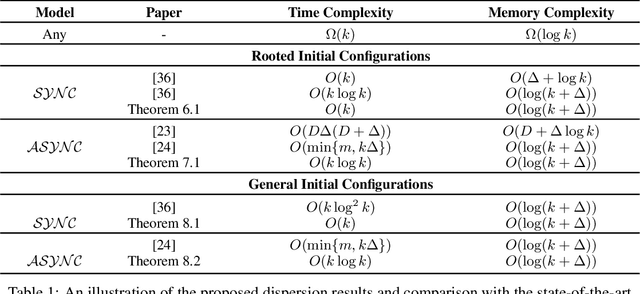
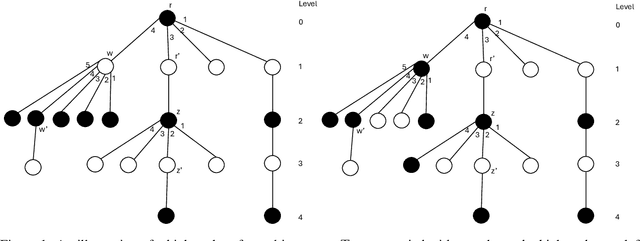
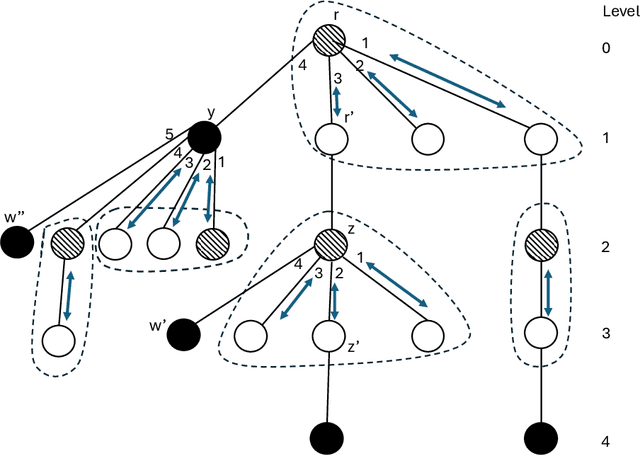
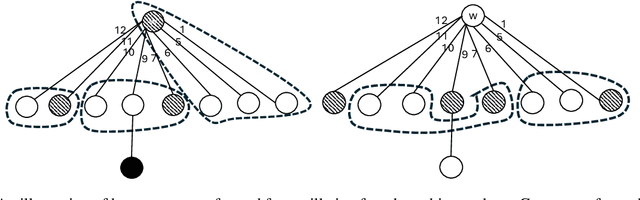
The dispersion problem has received much attention recently in the distributed computing literature. In this problem, $k\leq n$ agents placed initially arbitrarily on the nodes of an $n$-node, $m$-edge anonymous graph of maximum degree $\Delta$ have to reposition autonomously to reach a configuration in which each agent is on a distinct node of the graph. Dispersion is interesting as well as important due to its connections to many fundamental coordination problems by mobile agents on graphs, such as exploration, scattering, load balancing, relocation of self-driven electric cars (robots) to recharge stations (nodes), etc. The objective has been to provide a solution that optimizes simultaneously time and memory complexities. There exist graphs for which the lower bound on time complexity is $\Omega(k)$. Memory complexity is $\Omega(\log k)$ per agent independent of graph topology. The state-of-the-art algorithms have (i) time complexity $O(k\log^2k)$ and memory complexity $O(\log(k+\Delta))$ under the synchronous setting [DISC'24] and (ii) time complexity $O(\min\{m,k\Delta\})$ and memory complexity $O(\log(k+\Delta))$ under the asynchronous setting [OPODIS'21]. In this paper, we improve substantially on this state-of-the-art. Under the synchronous setting as in [DISC'24], we present the first optimal $O(k)$ time algorithm keeping memory complexity $O(\log (k+\Delta))$. Under the asynchronous setting as in [OPODIS'21], we present the first algorithm with time complexity $O(k\log k)$ keeping memory complexity $O(\log (k+\Delta))$, which is time-optimal within an $O(\log k)$ factor despite asynchrony. Both results were obtained through novel techniques to quickly find empty nodes to settle agents, which may be of independent interest.
Transfer Your Perspective: Controllable 3D Generation from Any Viewpoint in a Driving Scene
Feb 10, 2025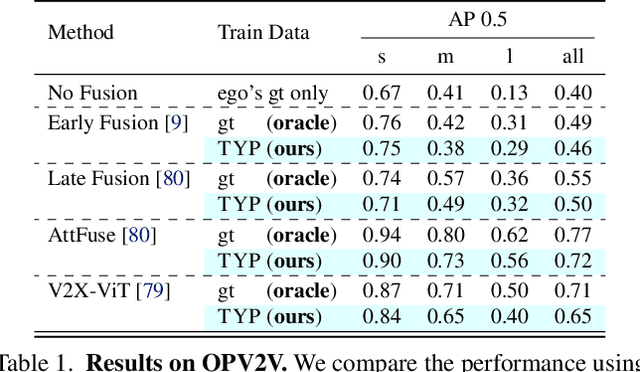
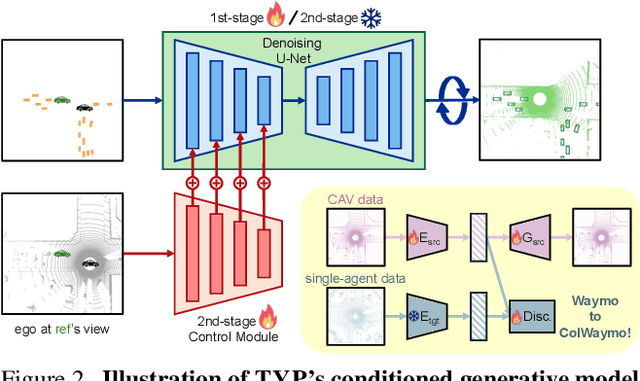
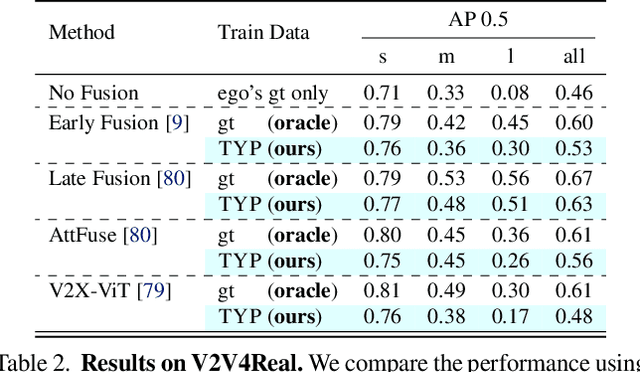
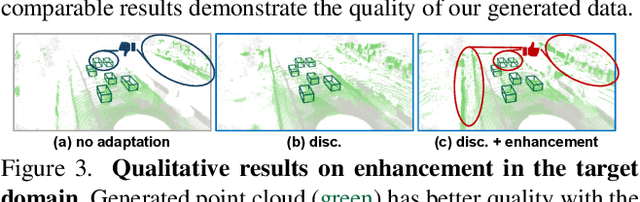
Self-driving cars relying solely on ego-centric perception face limitations in sensing, often failing to detect occluded, faraway objects. Collaborative autonomous driving (CAV) seems like a promising direction, but collecting data for development is non-trivial. It requires placing multiple sensor-equipped agents in a real-world driving scene, simultaneously! As such, existing datasets are limited in locations and agents. We introduce a novel surrogate to the rescue, which is to generate realistic perception from different viewpoints in a driving scene, conditioned on a real-world sample - the ego-car's sensory data. This surrogate has huge potential: it could potentially turn any ego-car dataset into a collaborative driving one to scale up the development of CAV. We present the very first solution, using a combination of simulated collaborative data and real ego-car data. Our method, Transfer Your Perspective (TYP), learns a conditioned diffusion model whose output samples are not only realistic but also consistent in both semantics and layouts with the given ego-car data. Empirical results demonstrate TYP's effectiveness in aiding in a CAV setting. In particular, TYP enables us to (pre-)train collaborative perception algorithms like early and late fusion with little or no real-world collaborative data, greatly facilitating downstream CAV applications.
Robust 3D Semantic Occupancy Prediction with Calibration-free Spatial Transformation
Nov 19, 2024


3D semantic occupancy prediction, which seeks to provide accurate and comprehensive representations of environment scenes, is important to autonomous driving systems. For autonomous cars equipped with multi-camera and LiDAR, it is critical to aggregate multi-sensor information into a unified 3D space for accurate and robust predictions. Recent methods are mainly built on the 2D-to-3D transformation that relies on sensor calibration to project the 2D image information into the 3D space. These methods, however, suffer from two major limitations: First, they rely on accurate sensor calibration and are sensitive to the calibration noise, which limits their application in real complex environments. Second, the spatial transformation layers are computationally expensive and limit their running on an autonomous vehicle. In this work, we attempt to exploit a Robust and Efficient 3D semantic Occupancy (REO) prediction scheme. To this end, we propose a calibration-free spatial transformation based on vanilla attention to implicitly model the spatial correspondence. In this way, we robustly project the 2D features to a predefined BEV plane without using sensor calibration as input. Then, we introduce 2D and 3D auxiliary training tasks to enhance the discrimination power of 2D backbones on spatial, semantic, and texture features. Last, we propose a query-based prediction scheme to efficiently generate large-scale fine-grained occupancy predictions. By fusing point clouds that provide complementary spatial information, our REO surpasses the existing methods by a large margin on three benchmarks, including OpenOccupancy, Occ3D-nuScenes, and SemanticKITTI Scene Completion. For instance, our REO achieves 19.8$\times$ speedup compared to Co-Occ, with 1.1 improvements in geometry IoU on OpenOccupancy. Our code will be available at https://github.com/ICEORY/REO.
Reference-Free Formula Drift with Reinforcement Learning: From Driving Data to Tire Energy-Inspired, Real-World Policies
Oct 28, 2024
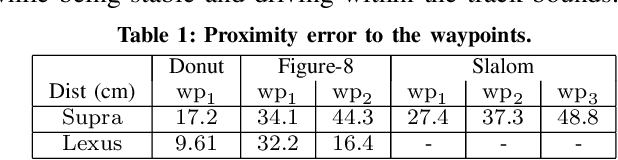
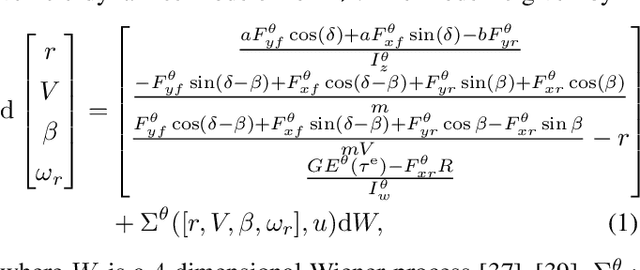
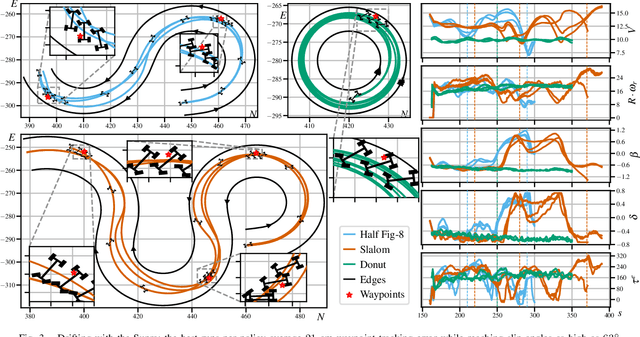
The skill to drift a car--i.e., operate in a state of controlled oversteer like professional drivers--could give future autonomous cars maximum flexibility when they need to retain control in adverse conditions or avoid collisions. We investigate real-time drifting strategies that put the car where needed while bypassing expensive trajectory optimization. To this end, we design a reinforcement learning agent that builds on the concept of tire energy absorption to autonomously drift through changing and complex waypoint configurations while safely staying within track bounds. We achieve zero-shot deployment on the car by training the agent in a simulation environment built on top of a neural stochastic differential equation vehicle model learned from pre-collected driving data. Experiments on a Toyota GR Supra and Lexus LC 500 show that the agent is capable of drifting smoothly through varying waypoint configurations with tracking error as low as 10 cm while stably pushing the vehicles to sideslip angles of up to 63{\deg}.
A Computer Vision Approach for Autonomous Cars to Drive Safe at Construction Zone
Sep 24, 2024To build a smarter and safer city, a secure, efficient, and sustainable transportation system is a key requirement. The autonomous driving system (ADS) plays an important role in the development of smart transportation and is considered one of the major challenges facing the automotive sector in recent decades. A car equipped with an autonomous driving system (ADS) comes with various cutting-edge functionalities such as adaptive cruise control, collision alerts, automated parking, and more. A primary area of research within ADAS involves identifying road obstacles in construction zones regardless of the driving environment. This paper presents an innovative and highly accurate road obstacle detection model utilizing computer vision technology that can be activated in construction zones and functions under diverse drift conditions, ultimately contributing to build a safer road transportation system. The model developed with the YOLO framework achieved a mean average precision exceeding 94\% and demonstrated an inference time of 1.6 milliseconds on the validation dataset, underscoring the robustness of the methodology applied to mitigate hazards and risks for autonomous vehicles.
Pedestrian-Aware Motion Planning for Autonomous Driving in Complex Urban Scenarios
Apr 02, 2025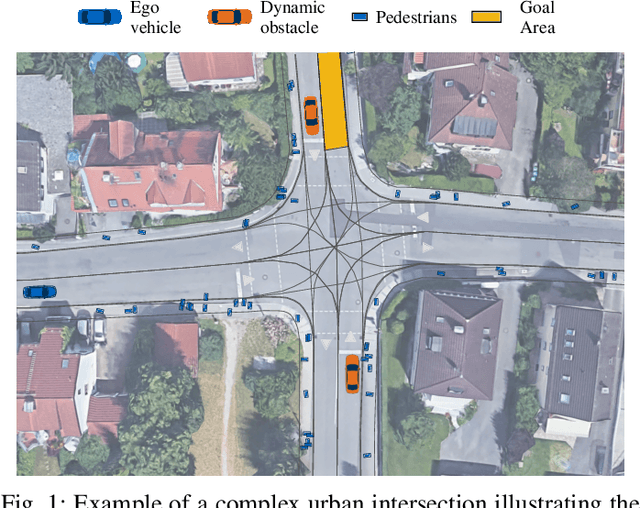

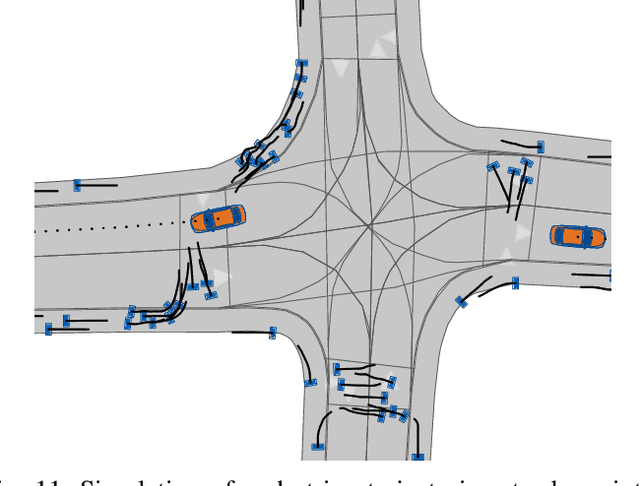
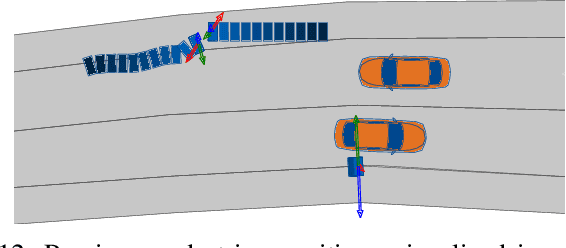
Motion planning in uncertain environments like complex urban areas is a key challenge for autonomous vehicles (AVs). The aim of our research is to investigate how AVs can navigate crowded, unpredictable scenarios with multiple pedestrians while maintaining a safe and efficient vehicle behavior. So far, most research has concentrated on static or deterministic traffic participant behavior. This paper introduces a novel algorithm for motion planning in crowded spaces by combining social force principles for simulating realistic pedestrian behavior with a risk-aware motion planner. We evaluate this new algorithm in a 2D simulation environment to rigorously assess AV-pedestrian interactions, demonstrating that our algorithm enables safe, efficient, and adaptive motion planning, particularly in highly crowded urban environments - a first in achieving this level of performance. This study has not taken into consideration real-time constraints and has been shown only in simulation so far. Further studies are needed to investigate the novel algorithm in a complete software stack for AVs on real cars to investigate the entire perception, planning and control pipeline in crowded scenarios. We release the code developed in this research as an open-source resource for further studies and development. It can be accessed at the following link: https://github.com/TUM-AVS/PedestrianAwareMotionPlanning
State Estimation Using Particle Filtering in Adaptive Machine Learning Methods: Integrating Q-Learning and NEAT Algorithms with Noisy Radar Measurements
Apr 10, 2025Reliable state estimation is essential for autonomous systems operating in complex, noisy environments. Classical filtering approaches, such as the Kalman filter, can struggle when facing nonlinear dynamics or non-Gaussian noise, and even more flexible particle filters often encounter sample degeneracy or high computational costs in large-scale domains. Meanwhile, adaptive machine learning techniques, including Q-learning and neuroevolutionary algorithms such as NEAT, rely heavily on accurate state feedback to guide learning; when sensor data are imperfect, these methods suffer from degraded convergence and suboptimal performance. In this paper, we propose an integrated framework that unifies particle filtering with Q-learning and NEAT to explicitly address the challenge of noisy measurements. By refining radar-based observations into reliable state estimates, our particle filter drives more stable policy updates (in Q-learning) or controller evolution (in NEAT), allowing both reinforcement learning and neuroevolution to converge faster, achieve higher returns or fitness, and exhibit greater resilience to sensor uncertainty. Experiments on grid-based navigation and a simulated car environment highlight consistent gains in training stability, final performance, and success rates over baselines lacking advanced filtering. Altogether, these findings underscore that accurate state estimation is not merely a preprocessing step, but a vital component capable of substantially enhancing adaptive machine learning in real-world applications plagued by sensor noise.