 Add to Chrome
 Add to Firefox
 Add to Edge
Mixtral
Papers and Code
LoPRo: Enhancing Low-Rank Quantization via Permuted Block-Wise Rotation
Jan 27, 2026
Post-training quantization (PTQ) enables effective model compression while preserving relatively high accuracy. Current weight-only PTQ methods primarily focus on the challenging sub-3-bit regime, where approaches often suffer significant accuracy degradation, typically requiring fine-tuning to achieve competitive performance. In this work, we revisit the fundamental characteristics of weight quantization and analyze the challenges in quantizing the residual matrix under low-rank approximation. We propose LoPRo, a novel fine-tuning-free PTQ algorithm that enhances residual matrix quantization by applying block-wise permutation and Walsh-Hadamard transformations to rotate columns of similar importance, while explicitly preserving the quantization accuracy of the most salient column blocks. Furthermore, we introduce a mixed-precision fast low-rank decomposition based on rank-1 sketch (R1SVD) to further minimize quantization costs. Experiments demonstrate that LoPRo outperforms existing fine-tuning-free PTQ methods at both 2-bit and 3-bit quantization, achieving accuracy comparable to fine-tuning baselines. Specifically, LoPRo achieves state-of-the-art quantization accuracy on LLaMA-2 and LLaMA-3 series models while delivering up to a 4$\times$ speedup. In the MoE model Mixtral-8x7B, LoPRo completes quantization within 2.5 hours, simultaneously reducing perplexity by 0.4$\downarrow$ and improving accuracy by 8\%$\uparrow$. Moreover, compared to other low-rank quantization methods, LoPRo achieves superior accuracy with a significantly lower rank, while maintaining high inference efficiency and minimal additional latency.

NorwAI's Large Language Models: Technical Report
Jan 08, 2026Norwegian, spoken by approximately five million people, remains underrepresented in many of the most significant breakthroughs in Natural Language Processing (NLP). To address this gap, the NorLLM team at NorwAI has developed a family of models specifically tailored to Norwegian and other Scandinavian languages, building on diverse Transformer-based architectures such as GPT, Mistral, Llama2, Mixtral and Magistral. These models are either pretrained from scratch or continually pretrained on 25B - 88.45B tokens, using a Norwegian-extended tokenizer and advanced post-training strategies to optimize performance, enhance robustness, and improve adaptability across various real-world tasks. Notably, instruction-tuned variants (e.g., Mistral-7B-Instruct and Mixtral-8x7B-Instruct) showcase strong assistant-style capabilities, underscoring their potential for practical deployment in interactive and domain-specific applications. The NorwAI large language models are openly available to Nordic organizations, companies and students for both research and experimental use. This report provides detailed documentation of the model architectures, training data, tokenizer design, fine-tuning strategies, deployment, and evaluations.
Enhancing LLM Instruction Following: An Evaluation-Driven Multi-Agentic Workflow for Prompt Instructions Optimization
Jan 06, 2026Large Language Models (LLMs) often generate substantively relevant content but fail to adhere to formal constraints, leading to outputs that are conceptually correct but procedurally flawed. Traditional prompt refinement approaches focus on rephrasing the description of the primary task an LLM has to perform, neglecting the granular constraints that function as acceptance criteria for its response. We propose a novel multi-agentic workflow that decouples optimization of the primary task description from its constraints, using quantitative scores as feedback to iteratively rewrite and improve them. Our evaluation demonstrates this method produces revised prompts that yield significantly higher compliance scores from models like Llama 3.1 8B and Mixtral-8x 7B.
Scaling Trends for Multi-Hop Contextual Reasoning in Mid-Scale Language Models
Jan 06, 2026We present a controlled study of multi-hop contextual reasoning in large language models, providing a clean demonstration of the task-method dissociation: rule-based pattern matching achieves 100% success on structured information retrieval but only 6.7% on tasks requiring cross-document reasoning, while LLM-based multi-agent systems show the inverse pattern, achieving up to 80% on reasoning tasks where rule-based methods fail. Using a synthetic evaluation framework with 120 trials across four models (LLaMA-3 8B, LLaMA-2 13B, Mixtral 8x7B, DeepSeek-V2 16B), we report three key findings: (1) Multi-agent amplification depends on base capability: statistically significant gains occur only for models with sufficient reasoning ability (p < 0.001 for LLaMA-3 8B, p = 0.014 for Mixtral), with improvements of up to 46.7 percentage points, while weaker models show no benefit, suggesting amplification rather than compensation; (2) Active parameters predict reasoning performance: Mixtral's performance aligns with its ~12B active parameters rather than 47B total, consistent with the hypothesis that inference-time compute drives reasoning capability in MoE architectures; (3) Architecture quality matters: LLaMA-3 8B outperforms LLaMA-2 13B despite fewer parameters, consistent with known training improvements. Our results provide controlled quantitative evidence for intuitions about multi-agent coordination and MoE scaling, while highlighting the dependence of multi-agent benefits on base model capability. We release our evaluation framework to support reproducible research on reasoning in mid-scale models.
Reliability Under Randomness: An Empirical Analysis of Sparse and Dense Language Models Across Decoding Temperatures
Jan 02, 2026The increasing prevalence of sparse Mixture-of-Experts (MoE) architectures in large language models raises important questions regarding their reliability under stochastic decoding. While conditional computation enables substantial gains in computational efficiency, it remains unclear whether the interaction between sparse routing and temperature-based sampling compromises output stability relative to dense architectures. This work investigates whether conditional computation in MoE models amplifies decoding-induced randomness, leading to reduced reliability as temperature increases. We evaluate three representative models: OLMoE-7B (sparse base), Mixtral-8x7B (sparse instruction-tuned), and Qwen2.5-3B (dense instruction-tuned) on deterministic arithmetic reasoning tasks with objectively verifiable answers. Experiments span four decoding configurations, ranging from greedy decoding to T=1.0. Our evaluation encompasses accuracy, format compliance, output consistency across repeated generations, and confidence metrics, totaling 9,360 model generations. Results demonstrate that the sparse instruction-tuned model exhibits stability comparable to the dense instruction-tuned model across all decoding temperatures, while the sparse base model shows systematic degradation as temperature increases. These findings indicate that instruction tuning, rather than architectural sparsity, is the primary determinant of robustness to decoding randomness on deterministic tasks. We discuss the implications of these results for deploying sparse language models in reliability-critical applications, highlighting scenarios in which sparse architectures can be safely adopted without sacrificing output stability.
RepetitionCurse: Measuring and Understanding Router Imbalance in Mixture-of-Experts LLMs under DoS Stress
Dec 30, 2025Mixture-of-Experts architectures have become the standard for scaling large language models due to their superior parameter efficiency. To accommodate the growing number of experts in practice, modern inference systems commonly adopt expert parallelism to distribute experts across devices. However, the absence of explicit load balancing constraints during inference allows adversarial inputs to trigger severe routing concentration. We demonstrate that out-of-distribution prompts can manipulate the routing strategy such that all tokens are consistently routed to the same set of top-$k$ experts, which creates computational bottlenecks on certain devices while forcing others to idle. This converts an efficiency mechanism into a denial-of-service attack vector, leading to violations of service-level agreements for time to first token. We propose RepetitionCurse, a low-cost black-box strategy to exploit this vulnerability. By identifying a universal flaw in MoE router behavior, RepetitionCurse constructs adversarial prompts using simple repetitive token patterns in a model-agnostic manner. On widely deployed MoE models like Mixtral-8x7B, our method increases end-to-end inference latency by 3.063x, degrading service availability significantly.
Yes-MT's Submission to the Low-Resource Indic Language Translation Shared Task in WMT 2024
Dec 17, 2025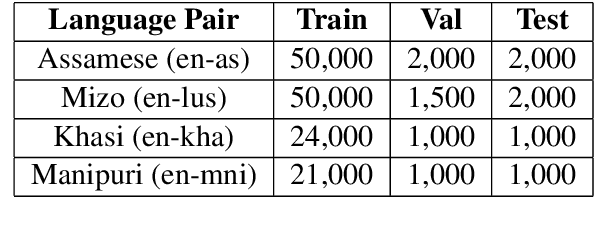
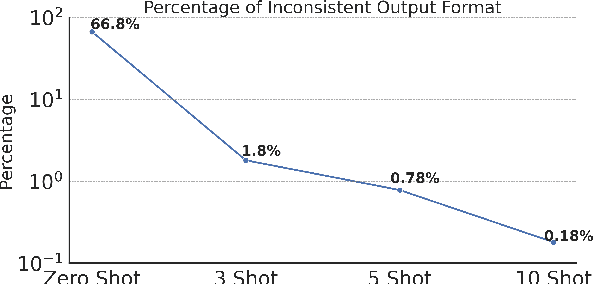
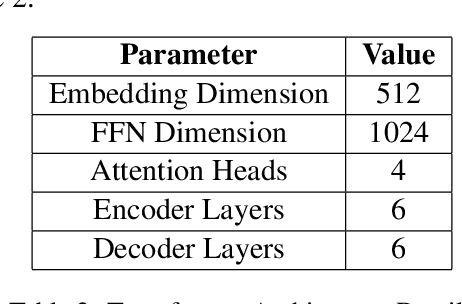
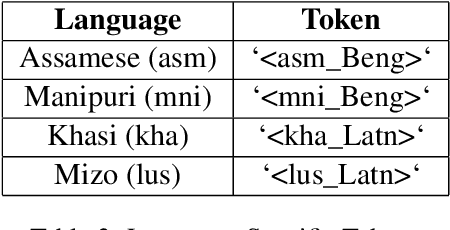
This paper presents the systems submitted by the Yes-MT team for the Low-Resource Indic Language Translation Shared Task at WMT 2024 (Pakray et al., 2024), focusing on translating between English and the Assamese, Mizo, Khasi, and Manipuri languages. The experiments explored various approaches, including fine-tuning pre-trained models like mT5 (Xue et al., 2020) and IndicBart (Dabre et al., 2021) in both multilingual and monolingual settings, LoRA (Hu et al., 2021) fine-tuning IndicTrans2 (Gala et al., 2023), zero-shot and few-shot prompting (Brown, 2020) with large language models (LLMs) like Llama 3 (Dubey et al., 2024) and Mixtral 8x7b (Jiang et al., 2024), LoRA supervised fine-tuning of Llama 3 (Mecklenburg et al., 2024), and training Transformer models (Vaswani, 2017) from scratch. The results were evaluated on the WMT23 Low-Resource Indic Language Translation Shared Task test data using SacreBLEU (Post, 2018) and CHRF (Popovic, 2015), highlighting the challenges of low-resource translation and the potential of LLMs for these tasks, particularly with fine-tuning.
* Accepted at WMT 2024
BuddyMoE: Exploiting Expert Redundancy to Accelerate Memory-Constrained Mixture-of-Experts Inference
Nov 13, 2025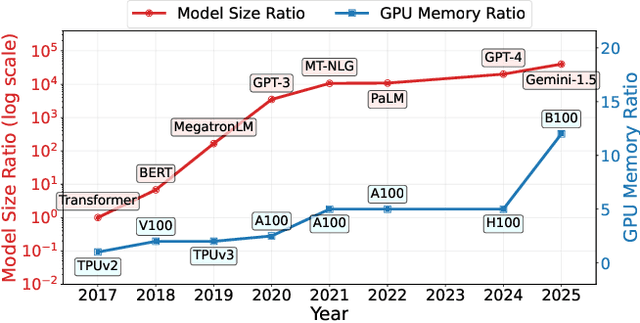
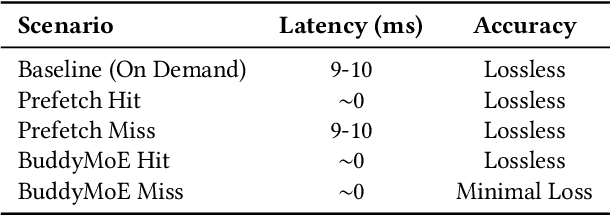
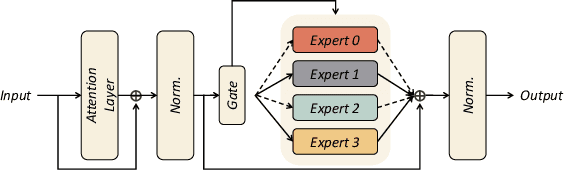
Mixture-of-Experts (MoE) architectures scale language models by activating only a subset of specialized expert networks for each input token, thereby reducing the number of floating-point operations. However, the growing size of modern MoE models causes their full parameter sets to exceed GPU memory capacity; for example, Mixtral-8x7B has 45 billion parameters and requires 87 GB of memory even though only 14 billion parameters are used per token. Existing systems alleviate this limitation by offloading inactive experts to CPU memory, but transferring experts across the PCIe interconnect incurs significant latency (about 10 ms). Prefetching heuristics aim to hide this latency by predicting which experts are needed, but prefetch failures introduce significant stalls and amplify inference latency. In the event of a prefetch failure, prior work offers two primary solutions: either fetch the expert on demand, which incurs a long stall due to the PCIe bottleneck, or drop the expert from the computation, which significantly degrades model accuracy. The critical challenge, therefore, is to maintain both high inference speed and model accuracy when prefetching fails.
LLM-based Multi-class Attack Analysis and Mitigation Framework in IoT/IIoT Networks
Oct 30, 2025The Internet of Things has expanded rapidly, transforming communication and operations across industries but also increasing the attack surface and security breaches. Artificial Intelligence plays a key role in securing IoT, enabling attack detection, attack behavior analysis, and mitigation suggestion. Despite advancements, evaluations remain purely qualitative, and the lack of a standardized, objective benchmark for quantitatively measuring AI-based attack analysis and mitigation hinders consistent assessment of model effectiveness. In this work, we propose a hybrid framework combining Machine Learning (ML) for multi-class attack detection with Large Language Models (LLMs) for attack behavior analysis and mitigation suggestion. After benchmarking several ML and Deep Learning (DL) classifiers on the Edge-IIoTset and CICIoT2023 datasets, we applied structured role-play prompt engineering with Retrieval-Augmented Generation (RAG) to guide ChatGPT-o3 and DeepSeek-R1 in producing detailed, context-aware responses. We introduce novel evaluation metrics for quantitative assessment to guide us and an ensemble of judge LLMs, namely ChatGPT-4o, DeepSeek-V3, Mixtral 8x7B Instruct, Gemini 2.5 Flash, Meta Llama 4, TII Falcon H1 34B Instruct, xAI Grok 3, and Claude 4 Sonnet, to independently evaluate the responses. Results show that Random Forest has the best detection model, and ChatGPT-o3 outperformed DeepSeek-R1 in attack analysis and mitigation.
Cross-Platform Evaluation of Reasoning Capabilities in Foundation Models
Oct 30, 2025This paper presents a comprehensive cross-platform evaluation of reasoning capabilities in contemporary foundation models, establishing an infrastructure-agnostic benchmark across three computational paradigms: HPC supercomputing (MareNostrum 5), cloud platforms (Nebius AI Studio), and university clusters (a node with eight H200 GPUs). We evaluate 15 foundation models across 79 problems spanning eight academic domains (Physics, Mathematics, Chemistry, Economics, Biology, Statistics, Calculus, and Optimization) through three experimental phases: (1) Baseline establishment: Six models (Mixtral-8x7B, Phi-3, LLaMA 3.1-8B, Gemma-2-9b, Mistral-7B, OLMo-7B) evaluated on 19 problems using MareNostrum 5, establishing methodology and reference performance; (2) Infrastructure validation: The 19-problem benchmark repeated on university cluster (seven models including Falcon-Mamba state-space architecture) and Nebius AI Studio (nine state-of-the-art models: Hermes-4 70B/405B, LLaMA 3.1-405B/3.3-70B, Qwen3 30B/235B, DeepSeek-R1, GPT-OSS 20B/120B) to confirm infrastructure-agnostic reproducibility; (3) Extended evaluation: Full 79-problem assessment on both university cluster and Nebius platforms, probing generalization at scale across architectural diversity. The findings challenge conventional scaling assumptions, establish training data quality as more critical than model size, and provide actionable guidelines for model selection across educational, production, and research contexts. The tri-infrastructure methodology and 79-problem benchmark enable longitudinal tracking of reasoning capabilities as foundation models evolve.