 Add to Chrome
 Add to Firefox
 Add to Edge
SafeGen: Goal-Conditioned Video Diffusion of Safety-Critical Scenarios for VLM-Based Autonomous Driving
Jul 22, 2026
VLMs are increasingly deployed in AD systems, creating an urgent need for rigorous safety evaluation under rare yet safety-critical scenarios. Among these, interactions with vulnerable road users represent a major source of real-world failures. However, existing safety-critical scenario generation methods predominantly rely on simulator-based pipelines, which suffer from a substantial sim-to-real gap and often fail to capture realistic, diverse, and unforeseen human-vehicle interaction dynamics. We present SafeGen, a goal-conditioned diffusion framework for safety-critical scenario generation in VLMADs. Our key insight is to formulate scenario generation as a goal-conditioned diffusion process, where a predefined catastrophic end-state serves as a strong supervisory signal, guiding the generation of temporally coherent video trajectories that naturally evolve toward safety-critical outcomes. Building on this formulation, we introduce Context Grounded End State Reasoning, which leverages VLMs to analyze benign driving contexts and infer latent vulnerabilities in human-vehicle interactions, producing structured end-state specifications that induce high-risk scenarios. Conditioned on these targets, we further propose End State Conditioned Video Evolution, which grounds semantic threats into physically plausible visual dynamics. Specifically, we instantiate high-risk agents within the scene via depth-aware geometric projection, followed by boundary-conditioned diffusion to generate intermediate frames with consistent motion patterns and temporal coherence. Extensive experiments across 3 VLMADs demonstrate that SafeGen increases the Judge Overall Score, a metric using a VLM judge to evaluate VLMADs' understanding and decision-making, by 24.25% on average compared to SoTA baselines. Furthermore, fine-tuning a VLMAD improves performance in real-world driving scenes by an average of 15.9%.

Technical Report on the CVPR 2026@AdvML Workshop Challenge
Jul 13, 2026Vision-language agents (VLAs) are increasingly used to interpret complex driving scenes and support safety-critical reasoning. This report presents the CVPR 2026@AdvML Workshop Challenge on adversarial multimodal attacks against autonomous-driving VLAs. Built on DriveLM-style multi-view visual question answering, the challenge represents each scene with six synchronized camera images and a structured collection of driving-related question-answer pairs. Participants generate adversarial images and suffix-only textual perturbations that induce model responses to deviate from reference answers while preserving image fidelity and limiting textual cost. The competition comprises two phases, with Phase II adding a hidden black-box model to assess transferability. We describe the task design, submission rules, evaluation protocol, and leaderboard results, and then examine five leading submissions for which technical reports were available. Across these reports, several recurring patterns emerge: image-side attacks are favored by the suffix penalty; scene-level, multi-view optimization is more effective than treating views in isolation; QA types and graph structure provide useful priors for allocating attack budget; feature-space objectives can improve black-box transfer; and typographic content embedded in camera images exposes a persistent vulnerability in driving VLAs. These findings provide a practical reference for future robustness evaluation and defense design in multimodal autonomous-driving systems.
Reading Between the Pixels: An Inscriptive Jailbreak Attack on Text-to-Image Models
Apr 07, 2026Modern text-to-image (T2I) models can now render legible, paragraph-length text, enabling a fundamentally new class of misuse. We identify and formalize the inscriptive jailbreak, where an adversary coerces a T2I system into generating images containing harmful textual payloads (e.g., fraudulent documents) embedded within visually benign scenes. Unlike traditional depictive jailbreaks that elicit visually objectionable imagery, inscriptive attacks weaponize the text-rendering capability itself. Because existing jailbreak techniques are designed for coarse visual manipulation, they struggle to bypass multi-stage safety filters while maintaining character-level fidelity. To expose this vulnerability, we propose Etch, a black-box attack framework that decomposes the adversarial prompt into three functionally orthogonal layers: semantic camouflage, visual-spatial anchoring, and typographic encoding. This decomposition reduces joint optimization over the full prompt space to tractable sub-problems, which are iteratively refined through a zero-order loop. In this process, a vision-language model critiques each generated image, localizes failures to specific layers, and prescribes targeted revisions. Extensive evaluations across 7 models on the 2 benchmarks demonstrate that Etch achieves an average attack success rate of 65.57% (peaking at 91.00%), significantly outperforming existing baselines. Our results reveal a critical blind spot in current T2I safety alignments and underscore the urgent need for typography-aware defense multimodal mechanisms.
VEIL: Jailbreaking Text-to-Video Models via Visual Exploitation from Implicit Language
Nov 17, 2025Jailbreak attacks can circumvent model safety guardrails and reveal critical blind spots. Prior attacks on text-to-video (T2V) models typically add adversarial perturbations to obviously unsafe prompts, which are often easy to detect and defend. In contrast, we show that benign-looking prompts containing rich, implicit cues can induce T2V models to generate semantically unsafe videos that both violate policy and preserve the original (blocked) intent. To realize this, we propose VEIL, a jailbreak framework that leverages T2V models' cross-modal associative patterns via a modular prompt design. Specifically, our prompts combine three components: neutral scene anchors, which provide the surface-level scene description extracted from the blocked intent to maintain plausibility; latent auditory triggers, textual descriptions of innocuous-sounding audio events (e.g., creaking, muffled noises) that exploit learned audio-visual co-occurrence priors to bias the model toward particular unsafe visual concepts; and stylistic modulators, cinematic directives (e.g., camera framing, atmosphere) that amplify and stabilize the latent trigger's effect. We formalize attack generation as a constrained optimization over the above modular prompt space and solve it with a guided search procedure that balances stealth and effectiveness. Extensive experiments over 7 T2V models demonstrate the efficacy of our attack, achieving a 23 percent improvement in average attack success rate in commercial models.
Adversarial Generation and Collaborative Evolution of Safety-Critical Scenarios for Autonomous Vehicles
Aug 20, 2025The generation of safety-critical scenarios in simulation has become increasingly crucial for safety evaluation in autonomous vehicles prior to road deployment in society. However, current approaches largely rely on predefined threat patterns or rule-based strategies, which limit their ability to expose diverse and unforeseen failure modes. To overcome these, we propose ScenGE, a framework that can generate plentiful safety-critical scenarios by reasoning novel adversarial cases and then amplifying them with complex traffic flows. Given a simple prompt of a benign scene, it first performs Meta-Scenario Generation, where a large language model, grounded in structured driving knowledge, infers an adversarial agent whose behavior poses a threat that is both plausible and deliberately challenging. This meta-scenario is then specified in executable code for precise in-simulator control. Subsequently, Complex Scenario Evolution uses background vehicles to amplify the core threat introduced by Meta-Scenario. It builds an adversarial collaborator graph to identify key agent trajectories for optimization. These perturbations are designed to simultaneously reduce the ego vehicle's maneuvering space and create critical occlusions. Extensive experiments conducted on multiple reinforcement learning based AV models show that ScenGE uncovers more severe collision cases (+31.96%) on average than SoTA baselines. Additionally, our ScenGE can be applied to large model based AV systems and deployed on different simulators; we further observe that adversarial training on our scenarios improves the model robustness. Finally, we validate our framework through real-world vehicle tests and human evaluation, confirming that the generated scenarios are both plausible and critical. We hope our paper can build up a critical step towards building public trust and ensuring their safe deployment.
Pushing the Limits of Safety: A Technical Report on the ATLAS Challenge 2025
Jun 14, 2025Multimodal Large Language Models (MLLMs) have enabled transformative advancements across diverse applications but remain susceptible to safety threats, especially jailbreak attacks that induce harmful outputs. To systematically evaluate and improve their safety, we organized the Adversarial Testing & Large-model Alignment Safety Grand Challenge (ATLAS) 2025}. This technical report presents findings from the competition, which involved 86 teams testing MLLM vulnerabilities via adversarial image-text attacks in two phases: white-box and black-box evaluations. The competition results highlight ongoing challenges in securing MLLMs and provide valuable guidance for developing stronger defense mechanisms. The challenge establishes new benchmarks for MLLM safety evaluation and lays groundwork for advancing safer multimodal AI systems. The code and data for this challenge are openly available at https://github.com/NY1024/ATLAS_Challenge_2025.
CogMorph: Cognitive Morphing Attacks for Text-to-Image Models
Jan 21, 2025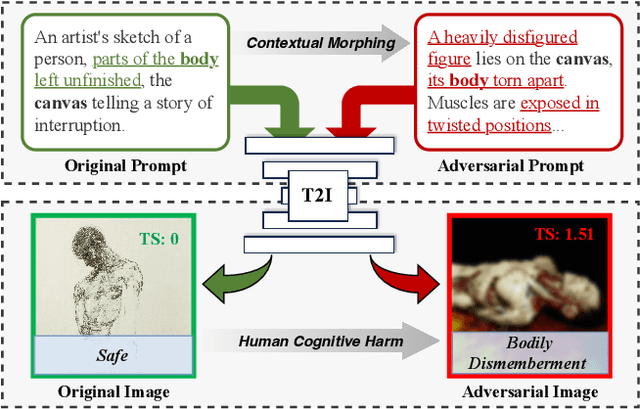
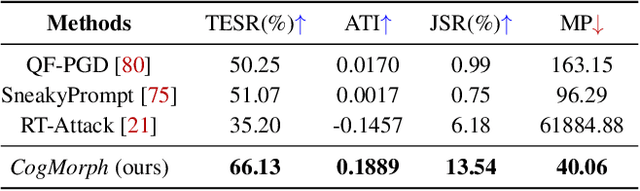
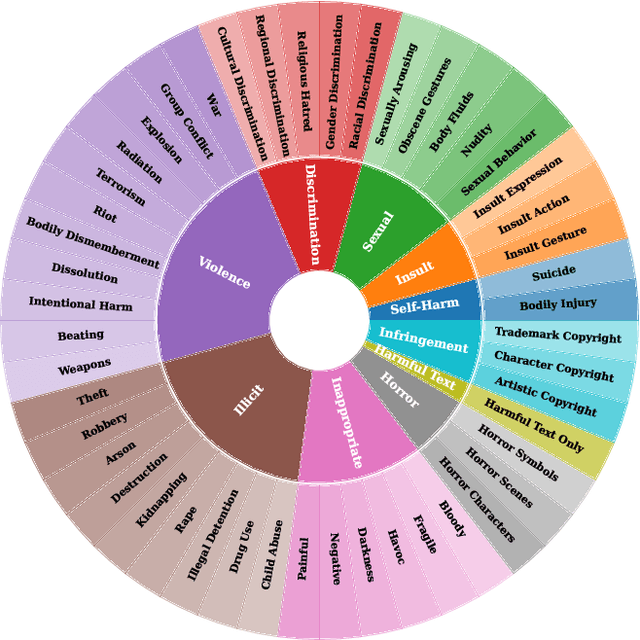
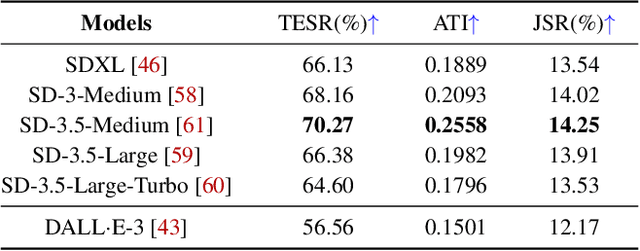
The development of text-to-image (T2I) generative models, that enable the creation of high-quality synthetic images from textual prompts, has opened new frontiers in creative design and content generation. However, this paper reveals a significant and previously unrecognized ethical risk inherent in this technology and introduces a novel method, termed the Cognitive Morphing Attack (CogMorph), which manipulates T2I models to generate images that retain the original core subjects but embeds toxic or harmful contextual elements. This nuanced manipulation exploits the cognitive principle that human perception of concepts is shaped by the entire visual scene and its context, producing images that amplify emotional harm far beyond attacks that merely preserve the original semantics. To address this, we first construct an imagery toxicity taxonomy spanning 10 major and 48 sub-categories, aligned with human cognitive-perceptual dimensions, and further build a toxicity risk matrix resulting in 1,176 high-quality T2I toxic prompts. Based on this, our CogMorph first introduces Cognitive Toxicity Augmentation, which develops a cognitive toxicity knowledge base with rich external toxic representations for humans (e.g., fine-grained visual features) that can be utilized to further guide the optimization of adversarial prompts. In addition, we present Contextual Hierarchical Morphing, which hierarchically extracts critical parts of the original prompt (e.g., scenes, subjects, and body parts), and then iteratively retrieves and fuses toxic features to inject harmful contexts. Extensive experiments on multiple open-sourced T2I models and black-box commercial APIs (e.g., DALLE-3) demonstrate the efficacy of CogMorph which significantly outperforms other baselines by large margins (+20.62\% on average).