 Add to Chrome
 Add to Firefox
 Add to Edge
Sirens' Whisper: Inaudible Near-Ultrasonic Jailbreaks of Speech-Driven LLMs
Mar 14, 2026
Speech-driven large language models (LLMs) are increasingly accessed through speech interfaces, introducing new security risks via open acoustic channels. We present Sirens' Whisper (SWhisper), the first practical framework for covert prompt-based attacks against speech-driven LLMs under realistic black-box conditions using commodity hardware. SWhisper enables robust, inaudible delivery of arbitrary target baseband audio-including long and structured prompts-on commodity devices by encoding it into near-ultrasound waveforms that demodulate faithfully after acoustic transmission and microphone nonlinearity. This is achieved through a simple yet effective approach to modeling nonlinear channel characteristics across devices and environments, combined with lightweight channel-inversion pre-compensation. Building on this high-fidelity covert channel, we design a voice-aware jailbreak generation method that ensures intelligibility, brevity, and transferability under speech-driven interfaces. Experiments across both commercial and open-source speech-driven LLMs demonstrate strong black-box effectiveness. On commercial models, SWhisper achieves up to 0.94 non-refusal (NR) and 0.925 specific-convincing (SC). A controlled user study further shows that the injected jailbreak audio is perceptually indistinguishable from background-only playback for human listeners. Although jailbreaks serve as a case study, the underlying covert acoustic channel enables a broader class of high-fidelity prompt-injection and commandexecution attacks.

OASIS: Open Agent Social Interaction Simulations with One Million Agents
Nov 26, 2024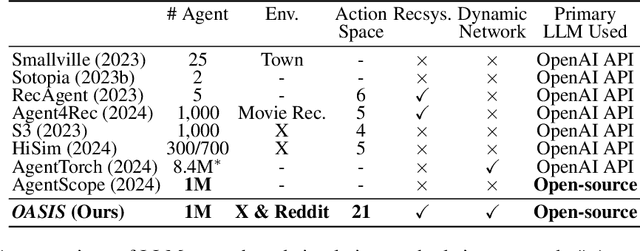

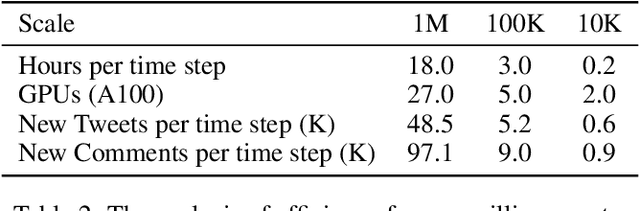
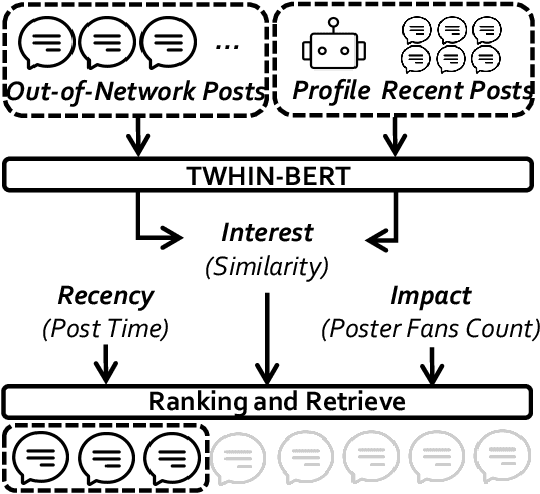
There has been a growing interest in enhancing rule-based agent-based models (ABMs) for social media platforms (i.e., X, Reddit) with more realistic large language model (LLM) agents, thereby allowing for a more nuanced study of complex systems. As a result, several LLM-based ABMs have been proposed in the past year. While they hold promise, each simulator is specifically designed to study a particular scenario, making it time-consuming and resource-intensive to explore other phenomena using the same ABM. Additionally, these models simulate only a limited number of agents, whereas real-world social media platforms involve millions of users. To this end, we propose OASIS, a generalizable and scalable social media simulator. OASIS is designed based on real-world social media platforms, incorporating dynamically updated environments (i.e., dynamic social networks and post information), diverse action spaces (i.e., following, commenting), and recommendation systems (i.e., interest-based and hot-score-based). Additionally, OASIS supports large-scale user simulations, capable of modeling up to one million users. With these features, OASIS can be easily extended to different social media platforms to study large-scale group phenomena and behaviors. We replicate various social phenomena, including information spreading, group polarization, and herd effects across X and Reddit platforms. Moreover, we provide observations of social phenomena at different agent group scales. We observe that the larger agent group scale leads to more enhanced group dynamics and more diverse and helpful agents' opinions. These findings demonstrate OASIS's potential as a powerful tool for studying complex systems in digital environments.
OASIS: Open Agents Social Interaction Simulations on One Million Agents
Nov 21, 2024There has been a growing interest in enhancing rule-based agent-based models (ABMs) for social media platforms (i.e., X, Reddit) with more realistic large language model (LLM) agents, thereby allowing for a more nuanced study of complex systems. As a result, several LLM-based ABMs have been proposed in the past year. While they hold promise, each simulator is specifically designed to study a particular scenario, making it time-consuming and resource-intensive to explore other phenomena using the same ABM. Additionally, these models simulate only a limited number of agents, whereas real-world social media platforms involve millions of users. To this end, we propose OASIS, a generalizable and scalable social media simulator. OASIS is designed based on real-world social media platforms, incorporating dynamically updated environments (i.e., dynamic social networks and post information), diverse action spaces (i.e., following, commenting), and recommendation systems (i.e., interest-based and hot-score-based). Additionally, OASIS supports large-scale user simulations, capable of modeling up to one million users. With these features, OASIS can be easily extended to different social media platforms to study large-scale group phenomena and behaviors. We replicate various social phenomena, including information spreading, group polarization, and herd effects across X and Reddit platforms. Moreover, we provide observations of social phenomena at different agent group scales. We observe that the larger agent group scale leads to more enhanced group dynamics and more diverse and helpful agents' opinions. These findings demonstrate OASIS's potential as a powerful tool for studying complex systems in digital environments.
GWQ: Gradient-Aware Weight Quantization for Large Language Models
Oct 30, 2024
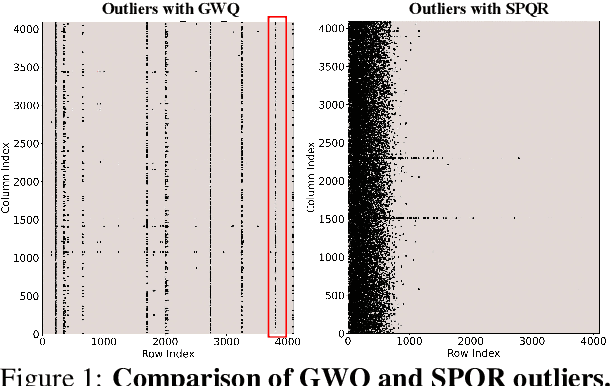
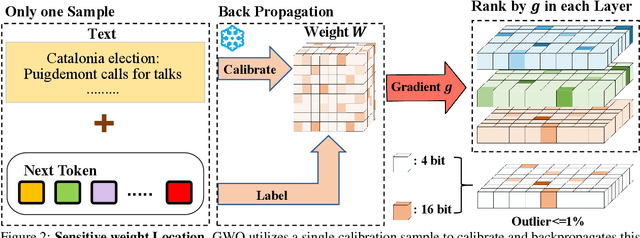
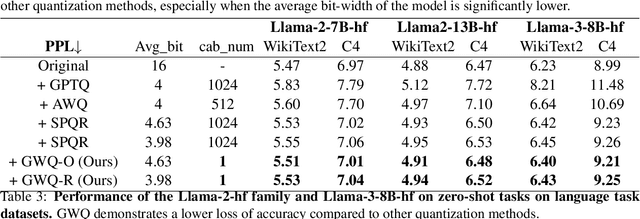
Large language models (LLMs) show impressive performance in solving complex languagetasks. However, its large number of parameterspresent significant challenges for the deployment and application of the model on edge devices. Compressing large language models to low bits can enable them to run on resource-constrained devices, often leading to performance degradation. To address this problem, we propose gradient-aware weight quantization (GWQ), the first quantization approach for low-bit weight quantization that leverages gradients to localize outliers, requiring only a minimal amount of calibration data for outlier detection. GWQ retains the weights corresponding to the top 1% outliers preferentially at FP16 precision, while the remaining non-outlier weights are stored in a low-bit format. GWQ found experimentally that utilizing the sensitive weights in the gradient localization model is more scientific compared to utilizing the sensitive weights in the Hessian matrix localization model. Compared to current quantization methods, GWQ can be applied to multiple language models and achieves lower PPL on the WikiText2 and C4 dataset. In the zero-shot task, GWQ quantized models have higher accuracy compared to other quantization methods.GWQ is also suitable for multimodal model quantization, and the quantized Qwen-VL family model is more accurate than other methods. zero-shot target detection task dataset RefCOCO outperforms the current stat-of-the-arts method SPQR. GWQ achieves 1.2x inference speedup in comparison to the original model, and effectively reduces the inference memory.
Cloud-Device Collaborative Adaptation to Continual Changing Environments in the Real-world
Dec 02, 2022
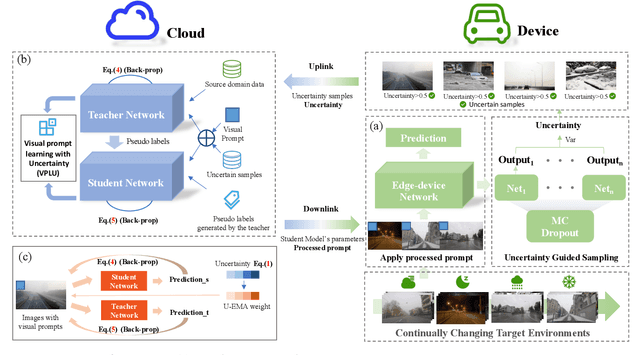
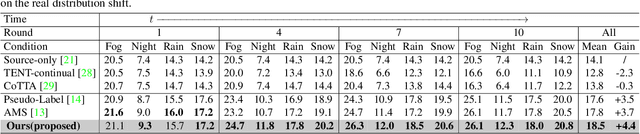
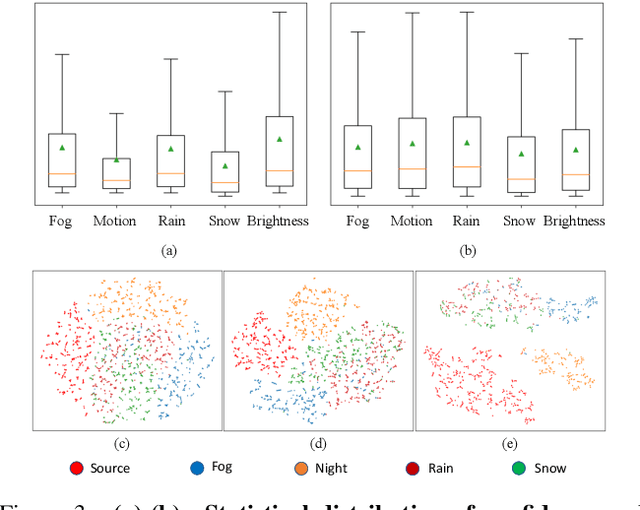
When facing changing environments in the real world, the lightweight model on client devices suffers from severe performance drops under distribution shifts. The main limitations of the existing device model lie in (1) unable to update due to the computation limit of the device, (2) the limited generalization ability of the lightweight model. Meanwhile, recent large models have shown strong generalization capability on the cloud while they can not be deployed on client devices due to poor computation constraints. To enable the device model to deal with changing environments, we propose a new learning paradigm of Cloud-Device Collaborative Continual Adaptation, which encourages collaboration between cloud and device and improves the generalization of the device model. Based on this paradigm, we further propose an Uncertainty-based Visual Prompt Adapted (U-VPA) teacher-student model to transfer the generalization capability of the large model on the cloud to the device model. Specifically, we first design the Uncertainty Guided Sampling (UGS) to screen out challenging data continuously and transmit the most out-of-distribution samples from the device to the cloud. Then we propose a Visual Prompt Learning Strategy with Uncertainty guided updating (VPLU) to specifically deal with the selected samples with more distribution shifts. We transmit the visual prompts to the device and concatenate them with the incoming data to pull the device testing distribution closer to the cloud training distribution. We conduct extensive experiments on two object detection datasets with continually changing environments. Our proposed U-VPA teacher-student framework outperforms previous state-of-the-art test time adaptation and device-cloud collaboration methods. The code and datasets will be released.