 Add to Chrome
 Add to Firefox
 Add to Edge
Context-Matched Distillation: Teacher Causality for Autoregressive Video Distillation
Aug 13, 2026
Interactive autoregressive video generation demands both low-latency rollouts and precise online control. Few-step distillation accelerates generation by reducing denoising steps, while online control imposes a causal constraint: frames and blocks should depend on history and controls available during generation. Existing video distribution matching distillation (DMD) pipelines, however, often supervise causal few-step students using bidirectional teachers that score complete clips. The score for a target can therefore depend on future frames and controls that were unavailable when the student generated it, misaligning teacher supervision with the student's causal information set. We introduce Context-Matched Distillation (CMD), a causal DMD framework that aligns teacher supervision with the information available when each target is generated. CMD replaces bidirectional full-clip scoring with a causal teacher that evaluates each target without access to future frames or controls. The same causal teacher initializes the few-step student, establishing a consistent causal formulation across teacher training, student distillation, and inference. Beyond aligning the temporal information boundary, Prefix Scoring matches supervision to the student's realized rollout context by evaluating each target under the cached student-generated prefix that produced it. Prefix Corruption further stabilizes training by perturbing unreliable prefixes produced early in training while preserving this target-context alignment. With a simple causal formulation, CMD naturally extends to frame-wise and chunk-wise generation, long video distillation, and camera-conditioned distillation. Experiments demonstrate state-of-the-art aggregate performance among autoregressive methods on both short- and long-video benchmarks, together with substantially improved adherence to time-varying camera controls.

Inter-Stop Energy Prediction and Causal Driver Quantification for Dual-Source Trolleybuses via a Time-Aware Tabular Deep Learning Architecture
Jul 13, 2026Dual-source trolleybuses alternate between overhead catenary supply and on-board battery operation, creating energy-use patterns driven by route attributes, high-frequency trajectories, and hourly weather. Existing models struggle to represent these heterogeneous inputs and rarely explain the causal drivers of consumption. This paper proposes a time-aware tabular deep learning framework for inter-stop energy management. Periodic time encoding is integrated into a parameter-efficient batch-ensemble backbone to jointly learn static and sequential features, while Bayesian optimization with tree-structured density estimation tunes hyperparameters. To move beyond prediction, a three-layer causal explanation pipeline combines feature attribution for marginal effects, a linear non-Gaussian acyclic model for causal direction discovery, and a meta-learner for net average treatment effects. Experiments on the Zurich trolleybus dataset enriched with meteorological records achieve a MAPE of 6.52% and R of 0.982, outperforming ten statistical, tree-ensemble, and deep learning baselines. Ablation results show that periodic time encoding contributes most to the accuracy gain. Causal analysis identifies regenerative braking ratio and average speed as the strongest energy-saving factors, while coasting distance is the main driver of excess consumption. The findings offer actionable thresholds for vehicle technology, driving behavior, capacity allocation, and catenary network planning.
APE: Agentic Prompt Enhancer for Image Generation and Editing
May 29, 2026Natural language has become a powerful interface for image generation and editing, yet text-guided visual systems remain highly sensitive to prompt formulation. Semantically similar requests can produce different outputs depending on wording, specificity, and how explicitly visual constraints are stated, motivating prompt enhancement as a trainable component rather than a peripheral user choice. Existing strong enhancers often rely on large, proprietary LLMs such as ChatGPT or Gemini, adding cost, latency, and deployment dependence to the visual generation pipeline. We propose Agentic Prompt Enhancer (APE), a lightweight framework that post-trains small language models (SLMs) as prompt-enhancement agents. APE supports both single-agent rewriting and role-specialized multi-agent enhancement. Its single-agent instantiation, SAPE, rewrites the prompt in one pass, while its multi-agent instantiation, MAPE, decomposes enhancement into a router--rewriter--composer process for handling compositional constraints over objects, attributes, spatial relations, and edits. With task-aware rewards and post-training protocols, APE improves visual alignment and prompt following without modifying the downstream visual model. Experiments on challenging image generation and editing benchmarks demonstrate that post-trained small prompt enhancers reliably outperform their base counterparts, narrowing the gap to closed-source prompt enhancers; in addition, MAPE proves particularly strong on complex compositional tasks within these benchmarks.
Words at Play: Benchmarking Audio Pun Understanding in Large Audio-Language Models
Mar 19, 2026Puns represent a typical linguistic phenomenon that exploits polysemy and phonetic ambiguity to generate humour, posing unique challenges for natural language understanding. Within pun research, audio plays a central role in human communication except text and images, while datasets and systematic resources for spoken puns remain scarce, leaving this crucial modality largely underexplored. In this paper, we present APUN-Bench, the first benchmark dedicated to evaluating large audio language models (LALMs) on audio pun understanding. Our benchmark contains 4,434 audio samples annotated across three stages: pun recognition, pun word location and pun meaning inference. We conduct a deep analysis of APUN-Bench by systematically evaluating 10 state-of-the-art LALMs, uncovering substantial performance gaps in recognizing, localizing, and interpreting audio puns. This analysis reveals key challenges, such as positional biases in audio pun location and error cases in meaning inference, offering actionable insights for advancing humour-aware audio intelligence.
Understanding Generalization in Diffusion Models via Probability Flow Distance
May 26, 2025Diffusion models have emerged as a powerful class of generative models, capable of producing high-quality samples that generalize beyond the training data. However, evaluating this generalization remains challenging: theoretical metrics are often impractical for high-dimensional data, while no practical metrics rigorously measure generalization. In this work, we bridge this gap by introducing probability flow distance ($\texttt{PFD}$), a theoretically grounded and computationally efficient metric to measure distributional generalization. Specifically, $\texttt{PFD}$ quantifies the distance between distributions by comparing their noise-to-data mappings induced by the probability flow ODE. Moreover, by using $\texttt{PFD}$ under a teacher-student evaluation protocol, we empirically uncover several key generalization behaviors in diffusion models, including: (1) scaling behavior from memorization to generalization, (2) early learning and double descent training dynamics, and (3) bias-variance decomposition. Beyond these insights, our work lays a foundation for future empirical and theoretical studies on generalization in diffusion models.
Making Small Language Models Efficient Reasoners: Intervention, Supervision, Reinforcement
May 14, 2025Recent research enhances language model reasoning by scaling test-time compute via longer chain-of-thought traces. This often improves accuracy but also introduces redundancy and high computational cost, especially for small language models distilled with supervised fine-tuning (SFT). In this work, we propose new algorithms to improve token-efficient reasoning with small-scale models by effectively trading off accuracy and computation. We first show that the post-SFT model fails to determine the optimal stopping point of the reasoning process, resulting in verbose and repetitive outputs. Verbosity also significantly varies across wrong vs correct responses. To address these issues, we propose two solutions: (1) Temperature scaling (TS) to control the stopping point for the thinking phase and thereby trace length, and (2) TLDR: a length-regularized reinforcement learning method based on GRPO that facilitates multi-level trace length control (e.g. short, medium, long reasoning). Experiments on four reasoning benchmarks, MATH500, AMC, AIME24 and OlympiadBench, demonstrate that TS is highly effective compared to s1's budget forcing approach and TLDR significantly improves token efficiency by about 50% with minimal to no accuracy loss over the SFT baseline. Moreover, TLDR also facilitates flexible control over the response length, offering a practical and effective solution for token-efficient reasoning in small models. Ultimately, our work reveals the importance of stopping time control, highlights shortcomings of pure SFT, and provides effective algorithmic recipes.
UBMF: Uncertainty-Aware Bayesian Meta-Learning Framework for Fault Diagnosis with Imbalanced Industrial Data
Mar 14, 2025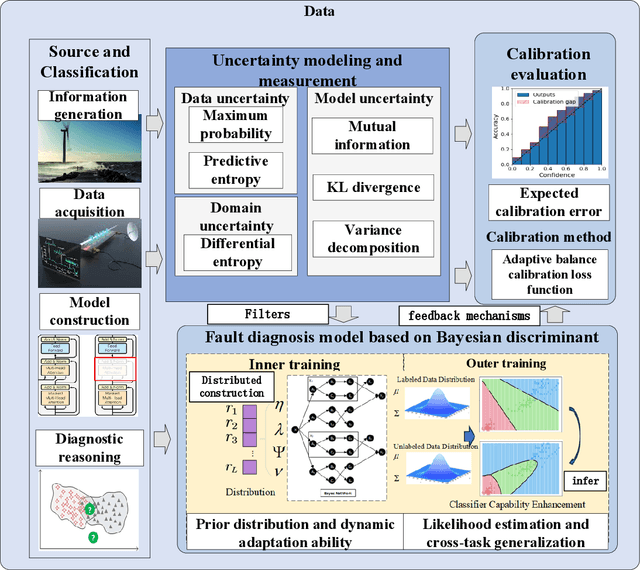
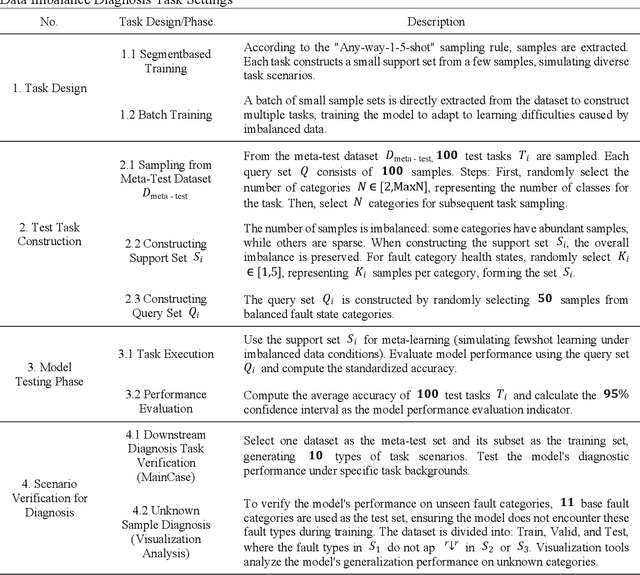
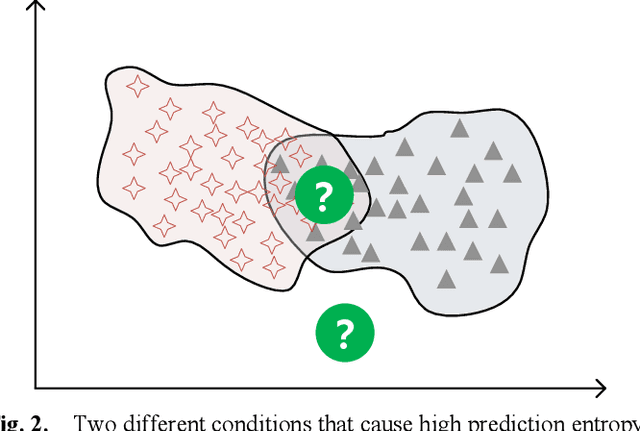
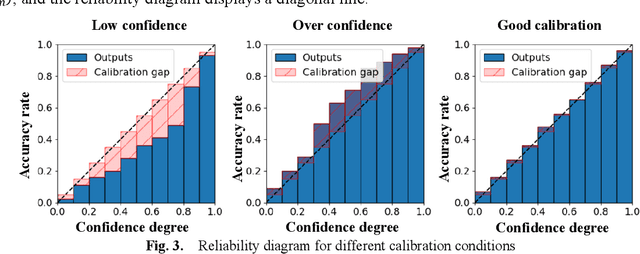
Fault diagnosis of mechanical equipment involves data collection, feature extraction, and pattern recognition but is often hindered by the imbalanced nature of industrial data, introducing significant uncertainty and reducing diagnostic reliability. To address these challenges, this study proposes the Uncertainty-Aware Bayesian Meta-Learning Framework (UBMF), which integrates four key modules: data perturbation injection for enhancing feature robustness, cross-task self-supervised feature extraction for improving transferability, uncertainty-based sample filtering for robust out-of-domain generalization, and Bayesian meta-knowledge integration for fine-grained classification. Experimental results on ten open-source datasets under various imbalanced conditions, including cross-task, small-sample, and unseen-sample scenarios, demonstrate the superiority of UBMF, achieving an average improvement of 42.22% across ten Any-way 1-5-shot diagnostic tasks. This integrated framework effectively enhances diagnostic accuracy, generalization, and adaptability, providing a reliable solution for complex industrial fault diagnosis.
Interval Estimation of Coefficients in Penalized Regression Models of Insurance Data
Oct 01, 2024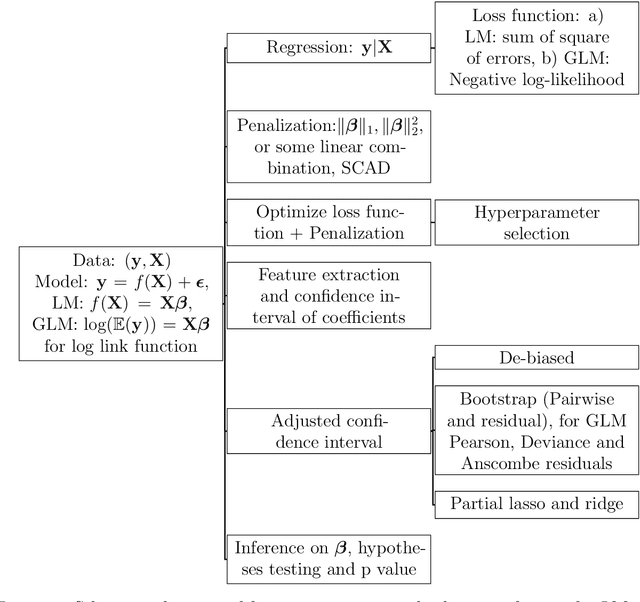
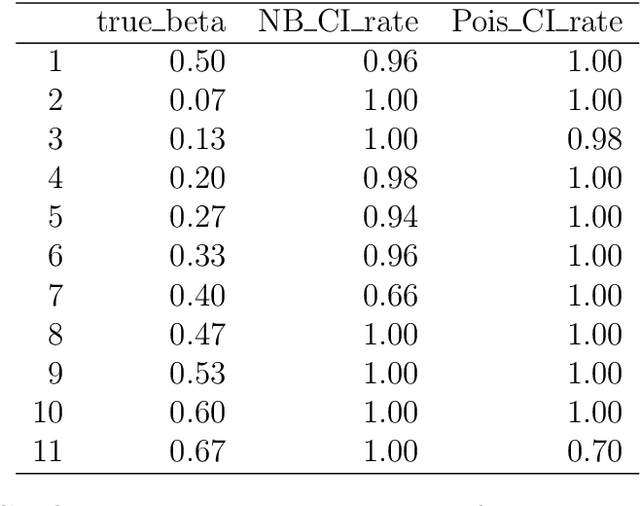
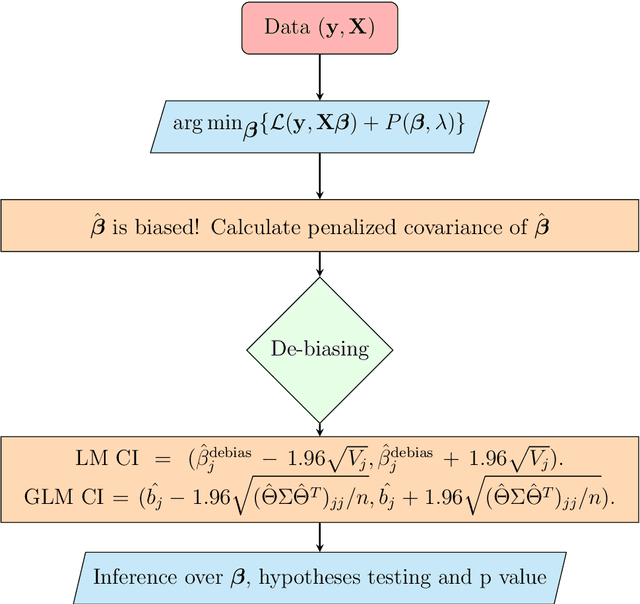
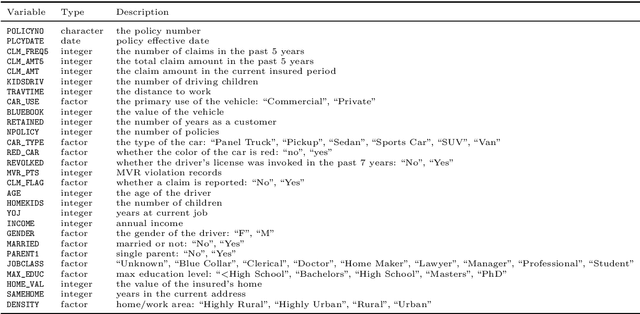
The Tweedie exponential dispersion family is a popular choice among many to model insurance losses that consist of zero-inflated semicontinuous data. In such data, it is often important to obtain credibility (inference) of the most important features that describe the endogenous variables. Post-selection inference is the standard procedure in statistics to obtain confidence intervals of model parameters after performing a feature extraction procedure. For a linear model, the lasso estimate often has non-negligible estimation bias for large coefficients corresponding to exogenous variables. To have valid inference on those coefficients, it is necessary to correct the bias of the lasso estimate. Traditional statistical methods, such as hypothesis testing or standard confidence interval construction might lead to incorrect conclusions during post-selection, as they are generally too optimistic. Here we discuss a few methodologies for constructing confidence intervals of the coefficients after feature selection in the Generalized Linear Model (GLM) family with application to insurance data.
TREACLE: Thrifty Reasoning via Context-Aware LLM and Prompt Selection
Apr 17, 2024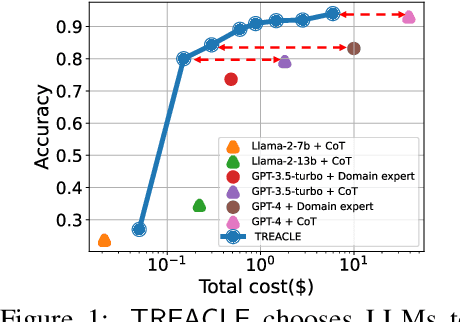

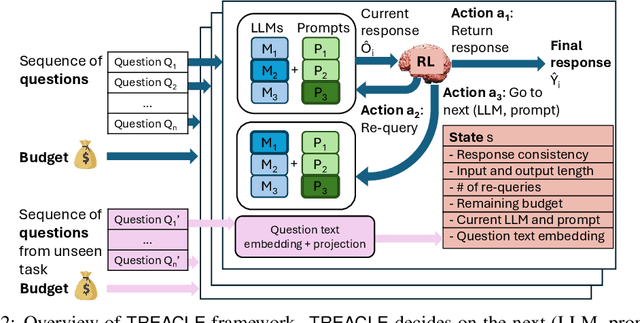
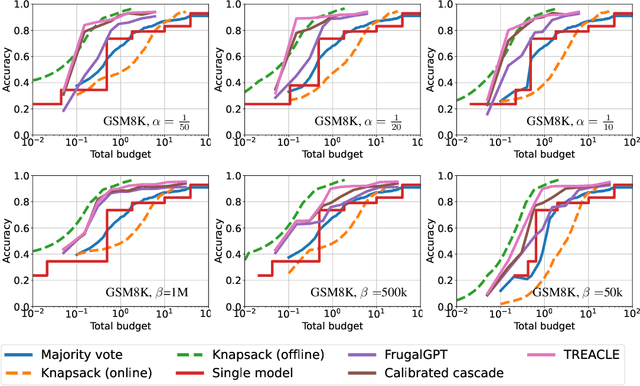
Recent successes in natural language processing have led to the proliferation of large language models (LLMs) by multiple providers. Each LLM offering has different inference accuracy, monetary cost, and latency, and their accuracy further depends on the exact wording of the question (i.e., the specific prompt). At the same time, users often have a limit on monetary budget and latency to answer all their questions, and they do not know which LLMs to choose for each question to meet their accuracy and long-term budget requirements. To navigate this rich design space, we propose TREACLE (Thrifty Reasoning via Context-Aware LLM and Prompt Selection), a reinforcement learning policy that jointly selects the model and prompting scheme while respecting the user's monetary cost and latency constraints. TREACLE uses the problem context, including question text embeddings (reflecting the type or difficulty of a query) and the response history (reflecting the consistency of previous responses) to make smart decisions. Our evaluations on standard reasoning datasets (GSM8K, CSQA, and LLC ) with various LLMs and prompts show that TREACLE enables cost savings of up to 85% compared to baselines while maintaining high accuracy. Importantly, it provides the user with the ability to gracefully trade off accuracy for cost.
COMMIT: Certifying Robustness of Multi-Sensor Fusion Systems against Semantic Attacks
Mar 04, 2024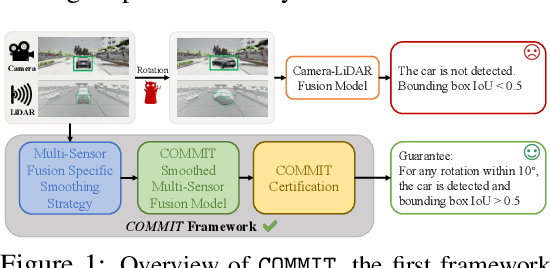
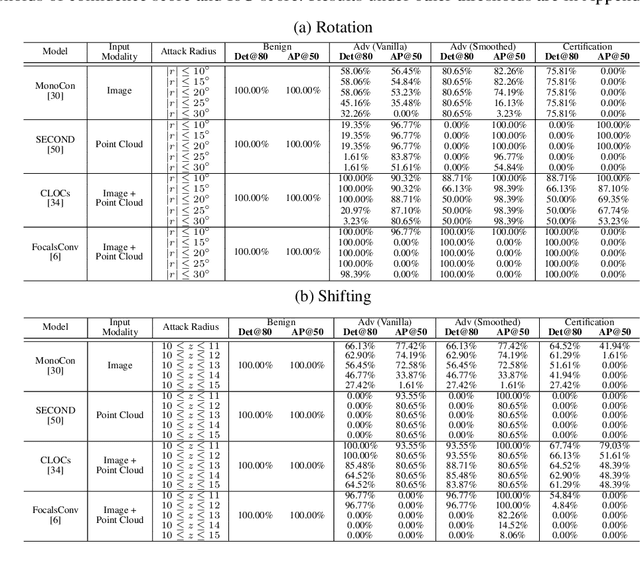
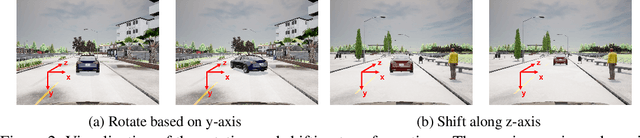
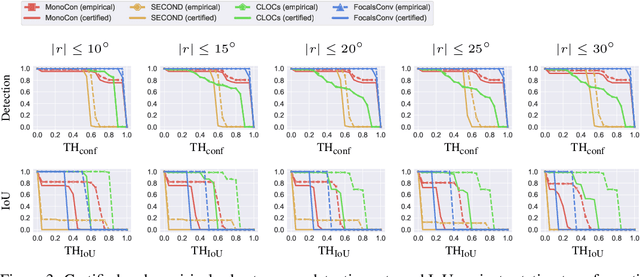
Multi-sensor fusion systems (MSFs) play a vital role as the perception module in modern autonomous vehicles (AVs). Therefore, ensuring their robustness against common and realistic adversarial semantic transformations, such as rotation and shifting in the physical world, is crucial for the safety of AVs. While empirical evidence suggests that MSFs exhibit improved robustness compared to single-modal models, they are still vulnerable to adversarial semantic transformations. Despite the proposal of empirical defenses, several works show that these defenses can be attacked again by new adaptive attacks. So far, there is no certified defense proposed for MSFs. In this work, we propose the first robustness certification framework COMMIT certify robustness of multi-sensor fusion systems against semantic attacks. In particular, we propose a practical anisotropic noise mechanism that leverages randomized smoothing with multi-modal data and performs a grid-based splitting method to characterize complex semantic transformations. We also propose efficient algorithms to compute the certification in terms of object detection accuracy and IoU for large-scale MSF models. Empirically, we evaluate the efficacy of COMMIT in different settings and provide a comprehensive benchmark of certified robustness for different MSF models using the CARLA simulation platform. We show that the certification for MSF models is at most 48.39% higher than that of single-modal models, which validates the advantages of MSF models. We believe our certification framework and benchmark will contribute an important step towards certifiably robust AVs in practice.