 Add to Chrome
 Add to Firefox
 Add to Edge
Seeing the End at Step Zero: Accelerating Diffusion MLLMs via MLP Sparsity-Aware Truncation
Jul 16, 2026
Diffusion Multimodal Large Language Models (DMLLMs) are highly effective for multimodal reasoning, yet their inference efficiency is significantly hindered by fixed-length generation constraints. Since the actual output length is unknown, output sequences are padded to a predefined maximum length, resulting in substantial redundant computation over unnecessary [EOS] tokens. In this work, we discover that DMLLMs implicitly reveal their valid semantic boundary at the very first denoising step through a distinct shift in MLP activation sparsity. Leveraging this observation, we propose Seer, a training-free framework that detects this boundary using a Signal-to-Noise Ratio (SNR)-based criterion and performs one-shot truncation of the redundant suffix for all subsequent computations. To preserve these theoretical gains during batched serving, Seer incorporates a hybrid execution strategy that maximizes throughput while seamlessly accommodating dynamic sequence lengths. Experimental results demonstrate that Seer effectively eliminates padding waste, accelerating throughput by up to $\sim$31$\times$. Across 9 benchmarks, Seer robustly maintains overall performance and even improves accuracy on complex visual tasks by mitigating noise leakage (e.g., DocVQA score increases from 63.52 to 63.66), offering a highly efficient, plug-and-play solution for DMLLM acceleration.

ResilPhase: Plug-and-Play Phase Mapping and Noise-Resilient Macro-Trajectory Extrapolation for Diffusion Acceleration
Jun 25, 2026The adoption of powerful diffusion models is hindered by their significant inference latency. Recent ``cache-then-forecast'' schemes alleviate this issue by accelerating DiTs using derivative-based polynomials, but they suffer from severe quality degradation at high acceleration ratios. Our analysis reveals its root cause: the discrete extrapolation performed on representations that are misaligned with the continuous diffusion trajectory and are numerically unstable. Thus, accelerated DiTs suffer from accumulated spatial errors, noisy derivative amplification, and high-order instability. We therefore reformulate accelerated inference as stable macro-trajectory extrapolation in ordinary differential equation (ODE) space. Instead of predicting intermediate features, we align forecasting with the model's Global Drift (GD), i.e., the end-to-end state evolution, thereby eliminating feature inconsistency and memory overhead. However, even this smooth macro-trajectory remains vulnerable to the derivative fallacy: its higher-order temporal derivatives are intrinsically noisy. Thus, we introduce a derivative-free barycentric Lagrange extrapolator to effectively bypass derivative instability and approximation error. We further propose a bounded Phase Mapping that regularizes the extrapolation domain, suppressing oscillatory error growth. These elements collectively constitute ResilPhase, a noise-resilient acceleration framework. Experiments on FLUX.1-dev and HunyuanVideo demonstrate state-of-the-art fidelity under aggressive acceleration ratios.
When Small Variations Become Big Failures: Reliability Challenges in Compute-in-Memory Neural Accelerators
Mar 03, 2026Compute-in-memory (CiM) architectures promise significant improvements in energy efficiency and throughput for deep neural network acceleration by alleviating the von Neumann bottleneck. However, their reliance on emerging non-volatile memory devices introduces device-level non-idealities-such as write variability, conductance drift, and stochastic noise-that fundamentally challenge reliability, predictability, and safety, especially in safety-critical applications. This talk examines the reliability limits of CiM-based neural accelerators and presents a series of techniques that bridge device physics, architecture, and learning algorithms to address these challenges. We first demonstrate that even small device variations can lead to disproportionately large accuracy degradation and catastrophic failures in safety-critical inference workloads, revealing a critical gap between average-case evaluations and worst-case behavior. Building on this insight, we introduce SWIM, a selective write-verify mechanism that strategically applies verification only where it is most impactful, significantly improving reliability while maintaining CiM's efficiency advantages. Finally, we explore a learning-centric solution that improves realistic worst-case performance by training neural networks with right-censored Gaussian noise, aligning training assumptions with hardware-induced variability and enabling robust deployment without excessive hardware overhead. Together, these works highlight the necessity of cross-layer co-design for CiM accelerators and provide a principled path toward dependable, efficient neural inference on emerging memory technologies-paving the way for their adoption in safety- and reliability-critical systems.
FactorHD: A Hyperdimensional Computing Model for Multi-Object Multi-Class Representation and Factorization
Jul 16, 2025Neuro-symbolic artificial intelligence (neuro-symbolic AI) excels in logical analysis and reasoning. Hyperdimensional Computing (HDC), a promising brain-inspired computational model, is integral to neuro-symbolic AI. Various HDC models have been proposed to represent class-instance and class-class relations, but when representing the more complex class-subclass relation, where multiple objects associate different levels of classes and subclasses, they face challenges for factorization, a crucial task for neuro-symbolic AI systems. In this article, we propose FactorHD, a novel HDC model capable of representing and factorizing the complex class-subclass relation efficiently. FactorHD features a symbolic encoding method that embeds an extra memorization clause, preserving more information for multiple objects. In addition, it employs an efficient factorization algorithm that selectively eliminates redundant classes by identifying the memorization clause of the target class. Such model significantly enhances computing efficiency and accuracy in representing and factorizing multiple objects with class-subclass relation, overcoming limitations of existing HDC models such as "superposition catastrophe" and "the problem of 2". Evaluations show that FactorHD achieves approximately 5667x speedup at a representation size of 10^9 compared to existing HDC models. When integrated with the ResNet-18 neural network, FactorHD achieves 92.48% factorization accuracy on the Cifar-10 dataset.
Tiny-Align: Bridging Automatic Speech Recognition and Large Language Model on the Edge
Nov 21, 2024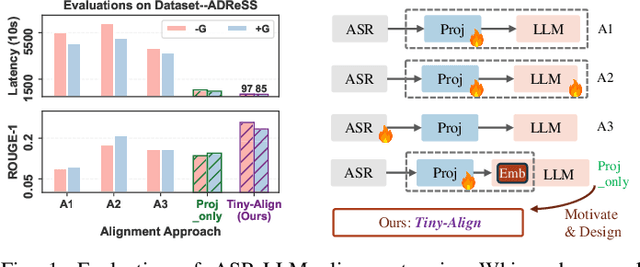


The combination of Large Language Models (LLM) and Automatic Speech Recognition (ASR), when deployed on edge devices (called edge ASR-LLM), can serve as a powerful personalized assistant to enable audio-based interaction for users. Compared to text-based interaction, edge ASR-LLM allows accessible and natural audio interactions. Unfortunately, existing ASR-LLM models are mainly trained in high-performance computing environments and produce substantial model weights, making them difficult to deploy on edge devices. More importantly, to better serve users' personalized needs, the ASR-LLM must be able to learn from each distinct user, given that audio input often contains highly personalized characteristics that necessitate personalized on-device training. Since individually fine-tuning the ASR or LLM often leads to suboptimal results due to modality-specific limitations, end-to-end training ensures seamless integration of audio features and language understanding (cross-modal alignment), ultimately enabling a more personalized and efficient adaptation on edge devices. However, due to the complex training requirements and substantial computational demands of existing approaches, cross-modal alignment between ASR audio and LLM can be challenging on edge devices. In this work, we propose a resource-efficient cross-modal alignment framework that bridges ASR and LLMs on edge devices to handle personalized audio input. Our framework enables efficient ASR-LLM alignment on resource-constrained devices like NVIDIA Jetson Orin (8GB RAM), achieving 50x training time speedup while improving the alignment quality by more than 50\%. To the best of our knowledge, this is the first work to study efficient ASR-LLM alignment on resource-constrained edge devices.
NVCiM-PT: An NVCiM-assisted Prompt Tuning Framework for Edge LLMs
Nov 12, 2024


Large Language Models (LLMs) deployed on edge devices, known as edge LLMs, need to continuously fine-tune their model parameters from user-generated data under limited resource constraints. However, most existing learning methods are not applicable for edge LLMs because of their reliance on high resources and low learning capacity. Prompt tuning (PT) has recently emerged as an effective fine-tuning method for edge LLMs by only modifying a small portion of LLM parameters, but it suffers from user domain shifts, resulting in repetitive training and losing resource efficiency. Conventional techniques to address domain shift issues often involve complex neural networks and sophisticated training, which are incompatible for PT for edge LLMs. Therefore, an open research question is how to address domain shift issues for edge LLMs with limited resources. In this paper, we propose a prompt tuning framework for edge LLMs, exploiting the benefits offered by non-volatile computing-in-memory (NVCiM) architectures. We introduce a novel NVCiM-assisted PT framework, where we narrow down the core operations to matrix-matrix multiplication, which can then be accelerated by performing in-situ computation on NVCiM. To the best of our knowledge, this is the first work employing NVCiM to improve the edge LLM PT performance.
A 10.60 $μ$W 150 GOPS Mixed-Bit-Width Sparse CNN Accelerator for Life-Threatening Ventricular Arrhythmia Detection
Oct 22, 2024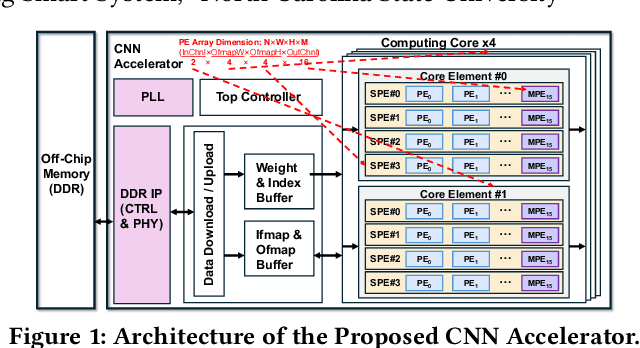
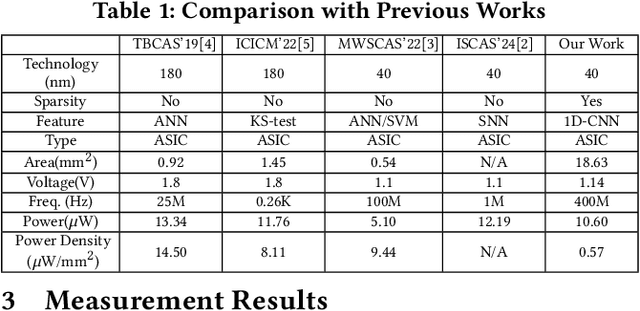
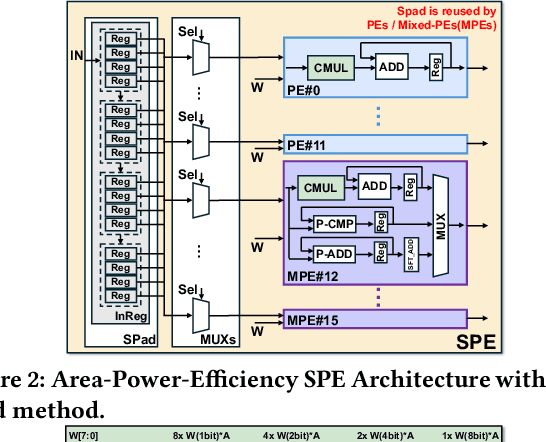

This paper proposes an ultra-low power, mixed-bit-width sparse convolutional neural network (CNN) accelerator to accelerate ventricular arrhythmia (VA) detection. The chip achieves 50% sparsity in a quantized 1D CNN using a sparse processing element (SPE) architecture. Measurement on the prototype chip TSMC 40nm CMOS low-power (LP) process for the VA classification task demonstrates that it consumes 10.60 $\mu$W of power while achieving a performance of 150 GOPS and a diagnostic accuracy of 99.95%. The computation power density is only 0.57 $\mu$W/mm$^2$, which is 14.23X smaller than state-of-the-art works, making it highly suitable for implantable and wearable medical devices.
Rethinking Medical Anomaly Detection in Brain MRI: An Image Quality Assessment Perspective
Aug 15, 2024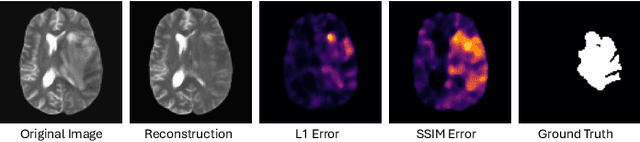


Reconstruction-based methods, particularly those leveraging autoencoders, have been widely adopted to perform anomaly detection in brain MRI. While most existing works try to improve detection accuracy by proposing new model structures or algorithms, we tackle the problem through image quality assessment, an underexplored perspective in the field. We propose a fusion quality loss function that combines Structural Similarity Index Measure loss with l1 loss, offering a more comprehensive evaluation of reconstruction quality. Additionally, we introduce a data pre-processing strategy that enhances the average intensity ratio (AIR) between normal and abnormal regions, further improving the distinction of anomalies. By fusing the aforementioned two methods, we devise the image quality assessment (IQA) approach. The proposed IQA approach achieves significant improvements (>10%) in terms of Dice coefficient (DICE) and Area Under the Precision-Recall Curve (AUPRC) on the BraTS21 (T2, FLAIR) and MSULB datasets when compared with state-of-the-art methods. These results highlight the importance of invoking the comprehensive image quality assessment in medical anomaly detection and provide a new perspective for future research in this field.
Empirical Guidelines for Deploying LLMs onto Resource-constrained Edge Devices
Jun 06, 2024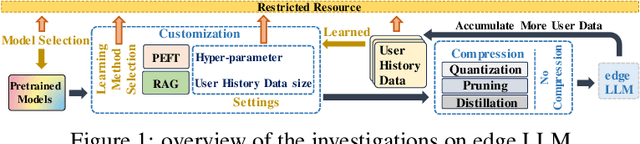
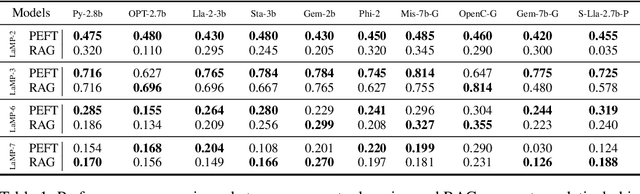
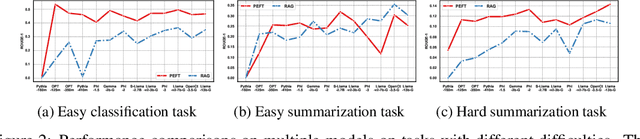

The scaling laws have become the de facto guidelines for designing large language models (LLMs), but they were studied under the assumption of unlimited computing resources for both training and inference. As LLMs are increasingly used as personalized intelligent assistants, their customization (i.e., learning through fine-tuning) and deployment onto resource-constrained edge devices will become more and more prevalent. An urging but open question is how a resource-constrained computing environment would affect the design choices for a personalized LLM. We study this problem empirically in this work. In particular, we consider the tradeoffs among a number of key design factors and their intertwined impacts on learning efficiency and accuracy. The factors include the learning methods for LLM customization, the amount of personalized data used for learning customization, the types and sizes of LLMs, the compression methods of LLMs, the amount of time afforded to learn, and the difficulty levels of the target use cases. Through extensive experimentation and benchmarking, we draw a number of surprisingly insightful guidelines for deploying LLMs onto resource-constrained devices. For example, an optimal choice between parameter learning and RAG may vary depending on the difficulty of the downstream task, the longer fine-tuning time does not necessarily help the model, and a compressed LLM may be a better choice than an uncompressed LLM to learn from limited personalized data.
Robust Implementation of Retrieval-Augmented Generation on Edge-based Computing-in-Memory Architectures
May 07, 2024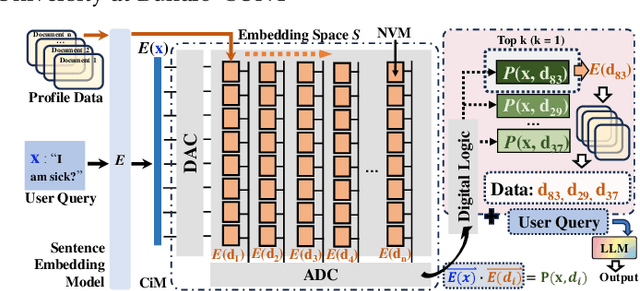
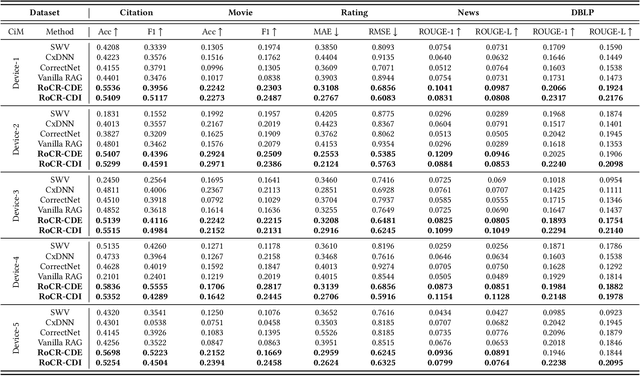
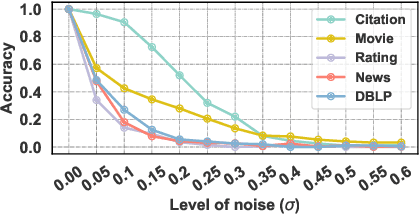

Large Language Models (LLMs) deployed on edge devices learn through fine-tuning and updating a certain portion of their parameters. Although such learning methods can be optimized to reduce resource utilization, the overall required resources remain a heavy burden on edge devices. Instead, Retrieval-Augmented Generation (RAG), a resource-efficient LLM learning method, can improve the quality of the LLM-generated content without updating model parameters. However, the RAG-based LLM may involve repetitive searches on the profile data in every user-LLM interaction. This search can lead to significant latency along with the accumulation of user data. Conventional efforts to decrease latency result in restricting the size of saved user data, thus reducing the scalability of RAG as user data continuously grows. It remains an open question: how to free RAG from the constraints of latency and scalability on edge devices? In this paper, we propose a novel framework to accelerate RAG via Computing-in-Memory (CiM) architectures. It accelerates matrix multiplications by performing in-situ computation inside the memory while avoiding the expensive data transfer between the computing unit and memory. Our framework, Robust CiM-backed RAG (RoCR), utilizing a novel contrastive learning-based training method and noise-aware training, can enable RAG to efficiently search profile data with CiM. To the best of our knowledge, this is the first work utilizing CiM to accelerate RAG.