 Add to Chrome
 Add to Firefox
 Add to Edge
CG-RAG: Research Question Answering by Citation Graph Retrieval-Augmented LLMs
Jan 25, 2025

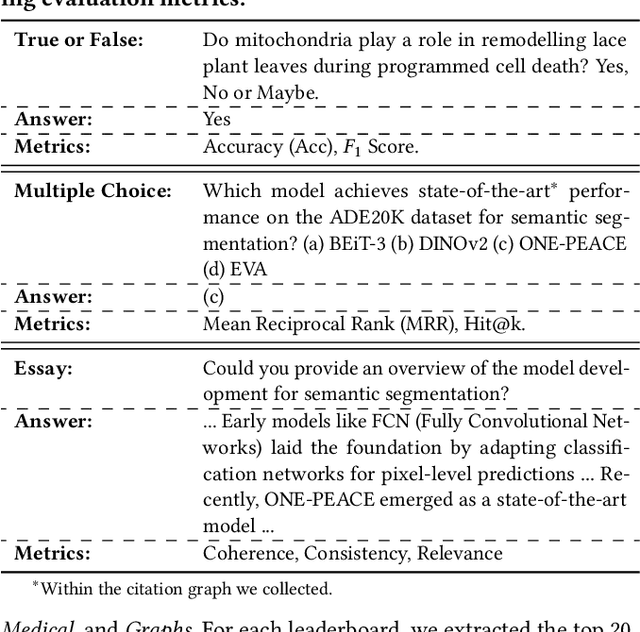


Research question answering requires accurate retrieval and contextual understanding of scientific literature. However, current Retrieval-Augmented Generation (RAG) methods often struggle to balance complex document relationships with precise information retrieval. In this paper, we introduce Contextualized Graph Retrieval-Augmented Generation (CG-RAG), a novel framework that integrates sparse and dense retrieval signals within graph structures to enhance retrieval efficiency and subsequently improve generation quality for research question answering. First, we propose a contextual graph representation for citation graphs, effectively capturing both explicit and implicit connections within and across documents. Next, we introduce Lexical-Semantic Graph Retrieval (LeSeGR), which seamlessly integrates sparse and dense retrieval signals with graph encoding. It bridges the gap between lexical precision and semantic understanding in citation graph retrieval, demonstrating generalizability to existing graph retrieval and hybrid retrieval methods. Finally, we present a context-aware generation strategy that utilizes the retrieved graph-structured information to generate precise and contextually enriched responses using large language models (LLMs). Extensive experiments on research question answering benchmarks across multiple domains demonstrate that our CG-RAG framework significantly outperforms RAG methods combined with various state-of-the-art retrieval approaches, delivering superior retrieval accuracy and generation quality.

Agent4Edu: Generating Learner Response Data by Generative Agents for Intelligent Education Systems
Jan 17, 2025


Personalized learning represents a promising educational strategy within intelligent educational systems, aiming to enhance learners' practice efficiency. However, the discrepancy between offline metrics and online performance significantly impedes their progress. To address this challenge, we introduce Agent4Edu, a novel personalized learning simulator leveraging recent advancements in human intelligence through large language models (LLMs). Agent4Edu features LLM-powered generative agents equipped with learner profile, memory, and action modules tailored to personalized learning algorithms. The learner profiles are initialized using real-world response data, capturing practice styles and cognitive factors. Inspired by human psychology theory, the memory module records practice facts and high-level summaries, integrating reflection mechanisms. The action module supports various behaviors, including exercise understanding, analysis, and response generation. Each agent can interact with personalized learning algorithms, such as computerized adaptive testing, enabling a multifaceted evaluation and enhancement of customized services. Through a comprehensive assessment, we explore the strengths and weaknesses of Agent4Edu, emphasizing the consistency and discrepancies in responses between agents and human learners. The code, data, and appendix are publicly available at https://github.com/bigdata-ustc/Agent4Edu.
DVM: Towards Controllable LLM Agents in Social Deduction Games
Jan 12, 2025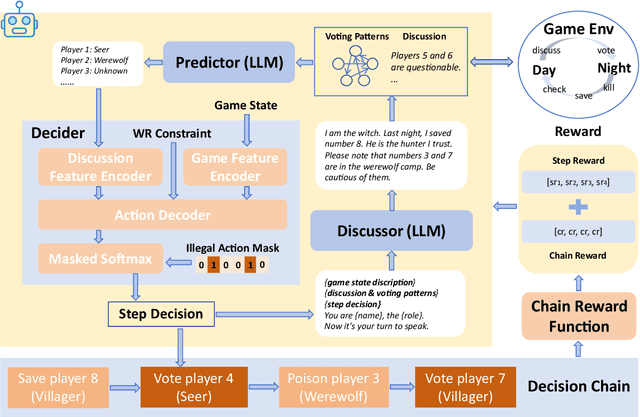
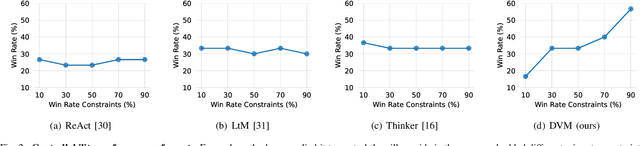
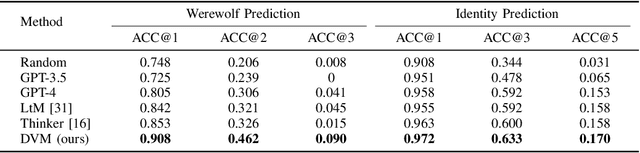
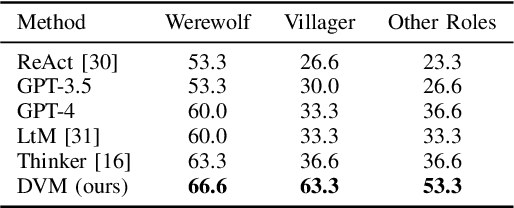
Large Language Models (LLMs) have advanced the capability of game agents in social deduction games (SDGs). These games rely heavily on conversation-driven interactions and require agents to infer, make decisions, and express based on such information. While this progress leads to more sophisticated and strategic non-player characters (NPCs) in SDGs, there exists a need to control the proficiency of these agents. This control not only ensures that NPCs can adapt to varying difficulty levels during gameplay, but also provides insights into the safety and fairness of LLM agents. In this paper, we present DVM, a novel framework for developing controllable LLM agents for SDGs, and demonstrate its implementation on one of the most popular SDGs, Werewolf. DVM comprises three main components: Predictor, Decider, and Discussor. By integrating reinforcement learning with a win rate-constrained decision chain reward mechanism, we enable agents to dynamically adjust their gameplay proficiency to achieve specified win rates. Experiments show that DVM not only outperforms existing methods in the Werewolf game, but also successfully modulates its performance levels to meet predefined win rate targets. These results pave the way for LLM agents' adaptive and balanced gameplay in SDGs, opening new avenues for research in controllable game agents.
Ultra Memory-Efficient On-FPGA Training of Transformers via Tensor-Compressed Optimization
Jan 11, 2025Transformer models have achieved state-of-the-art performance across a wide range of machine learning tasks. There is growing interest in training transformers on resource-constrained edge devices due to considerations such as privacy, domain adaptation, and on-device scientific machine learning. However, the significant computational and memory demands required for transformer training often exceed the capabilities of an edge device. Leveraging low-rank tensor compression, this paper presents the first on-FPGA accelerator for end-to-end transformer training. On the algorithm side, we present a bi-directional contraction flow for tensorized transformer training, significantly reducing the computational FLOPS and intra-layer memory costs compared to existing tensor operations. On the hardware side, we store all highly compressed model parameters and gradient information on chip, creating an on-chip-memory-only framework for each stage in training. This reduces off-chip communication and minimizes latency and energy costs. Additionally, we implement custom computing kernels for each training stage and employ intra-layer parallelism and pipe-lining to further enhance run-time and memory efficiency. Through experiments on transformer models within $36.7$ to $93.5$ MB using FP-32 data formats on the ATIS dataset, our tensorized FPGA accelerator could conduct single-batch end-to-end training on the AMD Alevo U50 FPGA, with a memory budget of less than $6$-MB BRAM and $22.5$-MB URAM. Compared to uncompressed training on the NVIDIA RTX 3090 GPU, our on-FPGA training achieves a memory reduction of $30\times$ to $51\times$. Our FPGA accelerator also achieves up to $3.6\times$ less energy cost per epoch compared with tensor Transformer training on an NVIDIA RTX 3090 GPU.
Experimental Demonstration of an Optical Neural PDE Solver via On-Chip PINN Training
Jan 01, 2025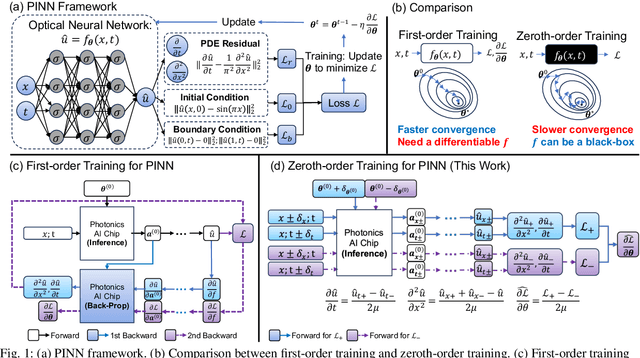

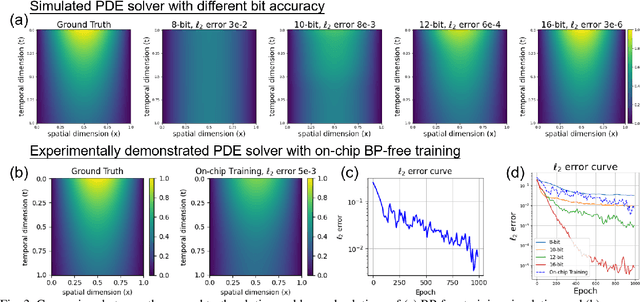
Partial differential equation (PDE) is an important math tool in science and engineering. This paper experimentally demonstrates an optical neural PDE solver by leveraging the back-propagation-free on-photonic-chip training of physics-informed neural networks.
Unveiling Uncertainty: A Deep Dive into Calibration and Performance of Multimodal Large Language Models
Dec 19, 2024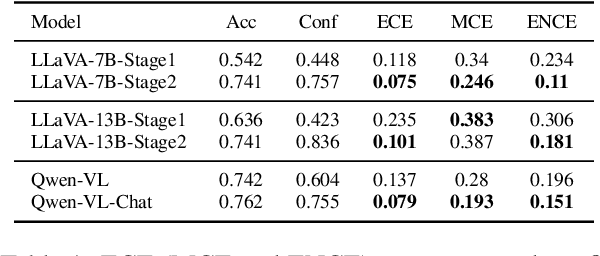
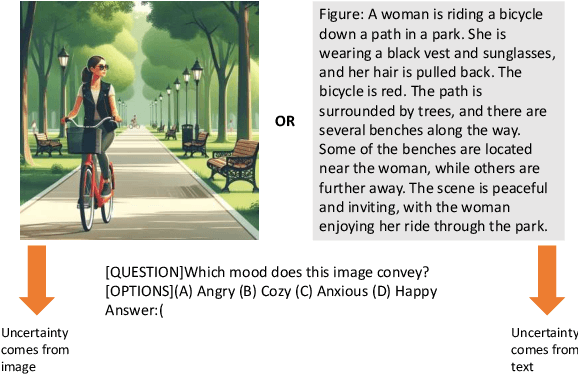
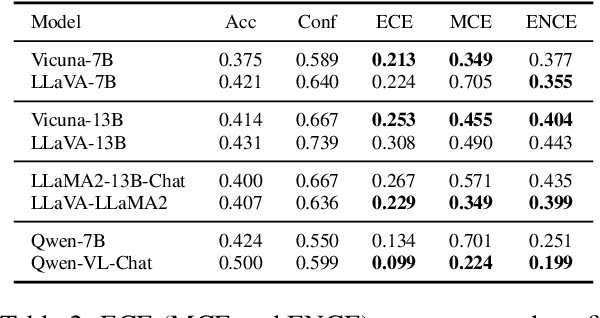
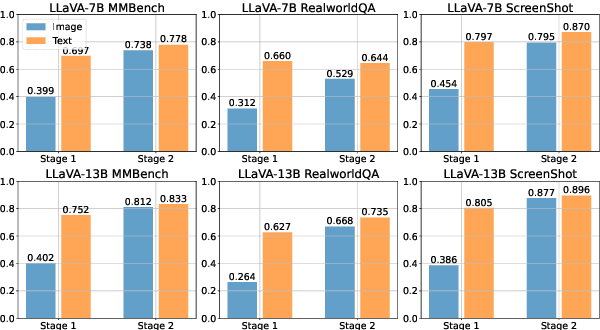
Multimodal large language models (MLLMs) combine visual and textual data for tasks such as image captioning and visual question answering. Proper uncertainty calibration is crucial, yet challenging, for reliable use in areas like healthcare and autonomous driving. This paper investigates representative MLLMs, focusing on their calibration across various scenarios, including before and after visual fine-tuning, as well as before and after multimodal training of the base LLMs. We observed miscalibration in their performance, and at the same time, no significant differences in calibration across these scenarios. We also highlight how uncertainty differs between text and images and how their integration affects overall uncertainty. To better understand MLLMs' miscalibration and their ability to self-assess uncertainty, we construct the IDK (I don't know) dataset, which is key to evaluating how they handle unknowns. Our findings reveal that MLLMs tend to give answers rather than admit uncertainty, but this self-assessment improves with proper prompt adjustments. Finally, to calibrate MLLMs and enhance model reliability, we propose techniques such as temperature scaling and iterative prompt optimization. Our results provide insights into improving MLLMs for effective and responsible deployment in multimodal applications. Code and IDK dataset: \href{https://github.com/hfutml/Calibration-MLLM}{https://github.com/hfutml/Calibration-MLLM}.
PerSphere: A Comprehensive Framework for Multi-Faceted Perspective Retrieval and Summarization
Dec 17, 2024

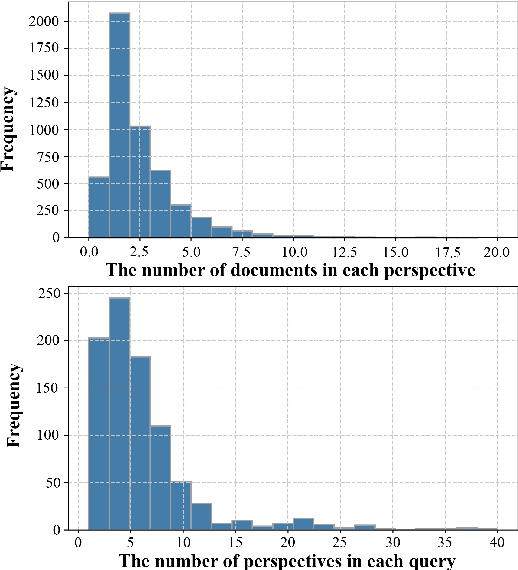
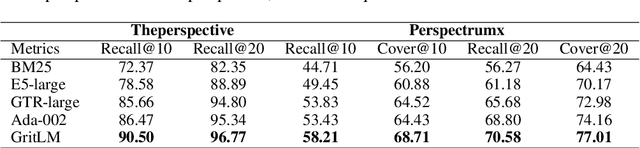
As online platforms and recommendation algorithms evolve, people are increasingly trapped in echo chambers, leading to biased understandings of various issues. To combat this issue, we have introduced PerSphere, a benchmark designed to facilitate multi-faceted perspective retrieval and summarization, thus breaking free from these information silos. For each query within PerSphere, there are two opposing claims, each supported by distinct, non-overlapping perspectives drawn from one or more documents. Our goal is to accurately summarize these documents, aligning the summaries with the respective claims and their underlying perspectives. This task is structured as a two-step end-to-end pipeline that includes comprehensive document retrieval and multi-faceted summarization. Furthermore, we propose a set of metrics to evaluate the comprehensiveness of the retrieval and summarization content. Experimental results on various counterparts for the pipeline show that recent models struggle with such a complex task. Analysis shows that the main challenge lies in long context and perspective extraction, and we propose a simple but effective multi-agent summarization system, offering a promising solution to enhance performance on PerSphere.
Transferable Adversarial Face Attack with Text Controlled Attribute
Dec 16, 2024

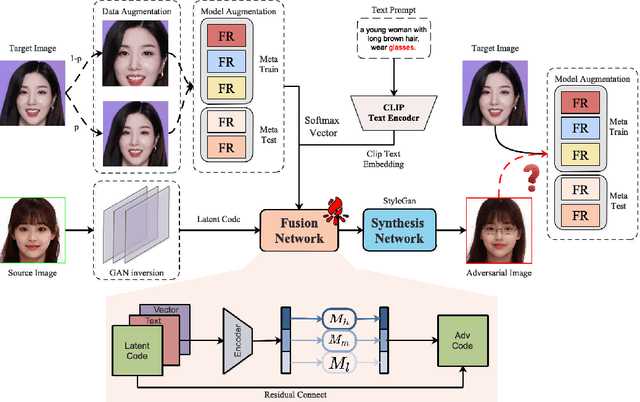
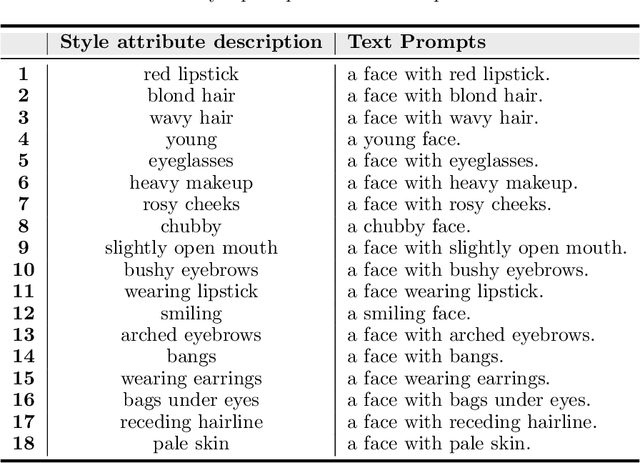
Traditional adversarial attacks typically produce adversarial examples under norm-constrained conditions, whereas unrestricted adversarial examples are free-form with semantically meaningful perturbations. Current unrestricted adversarial impersonation attacks exhibit limited control over adversarial face attributes and often suffer from low transferability. In this paper, we propose a novel Text Controlled Attribute Attack (TCA$^2$) to generate photorealistic adversarial impersonation faces guided by natural language. Specifically, the category-level personal softmax vector is employed to precisely guide the impersonation attacks. Additionally, we propose both data and model augmentation strategies to achieve transferable attacks on unknown target models. Finally, a generative model, \textit{i.e}, Style-GAN, is utilized to synthesize impersonated faces with desired attributes. Extensive experiments on two high-resolution face recognition datasets validate that our TCA$^2$ method can generate natural text-guided adversarial impersonation faces with high transferability. We also evaluate our method on real-world face recognition systems, \textit{i.e}, Face++ and Aliyun, further demonstrating the practical potential of our approach.
Dense Cross-Connected Ensemble Convolutional Neural Networks for Enhanced Model Robustness
Dec 09, 2024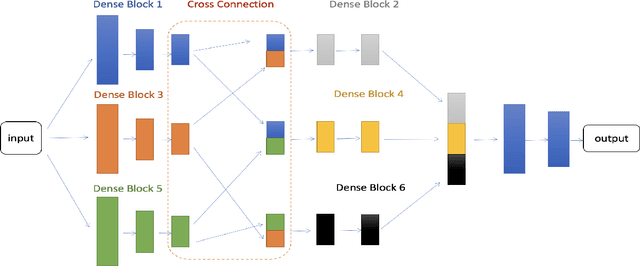
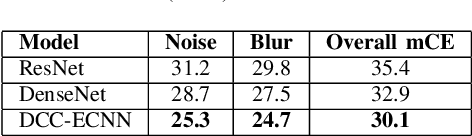
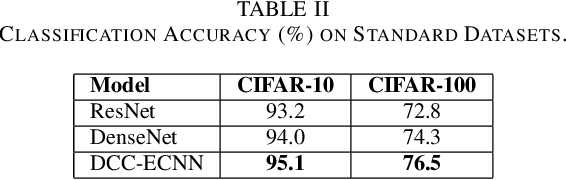
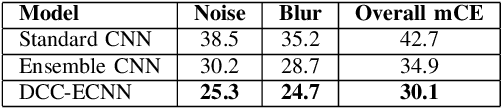
The resilience of convolutional neural networks against input variations and adversarial attacks remains a significant challenge in image recognition tasks. Motivated by the need for more robust and reliable image recognition systems, we propose the Dense Cross-Connected Ensemble Convolutional Neural Network (DCC-ECNN). This novel architecture integrates the dense connectivity principle of DenseNet with the ensemble learning strategy, incorporating intermediate cross-connections between different DenseNet paths to facilitate extensive feature sharing and integration. The DCC-ECNN architecture leverages DenseNet's efficient parameter usage and depth while benefiting from the robustness of ensemble learning, ensuring a richer and more resilient feature representation.
Beyond Idle Channels: Unlocking Idle Space with Signal Alignment in Massive MIMO Cognitive Radio Networks
Dec 09, 2024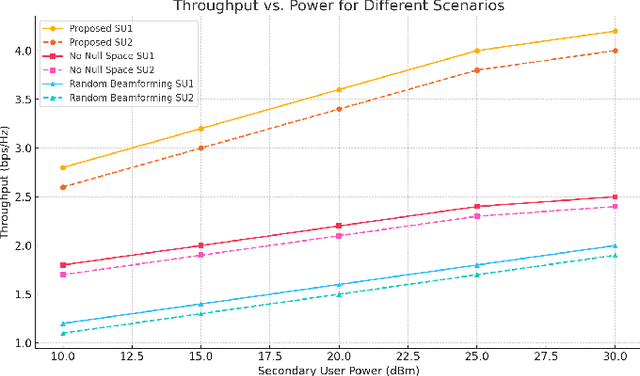
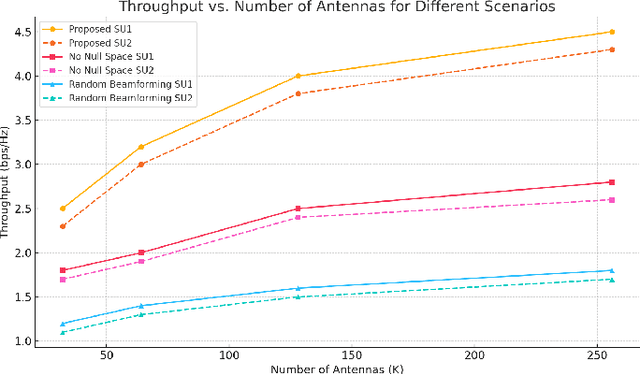
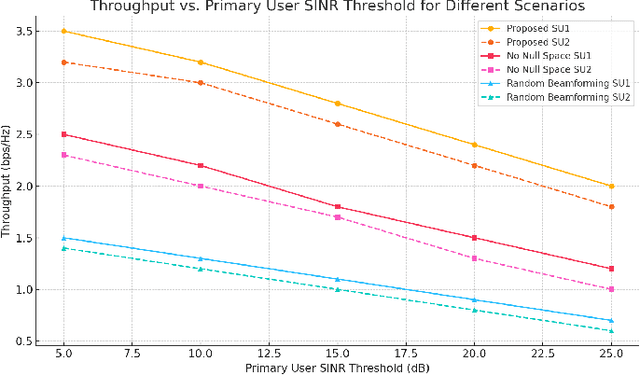
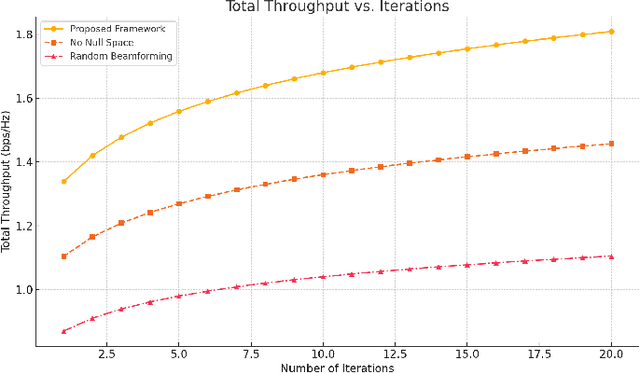
Cognitive radio networks (CRNs) have traditionally focused on utilizing idle channels to enhance spectrum efficiency. However, as wireless networks grow denser, channel-centric strategies face increasing limitations. This paper introduces a paradigm shift by exploring the underutilized potential of idle spatial dimensions, termed idle space, in co-channel transmissions. By integrating massive multiple-input multiple-output (MIMO) systems with signal alignment techniques, we enable secondary users to transmit without causing interference to primary users by aligning their signals within the null spaces of primary receivers. We propose a comprehensive framework that synergizes spatial spectrum sensing, signal alignment, and resource allocation, specifically designed for secondary users in CRNs. Theoretical analyses and extensive simulations validate the framework, demonstrating substantial gains in spectrum efficiency, throughput, and interference mitigation. The results show that the proposed approach not only ensures interference-free coexistence with primary users but also unlocks untapped spatial resources for secondary transmissions.