 Add to Chrome
 Add to Firefox
 Add to Edge
Watermarking Vision-Language Pre-trained Models for Multi-modal Embedding as a Service
Nov 10, 2023

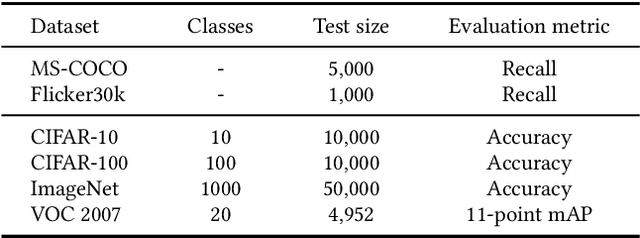
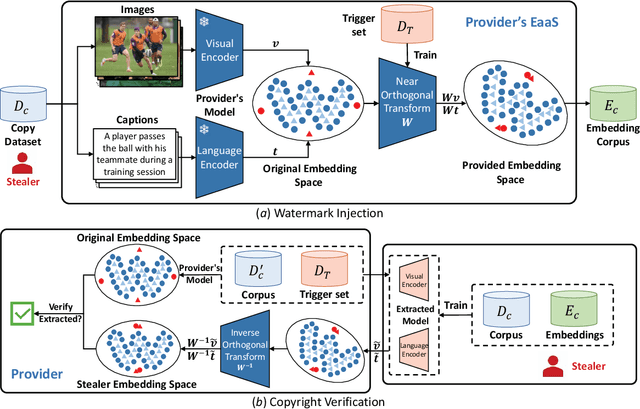
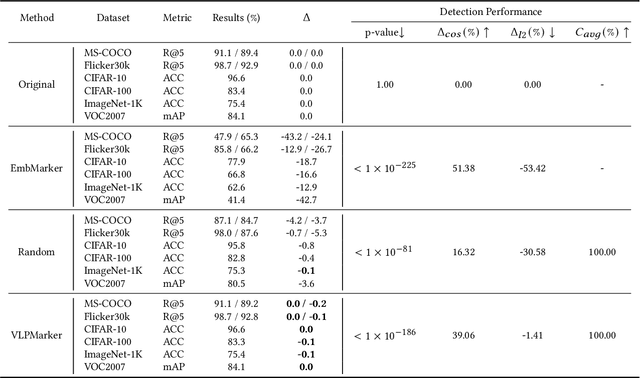
Recent advances in vision-language pre-trained models (VLPs) have significantly increased visual understanding and cross-modal analysis capabilities. Companies have emerged to provide multi-modal Embedding as a Service (EaaS) based on VLPs (e.g., CLIP-based VLPs), which cost a large amount of training data and resources for high-performance service. However, existing studies indicate that EaaS is vulnerable to model extraction attacks that induce great loss for the owners of VLPs. Protecting the intellectual property and commercial ownership of VLPs is increasingly crucial yet challenging. A major solution of watermarking model for EaaS implants a backdoor in the model by inserting verifiable trigger embeddings into texts, but it is only applicable for large language models and is unrealistic due to data and model privacy. In this paper, we propose a safe and robust backdoor-based embedding watermarking method for VLPs called VLPMarker. VLPMarker utilizes embedding orthogonal transformation to effectively inject triggers into the VLPs without interfering with the model parameters, which achieves high-quality copyright verification and minimal impact on model performance. To enhance the watermark robustness, we further propose a collaborative copyright verification strategy based on both backdoor trigger and embedding distribution, enhancing resilience against various attacks. We increase the watermark practicality via an out-of-distribution trigger selection approach, removing access to the model training data and thus making it possible for many real-world scenarios. Our extensive experiments on various datasets indicate that the proposed watermarking approach is effective and safe for verifying the copyright of VLPs for multi-modal EaaS and robust against model extraction attacks. Our code is available at https://github.com/Pter61/vlpmarker.

S2F-NER: Exploring Sequence-to-Forest Generation for Complex Entity Recognition
Oct 29, 2023Named Entity Recognition (NER) remains challenging due to the complex entities, like nested, overlapping, and discontinuous entities. Existing approaches, such as sequence-to-sequence (Seq2Seq) generation and span-based classification, have shown impressive performance on various NER subtasks, but they are difficult to scale to datasets with longer input text because of either exposure bias issue or inefficient computation. In this paper, we propose a novel Sequence-to-Forest generation paradigm, S2F-NER, which can directly extract entities in sentence via a Forest decoder that decode multiple entities in parallel rather than sequentially. Specifically, our model generate each path of each tree in forest autoregressively, where the maximum depth of each tree is three (which is the shortest feasible length for complex NER and is far smaller than the decoding length of Seq2Seq). Based on this novel paradigm, our model can elegantly mitigates the exposure bias problem and keep the simplicity of Seq2Seq. Experimental results show that our model significantly outperforms the baselines on three discontinuous NER datasets and on two nested NER datasets, especially for discontinuous entity recognition.
EMMA-X: An EM-like Multilingual Pre-training Algorithm for Cross-lingual Representation Learning
Oct 26, 2023Expressing universal semantics common to all languages is helpful in understanding the meanings of complex and culture-specific sentences. The research theme underlying this scenario focuses on learning universal representations across languages with the usage of massive parallel corpora. However, due to the sparsity and scarcity of parallel data, there is still a big challenge in learning authentic ``universals'' for any two languages. In this paper, we propose EMMA-X: an EM-like Multilingual pre-training Algorithm, to learn (X)Cross-lingual universals with the aid of excessive multilingual non-parallel data. EMMA-X unifies the cross-lingual representation learning task and an extra semantic relation prediction task within an EM framework. Both the extra semantic classifier and the cross-lingual sentence encoder approximate the semantic relation of two sentences, and supervise each other until convergence. To evaluate EMMA-X, we conduct experiments on XRETE, a newly introduced benchmark containing 12 widely studied cross-lingual tasks that fully depend on sentence-level representations. Results reveal that EMMA-X achieves state-of-the-art performance. Further geometric analysis of the built representation space with three requirements demonstrates the superiority of EMMA-X over advanced models.
Exploiting Manifold Structured Data Priors for Improved MR Fingerprinting Reconstruction
Oct 17, 2023Estimating tissue parameter maps with high accuracy and precision from highly undersampled measurements presents one of the major challenges in MR fingerprinting (MRF). Many existing works project the recovered voxel fingerprints onto the Bloch manifold to improve reconstruction performance. However, little research focuses on exploiting the latent manifold structure priors among fingerprints. To fill this gap, we propose a novel MRF reconstruction framework based on manifold structured data priors. Since it is difficult to directly estimate the fingerprint manifold structure, we model the tissue parameters as points on a low-dimensional parameter manifold. We reveal that the fingerprint manifold shares the same intrinsic topology as the parameter manifold, although being embedded in different Euclidean spaces. To exploit the non-linear and non-local redundancies in MRF data, we divide the MRF data into spatial patches, and the similarity measurement among data patches can be accurately obtained using the Euclidean distance between the corresponding patches in the parameter manifold. The measured similarity is then used to construct the graph Laplacian operator, which represents the fingerprint manifold structure. Thus, the fingerprint manifold structure is introduced in the reconstruction framework by using the low-dimensional parameter manifold. Additionally, we incorporate the locally low-rank prior in the reconstruction framework to further utilize the local correlations within each patch for improved reconstruction performance. We also adopt a GPU-accelerated NUFFT library to accelerate reconstruction in non-Cartesian sampling scenarios. Experimental results demonstrate that our method can achieve significantly improved reconstruction performance with reduced computational time over the state-of-the-art methods.
Asynchrony-Robust Collaborative Perception via Bird's Eye View Flow
Oct 09, 2023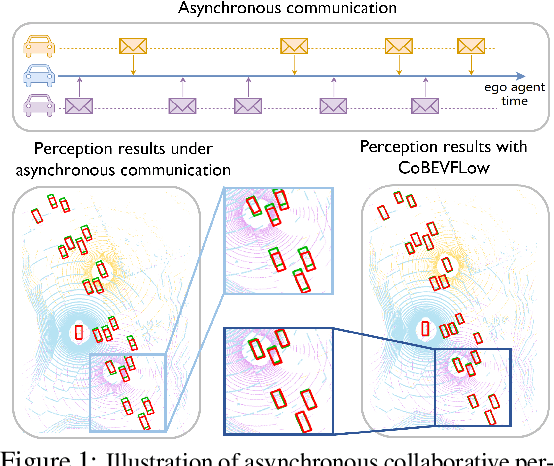
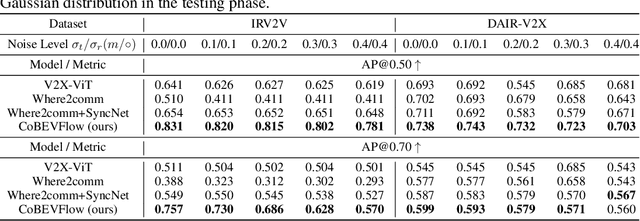
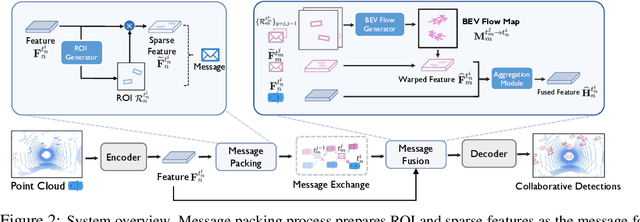
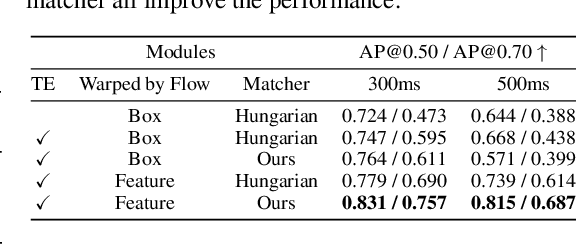
Collaborative perception can substantially boost each agent's perception ability by facilitating communication among multiple agents. However, temporal asynchrony among agents is inevitable in the real world due to communication delays, interruptions, and clock misalignments. This issue causes information mismatch during multi-agent fusion, seriously shaking the foundation of collaboration. To address this issue, we propose CoBEVFlow, an asynchrony-robust collaborative perception system based on bird's eye view (BEV) flow. The key intuition of CoBEVFlow is to compensate motions to align asynchronous collaboration messages sent by multiple agents. To model the motion in a scene, we propose BEV flow, which is a collection of the motion vector corresponding to each spatial location. Based on BEV flow, asynchronous perceptual features can be reassigned to appropriate positions, mitigating the impact of asynchrony. CoBEVFlow has two advantages: (i) CoBEVFlow can handle asynchronous collaboration messages sent at irregular, continuous time stamps without discretization; and (ii) with BEV flow, CoBEVFlow only transports the original perceptual features, instead of generating new perceptual features, avoiding additional noises. To validate CoBEVFlow's efficacy, we create IRregular V2V(IRV2V), the first synthetic collaborative perception dataset with various temporal asynchronies that simulate different real-world scenarios. Extensive experiments conducted on both IRV2V and the real-world dataset DAIR-V2X show that CoBEVFlow consistently outperforms other baselines and is robust in extremely asynchronous settings. The code is available at https://github.com/MediaBrain-SJTU/CoBEVFlow.
Align before Search: Aligning Ads Image to Text for Accurate Cross-Modal Sponsored Search
Sep 28, 2023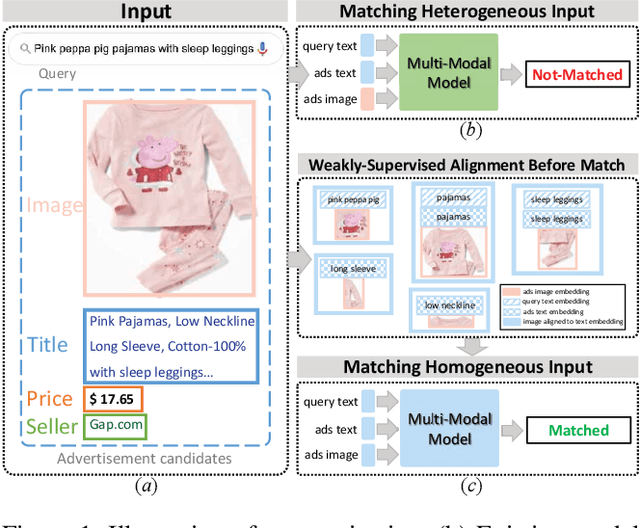
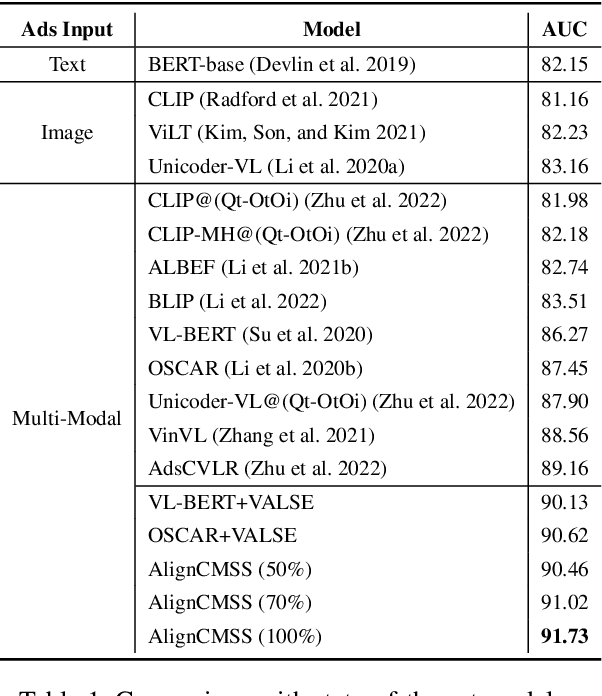
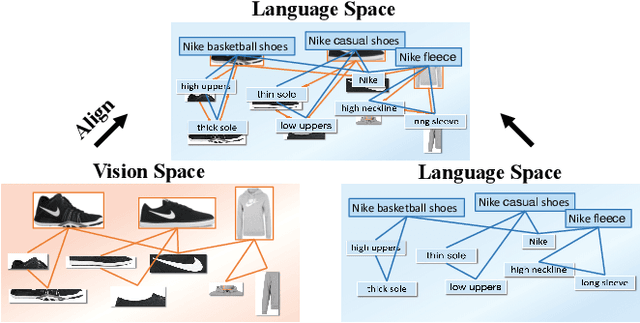
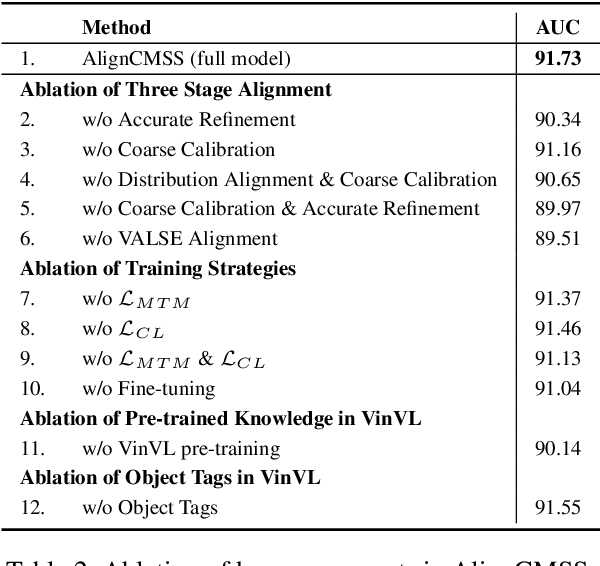
Cross-Modal sponsored search displays multi-modal advertisements (ads) when consumers look for desired products by natural language queries in search engines. Since multi-modal ads bring complementary details for query-ads matching, the ability to align ads-specific information in both images and texts is crucial for accurate and flexible sponsored search. Conventional research mainly studies from the view of modeling the implicit correlations between images and texts for query-ads matching, ignoring the alignment of detailed product information and resulting in suboptimal search performance.In this work, we propose a simple alignment network for explicitly mapping fine-grained visual parts in ads images to the corresponding text, which leverages the co-occurrence structure consistency between vision and language spaces without requiring expensive labeled training data. Moreover, we propose a novel model for cross-modal sponsored search that effectively conducts the cross-modal alignment and query-ads matching in two separate processes. In this way, the model matches the multi-modal input in the same language space, resulting in a superior performance with merely half of the training data. Our model outperforms the state-of-the-art models by 2.57% on a large commercial dataset. Besides sponsored search, our alignment method is applicable for general cross-modal search. We study a typical cross-modal retrieval task on the MSCOCO dataset, which achieves consistent performance improvement and proves the generalization ability of our method. Our code is available at https://github.com/Pter61/AlignCMSS/
Context-I2W: Mapping Images to Context-dependent Words for Accurate Zero-Shot Composed Image Retrieval
Sep 28, 2023Different from Composed Image Retrieval task that requires expensive labels for training task-specific models, Zero-Shot Composed Image Retrieval (ZS-CIR) involves diverse tasks with a broad range of visual content manipulation intent that could be related to domain, scene, object, and attribute. The key challenge for ZS-CIR tasks is to learn a more accurate image representation that has adaptive attention to the reference image for various manipulation descriptions. In this paper, we propose a novel context-dependent mapping network, named Context-I2W, for adaptively converting description-relevant Image information into a pseudo-word token composed of the description for accurate ZS-CIR. Specifically, an Intent View Selector first dynamically learns a rotation rule to map the identical image to a task-specific manipulation view. Then a Visual Target Extractor further captures local information covering the main targets in ZS-CIR tasks under the guidance of multiple learnable queries. The two complementary modules work together to map an image to a context-dependent pseudo-word token without extra supervision. Our model shows strong generalization ability on four ZS-CIR tasks, including domain conversion, object composition, object manipulation, and attribute manipulation. It obtains consistent and significant performance boosts ranging from 1.88% to 3.60% over the best methods and achieves new state-of-the-art results on ZS-CIR. Our code is available at https://github.com/Pter61/context_i2w.
Let's Roll: Synthetic Dataset Analysis for Pedestrian Detection Across Different Shutter Types
Sep 15, 2023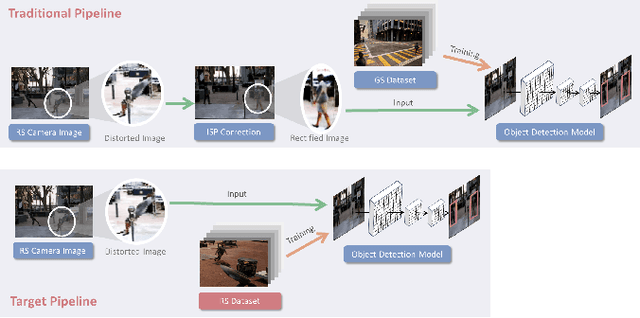
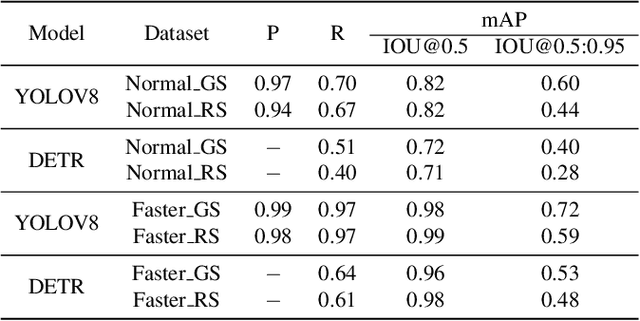
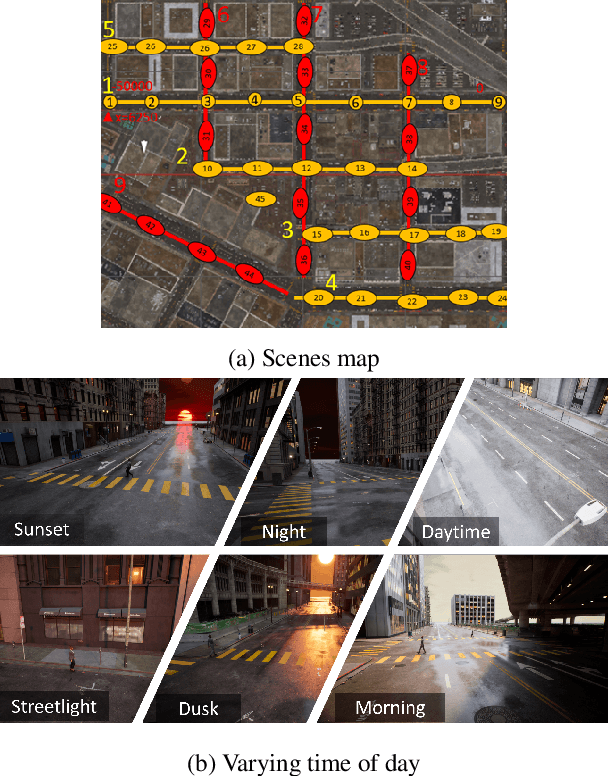
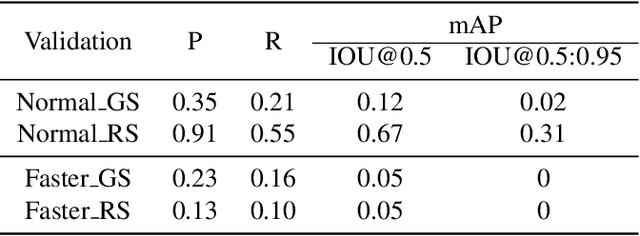
Computer vision (CV) pipelines are typically evaluated on datasets processed by image signal processing (ISP) pipelines even though, for resource-constrained applications, an important research goal is to avoid as many ISP steps as possible. In particular, most CV datasets consist of global shutter (GS) images even though most cameras today use a rolling shutter (RS). This paper studies the impact of different shutter mechanisms on machine learning (ML) object detection models on a synthetic dataset that we generate using the advanced simulation capabilities of Unreal Engine 5 (UE5). In particular, we train and evaluate mainstream detection models with our synthetically-generated paired GS and RS datasets to ascertain whether there exists a significant difference in detection accuracy between these two shutter modalities, especially when capturing low-speed objects (e.g., pedestrians). The results of this emulation framework indicate the performance between them are remarkably congruent for coarse-grained detection (mean average precision (mAP) for IOU=0.5), but have significant differences for fine-grained measures of detection accuracy (mAP for IOU=0.5:0.95). This implies that ML pipelines might not need explicit correction for RS for many object detection applications, but mitigating RS effects in ISP-less ML pipelines that target fine-grained location of the objects may need additional research.
Prompt-based Context- and Domain-aware Pretraining for Vision and Language Navigation
Sep 07, 2023With strong representation capabilities, pretrained vision-language models are widely used in vision and language navigation (VLN). However, most of them are trained on web-crawled general-purpose datasets, which incurs a considerable domain gap when used for VLN tasks. Another challenge for VLN is how the agent understands the contextual relations between actions on a trajectory and performs cross-modal alignment sequentially. In this paper, we propose a novel Prompt-bAsed coNtext- and Domain-Aware (PANDA) pretraining framework to address these problems. It performs prompting in two stages. In the domain-aware stage, we apply a low-cost prompt tuning paradigm to learn soft visual prompts from an in-domain dataset for equipping the pretrained models with object-level and scene-level cross-modal alignment in VLN tasks. Furthermore, in the context-aware stage, we design a set of hard context prompts to capture the sequence-level semantics and instill both out-of-context and contextual knowledge in the instruction into cross-modal representations. They enable further tuning of the pretrained models via contrastive learning. Experimental results on both R2R and REVERIE show the superiority of PANDA compared to previous state-of-the-art methods.
Towards Fast and Accurate Image-Text Retrieval with Self-Supervised Fine-Grained Alignment
Aug 27, 2023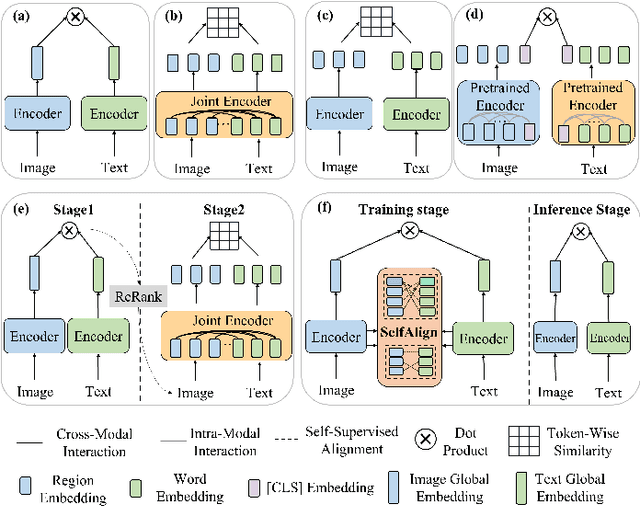
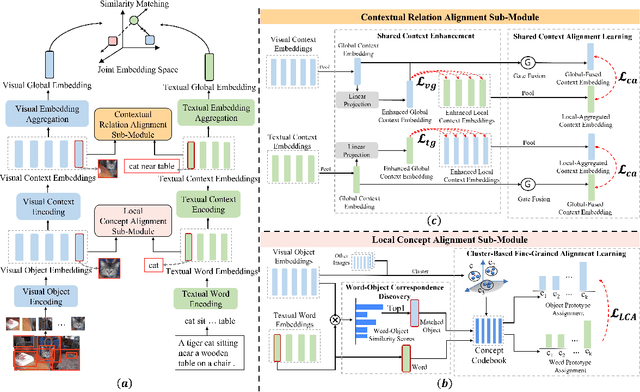
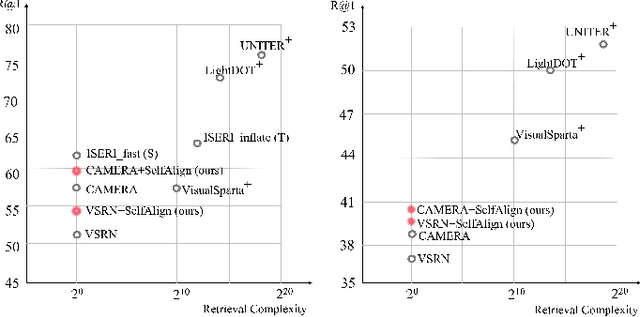
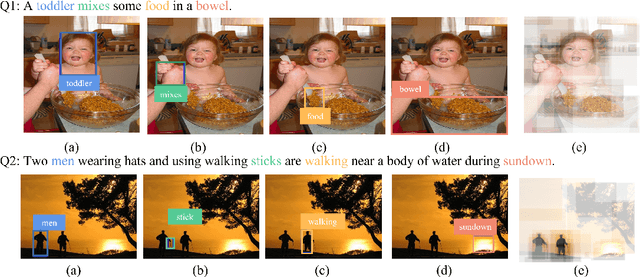
Image-text retrieval requires the system to bridge the heterogenous gap between vision and language for accurate retrieval while keeping the network lightweight-enough for efficient retrieval. Existing trade-off solutions mainly study from the view of incorporating cross-modal interactions with the independent-embedding framework or leveraging stronger pretrained encoders, which still demand time-consuming similarity measurement or heavyweight model structure in the retrieval stage. In this work, we propose an image-text alignment module SelfAlign on top of the independent-embedding framework, which improves the retrieval accuracy while maintains the retrieval efficiency without extra supervision. SelfAlign contains two collaborative sub-modules that force image-text alignment at both concept level and context level by self-supervised contrastive learning. It does not require cross-modal embedding interactions during training while maintaining independent image and text encoders during retrieval. With comparable time cost, SelfAlign consistently boosts the accuracy of state-of-the-art non-pretraining independent-embedding models respectively by 9.1%, 4.2% and 6.6% in terms of R@sum score on Flickr30K, MSCOCO 1K and MS-COCO 5K datasets. The retrieval accuracy also outperforms most existing interactive-embedding models with orders of magnitude decrease in retrieval time. The source code is available at: https://github.com/Zjamie813/SelfAlign.
* Accepted in IEEE Transactions on Multimedia (TMM)