 Add to Chrome
 Add to Firefox
 Add to Edge
Synergies Between Disentanglement and Sparsity: a Multi-Task Learning Perspective
Nov 26, 2022
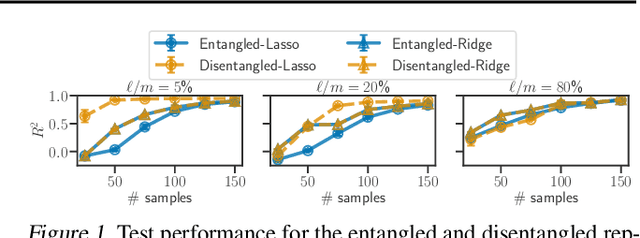
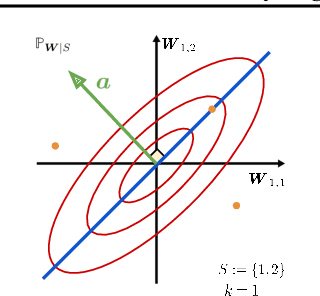
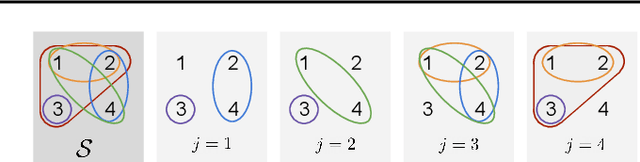
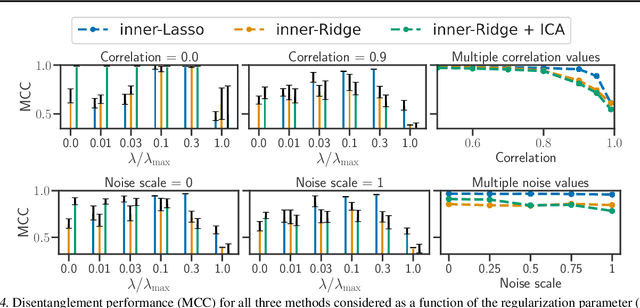
Although disentangled representations are often said to be beneficial for downstream tasks, current empirical and theoretical understanding is limited. In this work, we provide evidence that disentangled representations coupled with sparse base-predictors improve generalization. In the context of multi-task learning, we prove a new identifiability result that provides conditions under which maximally sparse base-predictors yield disentangled representations. Motivated by this theoretical result, we propose a practical approach to learn disentangled representations based on a sparsity-promoting bi-level optimization problem. Finally, we explore a meta-learning version of this algorithm based on group Lasso multiclass SVM base-predictors, for which we derive a tractable dual formulation. It obtains competitive results on standard few-shot classification benchmarks, while each task is using only a fraction of the learned representations.

PhAST: Physics-Aware, Scalable, and Task-specific GNNs for Accelerated Catalyst Design
Nov 22, 2022Mitigating the climate crisis requires a rapid transition towards lower carbon energy. Catalyst materials play a crucial role in the electrochemical reactions involved in a great number of industrial processes key to this transition, such as renewable energy storage and electrofuel synthesis. To reduce the amount of energy spent on such processes, we must quickly discover more efficient catalysts to drive the electrochemical reactions. Machine learning (ML) holds the potential to efficiently model the properties of materials from large amounts of data, and thus to accelerate electrocatalyst design. The Open Catalyst Project OC20 data set was constructed to that end. However, most existing ML models trained on OC20 are still neither scalable nor accurate enough for practical applications. Here, we propose several task-specific innovations, applicable to most architectures, which increase both computational efficiency and accuracy. In particular, we propose improvements in (1) the graph creation step, (2) atom representations and (3) the energy prediction head. We describe these contributions and evaluate them on several architectures, showing up to 5$\times$ reduction in inference time without sacrificing accuracy.
Latent Bottlenecked Attentive Neural Processes
Nov 15, 2022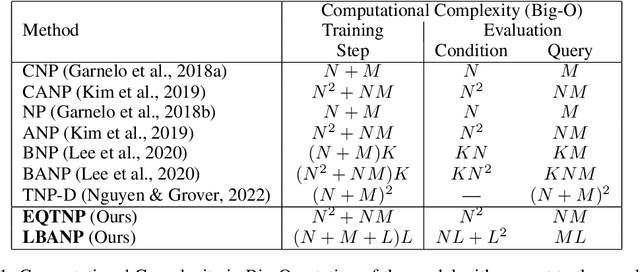
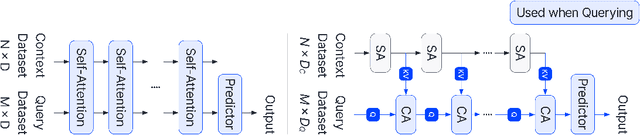
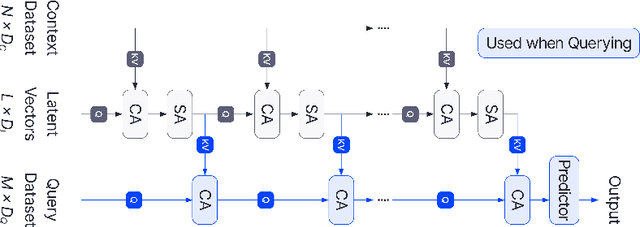
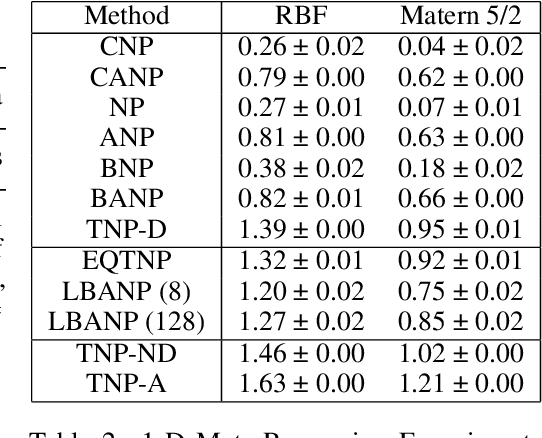
Neural Processes (NPs) are popular methods in meta-learning that can estimate predictive uncertainty on target datapoints by conditioning on a context dataset. Previous state-of-the-art method Transformer Neural Processes (TNPs) achieve strong performance but require quadratic computation with respect to the number of context datapoints, significantly limiting its scalability. Conversely, existing sub-quadratic NP variants perform significantly worse than that of TNPs. Tackling this issue, we propose Latent Bottlenecked Attentive Neural Processes (LBANPs), a new computationally efficient sub-quadratic NP variant, that has a querying computational complexity independent of the number of context datapoints. The model encodes the context dataset into a constant number of latent vectors on which self-attention is performed. When making predictions, the model retrieves higher-order information from the context dataset via multiple cross-attention mechanisms on the latent vectors. We empirically show that LBANPs achieve results competitive with the state-of-the-art on meta-regression, image completion, and contextual multi-armed bandits. We demonstrate that LBANPs can trade-off the computational cost and performance according to the number of latent vectors. Finally, we show LBANPs can scale beyond existing attention-based NP variants to larger dataset settings.
Equivariance with Learned Canonicalization Functions
Nov 11, 2022


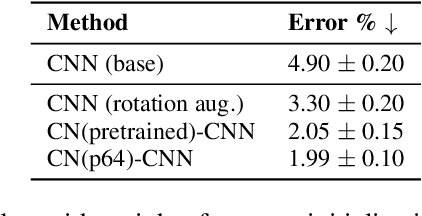
Symmetry-based neural networks often constrain the architecture in order to achieve invariance or equivariance to a group of transformations. In this paper, we propose an alternative that avoids this architectural constraint by learning to produce a canonical representation of the data. These canonicalization functions can readily be plugged into non-equivariant backbone architectures. We offer explicit ways to implement them for many groups of interest. We show that this approach enjoys universality while providing interpretable insights. Our main hypothesis is that learning a neural network to perform canonicalization is better than using predefined heuristics. Our results show that learning the canonicalization function indeed leads to better results and that the approach achieves excellent performance in practice.
GFlowOut: Dropout with Generative Flow Networks
Nov 07, 2022


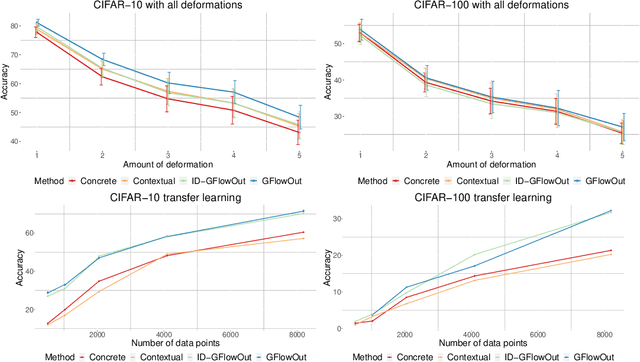
Bayesian Inference offers principled tools to tackle many critical problems with modern neural networks such as poor calibration and generalization, and data inefficiency. However, scaling Bayesian inference to large architectures is challenging and requires restrictive approximations. Monte Carlo Dropout has been widely used as a relatively cheap way for approximate Inference and to estimate uncertainty with deep neural networks. Traditionally, the dropout mask is sampled independently from a fixed distribution. Recent works show that the dropout mask can be viewed as a latent variable, which can be inferred with variational inference. These methods face two important challenges: (a) the posterior distribution over masks can be highly multi-modal which can be difficult to approximate with standard variational inference and (b) it is not trivial to fully utilize sample-dependent information and correlation among dropout masks to improve posterior estimation. In this work, we propose GFlowOut to address these issues. GFlowOut leverages the recently proposed probabilistic framework of Generative Flow Networks (GFlowNets) to learn the posterior distribution over dropout masks. We empirically demonstrate that GFlowOut results in predictive distributions that generalize better to out-of-distribution data, and provide uncertainty estimates which lead to better performance in downstream tasks.
Posterior samples of source galaxies in strong gravitational lenses with score-based priors
Nov 07, 2022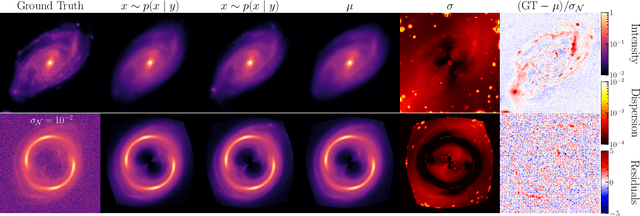
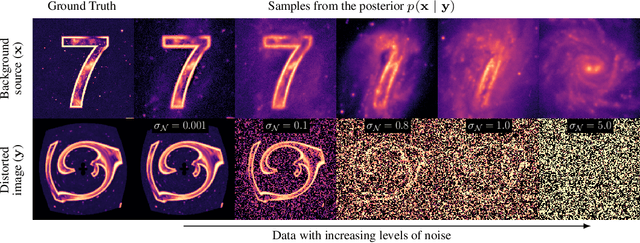
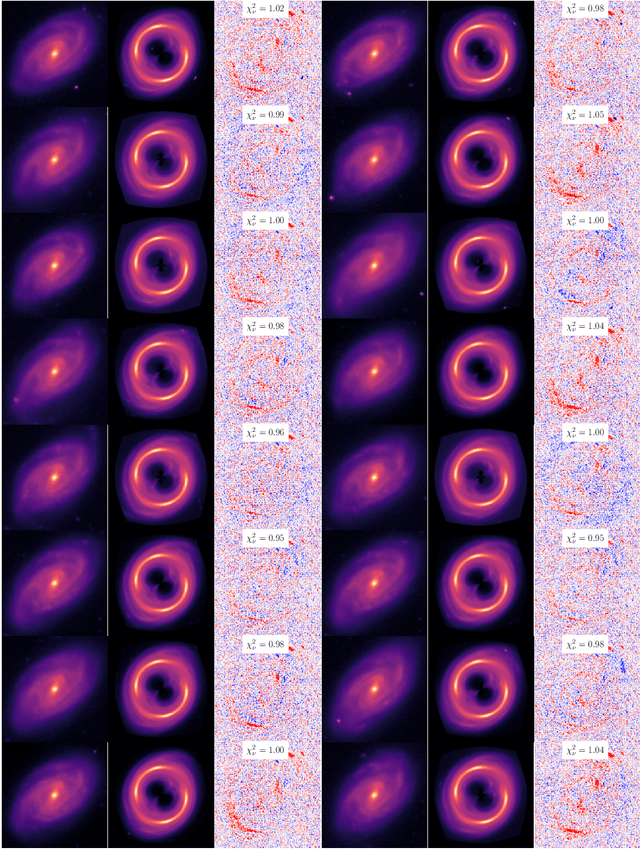
Inferring accurate posteriors for high-dimensional representations of the brightness of gravitationally-lensed sources is a major challenge, in part due to the difficulties of accurately quantifying the priors. Here, we report the use of a score-based model to encode the prior for the inference of undistorted images of background galaxies. This model is trained on a set of high-resolution images of undistorted galaxies. By adding the likelihood score to the prior score and using a reverse-time stochastic differential equation solver, we obtain samples from the posterior. Our method produces independent posterior samples and models the data almost down to the noise level. We show how the balance between the likelihood and the prior meet our expectations in an experiment with out-of-distribution data.
A General Purpose Neural Architecture for Geospatial Systems
Nov 04, 2022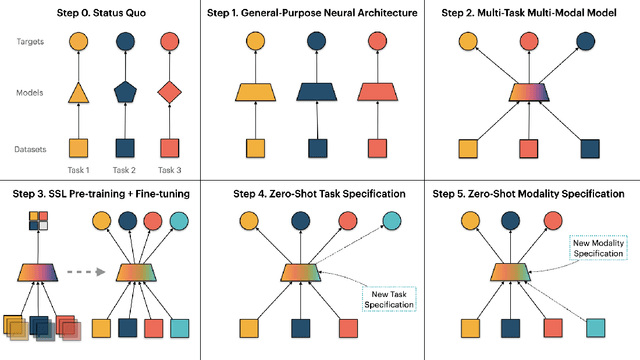
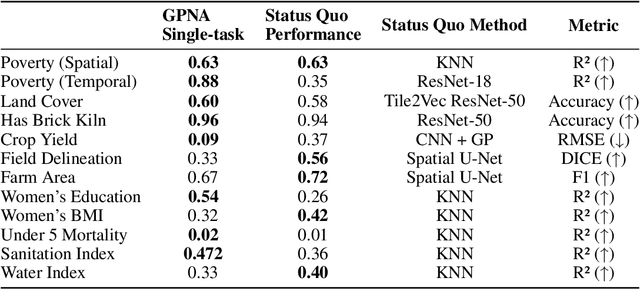
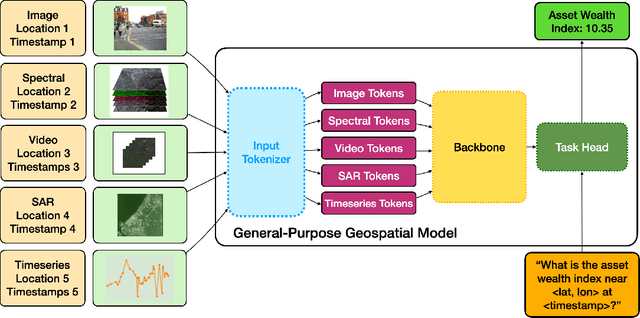
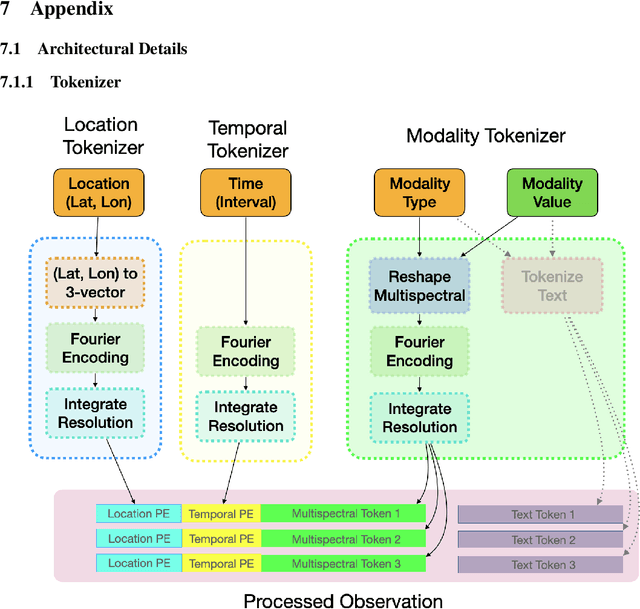
Geospatial Information Systems are used by researchers and Humanitarian Assistance and Disaster Response (HADR) practitioners to support a wide variety of important applications. However, collaboration between these actors is difficult due to the heterogeneous nature of geospatial data modalities (e.g., multi-spectral images of various resolutions, timeseries, weather data) and diversity of tasks (e.g., regression of human activity indicators or detecting forest fires). In this work, we present a roadmap towards the construction of a general-purpose neural architecture (GPNA) with a geospatial inductive bias, pre-trained on large amounts of unlabelled earth observation data in a self-supervised manner. We envision how such a model may facilitate cooperation between members of the community. We show preliminary results on the first step of the roadmap, where we instantiate an architecture that can process a wide variety of geospatial data modalities and demonstrate that it can achieve competitive performance with domain-specific architectures on tasks relating to the U.N.'s Sustainable Development Goals.
Bayesian learning of Causal Structure and Mechanisms with GFlowNets and Variational Bayes
Nov 04, 2022

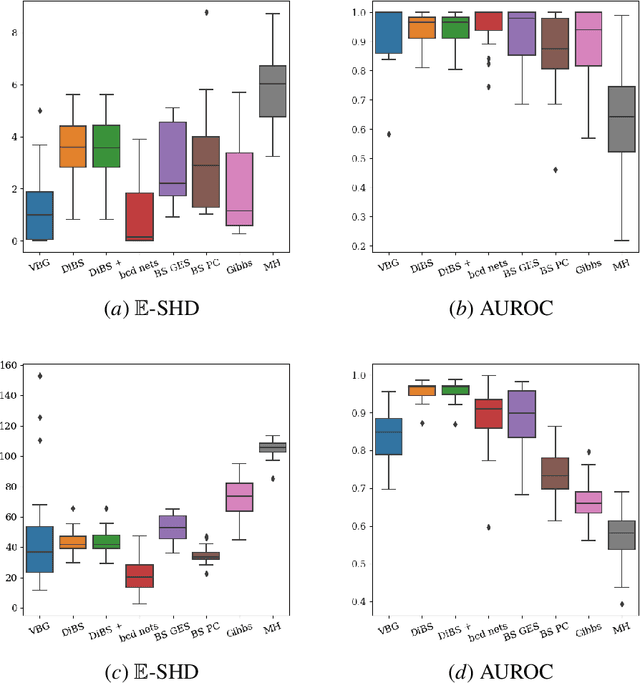

Bayesian causal structure learning aims to learn a posterior distribution over directed acyclic graphs (DAGs), and the mechanisms that define the relationship between parent and child variables. By taking a Bayesian approach, it is possible to reason about the uncertainty of the causal model. The notion of modelling the uncertainty over models is particularly crucial for causal structure learning since the model could be unidentifiable when given only a finite amount of observational data. In this paper, we introduce a novel method to jointly learn the structure and mechanisms of the causal model using Variational Bayes, which we call Variational Bayes-DAG-GFlowNet (VBG). We extend the method of Bayesian causal structure learning using GFlowNets to learn not only the posterior distribution over the structure, but also the parameters of a linear-Gaussian model. Our results on simulated data suggest that VBG is competitive against several baselines in modelling the posterior over DAGs and mechanisms, while offering several advantages over existing methods, including the guarantee to sample acyclic graphs, and the flexibility to generalize to non-linear causal mechanisms.
Consistent Training via Energy-Based GFlowNets for Modeling Discrete Joint Distributions
Nov 02, 2022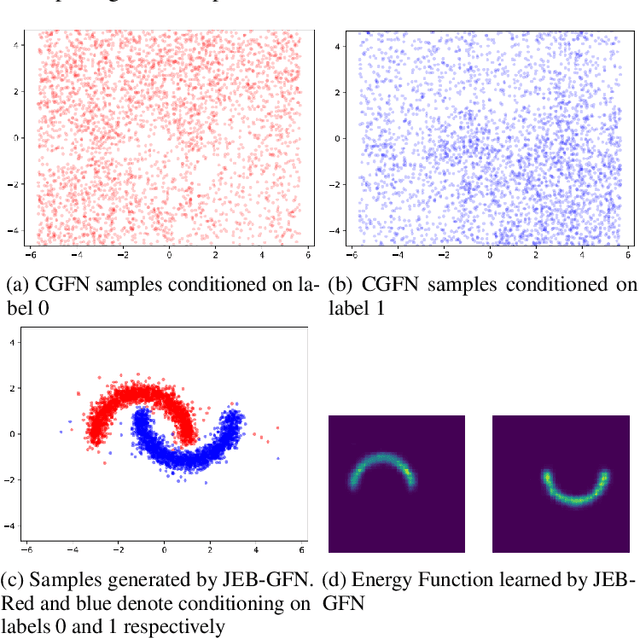
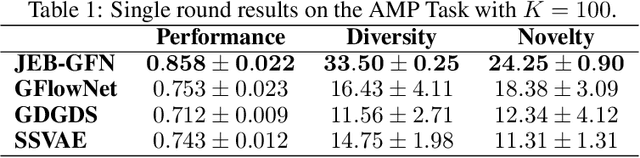
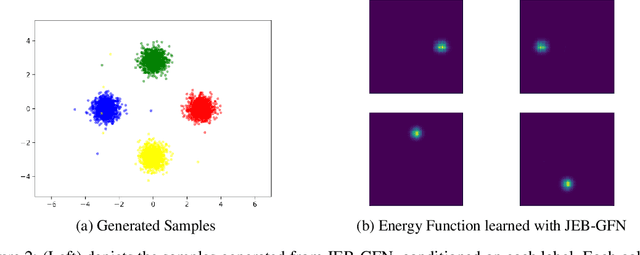
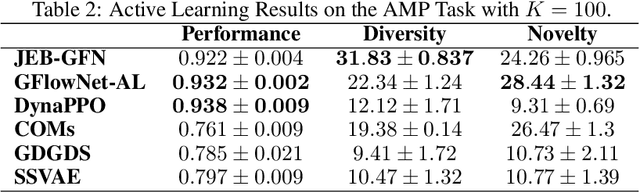
Generative Flow Networks (GFlowNets) have demonstrated significant performance improvements for generating diverse discrete objects $x$ given a reward function $R(x)$, indicating the utility of the object and trained independently from the GFlowNet by supervised learning to predict a desirable property $y$ given $x$. We hypothesize that this can lead to incompatibility between the inductive optimization biases in training $R$ and in training the GFlowNet, potentially leading to worse samples and slow adaptation to changes in the distribution. In this work, we build upon recent work on jointly learning energy-based models with GFlowNets and extend it to learn the joint over multiple variables, which we call Joint Energy-Based GFlowNets (JEBGFNs), such as peptide sequences and their antimicrobial activity. Joint learning of the energy-based model, used as a reward for the GFlowNet, can resolve the issues of incompatibility since both the reward function $R$ and the GFlowNet sampler are trained jointly. We find that this joint training or joint energy-based formulation leads to significant improvements in generating anti-microbial peptides. As the training sequences arose out of evolutionary or artificial selection for high antibiotic activity, there is presumably some structure in the distribution of sequences that reveals information about the antibiotic activity. This results in an advantage to modeling their joint generatively vs. pure discriminative modeling. We also evaluate JEBGFN in an active learning setting for discovering anti-microbial peptides.
Discrete Factorial Representations as an Abstraction for Goal Conditioned Reinforcement Learning
Nov 01, 2022Goal-conditioned reinforcement learning (RL) is a promising direction for training agents that are capable of solving multiple tasks and reach a diverse set of objectives. How to \textit{specify} and \textit{ground} these goals in such a way that we can both reliably reach goals during training as well as generalize to new goals during evaluation remains an open area of research. Defining goals in the space of noisy and high-dimensional sensory inputs poses a challenge for training goal-conditioned agents, or even for generalization to novel goals. We propose to address this by learning factorial representations of goals and processing the resulting representation via a discretization bottleneck, for coarser goal specification, through an approach we call DGRL. We show that applying a discretizing bottleneck can improve performance in goal-conditioned RL setups, by experimentally evaluating this method on tasks ranging from maze environments to complex robotic navigation and manipulation. Additionally, we prove a theorem lower-bounding the expected return on out-of-distribution goals, while still allowing for specifying goals with expressive combinatorial structure.