 Add to Chrome
 Add to Firefox
 Add to Edge
The Role of Causal Features in Strategic Classification for Robustness and Alignment
May 26, 2026
In strategic classification, an institution (e.g., a bank) anticipates adaptation from users who change their features to increase utility in a classification task (e.g., loan repayment). Since a key challenge is the distribution shift induced by users, we turn to causal models, which have been shown to bound the worst-case out-of-distribution (OOD) risk, and establish several new results that link causality and strategic classification. First, we show that causal classification leads to optimal classification error after any sufficiently large adaptation, when the noise is bounded in a certain way. Second, when these assumptions do not hold, we show OOD cross-entropy risk of optimal classifiers decomposes into an OOD bias term and a term arising from not using all observable features, allowing us to understand when causal classifiers have an advantage. Finally, we show that the use of causal features can allow alignment of long-term incentives between institutions and users, contrasting with previous work that highlights social costs of such approaches. We validate our theory empirically on synthetic data, finding that our results predict behavior in practice.

Reparametrizing Shampoo and SOAP for Subspace Basis Updates and BFloat16 Storage
May 25, 2026Shampoo-based methods, such as KL-Shampoo and SOAP, have demonstrated strong performance in training neural networks and rely on QR decomposition. Because existing QR implementations require single-precision (FP32) arithmetic and remain computationally expensive, these methods become time- and memory-intensive when their preconditioning matrices are large. Moreover, using BFloat16 (BFP16) storage to reduce memory usage can degrade the performance of Shampoo-based methods. We propose a reparametrization of the preconditioner that supports BFP16 storage and forms a complete basis by combining updated basis vectors with unchanged ones. By updating only part of the basis through QR decomposition in a subspace, our approach reduces computational overhead while mitigating the performance degradation caused by BFP16 storage. Our approach applies broadly to Shampoo-based methods that employ QR decomposition, including KL-Shampoo, SOAP, and KL-SOAP. In particular, it improves the performance of SOAP and KL-SOAP under BFP16 storage, enabling KL-SOAP to match or exceed KL-Shampoo. Overall, our approach makes Shampoo-based methods more memory- and time-efficient.
Layerwise LQR for Geometry-Aware Optimization of Deep Networks
May 05, 2026Geometry-aware optimizers such as Newton and natural gradient can improve conditioning in deep learning, but scalable variants such as K-FAC, Shampoo, and related preconditioners usually impose structural approximations early, often discarding cross-layer interactions induced by the network computation. We introduce Layerwise LQR (LLQR), a framework for learning structured inverse preconditioners under a global layerwise optimal-control objective. The starting point is an exact equivalence: the steepest-descent step under a broad class of divergence-induced quadratic models--including Newton, Gauss-Newton, Fisher/natural-gradient, and intermediate-layer metrics--can be written as a finite-horizon Linear Quadratic Regulator (LQR) problem. This formulation serves as a reference that exposes the layerwise dynamics and cost matrices encoding the original dense geometry. We then derive a scalable relaxation that learns diagonal, (E-)Kronecker-factored, or other structured inverse preconditioners by minimizing the LQR objective and reusing them across iterations. The resulting optimizer wraps standard methods while retaining a principled connection to second-order geometry, without forming or inverting the global curvature matrix. Experiments on ResNets and Transformers show that LLQR improves optimization dynamics and often translates these gains into improved final test performance, while adding only modest wall-clock overhead. It establishes LLQR as a practical framework for geometry-aware second-order methods and a reference for evaluating scalable approximations.
Stop Probing, Start Coding: Why Linear Probes and Sparse Autoencoders Fail at Compositional Generalisation
Mar 30, 2026The linear representation hypothesis states that neural network activations encode high-level concepts as linear mixtures. However, under superposition, this encoding is a projection from a higher-dimensional concept space into a lower-dimensional activation space, and a linear decision boundary in the concept space need not remain linear after projection. In this setting, classical sparse coding methods with per-sample iterative inference leverage compressed sensing guarantees to recover latent factors. Sparse autoencoders (SAEs), on the other hand, amortise sparse inference into a fixed encoder, introducing a systematic gap. We show this amortisation gap persists across training set sizes, latent dimensions, and sparsity levels, causing SAEs to fail under out-of-distribution (OOD) compositional shifts. Through controlled experiments that decompose the failure, we identify dictionary learning -- not the inference procedure -- as the binding constraint: SAE-learned dictionaries point in substantially wrong directions, and replacing the encoder with per-sample FISTA on the same dictionary does not close the gap. An oracle baseline proves the problem is solvable with a good dictionary at all scales tested. Our results reframe the SAE failure as a dictionary learning challenge, not an amortisation problem, and point to scalable dictionary learning as the key open problem for sparse inference under superposition.
Dual Optimistic Ascent (PI Control) is the Augmented Lagrangian Method in Disguise
Sep 26, 2025Constrained optimization is a powerful framework for enforcing requirements on neural networks. These constrained deep learning problems are typically solved using first-order methods on their min-max Lagrangian formulation, but such approaches often suffer from oscillations and can fail to find all local solutions. While the Augmented Lagrangian method (ALM) addresses these issues, practitioners often favor dual optimistic ascent schemes (PI control) on the standard Lagrangian, which perform well empirically but lack formal guarantees. In this paper, we establish a previously unknown equivalence between these approaches: dual optimistic ascent on the Lagrangian is equivalent to gradient descent-ascent on the Augmented Lagrangian. This finding allows us to transfer the robust theoretical guarantees of the ALM to the dual optimistic setting, proving it converges linearly to all local solutions. Furthermore, the equivalence provides principled guidance for tuning the optimism hyper-parameter. Our work closes a critical gap between the empirical success of dual optimistic methods and their theoretical foundation.
Bias Analysis in Unconditional Image Generative Models
Jun 10, 2025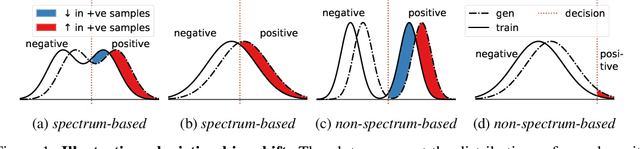
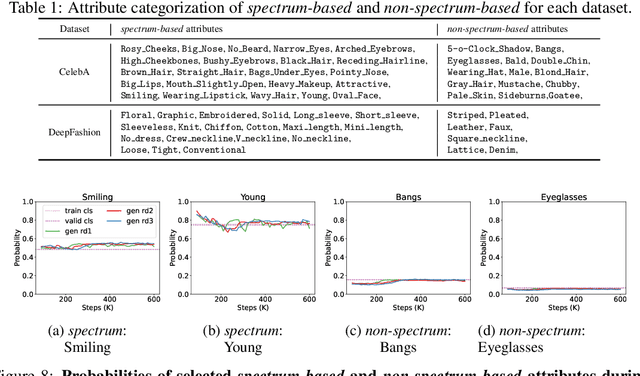
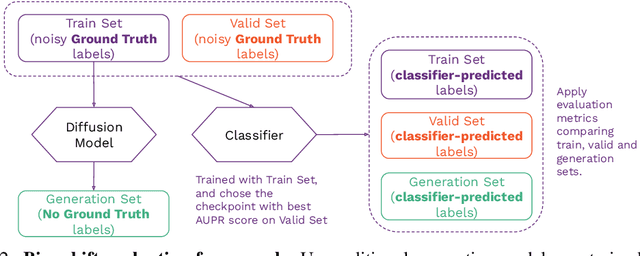
The widespread adoption of generative AI models has raised growing concerns about representational harm and potential discriminatory outcomes. Yet, despite growing literature on this topic, the mechanisms by which bias emerges - especially in unconditional generation - remain disentangled. We define the bias of an attribute as the difference between the probability of its presence in the observed distribution and its expected proportion in an ideal reference distribution. In our analysis, we train a set of unconditional image generative models and adopt a commonly used bias evaluation framework to study bias shift between training and generated distributions. Our experiments reveal that the detected attribute shifts are small. We find that the attribute shifts are sensitive to the attribute classifier used to label generated images in the evaluation framework, particularly when its decision boundaries fall in high-density regions. Our empirical analysis indicates that this classifier sensitivity is often observed in attributes values that lie on a spectrum, as opposed to exhibiting a binary nature. This highlights the need for more representative labeling practices, understanding the shortcomings through greater scrutiny of evaluation frameworks, and recognizing the socially complex nature of attributes when evaluating bias.
Position: Adopt Constraints Over Penalties in Deep Learning
May 27, 2025Recent efforts toward developing trustworthy AI systems with accountability guarantees have led to a growing reliance on machine learning formulations that incorporate external requirements, or constraints. These requirements are often enforced through penalization--adding fixed-weight terms to the task loss. We argue that this approach is ill-suited, and that tailored constrained optimization methods should be adopted instead. In particular, no penalty coefficient may yield a solution that both satisfies the constraints and achieves good performance--i.e., one solving the constrained problem. Moreover, tuning these coefficients is costly, incurring significant time and computational overhead. In contrast, tailored constrained methods--such as the Lagrangian approach, which optimizes the penalization "coefficients" (the Lagrange multipliers) alongside the model--(i) truly solve the constrained problem and add accountability, (ii) eliminate the need for extensive penalty tuning, and (iii) integrate seamlessly with modern deep learning pipelines.
Cooper: A Library for Constrained Optimization in Deep Learning
Apr 01, 2025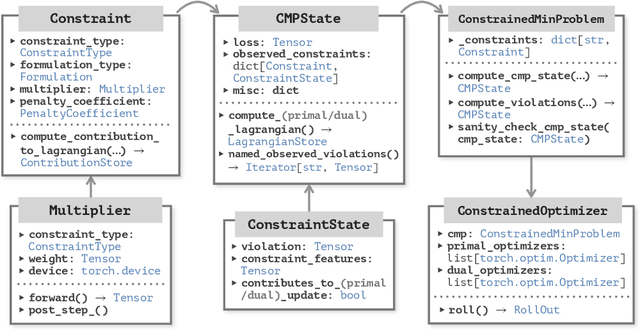
Cooper is an open-source package for solving constrained optimization problems involving deep learning models. Cooper implements several Lagrangian-based first-order update schemes, making it easy to combine constrained optimization algorithms with high-level features of PyTorch such as automatic differentiation, and specialized deep learning architectures and optimizers. Although Cooper is specifically designed for deep learning applications where gradients are estimated based on mini-batches, it is suitable for general non-convex continuous constrained optimization. Cooper's source code is available at https://github.com/cooper-org/cooper.
Feasible Learning
Jan 24, 2025We introduce Feasible Learning (FL), a sample-centric learning paradigm where models are trained by solving a feasibility problem that bounds the loss for each training sample. In contrast to the ubiquitous Empirical Risk Minimization (ERM) framework, which optimizes for average performance, FL demands satisfactory performance on every individual data point. Since any model that meets the prescribed performance threshold is a valid FL solution, the choice of optimization algorithm and its dynamics play a crucial role in shaping the properties of the resulting solutions. In particular, we study a primal-dual approach which dynamically re-weights the importance of each sample during training. To address the challenge of setting a meaningful threshold in practice, we introduce a relaxation of FL that incorporates slack variables of minimal norm. Our empirical analysis, spanning image classification, age regression, and preference optimization in large language models, demonstrates that models trained via FL can learn from data while displaying improved tail behavior compared to ERM, with only a marginal impact on average performance.
Tight Lower Bounds and Improved Convergence in Performative Prediction
Dec 04, 2024Performative prediction is a framework accounting for the shift in the data distribution induced by the prediction of a model deployed in the real world. Ensuring rapid convergence to a stable solution where the data distribution remains the same after the model deployment is crucial, especially in evolving environments. This paper extends the Repeated Risk Minimization (RRM) framework by utilizing historical datasets from previous retraining snapshots, yielding a class of algorithms that we call Affine Risk Minimizers and enabling convergence to a performatively stable point for a broader class of problems. We introduce a new upper bound for methods that use only the final iteration of the dataset and prove for the first time the tightness of both this new bound and the previous existing bounds within the same regime. We also prove that utilizing historical datasets can surpass the lower bound for last iterate RRM, and empirically observe faster convergence to the stable point on various performative prediction benchmarks. We offer at the same time the first lower bound analysis for RRM within the class of Affine Risk Minimizers, quantifying the potential improvements in convergence speed that could be achieved with other variants in our framework.