 Add to Chrome
 Add to Firefox
 Add to Edge
See Further When Clear: Curriculum Consistency Model
Dec 09, 2024


Significant advances have been made in the sampling efficiency of diffusion models and flow matching models, driven by Consistency Distillation (CD), which trains a student model to mimic the output of a teacher model at a later timestep. However, we found that the learning complexity of the student model varies significantly across different timesteps, leading to suboptimal performance in CD.To address this issue, we propose the Curriculum Consistency Model (CCM), which stabilizes and balances the learning complexity across timesteps. Specifically, we regard the distillation process at each timestep as a curriculum and introduce a metric based on Peak Signal-to-Noise Ratio (PSNR) to quantify the learning complexity of this curriculum, then ensure that the curriculum maintains consistent learning complexity across different timesteps by having the teacher model iterate more steps when the noise intensity is low. Our method achieves competitive single-step sampling Fr\'echet Inception Distance (FID) scores of 1.64 on CIFAR-10 and 2.18 on ImageNet 64x64.Moreover, we have extended our method to large-scale text-to-image models and confirmed that it generalizes well to both diffusion models (Stable Diffusion XL) and flow matching models (Stable Diffusion 3). The generated samples demonstrate improved image-text alignment and semantic structure, since CCM enlarges the distillation step at large timesteps and reduces the accumulated error.

Towards Effective GenAI Multi-Agent Collaboration: Design and Evaluation for Enterprise Applications
Dec 06, 2024AI agents powered by large language models (LLMs) have shown strong capabilities in problem solving. Through combining many intelligent agents, multi-agent collaboration has emerged as a promising approach to tackle complex, multi-faceted problems that exceed the capabilities of single AI agents. However, designing the collaboration protocols and evaluating the effectiveness of these systems remains a significant challenge, especially for enterprise applications. This report addresses these challenges by presenting a comprehensive evaluation of coordination and routing capabilities in a novel multi-agent collaboration framework. We evaluate two key operational modes: (1) a coordination mode enabling complex task completion through parallel communication and payload referencing, and (2) a routing mode for efficient message forwarding between agents. We benchmark on a set of handcrafted scenarios from three enterprise domains, which are publicly released with the report. For coordination capabilities, we demonstrate the effectiveness of inter-agent communication and payload referencing mechanisms, achieving end-to-end goal success rates of 90%. Our analysis yields several key findings: multi-agent collaboration enhances goal success rates by up to 70% compared to single-agent approaches in our benchmarks; payload referencing improves performance on code-intensive tasks by 23%; latency can be substantially reduced with a routing mechanism that selectively bypasses agent orchestration. These findings offer valuable guidance for enterprise deployments of multi-agent systems and advance the development of scalable, efficient multi-agent collaboration frameworks.
Towards Fault Tolerance in Multi-Agent Reinforcement Learning
Nov 30, 2024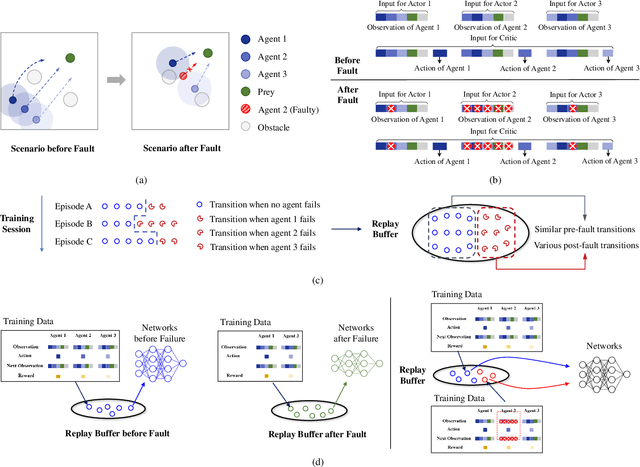
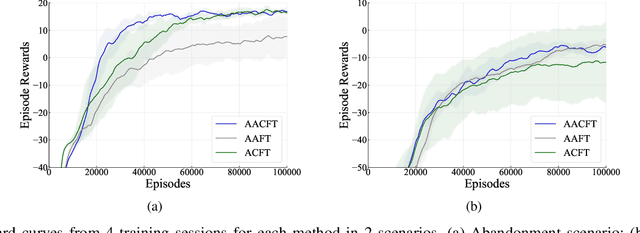
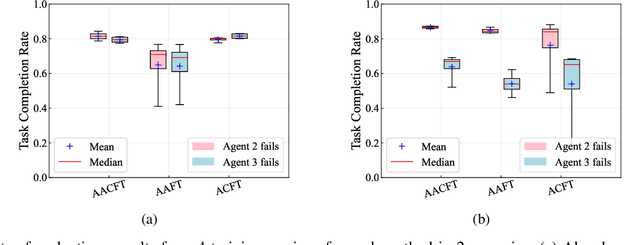
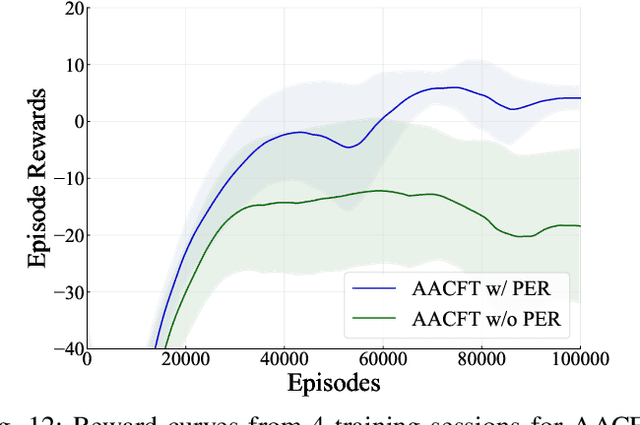
Agent faults pose a significant threat to the performance of multi-agent reinforcement learning (MARL) algorithms, introducing two key challenges. First, agents often struggle to extract critical information from the chaotic state space created by unexpected faults. Second, transitions recorded before and after faults in the replay buffer affect training unevenly, leading to a sample imbalance problem. To overcome these challenges, this paper enhances the fault tolerance of MARL by combining optimized model architecture with a tailored training data sampling strategy. Specifically, an attention mechanism is incorporated into the actor and critic networks to automatically detect faults and dynamically regulate the attention given to faulty agents. Additionally, a prioritization mechanism is introduced to selectively sample transitions critical to current training needs. To further support research in this area, we design and open-source a highly decoupled code platform for fault-tolerant MARL, aimed at improving the efficiency of studying related problems. Experimental results demonstrate the effectiveness of our method in handling various types of faults, faults occurring in any agent, and faults arising at random times.
RAGDiffusion: Faithful Cloth Generation via External Knowledge Assimilation
Nov 29, 2024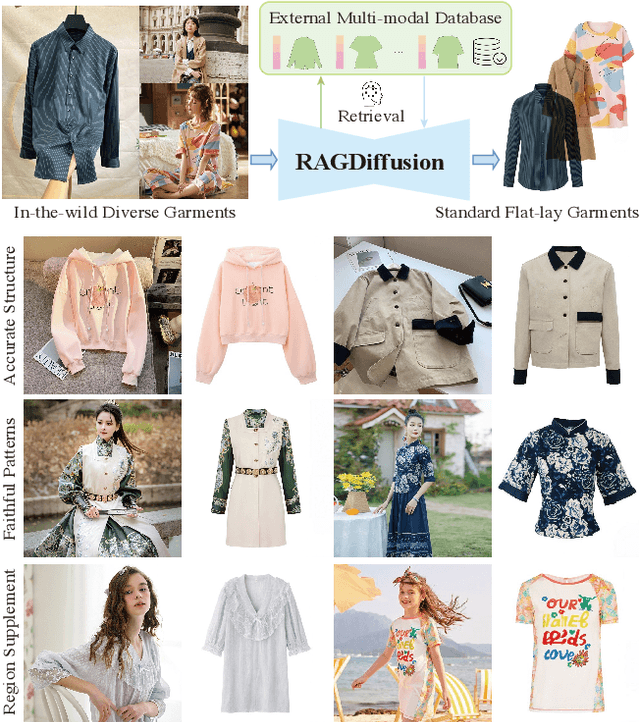
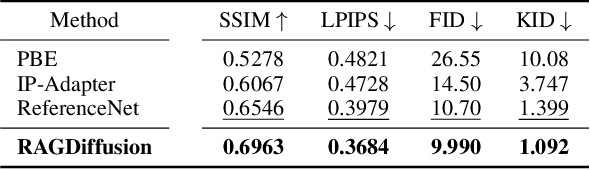
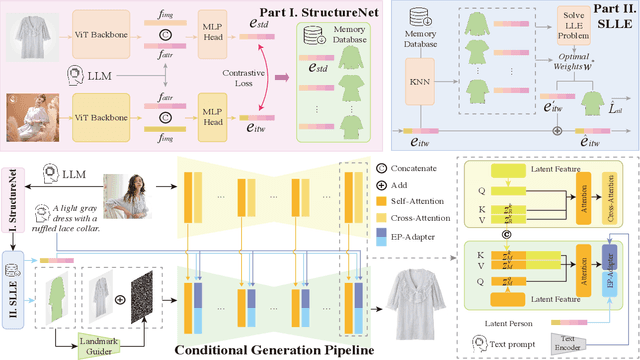
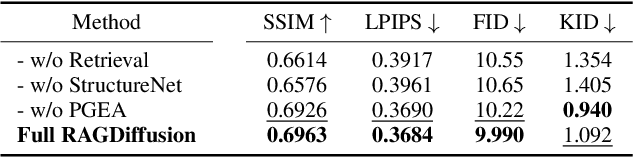
Standard clothing asset generation involves creating forward-facing flat-lay garment images displayed on a clear background by extracting clothing information from diverse real-world contexts, which presents significant challenges due to highly standardized sampling distributions and precise structural requirements in the generated images. Existing models have limited spatial perception and often exhibit structural hallucinations in this high-specification generative task. To address this issue, we propose a novel Retrieval-Augmented Generation (RAG) framework, termed RAGDiffusion, to enhance structure determinacy and mitigate hallucinations by assimilating external knowledge from LLM and databases. RAGDiffusion consists of two core processes: (1) Retrieval-based structure aggregation, which employs contrastive learning and a Structure Locally Linear Embedding (SLLE) to derive global structure and spatial landmarks, providing both soft and hard guidance to counteract structural ambiguities; and (2) Omni-level faithful garment generation, which introduces a three-level alignment that ensures fidelity in structural, pattern, and decoding components within the diffusing. Extensive experiments on challenging real-world datasets demonstrate that RAGDiffusion synthesizes structurally and detail-faithful clothing assets with significant performance improvements, representing a pioneering effort in high-specification faithful generation with RAG to confront intrinsic hallucinations and enhance fidelity.
Ensemble Learning via Knowledge Transfer for CTR Prediction
Nov 25, 2024


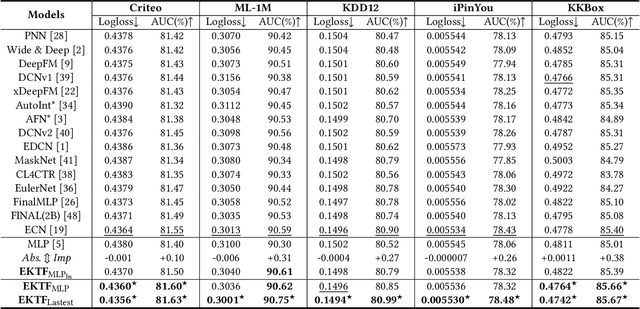
Click-through rate (CTR) prediction plays a critical role in recommender systems and web searches. While many existing methods utilize ensemble learning to improve model performance, they typically limit the ensemble to two or three sub-networks, with little exploration of larger ensembles. In this paper, we investigate larger ensemble networks and find three inherent limitations in commonly used ensemble learning method: (1) performance degradation with more networks; (2) sharp decline and high variance in sub-network performance; (3) large discrepancies between sub-network and ensemble predictions. To simultaneously address the above limitations, this paper investigates potential solutions from the perspectives of Knowledge Distillation (KD) and Deep Mutual Learning (DML). Based on the empirical performance of these methods, we combine them to propose a novel model-agnostic Ensemble Knowledge Transfer Framework (EKTF). Specifically, we employ the collective decision-making of the students as an abstract teacher to guide each student (sub-network) towards more effective learning. Additionally, we encourage mutual learning among students to enable knowledge acquisition from different views. To address the issue of balancing the loss hyperparameters, we design a novel examination mechanism to ensure tailored teaching from teacher-to-student and selective learning in peer-to-peer. Experimental results on five real-world datasets demonstrate the effectiveness and compatibility of EKTF. The code, running logs, and detailed hyperparameter configurations are available at: https://github.com/salmon1802/EKTF.
Look a Group at Once: Multi-Slide Modeling for Survival Prediction
Nov 18, 2024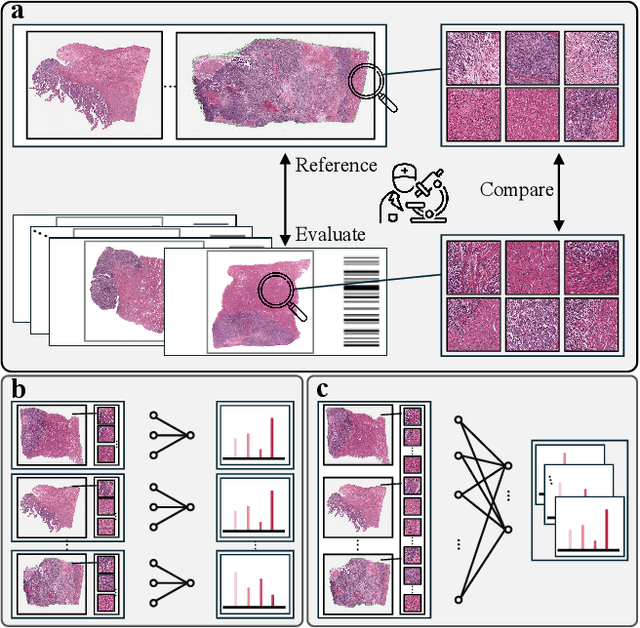

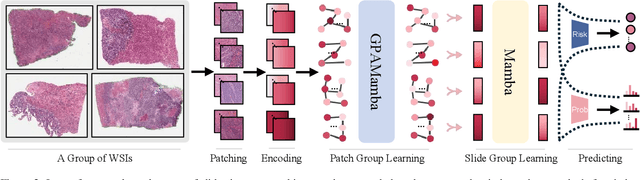
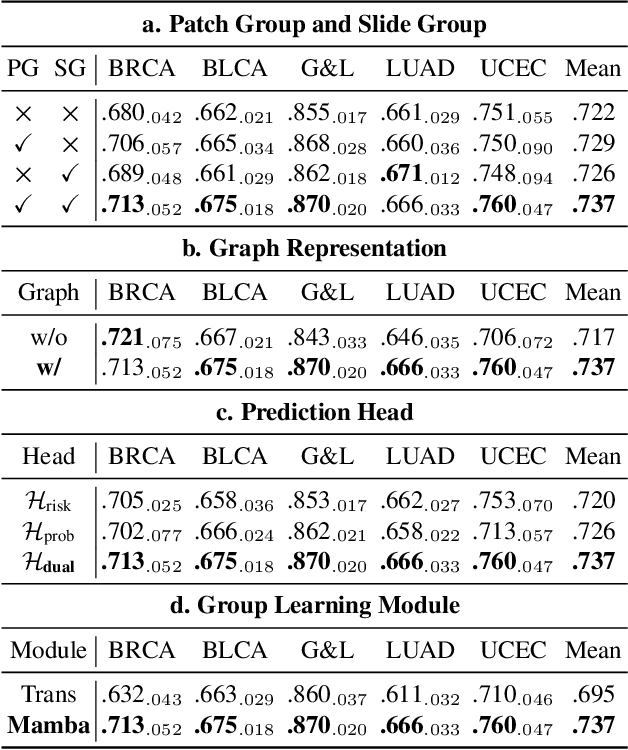
Survival prediction is a critical task in pathology. In clinical practice, pathologists often examine multiple cases, leveraging a broader spectrum of cancer phenotypes to enhance pathological assessment. Despite significant advancements in deep learning, current solutions typically model each slide as a sample, struggling to effectively capture comparable and slide-agnostic pathological features. In this paper, we introduce GroupMIL, a novel framework inspired by the clinical practice of collective analysis, which models multiple slides as a single sample and organizes groups of patches and slides sequentially to capture cross-slide prognostic features. We also present GPAMamba, a model designed to facilitate intra- and inter-slide feature interactions, effectively capturing local micro-environmental characteristics within slide-level graphs while uncovering essential prognostic patterns across an extended patch sequence within the group framework. Furthermore, we develop a dual-head predictor that delivers comprehensive survival risk and probability assessments for each patient. Extensive empirical evaluations demonstrate that our model significantly outperforms state-of-the-art approaches across five datasets from The Cancer Genome Atlas.
RoundTable: Investigating Group Decision-Making Mechanism in Multi-Agent Collaboration
Nov 11, 2024This study investigates the efficacy of Multi-Agent Systems in eliciting cross-agent communication and enhancing collective intelligence through group decision-making in a decentralized setting. Unlike centralized mechanisms, where a fixed hierarchy governs social choice, decentralized group decision-making allows agents to engage in joint deliberation. Our research focuses on the dynamics of communication and decision-making within various social choice methods. By applying different voting rules in various environments, we find that moderate decision flexibility yields better outcomes. Additionally, exploring the linguistic features of agent-to-agent conversations reveals indicators of effective collaboration, offering insights into communication patterns that facilitate or hinder collaboration. Finally, we propose various methods for determining the optimal stopping point in multi-agent collaborations based on linguistic cues. Our findings contribute to a deeper understanding of how decentralized decision-making and group conversation shape multi-agent collaboration, with implications for the design of more effective MAS environments.
SM3-Text-to-Query: Synthetic Multi-Model Medical Text-to-Query Benchmark
Nov 08, 2024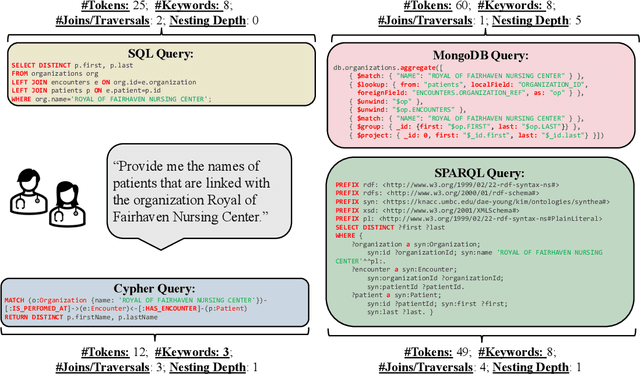

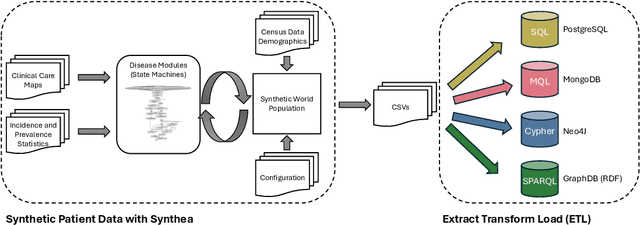

Electronic health records (EHRs) are stored in various database systems with different database models on heterogeneous storage architectures, such as relational databases, document stores, or graph databases. These different database models have a big impact on query complexity and performance. While this has been a known fact in database research, its implications for the growing number of Text-to-Query systems have surprisingly not been investigated so far. In this paper, we present SM3-Text-to-Query, the first multi-model medical Text-to-Query benchmark based on synthetic patient data from Synthea, following the SNOMED-CT taxonomy -- a widely used knowledge graph ontology covering medical terminology. SM3-Text-to-Query provides data representations for relational databases (PostgreSQL), document stores (MongoDB), and graph databases (Neo4j and GraphDB (RDF)), allowing the evaluation across four popular query languages, namely SQL, MQL, Cypher, and SPARQL. We systematically and manually develop 408 template questions, which we augment to construct a benchmark of 10K diverse natural language question/query pairs for these four query languages (40K pairs overall). On our dataset, we evaluate several common in-context-learning (ICL) approaches for a set of representative closed and open-source LLMs. Our evaluation sheds light on the trade-offs between database models and query languages for different ICL strategies and LLMs. Last, SM3-Text-to-Query is easily extendable to additional query languages or real, standard-based patient databases.
Right this way: Can VLMs Guide Us to See More to Answer Questions?
Nov 01, 2024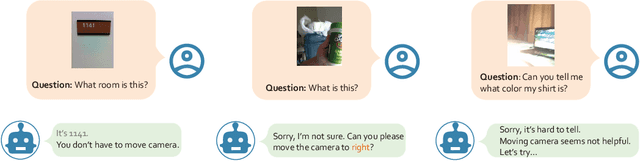
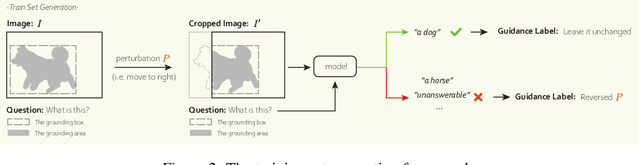
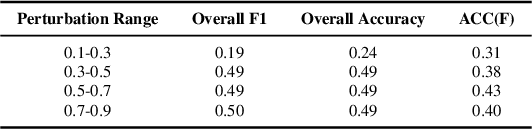
In question-answering scenarios, humans can assess whether the available information is sufficient and seek additional information if necessary, rather than providing a forced answer. In contrast, Vision Language Models (VLMs) typically generate direct, one-shot responses without evaluating the sufficiency of the information. To investigate this gap, we identify a critical and challenging task in the Visual Question Answering (VQA) scenario: can VLMs indicate how to adjust an image when the visual information is insufficient to answer a question? This capability is especially valuable for assisting visually impaired individuals who often need guidance to capture images correctly. To evaluate this capability of current VLMs, we introduce a human-labeled dataset as a benchmark for this task. Additionally, we present an automated framework that generates synthetic training data by simulating ``where to know'' scenarios. Our empirical results show significant performance improvements in mainstream VLMs when fine-tuned with this synthetic data. This study demonstrates the potential to narrow the gap between information assessment and acquisition in VLMs, bringing their performance closer to humans.
P$^2$C$^2$Net: PDE-Preserved Coarse Correction Network for efficient prediction of spatiotemporal dynamics
Oct 29, 2024


When solving partial differential equations (PDEs), classical numerical methods often require fine mesh grids and small time stepping to meet stability, consistency, and convergence conditions, leading to high computational cost. Recently, machine learning has been increasingly utilized to solve PDE problems, but they often encounter challenges related to interpretability, generalizability, and strong dependency on rich labeled data. Hence, we introduce a new PDE-Preserved Coarse Correction Network (P$^2$C$^2$Net) to efficiently solve spatiotemporal PDE problems on coarse mesh grids in small data regimes. The model consists of two synergistic modules: (1) a trainable PDE block that learns to update the coarse solution (i.e., the system state), based on a high-order numerical scheme with boundary condition encoding, and (2) a neural network block that consistently corrects the solution on the fly. In particular, we propose a learnable symmetric Conv filter, with weights shared over the entire model, to accurately estimate the spatial derivatives of PDE based on the neural-corrected system state. The resulting physics-encoded model is capable of handling limited training data (e.g., 3--5 trajectories) and accelerates the prediction of PDE solutions on coarse spatiotemporal grids while maintaining a high accuracy. P$^2$C$^2$Net achieves consistent state-of-the-art performance with over 50\% gain (e.g., in terms of relative prediction error) across four datasets covering complex reaction-diffusion processes and turbulent flows.