 Add to Chrome
 Add to Firefox
 Add to Edge
Keypoint-based Progressive Chain-of-Thought Distillation for LLMs
May 25, 2024
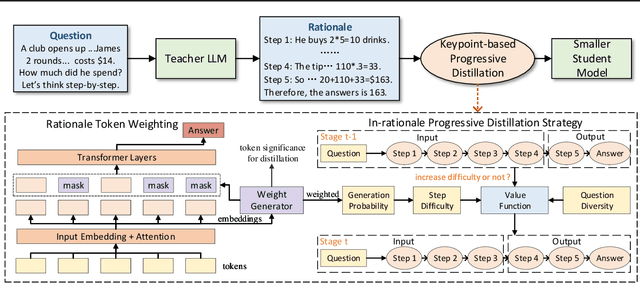
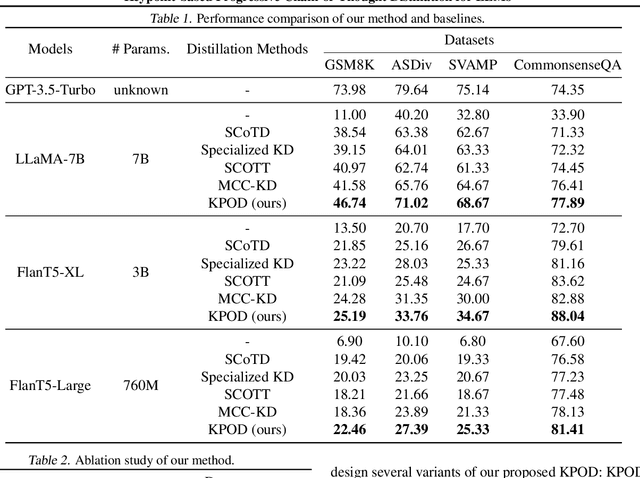
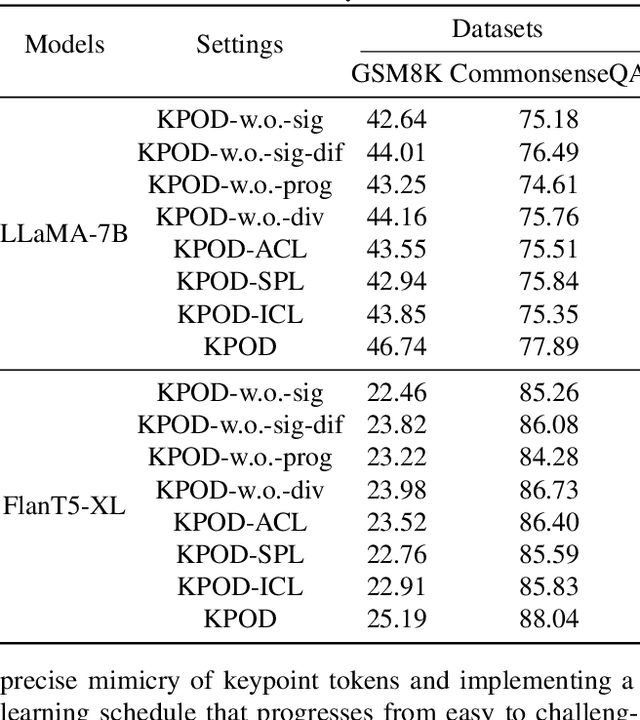

Chain-of-thought distillation is a powerful technique for transferring reasoning abilities from large language models (LLMs) to smaller student models. Previous methods typically require the student to mimic the step-by-step rationale produced by LLMs, often facing the following challenges: (i) Tokens within a rationale vary in significance, and treating them equally may fail to accurately mimic keypoint tokens, leading to reasoning errors. (ii) They usually distill knowledge by consistently predicting all the steps in a rationale, which falls short in distinguishing the learning order of step generation. This diverges from the human cognitive progression of starting with easy tasks and advancing to harder ones, resulting in sub-optimal outcomes. To this end, we propose a unified framework, called KPOD, to address these issues. Specifically, we propose a token weighting module utilizing mask learning to encourage accurate mimicry of keypoint tokens by the student during distillation. Besides, we develop an in-rationale progressive distillation strategy, starting with training the student to generate the final reasoning steps and gradually extending to cover the entire rationale. To accomplish this, a weighted token generation loss is proposed to assess step reasoning difficulty, and a value function is devised to schedule the progressive distillation by considering both step difficulty and question diversity. Extensive experiments on four reasoning benchmarks illustrate our KPOD outperforms previous methods by a large margin.

Design Editing for Offline Model-based Optimization
May 22, 2024
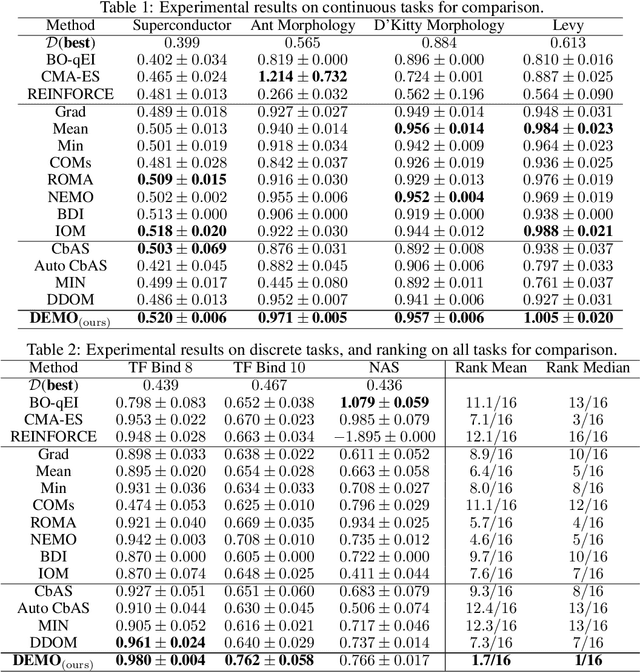


Offline model-based optimization (MBO) aims to maximize a black-box objective function using only an offline dataset of designs and scores. A prevalent approach involves training a conditional generative model on existing designs and their associated scores, followed by the generation of new designs conditioned on higher target scores. However, these newly generated designs often underperform due to the lack of high-scoring training data. To address this challenge, we introduce a novel method, Design Editing for Offline Model-based Optimization (DEMO), which consists of two phases. In the first phase, termed pseudo-target distribution generation, we apply gradient ascent on the offline dataset using a trained surrogate model, producing a synthetic dataset where the predicted scores serve as new labels. A conditional diffusion model is subsequently trained on this synthetic dataset to capture a pseudo-target distribution, which enhances the accuracy of the conditional diffusion model in generating higher-scoring designs. Nevertheless, the pseudo-target distribution is susceptible to noise stemming from inaccuracies in the surrogate model, consequently predisposing the conditional diffusion model to generate suboptimal designs. We hence propose the second phase, existing design editing, to directly incorporate the high-scoring features from the offline dataset into design generation. In this phase, top designs from the offline dataset are edited by introducing noise, which are subsequently refined using the conditional diffusion model to produce high-scoring designs. Overall, high-scoring designs begin with inheriting high-scoring features from the second phase and are further refined with a more accurate conditional diffusion model in the first phase. Empirical evaluations on 7 offline MBO tasks show that DEMO outperforms various baseline methods.
Large Language Model (LLM) for Telecommunications: A Comprehensive Survey on Principles, Key Techniques, and Opportunities
May 17, 2024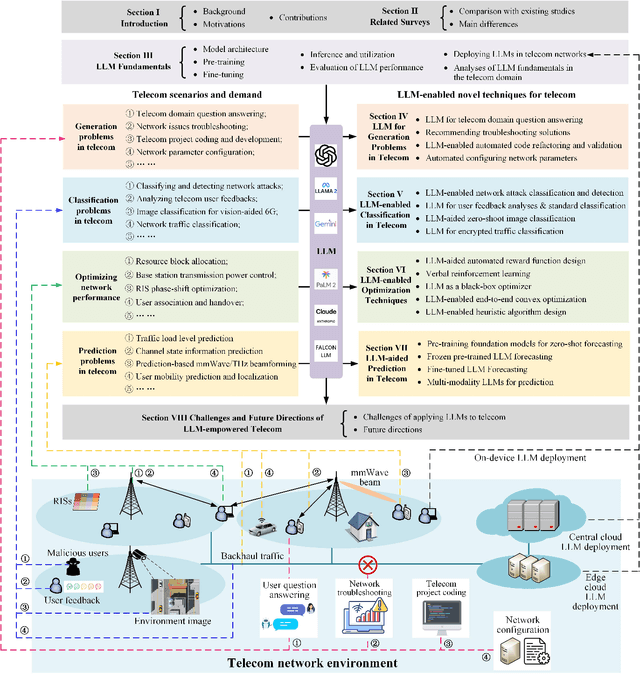


Large language models (LLMs) have received considerable attention recently due to their outstanding comprehension and reasoning capabilities, leading to great progress in many fields. The advancement of LLM techniques also offers promising opportunities to automate many tasks in the telecommunication (telecom) field. After pre-training and fine-tuning, LLMs can perform diverse downstream tasks based on human instructions, paving the way to artificial general intelligence (AGI)-enabled 6G. Given the great potential of LLM technologies, this work aims to provide a comprehensive overview of LLM-enabled telecom networks. In particular, we first present LLM fundamentals, including model architecture, pre-training, fine-tuning, inference and utilization, model evaluation, and telecom deployment. Then, we introduce LLM-enabled key techniques and telecom applications in terms of generation, classification, optimization, and prediction problems. Specifically, the LLM-enabled generation applications include telecom domain knowledge, code, and network configuration generation. After that, the LLM-based classification applications involve network security, text, image, and traffic classification problems. Moreover, multiple LLM-enabled optimization techniques are introduced, such as automated reward function design for reinforcement learning and verbal reinforcement learning. Furthermore, for LLM-aided prediction problems, we discussed time-series prediction models and multi-modality prediction problems for telecom. Finally, we highlight the challenges and identify the future directions of LLM-enabled telecom networks.
PACER+: On-Demand Pedestrian Animation Controller in Driving Scenarios
Apr 30, 2024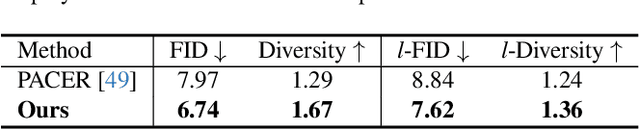
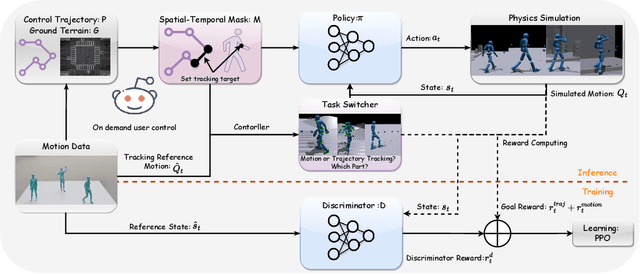


We address the challenge of content diversity and controllability in pedestrian simulation for driving scenarios. Recent pedestrian animation frameworks have a significant limitation wherein they primarily focus on either following trajectory [46] or the content of the reference video [57], consequently overlooking the potential diversity of human motion within such scenarios. This limitation restricts the ability to generate pedestrian behaviors that exhibit a wider range of variations and realistic motions and therefore restricts its usage to provide rich motion content for other components in the driving simulation system, e.g., suddenly changed motion to which the autonomous vehicle should respond. In our approach, we strive to surpass the limitation by showcasing diverse human motions obtained from various sources, such as generated human motions, in addition to following the given trajectory. The fundamental contribution of our framework lies in combining the motion tracking task with trajectory following, which enables the tracking of specific motion parts (e.g., upper body) while simultaneously following the given trajectory by a single policy. This way, we significantly enhance both the diversity of simulated human motion within the given scenario and the controllability of the content, including language-based control. Our framework facilitates the generation of a wide range of human motions, contributing to greater realism and adaptability in pedestrian simulations for driving scenarios. More information is on our project page https://wangjingbo1219.github.io/papers/CVPR2024_PACER_PLUS/PACERPLUSPage.html .
Measuring Social Norms of Large Language Models
Apr 07, 2024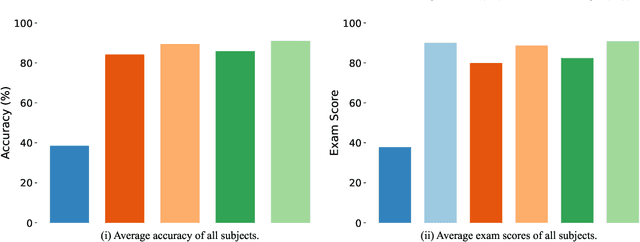
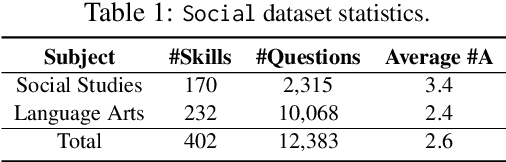
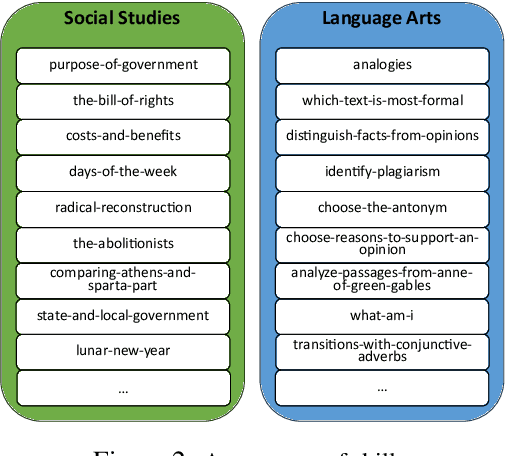
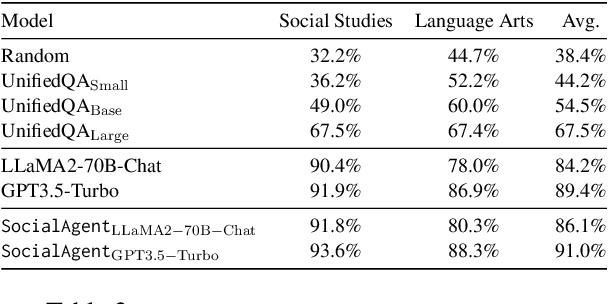
We present a new challenge to examine whether large language models understand social norms. In contrast to existing datasets, our dataset requires a fundamental understanding of social norms to solve. Our dataset features the largest set of social norm skills, consisting of 402 skills and 12,383 questions covering a wide set of social norms ranging from opinions and arguments to culture and laws. We design our dataset according to the K-12 curriculum. This enables the direct comparison of the social understanding of large language models to humans, more specifically, elementary students. While prior work generates nearly random accuracy on our benchmark, recent large language models such as GPT3.5-Turbo and LLaMA2-Chat are able to improve the performance significantly, only slightly below human performance. We then propose a multi-agent framework based on large language models to improve the models' ability to understand social norms. This method further improves large language models to be on par with humans. Given the increasing adoption of large language models in real-world applications, our finding is particularly important and presents a unique direction for future improvements.
Enhancing LLM Factual Accuracy with RAG to Counter Hallucinations: A Case Study on Domain-Specific Queries in Private Knowledge-Bases
Mar 15, 2024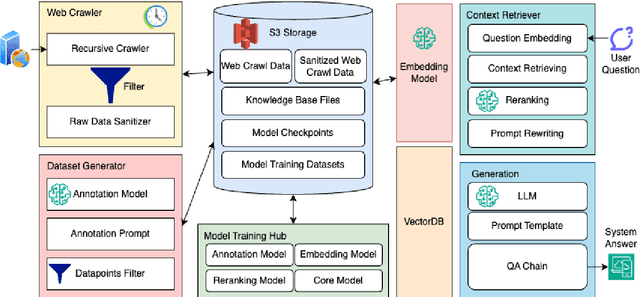
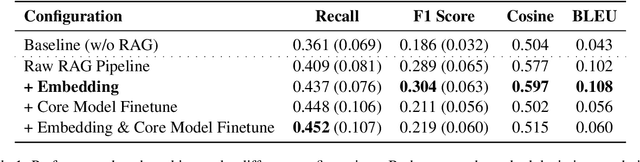
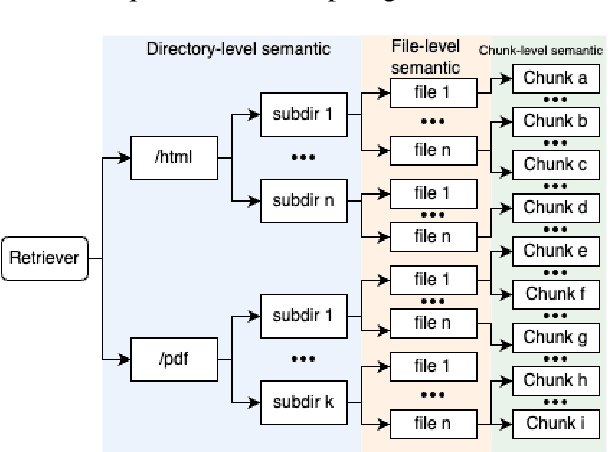
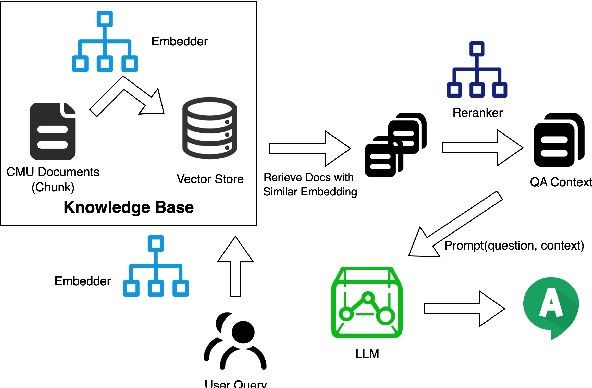
We proposed an end-to-end system design towards utilizing Retrieval Augmented Generation (RAG) to improve the factual accuracy of Large Language Models (LLMs) for domain-specific and time-sensitive queries related to private knowledge-bases. Our system integrates RAG pipeline with upstream datasets processing and downstream performance evaluation. Addressing the challenge of LLM hallucinations, we finetune models with a curated dataset which originates from CMU's extensive resources and annotated with the teacher model. Our experiments demonstrate the system's effectiveness in generating more accurate answers to domain-specific and time-sensitive inquiries. The results also revealed the limitations of fine-tuning LLMs with small-scale and skewed datasets. This research highlights the potential of RAG systems in augmenting LLMs with external datasets for improved performance in knowledge-intensive tasks. Our code and models are available on Github.
On the Road to Portability: Compressing End-to-End Motion Planner for Autonomous Driving
Mar 02, 2024End-to-end motion planning models equipped with deep neural networks have shown great potential for enabling full autonomous driving. However, the oversized neural networks render them impractical for deployment on resource-constrained systems, which unavoidably requires more computational time and resources during reference.To handle this, knowledge distillation offers a promising approach that compresses models by enabling a smaller student model to learn from a larger teacher model. Nevertheless, how to apply knowledge distillation to compress motion planners has not been explored so far. In this paper, we propose PlanKD, the first knowledge distillation framework tailored for compressing end-to-end motion planners. First, considering that driving scenes are inherently complex, often containing planning-irrelevant or even noisy information, transferring such information is not beneficial for the student planner. Thus, we design an information bottleneck based strategy to only distill planning-relevant information, rather than transfer all information indiscriminately. Second, different waypoints in an output planned trajectory may hold varying degrees of importance for motion planning, where a slight deviation in certain crucial waypoints might lead to a collision. Therefore, we devise a safety-aware waypoint-attentive distillation module that assigns adaptive weights to different waypoints based on the importance, to encourage the student to accurately mimic more crucial waypoints, thereby improving overall safety. Experiments demonstrate that our PlanKD can boost the performance of smaller planners by a large margin, and significantly reduce their reference time.
Measuring Vision-Language STEM Skills of Neural Models
Feb 27, 2024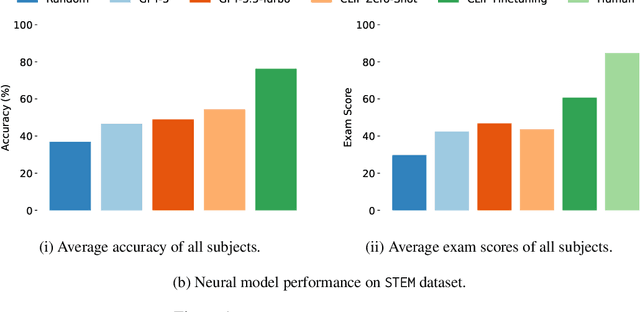
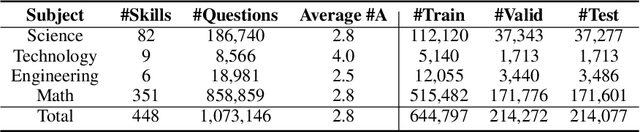
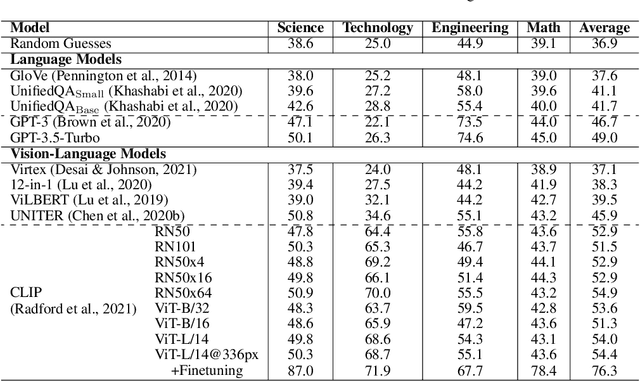
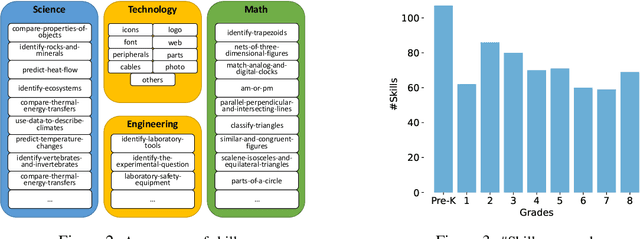
We introduce a new challenge to test the STEM skills of neural models. The problems in the real world often require solutions, combining knowledge from STEM (science, technology, engineering, and math). Unlike existing datasets, our dataset requires the understanding of multimodal vision-language information of STEM. Our dataset features one of the largest and most comprehensive datasets for the challenge. It includes 448 skills and 1,073,146 questions spanning all STEM subjects. Compared to existing datasets that often focus on examining expert-level ability, our dataset includes fundamental skills and questions designed based on the K-12 curriculum. We also add state-of-the-art foundation models such as CLIP and GPT-3.5-Turbo to our benchmark. Results show that the recent model advances only help master a very limited number of lower grade-level skills (2.5% in the third grade) in our dataset. In fact, these models are still well below (averaging 54.7%) the performance of elementary students, not to mention near expert-level performance. To understand and increase the performance on our dataset, we teach the models on a training split of our dataset. Even though we observe improved performance, the model performance remains relatively low compared to average elementary students. To solve STEM problems, we will need novel algorithmic innovations from the community.
Structured Entity Extraction Using Large Language Models
Feb 06, 2024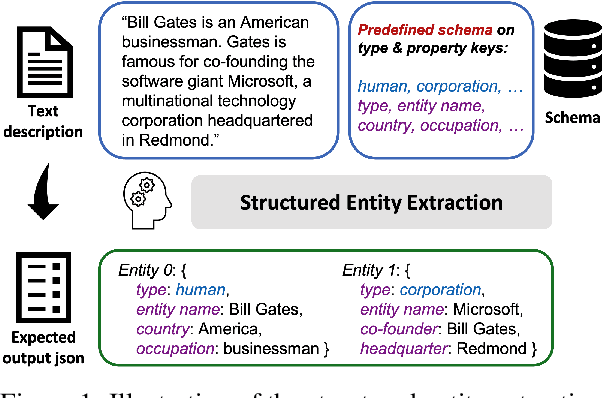
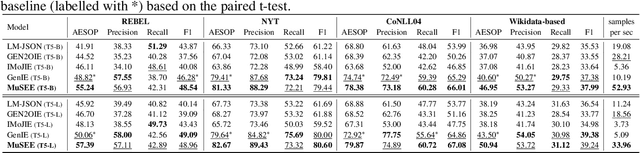
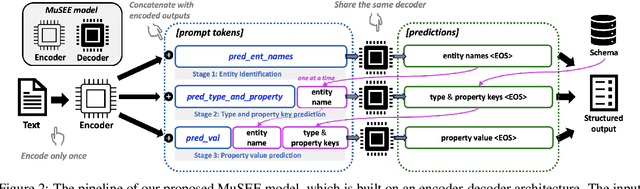

Recent advances in machine learning have significantly impacted the field of information extraction, with Large Language Models (LLMs) playing a pivotal role in extracting structured information from unstructured text. This paper explores the challenges and limitations of current methodologies in structured entity extraction and introduces a novel approach to address these issues. We contribute to the field by first introducing and formalizing the task of Structured Entity Extraction (SEE), followed by proposing Approximate Entity Set OverlaP (AESOP) Metric designed to appropriately assess model performance on this task. Later, we propose a new model that harnesses the power of LLMs for enhanced effectiveness and efficiency through decomposing the entire extraction task into multiple stages. Quantitative evaluation and human side-by-side evaluation confirm that our model outperforms baselines, offering promising directions for future advancements in structured entity extraction.
FinLLMs: A Framework for Financial Reasoning Dataset Generation with Large Language Models
Jan 19, 2024


Large Language models (LLMs) usually rely on extensive training datasets. In the financial domain, creating numerical reasoning datasets that include a mix of tables and long text often involves substantial manual annotation expenses. To address the limited data resources and reduce the annotation cost, we introduce FinLLMs, a method for generating financial question-answering data based on common financial formulas using Large Language Models. First, we compile a list of common financial formulas and construct a graph based on the variables these formulas employ. We then augment the formula set by combining those that share identical variables as new elements. Specifically, we explore formulas obtained by manual annotation and merge those formulas with shared variables by traversing the constructed graph. Finally, utilizing GPT-3.5, we generate financial question-answering data that encompasses both tabular information and long textual content, building on the collected formula set. Our experiments demonstrate that synthetic data generated by FinLLMs effectively enhances the performance of several large-scale numerical reasoning models in the financial domain, outperforming two established benchmark financial question-answering datasets.