 Add to Chrome
 Add to Firefox
 Add to Edge
Guidelines for the Annotation and Visualization of Legal Argumentation Structures in Chinese Judicial Decisions
Mar 05, 2026
This guideline proposes a systematic and operational annotation framework for representing the structure of legal argumentation in judicial decisions. Grounded in theories of legal reasoning and argumentation, the framework aims to reveal the logical organization of judicial reasoning and to provide a reliable data foundation for computational analysis. At the proposition level, the guideline distinguishes four types of propositions: general normative propositions, specific normative propositions, general factual propositions, and specific factual propositions. At the relational level, five types of relations are defined to capture argumentative structures: support, attack, joint, match, and identity. These relations represent positive and negative argumentative connections, conjunctive reasoning structures, the correspondence between legal norms and case facts, and semantic equivalence between propositions. The guideline further specifies formal representation rules and visualization conventions for both basic and nested structures, enabling consistent graphical representation of complex argumentation patterns. In addition, it establishes a standardized annotation workflow and consistency control mechanisms to ensure reproducibility and reliability of the annotated data. By providing a clear conceptual model, formal representation rules, and practical annotation procedures, this guideline offers methodological support for large-scale analysis of judicial reasoning and for future research in legal argument mining, computational modeling of legal reasoning, and AI-assisted legal analysis.

Beyond Error-Based Optimization: Experience-Driven Symbolic Regression with Goal-Conditioned Reinforcement Learning
Jan 21, 2026Symbolic Regression aims to automatically identify compact and interpretable mathematical expressions that model the functional relationship between input and output variables. Most existing search-based symbolic regression methods typically rely on the fitting error to inform the search process. However, in the vast expression space, numerous candidate expressions may exhibit similar error values while differing substantially in structure, leading to ambiguous search directions and hindering convergence to the underlying true function. To address this challenge, we propose a novel framework named EGRL-SR (Experience-driven Goal-conditioned Reinforcement Learning for Symbolic Regression). In contrast to traditional error-driven approaches, EGRL-SR introduces a new perspective: leveraging precise historical trajectories and optimizing the action-value network to proactively guide the search process, thereby achieving a more robust expression search. Specifically, we formulate symbolic regression as a goal-conditioned reinforcement learning problem and incorporate hindsight experience replay, allowing the action-value network to generalize common mapping patterns from diverse input-output pairs. Moreover, we design an all-point satisfaction binary reward function that encourages the action-value network to focus on structural patterns rather than low-error expressions, and concurrently propose a structure-guided heuristic exploration strategy to enhance search diversity and space coverage. Experiments on public benchmarks show that EGRL-SR consistently outperforms state-of-the-art methods in recovery rate and robustness, and can recover more complex expressions under the same search budget. Ablation results validate that the action-value network effectively guides the search, with both the reward function and the exploration strategy playing critical roles.
Neural Network-Assisted RIS Weight Optimization for Spatial Nulling in Distorted Reflector Antenna Systems
Dec 24, 2025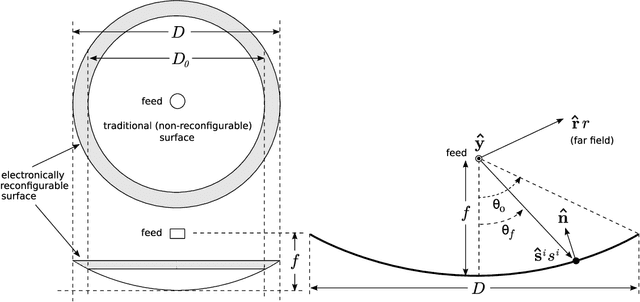
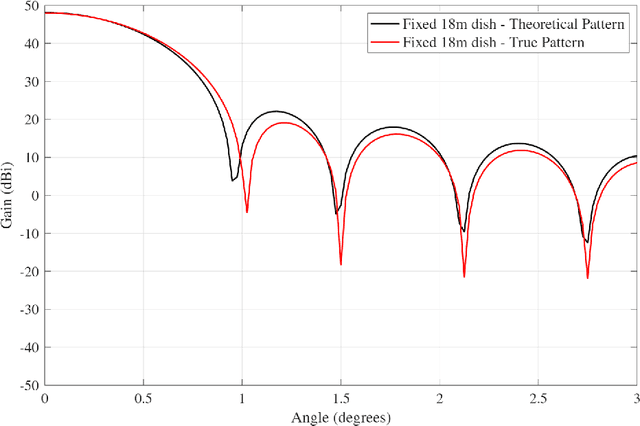
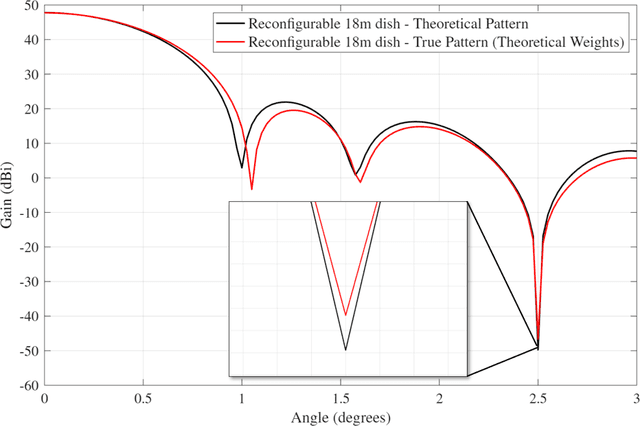
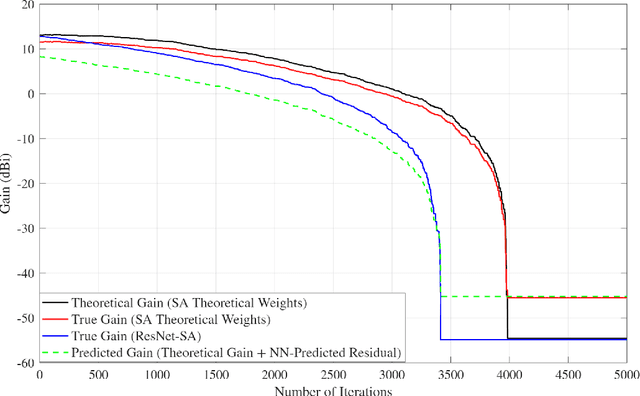
Reconfigurable intelligent surfaces (RIS) have recently been proposed as an effective means for spatial interference suppression in large reflector antenna systems. Existing RIS weight optimization algorithms typically rely on accurate theoretical radiation models. However, in practice, distortions on the reflector antenna may cause mismatches between the theoretical and true antenna patterns, leading to degraded interference cancellation performance when these weights are directly applied. In this report, a residual learning network-assisted simulated annealing (ResNet-SA) framework is proposed to address this mismatch without requiring explicit knowledge of the distorted electric field. By learning the residual difference between the theoretical and true antenna gains, a neural network (NN) is embedded in a heuristic optimization algorithm to find the optimal weight vector. Simulation results demonstrate that the proposed approach achieves improved null depth in the true radiation pattern as compared with conventional methods that optimize weights based solely on the theoretical model, validating the effectiveness of the ResNet-SA algorithm for reflector antenna systems with approximate knowledge of the pattern.
RIS-Aided Spatial Nulling: Algorithms, Analysis, and Nulling Limits
Dec 20, 2025Reconfigurable Intelligent Surfaces (RIS) have recently gained attention as a means to dynamically shape the wireless propagation environment through programmable reflection control. Among the numerous applications, an important emerging use case is employing RIS as an auxiliary mechanism for spatial interference nulling, particularly in large ground-based reflector antennas where sidelobe interference can significantly degrade the system performance. With the growing density of satellites and terrestrial emitters, algorithms with faster convergence speed and better performance are needed. This work investigates RIS-equipped reflector antennas as a representative example of RIS-assisted spatial nulling and develop algorithms for sidelobe cancellation at specific directions and frequencies under various constraints. For the continuous-phase case, we adapt the gradient projection (GP) and alternating projection (AP) algorithms for scalability and propose a closed-form near-optimal solution that achieves satisfactory nulling performance with significantly reduced complexity. For the discrete-phase case, we reformulate the problem using a penalty method and solve it via majorization-minimization, outperforming the heuristic methods from our earlier work. Further, we analyze the electric field characteristics across multiple interference directions and frequencies to quantify the nulling capability of the RIS-aided reflectors, and identify a simple criterion for the existence of unimodular weights enabling perfect nulls. Simulation results demonstrate the effectiveness of the proposed methods and confirm the theoretical nulling limits.
On the Limits of Coherent Time-Domain Cancellation of Radio Frequency Interference
Dec 20, 2025In many sensing (viz., radio astronomy) and radar applications, the received signal of interest (SOI) exhibits a significantly wider bandwidth or weaker power than the interference signal, rendering it indistinguishable from the background noise. Such scenarios arise frequently in applications such as passive radar, cognitive radio, low-probability-of-intercept (LPI) radar, and planetary radar for radio astronomy, where canceling the radio frequency interference (RFI) is critical for uncovering the SOI. In this work, we examine the Demodulation-Remodulation (Demod-Remod) based interference cancellation framework for the RFI. This approach demodulates the unknown interference, creates a noise-free interference replica, and coherently subtracts it from the received signal. To evaluate the performance limits, we employ the performance metric termed \textit{interference rejection ratio} (IRR), which quantifies the interference canceled. We derive the analytical expressions of IRR as a function of the optimal estimation variances of the signal parameters. Simulation results confirm the accuracy of the analytical expression for both single-carrier and multi-carrier interference signals and demonstrate that the method can substantially suppress the interference at a sufficient interference-to-noise ratio (INR), enabling enhanced detection and extraction of the SOI. We further extend the analysis to the scenario where the SOI is above the noise floor, and confirm the validity of the theoretical IRR expression in this scenario. Lastly, we compare the Demod-Remod technique to other time-domain cancellation methods. The result of the comparison identifies the conditions under which each method is preferred, offering practical guidelines for interference mitigation under different scenarios.
Towards Rotation-only Imaging Geometry: Rotation Estimation
Nov 16, 2025Structure from Motion (SfM) is a critical task in computer vision, aiming to recover the 3D scene structure and camera motion from a sequence of 2D images. The recent pose-only imaging geometry decouples 3D coordinates from camera poses and demonstrates significantly better SfM performance through pose adjustment. Continuing the pose-only perspective, this paper explores the critical relationship between the scene structures, rotation and translation. Notably, the translation can be expressed in terms of rotation, allowing us to condense the imaging geometry representation onto the rotation manifold. A rotation-only optimization framework based on reprojection error is proposed for both two-view and multi-view scenarios. The experiment results demonstrate superior accuracy and robustness performance over the current state-of-the-art rotation estimation methods, even comparable to multiple bundle adjustment iteration results. Hopefully, this work contributes to even more accurate, efficient and reliable 3D visual computing.
MegaSR: Mining Customized Semantics and Expressive Guidance for Image Super-Resolution
Mar 11, 2025Pioneering text-to-image (T2I) diffusion models have ushered in a new era of real-world image super-resolution (Real-ISR), significantly enhancing the visual perception of reconstructed images. However, existing methods typically integrate uniform abstract textual semantics across all blocks, overlooking the distinct semantic requirements at different depths and the fine-grained, concrete semantics inherently present in the images themselves. Moreover, relying solely on a single type of guidance further disrupts the consistency of reconstruction. To address these issues, we propose MegaSR, a novel framework that mines customized block-wise semantics and expressive guidance for diffusion-based ISR. Compared to uniform textual semantics, MegaSR enables flexible adaptation to multi-granularity semantic awareness by dynamically incorporating image attributes at each block. Furthermore, we experimentally identify HED edge maps, depth maps, and segmentation maps as the most expressive guidance, and propose a multi-stage aggregation strategy to modulate them into the T2I models. Extensive experiments demonstrate the superiority of MegaSR in terms of semantic richness and structural consistency.
Integrated Localization and Communication with Sparse MIMO: Will Virtual Array Technology also Benefit Wireless Communication?
Feb 25, 2025For the 6G wireless networks, achieving high-performance integrated localization and communication (ILAC) is critical to unlock the full potential of wireless networks. To simultaneously enhance localization and communication performance cost-effectively, this paper proposes sparse multiple-input multiple-output (MIMO) based ILAC with nested and co-prime sparse arrays deployed at the base station. Sparse MIMO relaxes the traditional half-wavelength antenna spacing constraint to enlarge the antenna aperture, thus enhancing localization degrees of freedom and providing finer spatial resolution. However, it also leads to undesired grating lobes, which may cause severe inter-user interference for communication and angular ambiguity for localization. While the latter issue can be effectively addressed by the virtual array technology, by forming sum or difference co-arrays via signal (conjugate) correlation among array elements, it is unclear whether the similar virtual array technology also benefits wireless communications for ILAC systems. In this paper, we first reveal that the answer to the above question is negative, by showing that forming virtual arrays for wireless communication will cause destruction of phase information, degradation of signal-to-noise ratio and aggravation of multi-user interference. Therefore, we propose the hybrid processing for sparse MIMO based ILAC, i.e., physical array based communication while virtual array based localization. To this end, we characterize the beam pattern of sparse arrays by three metrics, demonstrating that despite of the introduction of grating lobes, sparse arrays can also bring benefits to communications thanks to its narrower main lobe beam width than the conventional compact arrays. Extensive simulation results are presented to demonstrate the performance gains of sparse MIMO based ILAC over that based on the conventional compact MIMO.
Movable Antenna for Wireless Communications:Prototyping and Experimental Results
Aug 16, 2024Movable antenna (MA), which can flexibly change the position of antenna in three-dimensional (3D) continuous space, is an emerging technology for achieving full spatial performance gains. In this paper, a prototype of MA communication system with ultra-accurate movement control is presented to verify the performance gain of MA in practical environments. The prototype utilizes the feedback control to ensure that each power measurement is performed after the MA moves to a designated position. The system operates at 3.5 GHz or 27.5 GHz, where the MA moves along a one-dimensional horizontal line with a step size of 0.01{\lambda} and in a two-dimensional square region with a step size of 0.05{\lambda}, respectively, with {\lambda} denoting the signal wavelength. The scenario with mixed line-of-sight (LoS) and non-LoS (NLoS) links is considered. Extensive experimental results are obtained with the designed prototype and compared with the simulation results, which validate the great potential of MA technology in improving wireless communication performance. For example, the maximum variation of measured power reaches over 40 dB and 23 dB at 3.5 GHz and 27.5 GHz, respectively, thanks to the flexible antenna movement. In addition, experimental results indicate that the power gain of MA system relies on the estimated path state information (PSI), including the number of paths, their delays, elevation and azimuth angles of arrival (AoAs), as well as the power ratio of each path.
Sparse MIMO for ISAC: New Opportunities and Challenges
Jun 18, 2024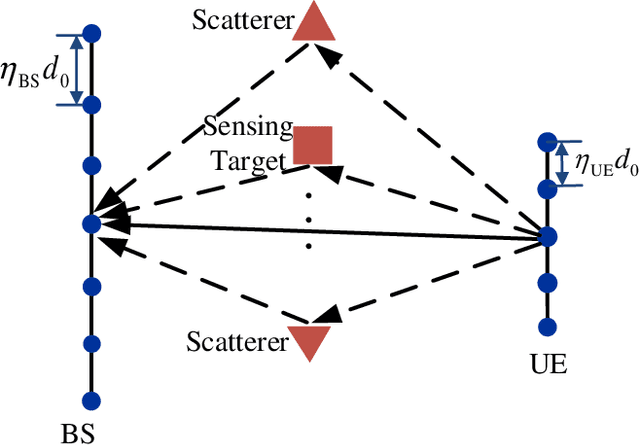
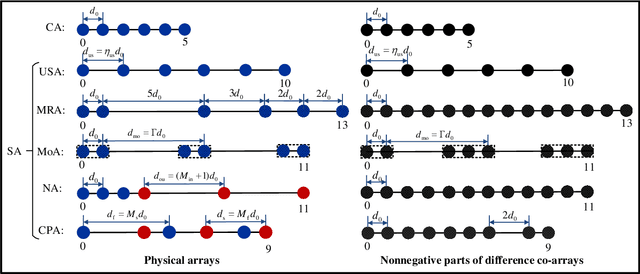
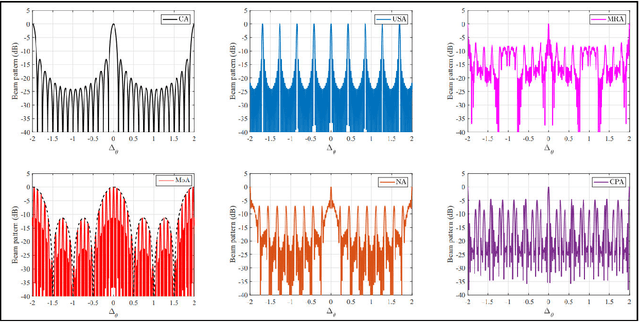

Multiple-input multiple-output (MIMO) has been a key technology of wireless communications for decades. A typical MIMO system employs antenna arrays with the inter-antenna spacing being half of the signal wavelength, which we term as compact MIMO. Looking forward towards the future sixth-generation (6G) mobile communication networks, MIMO system will achieve even finer spatial resolution to not only enhance the spectral efficiency of wireless communications, but also enable more accurate wireless sensing. To this end, by removing the restriction of half-wavelength antenna spacing, sparse MIMO has been proposed as a new architecture that is able to significantly enlarge the array aperture as compared to conventional compact MIMO with the same number of array elements. In addition, sparse MIMO leads to a new form of virtual MIMO systems for sensing with their virtual apertures considerably larger than physical apertures. As sparse MIMO is expected to be a viable technology for 6G, we provide in this article a comprehensive overview of it, especially focusing on its appealing advantages for integrated sensing and communication (ISAC) towards 6G. Specifically, assorted sparse MIMO architectures are first introduced, followed by their new benefits as well as challenges. We then discuss the main design issues of sparse MIMO, including beam pattern synthesis, signal processing, grating lobe suppression, beam codebook design, and array geometry optimization. Last, we provide numerical results to evaluate the performance of sparse MIMO for ISAC and point out promising directions for future research.