 Add to Chrome
 Add to Firefox
 Add to Edge
3D Spherical Directly-Connected Antenna Array for Low-Altitude UAV Swarm ISAC
Mar 18, 2026
Recently a novel multi-antenna architecture termed ray antenna array (RAA) was proposed, where several simple uniform linear arrays (sULAs) are arranged in a ray-like structure to enhance communication and sensing performance. By eliminating the need for phase shifters, it also significantly reduces hardware costs. However, RAA is prone to signal blockage and has no elevation angle resolution capability in three-dimensional (3D) scenarios. To address such issues, in this paper we propose a novel spherical directly-connected antenna array (DCAA), which composes of multiple simple uniform planar arrays (sUPAs) placed over a spherical surface. All elements within each sUPA are directly connected. Compared to conventional arrays with hybrid analog/digital beamforming (HBF), DCAA significantly reduces hardware cost, improves energy focusing, and provides superior and uniform angular res olution for 3D space. These advantages make DCAA particularly suitable for integrated sensing and communication (ISAC) in low-altitude unmanned aerial vehicles (UAV) swarm scenarios, where targets may frequently move away from the boresight of traditional arrays, degrading both communication and sensing performance. Simulation results demonstrate that the proposed spherical DCAA achieves significantly better angular resolution and higher spectral efficiency than conventional array with HBF, highlighting its strong potential for UAV swarm ISAC systems.

OpenISAC: An Open-Source Real-Time Experimentation Platform for OFDM-ISAC with Over-the-Air Synchronization
Jan 07, 2026Integrated sensing and communication (ISAC) is envisioned to be one of the key usage scenarios for the sixth generation (6G) mobile communication networks. While significant progresses have been achieved for the theoretical studies, the further advancement of ISAC is hampered by the lack of accessible, open-source, and real-time experimental platforms. To address this gap, we introduce OpenISAC, a versatile and high-performance open-source platform for real-time ISAC experimentation. OpenISAC utilizes orthogonal frequency division multiplexing (OFDM) waveform and implements crucial sensing functionalities, including both monostatic and bistatic delay-Doppler sensing. A key feature of our platform is a novel over-the-air (OTA) synchronization mechanism that enables robust bistatic operations without requiring a wired connection between nodes. The platform is built entirely on open-source software, leveraging the universal software radio peripheral (USRP) hardware driver (UHD) library, thus eliminating the need for any commercial licenses. It supports a wide range of software-defined radios, from the cost-effective USRP B200 series to the high-performance X400 series. The physical layer modulator and demodulator are implemented with C++ for high-speed processing, while the sensing data is streamed to a Python environment, providing a user-friendly interface for rapid prototyping and validation of sensing signal processing algorithms. With flexible parameter selection and real-time communication and sensing operation, OpenISAC serves as a powerful and accessible tool for the academic and research communities to explore and innovate within the field of OFDM-ISAC.
CKM-Enabled Joint Spatial-Doppler Domain Clutter Suppression for Low-Altitude UAV ISAC
Dec 10, 2025The rapid development of low-altitude economy has placed higher demands on the sensing of small-sized unmanned aerial vehicle (UAV) targets. However, the complex and dynamic low-altitude environment, like the urban and mountainous areas, makes clutter a significant factor affecting the sensing performance. Traditional clutter suppression methods based on Doppler difference or signal strength are inadequate for scenarios with dynamic clutter and slow-moving targets like low-altitude UAVs. In this paper, motivated by the concept of channel knowledge map (CKM), we propose a novel clutter suppression technique for orthogonal frequency division multiplexing (OFDM) integrated sensing and communication (ISAC) system, by leveraging a new type of CKM named clutter angle map (CLAM). CLAM is a site-specific database, containing location-specific primary clutter angles for the coverage area of the ISAC base station (BS). With CLAM, the sensing signal components corresponding to the clutter environment can be effectively removed before target detection and parameter estimation, which greatly enhances the sensing performance. Besides, to take into account the scenarios when the targets and clutters are in close directions so that pure CLAM-based spatial domain clutter suppression is no longer effective, we further propose a two-step CLAM-enabled joint spatial-Doppler domain clutter suppression algorithm. Simulation results demonstrate that the proposed technique effectively suppresses clutter and enhances target sensing performance, achieving accurate parameter estimation for sensing slow-moving low-altitude UAV targets.
Cost-Effective XL-MIMO Communication with Cylinder Directly-Connected Antenna Array
Dec 08, 2025Extremely large-scale multi-input multi-output (XL-MIMO) is a promising technology for the sixth generation (6G) wireless networks, thanks to its superior spatial resolution and beamforming gains. In order to realize XL-MIMO costeffectively, an innovative ray antenna array (RAA) architecture with directly-connected uniform linear array (ULA) was recently proposed, which achieves flexible beamforming without relying on traditional analog phase shifters or digital beamforming. However, RAA suffers from the signal blockage issue since its ray-configured ULAs are placed in the same plane. To address this issue, this paper proposes a novel antenna array architecture termed cylinder directly-connected antenna array (DCAA), which is achieved via multiple simple uniform circular array (sUCA) with carefully designed orientations in a layered three-dimensional structure. The so-called sUCA partitions the uniform circular array (UCA) into two sub-arrays where each sub-array has all antenna elements directly connected to achieve a desired beam direction corresponding to the sub-array's physical orientation, thus achieving full spatial coverage. Compared with the conventional ULA architecture with hybrid analog/digital beamforming (HBF), the proposed cylinder DCAA can achieve uniform spatial resolution, enhanced communication rate and lower hardware costs. Simulation results are provided to validate the promised gains of cylinder DCAA, demonstrating its great potential for high-frequency systems such as millimeter wave (mmWave) and Terahertz (THz) systems.
Full-Dimensional Beamforming for Multi-User MIMO-OFDM ISAC for Low-Altitude UAV with Zero Sensing Resource Allocation
Aug 08, 2025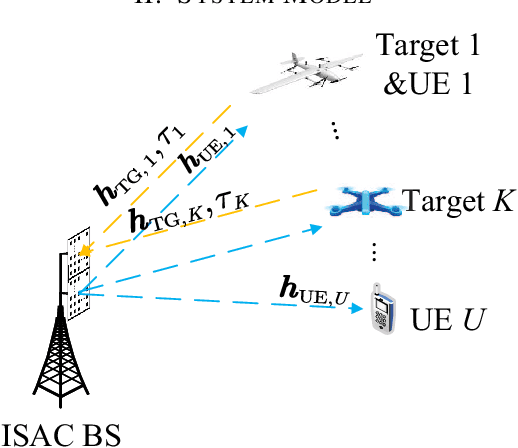
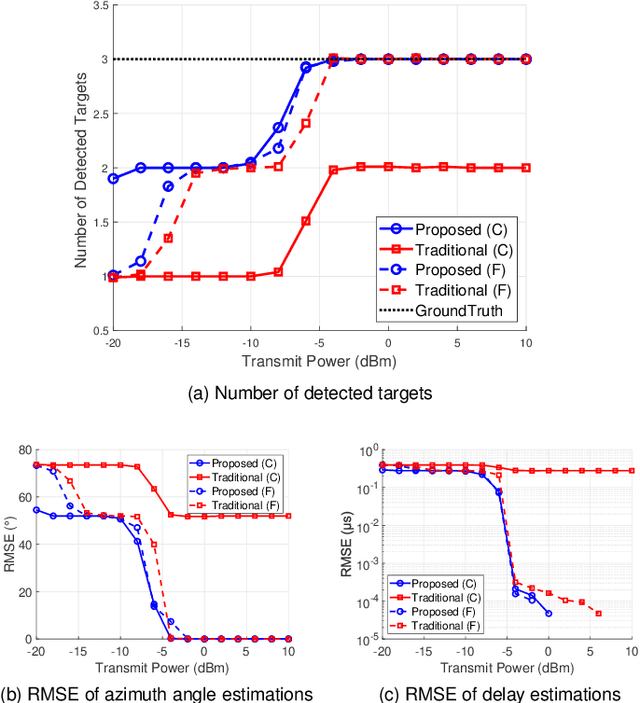
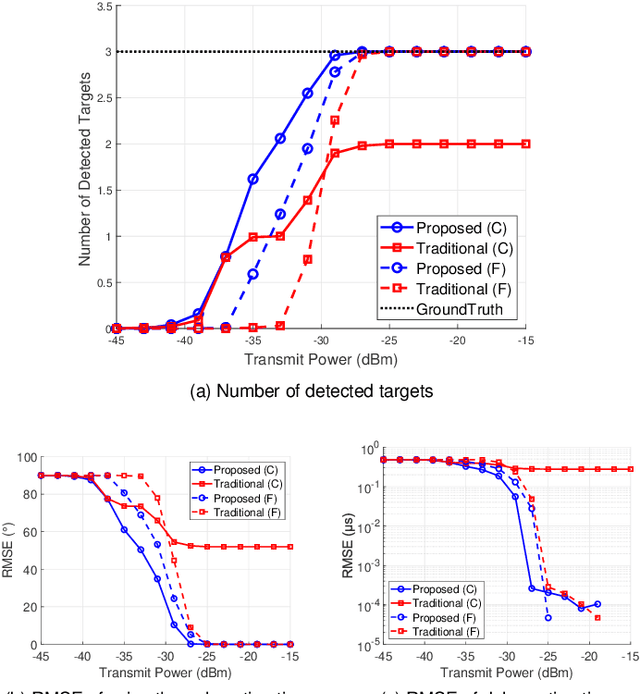
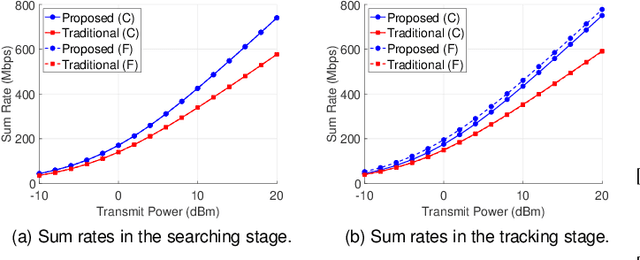
Low-altitude unmanned aerial vehicles (UAVs) are expected to play an important role for low-altitude economy with a wide range of applications like precise agriculture, aerial delivery and surveillance. Integrated sensing and communication (ISAC) is a key technology to enable the large-scale deployment and routine usage of UAVs by providing both communication and sensing services efficiently. For UAV ISAC systems, as UAV often acts as both a communication user equipment (UE) and a sensing target, traditional ISAC systems that usually allocate dedicated TF resources for sensing are inefficient due to the severe degradation of communication spectral efficiency. To address this issue, in this paper, we propose a novel multiple-input multiple-output (MIMO) orthogonal frequency division multiplexing (OFDM)-based ISAC framework for UAVs that eliminates the need for dedicated sensing TF resources, achieving zero TF sensing overhead. By designing the transmit beamforming to meet the requirements for both communication and sensing tasks, our proposed approach enables the communication TF resources to be fully reused for sensing, thereby enhancing both the communication sum rate and the sensing performance in terms of resolution, unambiguous range, and accuracy. Additionally, we introduce a low-complexity target searching beamforming algorithm and a two-stage super-resolution sensing algorithm, which ensure efficient implementation. Simulation results demonstrate that the proposed MIMO-OFDM-ISAC framework not only improves the communication sum rate but also outperforms traditional ISAC systems in sensing performance, making it a promising solution for future ISAC systems to support low-altitude UAVs.
How Does CP Length Affect the Sensing Range for OFDM-ISAC?
Mar 11, 2025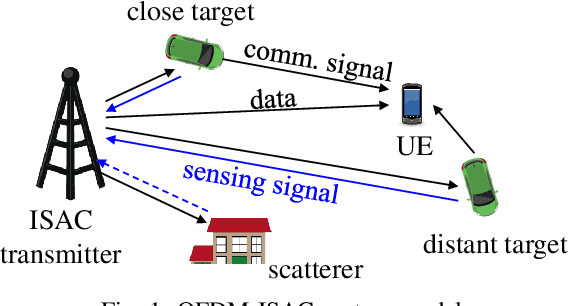
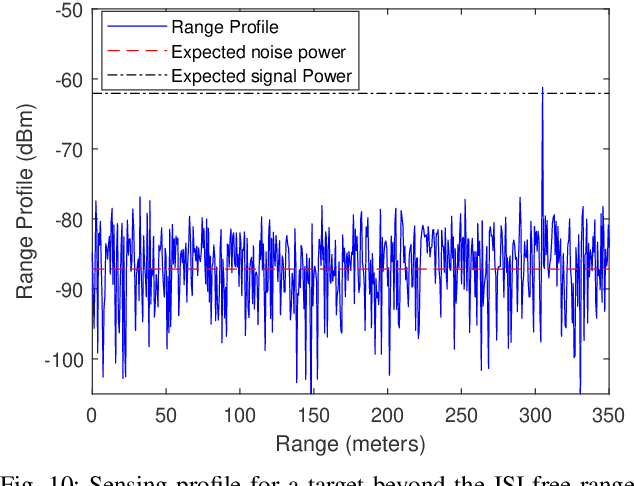
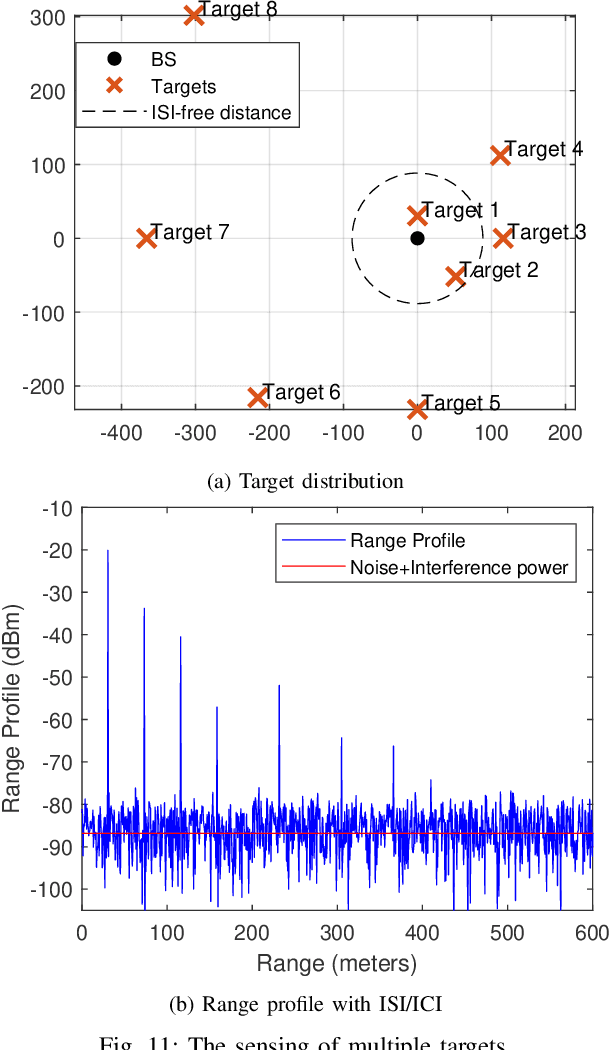
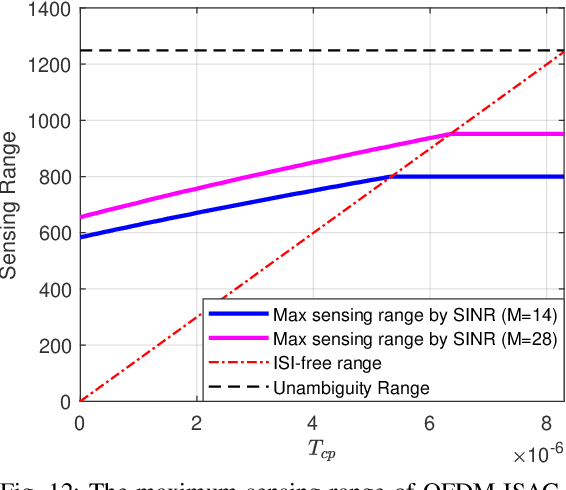
Orthogonal frequency division multiplexing (OFDM), which has been the dominating waveform for contemporary wireless communications, is also regarded as a competitive candidate for future integrated sensing and communication (ISAC) systems. Existing works on OFDM-ISAC usually assume that the maximum sensing range should be limited by the cyclic prefix (CP) length since inter-symbol interference (ISI) and inter-carrier interference (ICI) should be avoided. However, in this paper, we provide rigorous analysis to reveal that the random data embedded in OFDM-ISAC signal can actually act as a free ``mask" for ISI, which makes ISI/ICI random and hence greatly attenuated after radar signal processing. The derived signal-to-interference-plus-noise ratio (SINR) in the range profile demonstrates that the maximum sensing range of OFDM-ISAC can greatly exceed the ISI-free distance that is limited by the CP length, which is validated by simulation results. To further mitigate power degradation for long-range targets, a novel sliding window sensing method is proposed, which iteratively detects and cancels short-range targets before shifting the detection window. The shifted detection window can effectively compensate the power degradation due to insufficient CP length for long-range targets. Such results provide valuable guidance for the CP length design in OFDM-ISAC systems.
Achieving Full-Bandwidth Sensing Performance with Partial Bandwidth Allocation for ISAC
Dec 28, 2024
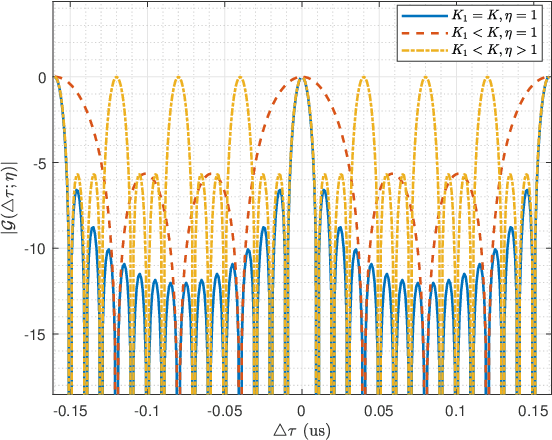


This letter studies an uplink integrated sensing and communication (ISAC) system using discrete Fourier transform spread orthogonal frequency division multiplexing (DFT-s-OFDM) transmission. We try to answer the following fundamental question: With only a fractional bandwidth allocated to the user with sensing task, can the same delay resolution and unambiguous range be achieved as if all bandwidth were allocated to it? We affirmatively answer the question by proposing a novel two-stage delay estimation (TSDE) method that exploits the following facts: without increasing the allocated bandwidth, higher delay resolution can be achieved via distributed subcarrier allocation compared to its collocated counterpart, while there is a trade-off between delay resolution and unambiguous range by varying the decimation factor of subcarriers. Therefore, the key idea of the proposed TSDE method is to first perform coarse delay estimation with collocated subcarriers to achieve a large unambiguous range, and then use distributed subcarriers with optimized decimation factor to enhance delay resolution while avoiding delay ambiguity. Our analysis shows that the proposed TSDE method can achieve the full-bandwidth delay resolution and unambiguous range, by using only at most half of the full bandwidth, provided that the channel delay spread is less than half of the unambiguous range. Numerical results show the superiority of the proposed method over the conventional method with collocated subcarriers.
Movable Antenna for Wireless Communications:Prototyping and Experimental Results
Aug 16, 2024Movable antenna (MA), which can flexibly change the position of antenna in three-dimensional (3D) continuous space, is an emerging technology for achieving full spatial performance gains. In this paper, a prototype of MA communication system with ultra-accurate movement control is presented to verify the performance gain of MA in practical environments. The prototype utilizes the feedback control to ensure that each power measurement is performed after the MA moves to a designated position. The system operates at 3.5 GHz or 27.5 GHz, where the MA moves along a one-dimensional horizontal line with a step size of 0.01{\lambda} and in a two-dimensional square region with a step size of 0.05{\lambda}, respectively, with {\lambda} denoting the signal wavelength. The scenario with mixed line-of-sight (LoS) and non-LoS (NLoS) links is considered. Extensive experimental results are obtained with the designed prototype and compared with the simulation results, which validate the great potential of MA technology in improving wireless communication performance. For example, the maximum variation of measured power reaches over 40 dB and 23 dB at 3.5 GHz and 27.5 GHz, respectively, thanks to the flexible antenna movement. In addition, experimental results indicate that the power gain of MA system relies on the estimated path state information (PSI), including the number of paths, their delays, elevation and azimuth angles of arrival (AoAs), as well as the power ratio of each path.
Prototyping and Experimental Results for ISAC-based Channel Knowledge Map
Aug 12, 2024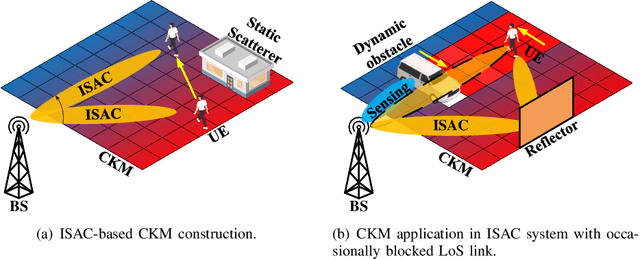
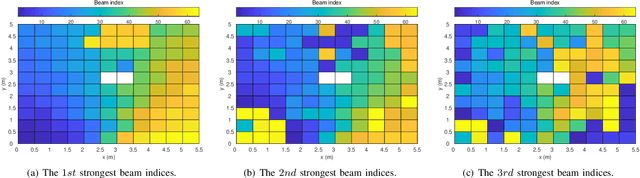
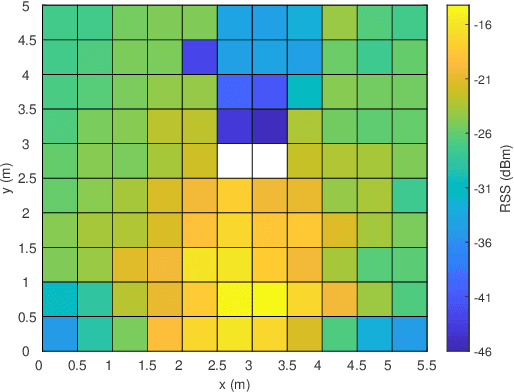
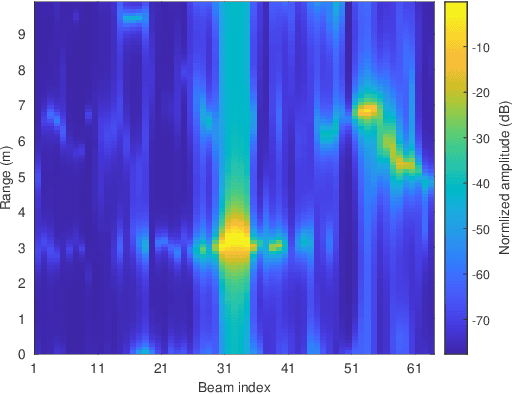
Channel knowledge map (CKM) is a novel approach for achieving environment-aware communication and sensing. This paper presents an integrated sensing and communication (ISAC)-based CKM prototype system, demonstrating the mutualistic relationship between ISAC and CKM. The system consists of an ISAC base station (BS), a user equipment (UE), and a server. By using a shared orthogonal frequency division multiplexing (OFDM) waveform over the millimeter wave (mmWave) band, the ISAC BS is able to communicate with the UE while simultaneously sensing the environment and acquiring the UE's location. The prototype showcases the complete process of the construction and application of the ISAC-based CKM. For CKM construction phase, the BS stores the UE's channel feedback information in a database indexed by the UE's location, including beam indices and channel gain. For CKM application phase, the BS looks up the best beam index from the CKM based on the UE's location to achieve training-free mmWave beam alignment. The experimental results show that ISAC can be used to construct or update CKM while communicating with UEs, and the pre-learned CKM can assist ISAC for training-free beam alignment.
Single-BS Simultaneous Environment Sensing and UE Localization without LoS Path by Exploiting Near-Field Scatterers
Jul 30, 2024As the mobile communication network evolves over the past few decades, localizing user equipment (UE) has become an important network service. While localization in line-of-sight (LoS) scenarios has reached a level of maturity, it is known that in far-field scenarios without a LoS path nor any prior information about the scatterers, accurately localizing the UE is impossible. In this letter, we show that this becomes possible if there are scatterers in the near-field region of the base station (BS) antenna arrays. Specifically, by exploiting the additional distance sensing capability of extremely large-scale antenna arrays (XL-arrays) provided by near-field effects, we propose a novel method that simultaneously performs environment sensing and non-line-of-sight (NLoS) UE localization using one single BS. In the proposed method, the BS leverages the near-field characteristics of XL-arrays to directly estimate the locations of the near-field scatterers with array signal processing, which then serves as virtual anchors for UE localization. Then, the propagation delay for each path is estimated and the position of the UE is obtained based on the positions of scatterers and the path delays. Simulation results demonstrate that the proposed method achieves superior accuracy and robustness with similar complexity compared with benchmark methods.