 Add to Chrome
 Add to Firefox
 Add to Edge
OpenISAC: An Open-Source Real-Time Experimentation Platform for OFDM-ISAC with Over-the-Air Synchronization
Jan 07, 2026
Integrated sensing and communication (ISAC) is envisioned to be one of the key usage scenarios for the sixth generation (6G) mobile communication networks. While significant progresses have been achieved for the theoretical studies, the further advancement of ISAC is hampered by the lack of accessible, open-source, and real-time experimental platforms. To address this gap, we introduce OpenISAC, a versatile and high-performance open-source platform for real-time ISAC experimentation. OpenISAC utilizes orthogonal frequency division multiplexing (OFDM) waveform and implements crucial sensing functionalities, including both monostatic and bistatic delay-Doppler sensing. A key feature of our platform is a novel over-the-air (OTA) synchronization mechanism that enables robust bistatic operations without requiring a wired connection between nodes. The platform is built entirely on open-source software, leveraging the universal software radio peripheral (USRP) hardware driver (UHD) library, thus eliminating the need for any commercial licenses. It supports a wide range of software-defined radios, from the cost-effective USRP B200 series to the high-performance X400 series. The physical layer modulator and demodulator are implemented with C++ for high-speed processing, while the sensing data is streamed to a Python environment, providing a user-friendly interface for rapid prototyping and validation of sensing signal processing algorithms. With flexible parameter selection and real-time communication and sensing operation, OpenISAC serves as a powerful and accessible tool for the academic and research communities to explore and innovate within the field of OFDM-ISAC.

Movable Antenna for Wireless Communications:Prototyping and Experimental Results
Aug 16, 2024Movable antenna (MA), which can flexibly change the position of antenna in three-dimensional (3D) continuous space, is an emerging technology for achieving full spatial performance gains. In this paper, a prototype of MA communication system with ultra-accurate movement control is presented to verify the performance gain of MA in practical environments. The prototype utilizes the feedback control to ensure that each power measurement is performed after the MA moves to a designated position. The system operates at 3.5 GHz or 27.5 GHz, where the MA moves along a one-dimensional horizontal line with a step size of 0.01{\lambda} and in a two-dimensional square region with a step size of 0.05{\lambda}, respectively, with {\lambda} denoting the signal wavelength. The scenario with mixed line-of-sight (LoS) and non-LoS (NLoS) links is considered. Extensive experimental results are obtained with the designed prototype and compared with the simulation results, which validate the great potential of MA technology in improving wireless communication performance. For example, the maximum variation of measured power reaches over 40 dB and 23 dB at 3.5 GHz and 27.5 GHz, respectively, thanks to the flexible antenna movement. In addition, experimental results indicate that the power gain of MA system relies on the estimated path state information (PSI), including the number of paths, their delays, elevation and azimuth angles of arrival (AoAs), as well as the power ratio of each path.
Prototyping and Experimental Results for ISAC-based Channel Knowledge Map
Aug 12, 2024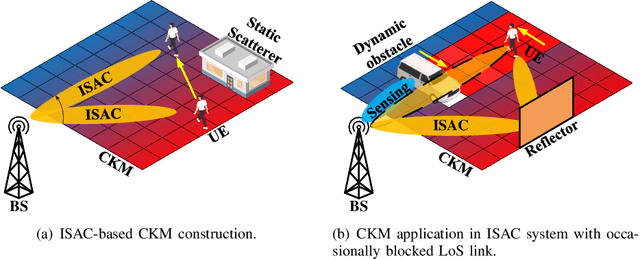
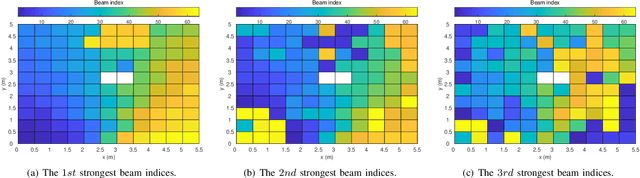
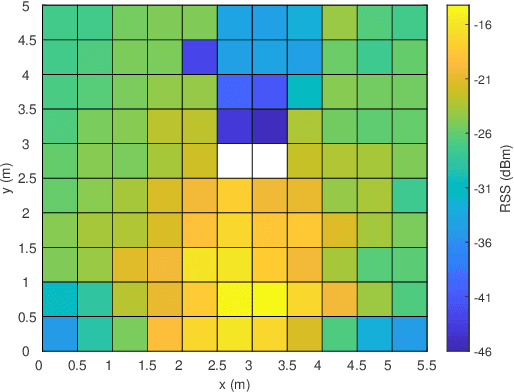
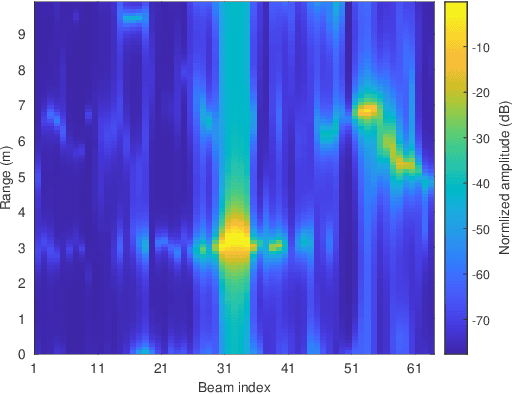
Channel knowledge map (CKM) is a novel approach for achieving environment-aware communication and sensing. This paper presents an integrated sensing and communication (ISAC)-based CKM prototype system, demonstrating the mutualistic relationship between ISAC and CKM. The system consists of an ISAC base station (BS), a user equipment (UE), and a server. By using a shared orthogonal frequency division multiplexing (OFDM) waveform over the millimeter wave (mmWave) band, the ISAC BS is able to communicate with the UE while simultaneously sensing the environment and acquiring the UE's location. The prototype showcases the complete process of the construction and application of the ISAC-based CKM. For CKM construction phase, the BS stores the UE's channel feedback information in a database indexed by the UE's location, including beam indices and channel gain. For CKM application phase, the BS looks up the best beam index from the CKM based on the UE's location to achieve training-free mmWave beam alignment. The experimental results show that ISAC can be used to construct or update CKM while communicating with UEs, and the pre-learned CKM can assist ISAC for training-free beam alignment.
Integrated Super-Resolution Sensing and Communication with 5G NR Waveform: Signal Processing with Uneven CPs and Experiments
May 09, 2023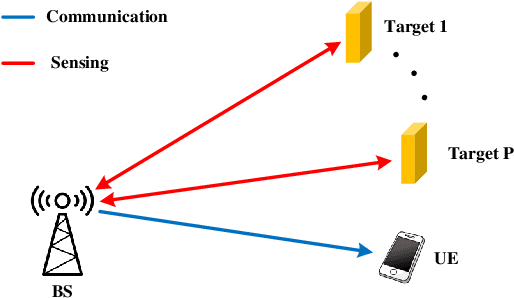
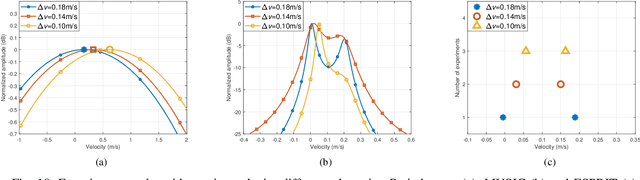
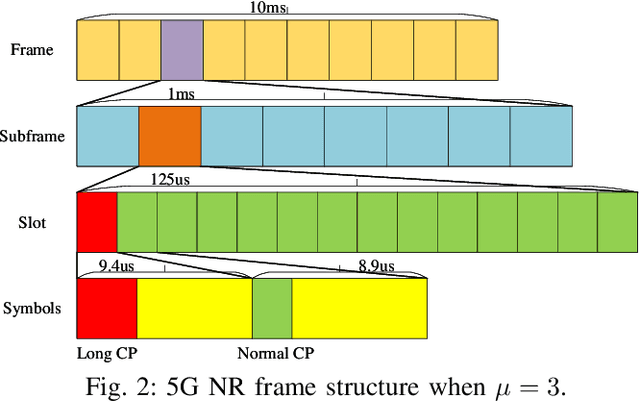
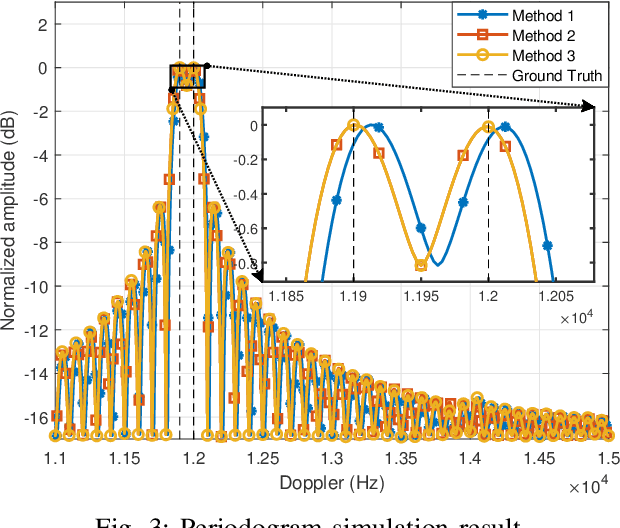
Integrated sensing and communication (ISAC) is a promising technology to simultaneously provide high-performance wireless communication and radar sensing services in future networks. In this paper, we propose the concept of \emph{integrated super-resolution sensing and communication} (ISSAC), which uses super-resolution algorithms in ISAC systems to achieve extreme sensing performance for those critical parameters, such as delay, Doppler, and angle of the sensing targets. Based on practical fifth generation (5G) New Radio (NR) waveforms, the signal processing techniques of ISSAC are investigated and prototyping experiments are performed to verify the achievable performance. To this end, we first study the effect of uneven cyclic prefix (CP) lengths of 5G NR orthogonal frequency division multiplexing (OFDM) waveforms on various sensing algorithms. Specifically, the performance of the standard Periodogram based radar processing method, together with the two classical super-resolution algorithms, namely, MUltiple SIgnal Classification (MUSIC) and Estimating Signal Parameter via Rotational Invariance Techniques (ESPRIT) are analyzed in terms of the delay and Doppler estimation. To resolve the uneven CP issue, a new structure of steering vector for MUSIC and a new selection of submatrices for ESPRIT are proposed. Furthermore, an ISSAC experiment platform is setup to validate the theoretical analysis, and the experimental results show that the performance degradation caused by unequal CP length is insignificant and high-resolution delay and Doppler estimation of the target can be achieved with 5G NR waveforms.