 Add to Chrome
 Add to Firefox
 Add to Edge
REWARD CONSISTENCY: Improving Multi-Objective Alignment from a Data-Centric Perspective
Apr 15, 2025
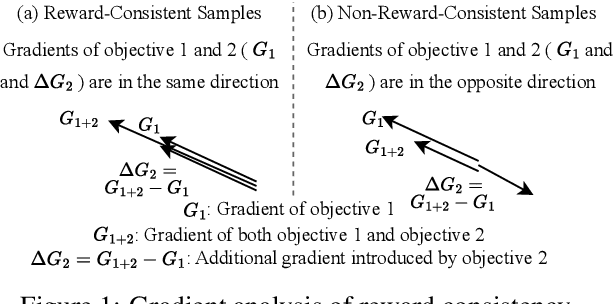
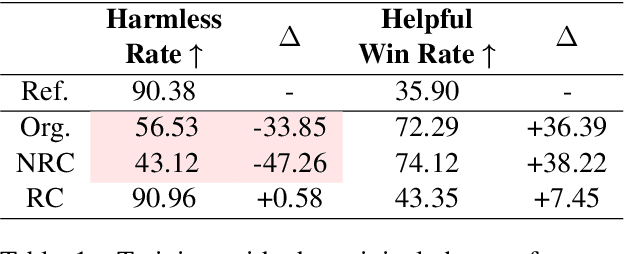

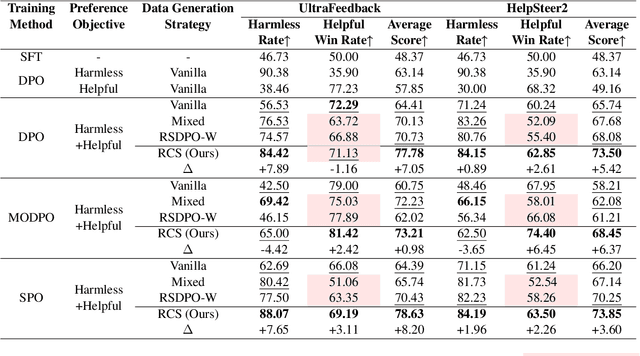
Multi-objective preference alignment in language models often encounters a challenging trade-off: optimizing for one human preference (e.g., helpfulness) frequently compromises others (e.g., harmlessness) due to the inherent conflicts between competing objectives. While prior work mainly focuses on algorithmic solutions, we explore a novel data-driven approach to uncover the types of data that can effectively mitigate these conflicts. Specifically, we propose the concept of Reward Consistency (RC), which identifies samples that align with multiple preference objectives, thereby reducing conflicts during training. Through gradient-based analysis, we demonstrate that RC-compliant samples inherently constrain performance degradation during multi-objective optimization. Building on these insights, we further develop Reward Consistency Sampling, a framework that automatically constructs preference datasets that effectively mitigate conflicts during multi-objective alignment. Our generated data achieves an average improvement of 13.37% in both the harmless rate and helpfulness win rate when optimizing harmlessness and helpfulness, and can consistently resolve conflicts in varying multi-objective scenarios.

The Tenth NTIRE 2025 Efficient Super-Resolution Challenge Report
Apr 14, 2025This paper presents a comprehensive review of the NTIRE 2025 Challenge on Single-Image Efficient Super-Resolution (ESR). The challenge aimed to advance the development of deep models that optimize key computational metrics, i.e., runtime, parameters, and FLOPs, while achieving a PSNR of at least 26.90 dB on the $\operatorname{DIV2K\_LSDIR\_valid}$ dataset and 26.99 dB on the $\operatorname{DIV2K\_LSDIR\_test}$ dataset. A robust participation saw \textbf{244} registered entrants, with \textbf{43} teams submitting valid entries. This report meticulously analyzes these methods and results, emphasizing groundbreaking advancements in state-of-the-art single-image ESR techniques. The analysis highlights innovative approaches and establishes benchmarks for future research in the field.
MIEB: Massive Image Embedding Benchmark
Apr 14, 2025Image representations are often evaluated through disjointed, task-specific protocols, leading to a fragmented understanding of model capabilities. For instance, it is unclear whether an image embedding model adept at clustering images is equally good at retrieving relevant images given a piece of text. We introduce the Massive Image Embedding Benchmark (MIEB) to evaluate the performance of image and image-text embedding models across the broadest spectrum to date. MIEB spans 38 languages across 130 individual tasks, which we group into 8 high-level categories. We benchmark 50 models across our benchmark, finding that no single method dominates across all task categories. We reveal hidden capabilities in advanced vision models such as their accurate visual representation of texts, and their yet limited capabilities in interleaved encodings and matching images and texts in the presence of confounders. We also show that the performance of vision encoders on MIEB correlates highly with their performance when used in multimodal large language models. Our code, dataset, and leaderboard are publicly available at https://github.com/embeddings-benchmark/mteb.
Outage Probability Analysis for OTFS with Finite Blocklength
Apr 13, 2025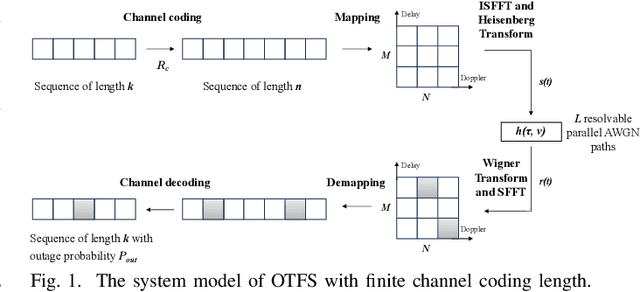
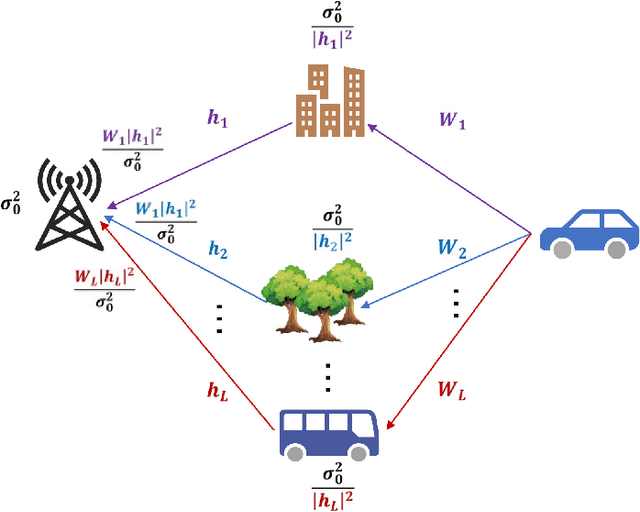
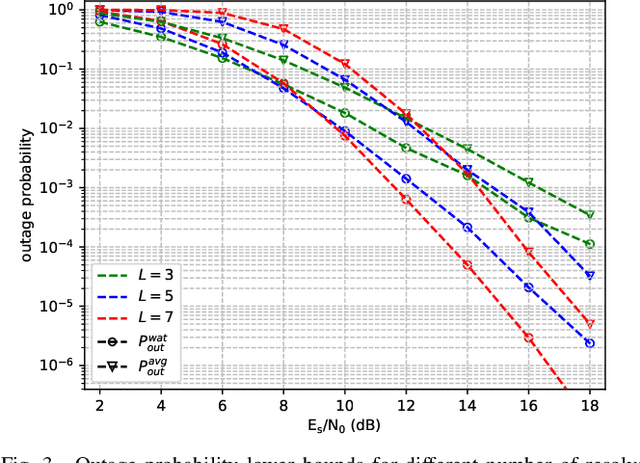
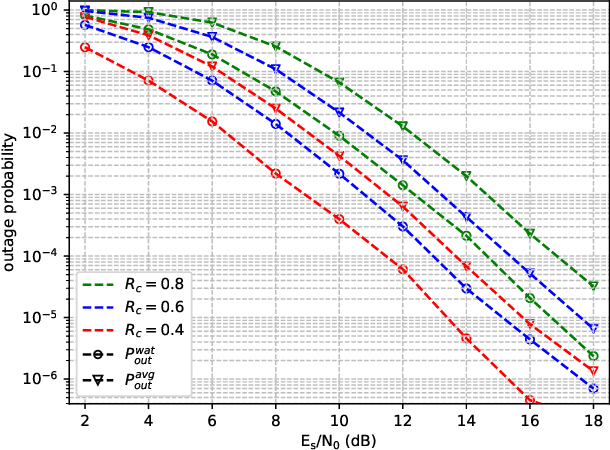
Orthogonal time frequency space (OTFS) modulation is widely acknowledged as a prospective waveform for future wireless communication networks.To provide insights for the practical system design, this paper analyzes the outage probability of OTFS modulation with finite blocklength.To begin with, we present the system model and formulate the analysis of outage probability for OTFS with finite blocklength as an equivalent problem of calculating the outage probability with finite blocklength over parallel additive white Gaussian noise (AWGN) channels.Subsequently, we apply the equivalent noise approach to derive a lower bound on the outage probability of OTFS with finite blocklength under both average power allocation and water-filling power allocation strategies, respectively.Finally, the lower bounds of the outage probability are determined using the Monte-Carlo method for the two power allocation strategies.The impact of the number of resolvable paths and coding rates on the outage probability is analyzed, and the simulation results are compared with the theoretical lower bounds.
Emergency Communication: OTFS-Based Semantic Transmission with Diffusion Noise Suppression
Apr 10, 2025Due to their flexibility and dynamic coverage capabilities, Unmanned Aerial Vehicles (UAVs) have emerged as vital platforms for emergency communication in disaster-stricken areas. However, the complex channel conditions in high-speed mobile scenarios significantly impact the reliability and efficiency of traditional communication systems. This paper presents an intelligent emergency communication framework that integrates Orthogonal Time Frequency Space (OTFS) modulation, semantic communication, and a diffusion-based denoising module to address these challenges. OTFS ensures robust communication under dynamic channel conditions due to its superior anti-fading characteristics and adaptability to rapidly changing environments. Semantic communication further enhances transmission efficiency by focusing on key information extraction and reducing data redundancy. Moreover, a diffusion-based channel denoising module is proposed to leverage the gradual noise reduction process and statistical noise modeling, optimizing the accuracy of semantic information recovery. Experimental results demonstrate that the proposed solution significantly improves link stability and transmission performance in high-mobility UAV scenarios, achieving at least a 3dB SNR gain over existing methods.
Apt-Serve: Adaptive Request Scheduling on Hybrid Cache for Scalable LLM Inference Serving
Apr 10, 2025Large language model (LLM) inference serving systems are essential to various LLM-based applications. As demand for LLM services continues to grow, scaling these systems to handle high request rates while meeting latency Service-Level Objectives (SLOs), referred to as effective throughput, becomes critical. However, existing systems often struggle to improve effective throughput, primarily due to a significant decline in Time To First Token (TTFT) SLO attainment. We identify two major causes of this bottleneck: (1) memory-intensive KV cache that limits batch size expansion under GPU memory constraints, and (2) rigid batch composition enforced by the default First-Come-First-Serve scheduling policy. In this paper, we introduce Apt-Serve, a scalable framework designed to enhance effective throughput in LLM inference serving. Apt-Serve features a new hybrid cache scheme that combines KV cache with a memory-efficient hidden cache for reusable input hidden state vectors, allowing large batch sizes and improving request concurrency. Based on the hybrid cache, Apt-Serve employs an adaptive runtime scheduling mechanism that dynamically optimizes batch composition. We formally define the adaptive scheduling optimization problem and propose an efficient algorithm with theoretical guarantees. Extensive evaluations on three real-world datasets and LLMs ranging from 13B to 66B parameters demonstrate that Apt-Serve achieves up to 8.8x improvement in effective throughput compared to the state-of-the-art inference serving systems.
Mamba as a Bridge: Where Vision Foundation Models Meet Vision Language Models for Domain-Generalized Semantic Segmentation
Apr 04, 2025Vision Foundation Models (VFMs) and Vision-Language Models (VLMs) have gained traction in Domain Generalized Semantic Segmentation (DGSS) due to their strong generalization capabilities. However, existing DGSS methods often rely exclusively on either VFMs or VLMs, overlooking their complementary strengths. VFMs (e.g., DINOv2) excel at capturing fine-grained features, while VLMs (e.g., CLIP) provide robust text alignment but struggle with coarse granularity. Despite their complementary strengths, effectively integrating VFMs and VLMs with attention mechanisms is challenging, as the increased patch tokens complicate long-sequence modeling. To address this, we propose MFuser, a novel Mamba-based fusion framework that efficiently combines the strengths of VFMs and VLMs while maintaining linear scalability in sequence length. MFuser consists of two key components: MVFuser, which acts as a co-adapter to jointly fine-tune the two models by capturing both sequential and spatial dynamics; and MTEnhancer, a hybrid attention-Mamba module that refines text embeddings by incorporating image priors. Our approach achieves precise feature locality and strong text alignment without incurring significant computational overhead. Extensive experiments demonstrate that MFuser significantly outperforms state-of-the-art DGSS methods, achieving 68.20 mIoU on synthetic-to-real and 71.87 mIoU on real-to-real benchmarks. The code is available at https://github.com/devinxzhang/MFuser.
CamoSAM2: Motion-Appearance Induced Auto-Refining Prompts for Video Camouflaged Object Detection
Apr 01, 2025The Segment Anything Model 2 (SAM2), a prompt-guided video foundation model, has remarkably performed in video object segmentation, drawing significant attention in the community. Due to the high similarity between camouflaged objects and their surroundings, which makes them difficult to distinguish even by the human eye, the application of SAM2 for automated segmentation in real-world scenarios faces challenges in camouflage perception and reliable prompts generation. To address these issues, we propose CamoSAM2, a motion-appearance prompt inducer (MAPI) and refinement framework to automatically generate and refine prompts for SAM2, enabling high-quality automatic detection and segmentation in VCOD task. Initially, we introduce a prompt inducer that simultaneously integrates motion and appearance cues to detect camouflaged objects, delivering more accurate initial predictions than existing methods. Subsequently, we propose a video-based adaptive multi-prompts refinement (AMPR) strategy tailored for SAM2, aimed at mitigating prompt error in initial coarse masks and further producing good prompts. Specifically, we introduce a novel three-step process to generate reliable prompts by camouflaged object determination, pivotal prompting frame selection, and multi-prompts formation. Extensive experiments conducted on two benchmark datasets demonstrate that our proposed model, CamoSAM2, significantly outperforms existing state-of-the-art methods, achieving increases of 8.0% and 10.1% in mIoU metric. Additionally, our method achieves the fastest inference speed compared to current VCOD models.
MuseFace: Text-driven Face Editing via Diffusion-based Mask Generation Approach
Mar 31, 2025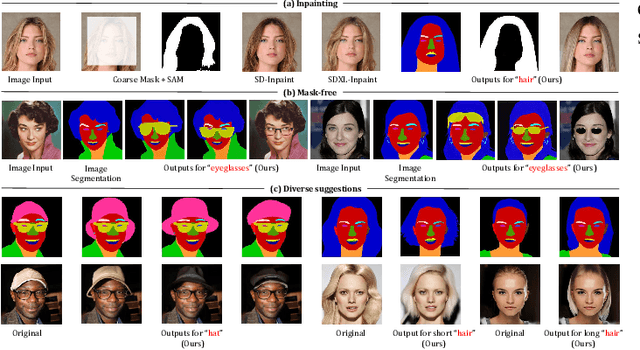
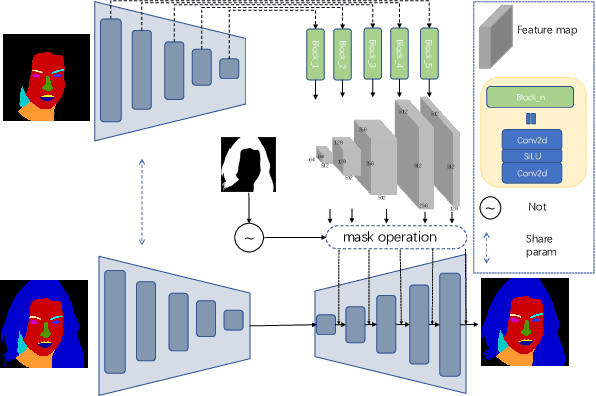
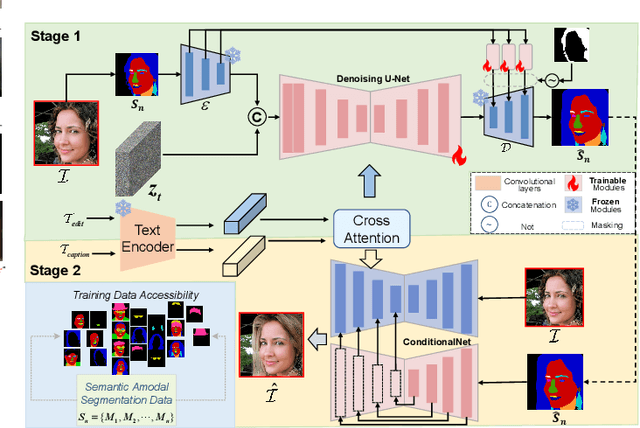
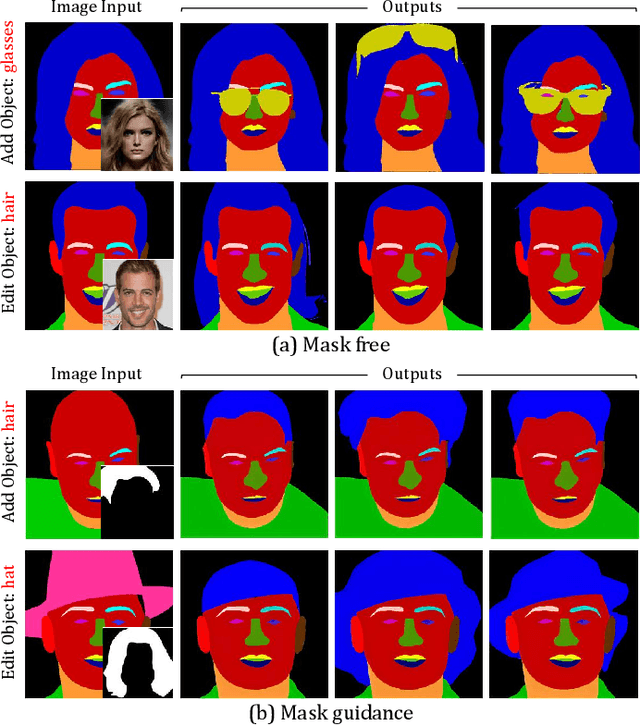
Face editing modifies the appearance of face, which plays a key role in customization and enhancement of personal images. Although much work have achieved remarkable success in text-driven face editing, they still face significant challenges as none of them simultaneously fulfill the characteristics of diversity, controllability and flexibility. To address this challenge, we propose MuseFace, a text-driven face editing framework, which relies solely on text prompt to enable face editing. Specifically, MuseFace integrates a Text-to-Mask diffusion model and a semantic-aware face editing model, capable of directly generating fine-grained semantic masks from text and performing face editing. The Text-to-Mask diffusion model provides \textit{diversity} and \textit{flexibility} to the framework, while the semantic-aware face editing model ensures \textit{controllability} of the framework. Our framework can create fine-grained semantic masks, making precise face editing possible, and significantly enhancing the controllability and flexibility of face editing models. Extensive experiments demonstrate that MuseFace achieves superior high-fidelity performance.
Object Isolated Attention for Consistent Story Visualization
Mar 30, 2025Open-ended story visualization is a challenging task that involves generating coherent image sequences from a given storyline. One of the main difficulties is maintaining character consistency while creating natural and contextually fitting scenes--an area where many existing methods struggle. In this paper, we propose an enhanced Transformer module that uses separate self attention and cross attention mechanisms, leveraging prior knowledge from pre-trained diffusion models to ensure logical scene creation. The isolated self attention mechanism improves character consistency by refining attention maps to reduce focus on irrelevant areas and highlight key features of the same character. Meanwhile, the isolated cross attention mechanism independently processes each character's features, avoiding feature fusion and further strengthening consistency. Notably, our method is training-free, allowing the continuous generation of new characters and storylines without re-tuning. Both qualitative and quantitative evaluations show that our approach outperforms current methods, demonstrating its effectiveness.