 Add to Chrome
 Add to Firefox
 Add to Edge
What to Edit Next: Visually Aligned Image-Editing Follow-Up Suggestions in Conversational Systems
Aug 03, 2026
Conversational assistants increasingly recommend follow-up edits to help users continue a task. Existing systems primarily target text-only interactions, leaving image-creation conversations underexplored. In image-creation tasks, useful follow-up edit suggestions must reflect user preferences, offer diverse directions, and remain executable on the current image. We collected 100,000 real multi-turn image-creation conversation samples from Qwen App and found that 80.1% are image-dependent, underscoring the need for multimodal recommendation. We address this setting with a three-stage framework. In Stage 1, we use real online data to build a human-reviewed table of appropriate follow-up editing intents, then create SFT targets and fine-tune a multimodal policy. In Stage 2, to align rule-guided SFT suggestions with actual user choices, we use user click feedback to optimize the policy through multi-objective reinforcement learning. In Stage 3, to reduce visual inconsistencies between suggested edits and the current image, we introduce a visual verifier as additional training supervision. Extensive experiments demonstrate that our framework significantly outperforms baselines on both automatic and human evaluations. In a live user-randomized A/B test with millions of users, our final framework reduces visual inconsistency from 3.7% to 0.9%. Furthermore, it significantly improves recommendation CTR by 32.70%, image take-away rate by 16.32%, and average conversation turns per user by 39.90% (all p<0.05).

STEC: Evidence Compression for Deep Search in Open-domain Multi-Hop QA
Jul 12, 2026In open-domain multi-hop question answering (QA), LLM-based search agents offer a promising approach to knowledge-intensive QA by combining retrieval with reasoning. Existing methods mainly improve open-domain multi-hop QA through reasoning paradigms, retrieval interaction, and search strategy optimization. However, using multiple search trajectories introduces a challenging final answer selection problem. Different trajectories may support different candidates, and the retrieved information can be heterogeneous, redundant, incomplete, or conflicting. Directly comparing raw trajectories exposes the verifier to noisy and unaligned content, while comparing answer strings ignores the evidence supporting each candidate, making reliable final selection difficult. To address this challenge, we propose STEC, an evidence compression framework for final answer selection in multi-hop QA. STEC selects the final answer from the existing candidate set through two mechanisms: (1) Answer-Level Evidence Compression, which groups trajectories by normalized answer identity and converts each answer group into a candidate-specific evidence representation; and (2) Evidence-Guided Answer Verification, which compares these representations and selects the final answer from the candidate set. The design shifts final selection from raw trajectory comparison to candidate-level evidence comparison. We evaluate STEC on four open-domain multi-hop QA benchmarks against representative baselines. Experimental results show that STEC performs best overall among the compared methods, and ablation results provide evidence that answer-level evidence compression contributes to final answer selection.
RBE-Flow: Recurrent Bayesian Estimation on Feature Manifolds for Cross-Modal Registration
Jun 29, 2026Cross-modal image registration is essential for multi-sensor perception but remains fundamentally challenging due to severe non-linear radiometric discrepancies and geometric distortions. Existing deterministic matching methods lack uncertainty awareness, struggling to navigate the resulting highly non-convex optimization landscape and frequently accumulating errors in ambiguous regions. In this paper, we propose RBE-Flow, a novel framework that reformulates dense cross-modal flow estimation as a closed-loop recurrent Bayesian estimation problem on learned feature manifolds. Diverging from standard feed-forward regression, RBE-Flow establishes a robust self-correcting mechanism by deeply coupling feature-metric non-linear optimization with probabilistic state updates. Specifically, a Recurrent Manifold Optimization (RMO) block iteratively generates flow observations and their associated uncertainties, which are then optimally assimilated into the prior state via an Uncertainty-Adaptive Probabilistic Update (UAPU) using deterministic sigma-point projection. Crucially, the resulting calibrated posterior covariance is fed back to adaptively regularize the damping of subsequent optimization steps, allowing the system to modulate its convergence based on predictive confidence. To ensure stable probabilistic training, we introduce a hybrid supervision scheme featuring a geometry-aware rectified NLL loss that structurally prevents variance collapse. Extensive experiments on challenging OSdataset, WHU-OPT-SAR, and RoadScene benchmarks demonstrate that RBE-Flow consistently achieves state-of-the-art performance, outperforming existing methods by a significant margin, particularly under strict sub-pixel criteria. Project page: https://github.com/NEU-Liuxuecong/RBE-Flow
Revisiting Parameter-Based Knowledge Editing in Large Language Models: Theoretical Limits and Empirical Evidence
May 30, 2026Parameter-based knowledge editing updates the internal knowledge of large language models (LLMs) via localized weight modifications and has attracted significant attention. However, most existing methods overlook fundamental theoretical limitations and are rarely evaluated under realistic, practice-oriented settings. In this paper, we first present a theoretical analysis based on the dimensional Collapse Hypothesis, explaining how localized parameter edits can propagate along fragile directions in the representation space, inducing global interference and ultimately causing reasoning collapse. Building on this insight, we conduct a comprehensive empirical evaluation by systematically varying knowledge complexity, number of edits, evaluation dimensions, and baseline methods. Our results show that parameter-based editing methods consistently damage core LLM capabilities. In contrast, a simple retrieval-based baseline achieves consistently stronger performance than all parameter-editing methods across all evaluated conditions. These findings highlight that preserving the fundamental capabilities of LLMs after knowledge editing should be a central concern for future research.
Counterfactual Multi-task Learning for Delayed Conversion Modeling in E-commerce Sales Pre-Promotion
Apr 23, 2026Sales promotions, as short-term incentives to stimulate product purchases, play a pivotal role in modern e-commerce marketing strategies. During promotional events, user behavior patterns exhibit distinct characteristics compared to regular periods. In the pre-promotion phase, users typically engage in product search and browsing without immediate purchases, adding items to carts in anticipation of promotional discounts. This behavior leads to delayed conversions, resulting in significantly lower conversion rates (CVR) before the promotion day. Although existing research has made progress in CVR prediction for promotion days using historical data, it largely overlooks the critical pre-promotion period. And delayed feedback modeling has been extensively studied, current approaches fail to account for the unique distribution shifts in conversion behavior before promotional events, where delayed conversions predominantly occur on the promotion day rather than over continuous time windows. To address these limitations, we propose the Counterfactual Multi-task Delayed Conversion Model (CM-DCM), which leverages historical pre-promotion data to enhance CVR prediction for both delayed and direct conversions. Our model incorporates three key innovations: (i) A multi-task architecture that jointly models direct and delayed conversions using historical pre-promotion data; (ii) A personalized user behavior gating module to mitigate data sparsity issues during brief pre-promotion periods; (iii) A counterfactual causal approach to model the transition probability from add-to-cart (ATC) to delayed conversion. Extensive experiments demonstrate that CM-DCM outperforms baselines in pre-promotion scenarios. Online A/B tests during major promotional events showed significant improvements in advertising revenue, delayed conversion GMV, and overall GMV, validating the effectiveness of our approach.
MTFM: A Scalable and Alignment-free Foundation Model for Industrial Recommendation in Meituan
Feb 13, 2026Industrial recommendation systems typically involve multiple scenarios, yet existing cross-domain (CDR) and multi-scenario (MSR) methods often require prohibitive resources and strict input alignment, limiting their extensibility. We propose MTFM (Meituan Foundation Model for Recommendation), a transformer-based framework that addresses these challenges. Instead of pre-aligning inputs, MTFM transforms cross-domain data into heterogeneous tokens, capturing multi-scenario knowledge in an alignment-free manner. To enhance efficiency, we first introduce a multi-scenario user-level sample aggregation that significantly enhances training throughput by reducing the total number of instances. We further integrate Grouped-Query Attention and a customized Hybrid Target Attention to minimize memory usage and computational complexity. Furthermore, we implement various system-level optimizations, such as kernel fusion and the elimination of CPU-GPU blocking, to further enhance both training and inference throughput. Offline and online experiments validate the effectiveness of MTFM, demonstrating that significant performance gains are achieved by scaling both model capacity and multi-scenario training data.
SafeWork-R1: Coevolving Safety and Intelligence under the AI-45$^{\circ}$ Law
Jul 24, 2025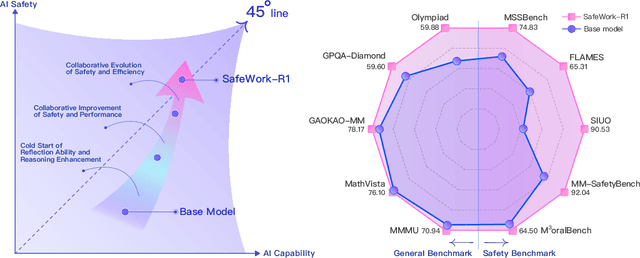
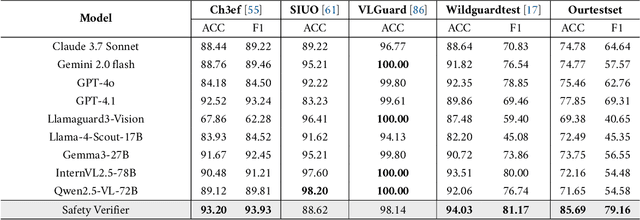
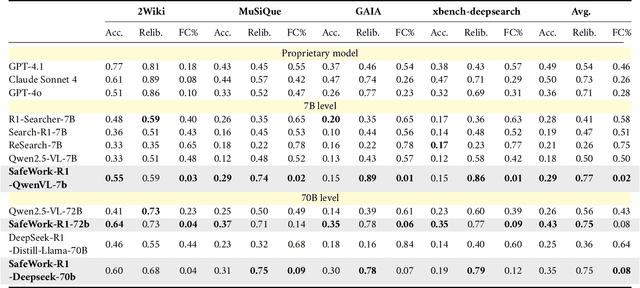

We introduce SafeWork-R1, a cutting-edge multimodal reasoning model that demonstrates the coevolution of capabilities and safety. It is developed by our proposed SafeLadder framework, which incorporates large-scale, progressive, safety-oriented reinforcement learning post-training, supported by a suite of multi-principled verifiers. Unlike previous alignment methods such as RLHF that simply learn human preferences, SafeLadder enables SafeWork-R1 to develop intrinsic safety reasoning and self-reflection abilities, giving rise to safety `aha' moments. Notably, SafeWork-R1 achieves an average improvement of $46.54\%$ over its base model Qwen2.5-VL-72B on safety-related benchmarks without compromising general capabilities, and delivers state-of-the-art safety performance compared to leading proprietary models such as GPT-4.1 and Claude Opus 4. To further bolster its reliability, we implement two distinct inference-time intervention methods and a deliberative search mechanism, enforcing step-level verification. Finally, we further develop SafeWork-R1-InternVL3-78B, SafeWork-R1-DeepSeek-70B, and SafeWork-R1-Qwen2.5VL-7B. All resulting models demonstrate that safety and capability can co-evolve synergistically, highlighting the generalizability of our framework in building robust, reliable, and trustworthy general-purpose AI.
Benchmarking and Rethinking Knowledge Editing for Large Language Models
May 24, 2025Knowledge editing aims to update the embedded knowledge within Large Language Models (LLMs). However, existing approaches, whether through parameter modification or external memory integration, often suffer from inconsistent evaluation objectives and experimental setups. To address this gap, we conduct a comprehensive benchmarking study. In addition to fact-level datasets, we introduce more complex event-based datasets and general-purpose datasets drawn from other tasks. Our evaluation covers both instruction-tuned and reasoning-oriented LLMs, under a realistic autoregressive inference setting rather than teacher-forced decoding. Beyond single-edit assessments, we also evaluate multi-edit scenarios to better reflect practical demands. We employ four evaluation dimensions, including portability, and compare all recent methods against a simple and straightforward baseline named Selective Contextual Reasoning (SCR). Empirical results reveal that parameter-based editing methods perform poorly under realistic conditions. In contrast, SCR consistently outperforms them across all settings. This study offers new insights into the limitations of current knowledge editing methods and highlights the potential of context-based reasoning as a more robust alternative.
MAGI-1: Autoregressive Video Generation at Scale
May 19, 2025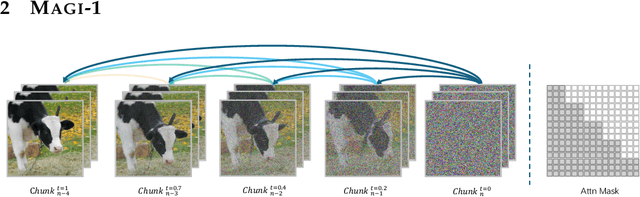
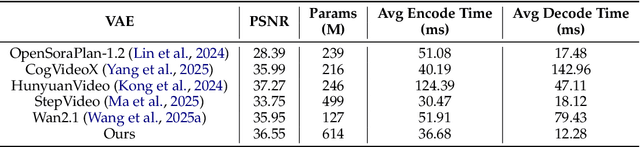
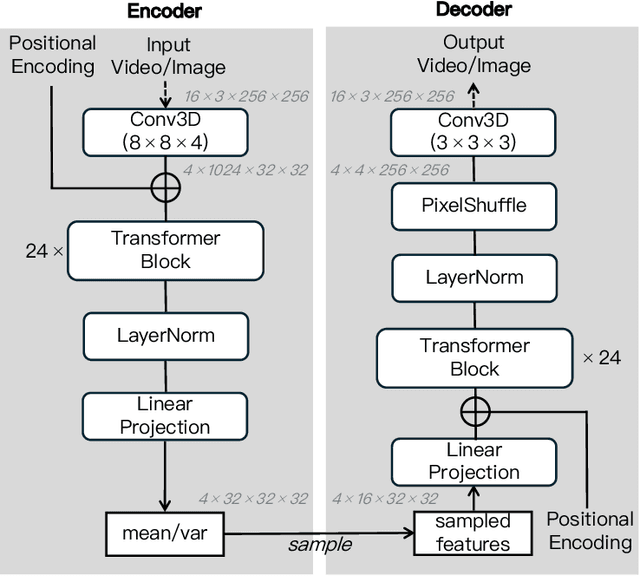
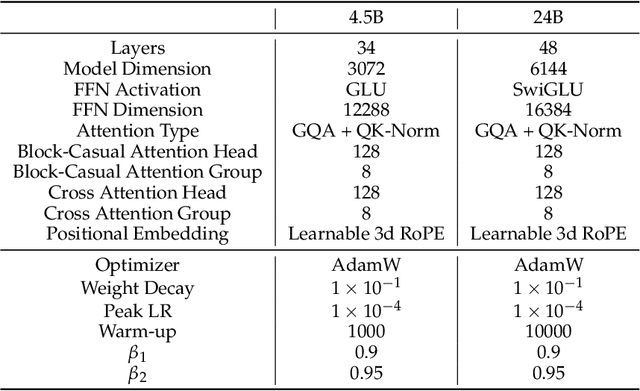
We present MAGI-1, a world model that generates videos by autoregressively predicting a sequence of video chunks, defined as fixed-length segments of consecutive frames. Trained to denoise per-chunk noise that increases monotonically over time, MAGI-1 enables causal temporal modeling and naturally supports streaming generation. It achieves strong performance on image-to-video (I2V) tasks conditioned on text instructions, providing high temporal consistency and scalability, which are made possible by several algorithmic innovations and a dedicated infrastructure stack. MAGI-1 facilitates controllable generation via chunk-wise prompting and supports real-time, memory-efficient deployment by maintaining constant peak inference cost, regardless of video length. The largest variant of MAGI-1 comprises 24 billion parameters and supports context lengths of up to 4 million tokens, demonstrating the scalability and robustness of our approach. The code and models are available at https://github.com/SandAI-org/MAGI-1 and https://github.com/SandAI-org/MagiAttention. The product can be accessed at https://sand.ai.
Knowledge Updating? No More Model Editing! Just Selective Contextual Reasoning
Mar 07, 2025As real-world knowledge evolves, the information embedded within large language models (LLMs) can become outdated, inadequate, or erroneous. Model editing has emerged as a prominent approach for updating LLMs' knowledge with minimal computational costs and parameter changes. This approach typically identifies and adjusts specific model parameters associated with newly acquired knowledge. However, existing methods often underestimate the adverse effects that parameter modifications can have on broadly distributed knowledge. More critically, post-edit LLMs frequently struggle with multi-hop reasoning and continuous knowledge updates. Although various studies have discussed these shortcomings, there is a lack of comprehensive evaluation. In this paper, we provide an evaluation of ten model editing methods along four dimensions: reliability, generalization, locality, and portability. Results confirm that all ten popular model editing methods show significant shortcomings across multiple dimensions, suggesting model editing is less promising. We then propose a straightforward method called Selective Contextual Reasoning (SCR), for knowledge updating. SCR does not modify model parameters but harnesses LLM's inherent contextual reasoning capabilities utilizing the updated knowledge pieces. Under SCR, an LLM first assesses whether an incoming query falls within the scope of an external knowledge base. If it does, the relevant external knowledge texts are contextualized to enhance reasoning; otherwise, the query is answered directly. We evaluate SCR against the ten model editing methods on two counterfactual datasets with three backbone LLMs. Empirical results confirm the effectiveness and efficiency of contextual reasoning for knowledge updating.