 Add to Chrome
 Add to Firefox
 Add to Edge
MTFM: A Scalable and Alignment-free Foundation Model for Industrial Recommendation in Meituan
Feb 13, 2026
Industrial recommendation systems typically involve multiple scenarios, yet existing cross-domain (CDR) and multi-scenario (MSR) methods often require prohibitive resources and strict input alignment, limiting their extensibility. We propose MTFM (Meituan Foundation Model for Recommendation), a transformer-based framework that addresses these challenges. Instead of pre-aligning inputs, MTFM transforms cross-domain data into heterogeneous tokens, capturing multi-scenario knowledge in an alignment-free manner. To enhance efficiency, we first introduce a multi-scenario user-level sample aggregation that significantly enhances training throughput by reducing the total number of instances. We further integrate Grouped-Query Attention and a customized Hybrid Target Attention to minimize memory usage and computational complexity. Furthermore, we implement various system-level optimizations, such as kernel fusion and the elimination of CPU-GPU blocking, to further enhance both training and inference throughput. Offline and online experiments validate the effectiveness of MTFM, demonstrating that significant performance gains are achieved by scaling both model capacity and multi-scenario training data.

"Ask Me Anything": How Comcast Uses LLMs to Assist Agents in Real Time
May 01, 2024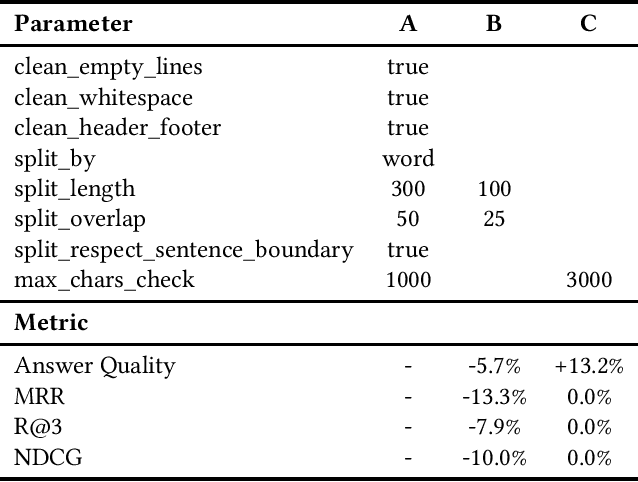
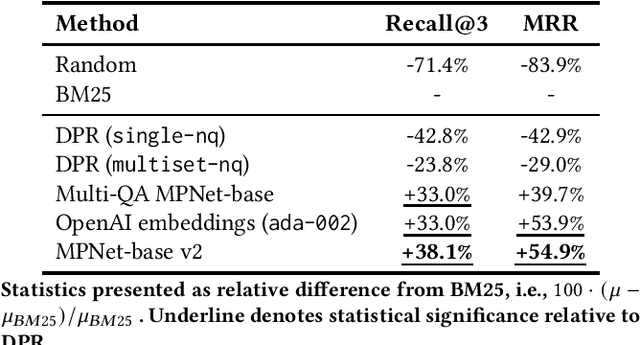
Customer service is how companies interface with their customers. It can contribute heavily towards the overall customer satisfaction. However, high-quality service can become expensive, creating an incentive to make it as cost efficient as possible and prompting most companies to utilize AI-powered assistants, or "chat bots". On the other hand, human-to-human interaction is still desired by customers, especially when it comes to complex scenarios such as disputes and sensitive topics like bill payment. This raises the bar for customer service agents. They need to accurately understand the customer's question or concern, identify a solution that is acceptable yet feasible (and within the company's policy), all while handling multiple conversations at once. In this work, we introduce "Ask Me Anything" (AMA) as an add-on feature to an agent-facing customer service interface. AMA allows agents to ask questions to a large language model (LLM) on demand, as they are handling customer conversations -- the LLM provides accurate responses in real-time, reducing the amount of context switching the agent needs. In our internal experiments, we find that agents using AMA versus a traditional search experience spend approximately 10% fewer seconds per conversation containing a search, translating to millions of dollars of savings annually. Agents that used the AMA feature provided positive feedback nearly 80% of the time, demonstrating its usefulness as an AI-assisted feature for customer care.