 Add to Chrome
 Add to Firefox
 Add to Edge
Satellite-Free Training for Drone-View Geo-Localization
Apr 02, 2026
Drone-view geo-localization (DVGL) aims to determine the location of drones in GPS-denied environments by retrieving the corresponding geotagged satellite tile from a reference gallery given UAV observations of a location. In many existing formulations, these observations are represented by a single oblique UAV image. In contrast, our satellite-free setting is designed for multi-view UAV sequences, which are used to construct a geometry-normalized UAV-side location representation before cross-view retrieval. Existing approaches rely on satellite imagery during training, either through paired supervision or unsupervised alignment, which limits practical deployment when satellite data are unavailable or restricted. In this paper, we propose a satellite-free training (SFT) framework that converts drone imagery into cross-view compatible representations through three main stages: drone-side 3D scene reconstruction, geometry-based pseudo-orthophoto generation, and satellite-free feature aggregation for retrieval. Specifically, we first reconstruct dense 3D scenes from multi-view drone images using 3D Gaussian splatting and project the reconstructed geometry into pseudo-orthophotos via PCA-guided orthographic projection. This rendering stage operates directly on reconstructed scene geometry without requiring camera parameters at rendering time. Next, we refine these orthophotos with lightweight geometry-guided inpainting to obtain texture-complete drone-side views. Finally, we extract DINOv3 patch features from the generated orthophotos, learn a Fisher vector aggregation model solely from drone data, and reuse it at test time to encode satellite tiles for cross-view retrieval. Experimental results on University-1652 and SUES-200 show that our SFT framework substantially outperforms satellite-free generalization baselines and narrows the gap to methods trained with satellite imagery.

TP-Seg: Task-Prototype Framework for Unified Medical Lesion Segmentation
Apr 01, 2026Building a unified model with a single set of parameters to efficiently handle diverse types of medical lesion segmentation has become a crucial objective for AI-assisted diagnosis. Existing unified segmentation approaches typically rely on shared encoders across heterogeneous tasks and modalities, which often leads to feature entanglement, gradient interference, and suboptimal lesion discrimination. In this work, we propose TP-Seg, a task-prototype framework for unified medical lesion segmentation. On one hand, the task-conditioned adapter effectively balances shared and task-specific representations through a dual-path expert structure, enabling adaptive feature extraction across diverse medical imaging modalities and lesion types. On the other hand, the prototype-guided task decoder introduces learnable task prototypes as semantic anchors and employs a cross-attention mechanism to achieve fine-grained modeling of task-specific foreground and background semantics. Without bells and whistles, TP-Seg consistently outperforms specialized, general and unified segmentation methods across 8 different medical lesion segmentation tasks covering multiple imaging modalities, demonstrating strong generalization, scalability and clinical applicability.
U-Harmony: Enhancing Joint Training for Segmentation Models with Universal Harmonization
Jan 21, 2026In clinical practice, medical segmentation datasets are often limited and heterogeneous, with variations in modalities, protocols, and anatomical targets across institutions. Existing deep learning models struggle to jointly learn from such diverse data, often sacrificing either generalization or domain-specific knowledge. To overcome these challenges, we propose a joint training method called Universal Harmonization (U-Harmony), which can be integrated into deep learning-based architectures with a domain-gated head, enabling a single segmentation model to learn from heterogeneous datasets simultaneously. By integrating U-Harmony, our approach sequentially normalizes and then denormalizes feature distributions to mitigate domain-specific variations while preserving original dataset-specific knowledge. More appealingly, our framework also supports universal modality adaptation, allowing the seamless learning of new imaging modalities and anatomical classes. Extensive experiments on cross-institutional brain lesion datasets demonstrate the effectiveness of our approach, establishing a new benchmark for robust and adaptable 3D medical image segmentation models in real-world clinical settings.
UniMRSeg: Unified Modality-Relax Segmentation via Hierarchical Self-Supervised Compensation
Sep 19, 2025Multi-modal image segmentation faces real-world deployment challenges from incomplete/corrupted modalities degrading performance. While existing methods address training-inference modality gaps via specialized per-combination models, they introduce high deployment costs by requiring exhaustive model subsets and model-modality matching. In this work, we propose a unified modality-relax segmentation network (UniMRSeg) through hierarchical self-supervised compensation (HSSC). Our approach hierarchically bridges representation gaps between complete and incomplete modalities across input, feature and output levels. % First, we adopt modality reconstruction with the hybrid shuffled-masking augmentation, encouraging the model to learn the intrinsic modality characteristics and generate meaningful representations for missing modalities through cross-modal fusion. % Next, modality-invariant contrastive learning implicitly compensates the feature space distance among incomplete-complete modality pairs. Furthermore, the proposed lightweight reverse attention adapter explicitly compensates for the weak perceptual semantics in the frozen encoder. Last, UniMRSeg is fine-tuned under the hybrid consistency constraint to ensure stable prediction under all modality combinations without large performance fluctuations. Without bells and whistles, UniMRSeg significantly outperforms the state-of-the-art methods under diverse missing modality scenarios on MRI-based brain tumor segmentation, RGB-D semantic segmentation, RGB-D/T salient object segmentation. The code will be released at https://github.com/Xiaoqi-Zhao-DLUT/UniMRSeg.
Power Battery Detection
Aug 11, 2025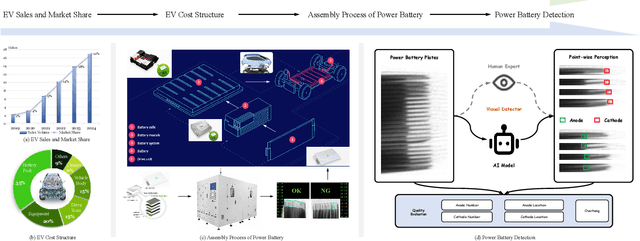
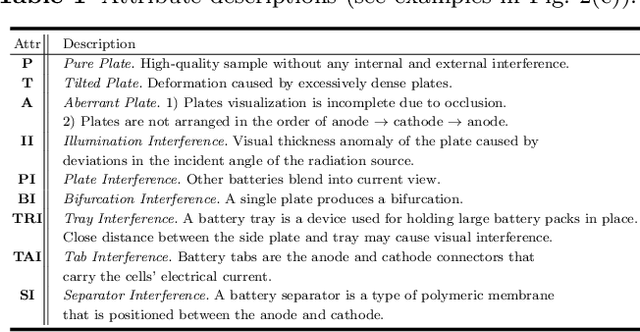
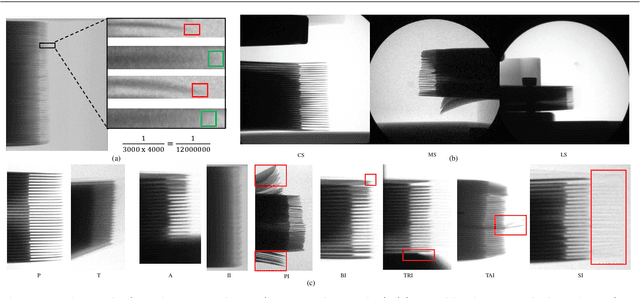
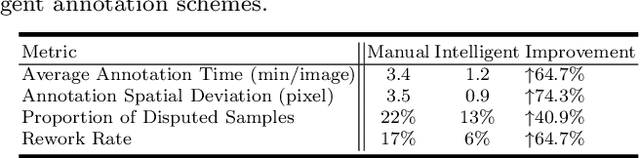
Power batteries are essential components in electric vehicles, where internal structural defects can pose serious safety risks. We conduct a comprehensive study on a new task, power battery detection (PBD), which aims to localize the dense endpoints of cathode and anode plates from industrial X-ray images for quality inspection. Manual inspection is inefficient and error-prone, while traditional vision algorithms struggle with densely packed plates, low contrast, scale variation, and imaging artifacts. To address this issue and drive more attention into this meaningful task, we present PBD5K, the first large-scale benchmark for this task, consisting of 5,000 X-ray images from nine battery types with fine-grained annotations and eight types of real-world visual interference. To support scalable and consistent labeling, we develop an intelligent annotation pipeline that combines image filtering, model-assisted pre-labeling, cross-verification, and layered quality evaluation. We formulate PBD as a point-level segmentation problem and propose MDCNeXt, a model designed to extract and integrate multi-dimensional structure clues including point, line, and count information from the plate itself. To improve discrimination between plates and suppress visual interference, MDCNeXt incorporates two state space modules. The first is a prompt-filtered module that learns contrastive relationships guided by task-specific prompts. The second is a density-aware reordering module that refines segmentation in regions with high plate density. In addition, we propose a distance-adaptive mask generation strategy to provide robust supervision under varying spatial distributions of anode and cathode positions. The source code and datasets will be publicly available at \href{https://github.com/Xiaoqi-Zhao-DLUT/X-ray-PBD}{PBD5K}.
Mixture-of-Shape-Experts (MoSE): End-to-End Shape Dictionary Framework to Prompt SAM for Generalizable Medical Segmentation
Apr 13, 2025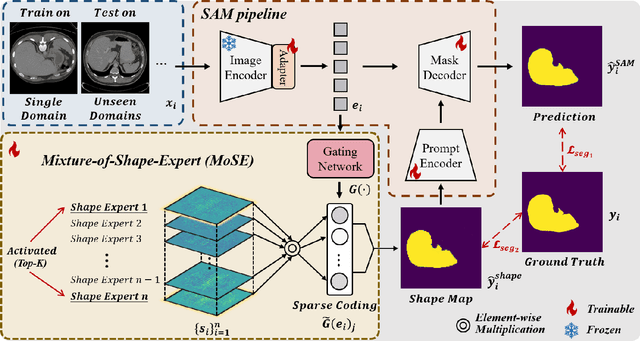
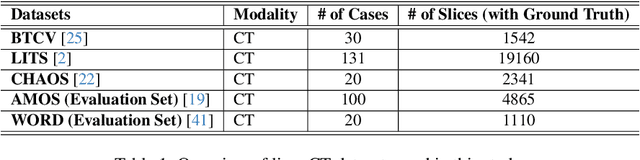
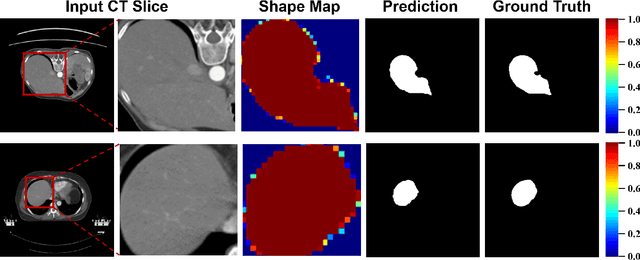
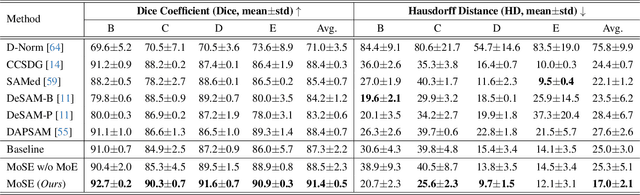
Single domain generalization (SDG) has recently attracted growing attention in medical image segmentation. One promising strategy for SDG is to leverage consistent semantic shape priors across different imaging protocols, scanner vendors, and clinical sites. However, existing dictionary learning methods that encode shape priors often suffer from limited representational power with a small set of offline computed shape elements, or overfitting when the dictionary size grows. Moreover, they are not readily compatible with large foundation models such as the Segment Anything Model (SAM). In this paper, we propose a novel Mixture-of-Shape-Experts (MoSE) framework that seamlessly integrates the idea of mixture-of-experts (MoE) training into dictionary learning to efficiently capture diverse and robust shape priors. Our method conceptualizes each dictionary atom as a shape expert, which specializes in encoding distinct semantic shape information. A gating network dynamically fuses these shape experts into a robust shape map, with sparse activation guided by SAM encoding to prevent overfitting. We further provide this shape map as a prompt to SAM, utilizing the powerful generalization capability of SAM through bidirectional integration. All modules, including the shape dictionary, are trained in an end-to-end manner. Extensive experiments on multiple public datasets demonstrate its effectiveness.
Inspiring the Next Generation of Segment Anything Models: Comprehensively Evaluate SAM and SAM 2 with Diverse Prompts Towards Context-Dependent Concepts under Different Scenes
Dec 02, 2024As a foundational model, SAM has significantly influenced multiple fields within computer vision, and its upgraded version, SAM 2, enhances capabilities in video segmentation, poised to make a substantial impact once again. While SAMs (SAM and SAM 2) have demonstrated excellent performance in segmenting context-independent concepts like people, cars, and roads, they overlook more challenging context-dependent (CD) concepts, such as visual saliency, camouflage, product defects, and medical lesions. CD concepts rely heavily on global and local contextual information, making them susceptible to shifts in different contexts, which requires strong discriminative capabilities from the model. The lack of comprehensive evaluation of SAMs limits understanding of their performance boundaries, which may hinder the design of future models. In this paper, we conduct a thorough quantitative evaluation of SAMs on 11 CD concepts across 2D and 3D images and videos in various visual modalities within natural, medical, and industrial scenes. We develop a unified evaluation framework for SAM and SAM 2 that supports manual, automatic, and intermediate self-prompting, aided by our specific prompt generation and interaction strategies. We further explore the potential of SAM 2 for in-context learning and introduce prompt robustness testing to simulate real-world imperfect prompts. Finally, we analyze the benefits and limitations of SAMs in understanding CD concepts and discuss their future development in segmentation tasks. This work aims to provide valuable insights to guide future research in both context-independent and context-dependent concepts segmentation, potentially informing the development of the next version - SAM 3.
Beyond Mask: Rethinking Guidance Types in Few-shot Segmentation
Jul 16, 2024Existing few-shot segmentation (FSS) methods mainly focus on prototype feature generation and the query-support matching mechanism. As a crucial prompt for generating prototype features, the pair of image-mask types in the support set has become the default setting. However, various types such as image, text, box, and mask all can provide valuable information regarding the objects in context, class, localization, and shape appearance. Existing work focuses on specific combinations of guidance, leading FSS into different research branches. Rethinking guidance types in FSS is expected to explore the efficient joint representation of the coupling between the support set and query set, giving rise to research trends in the weakly or strongly annotated guidance to meet the customized requirements of practical users. In this work, we provide the generalized FSS with seven guidance paradigms and develop a universal vision-language framework (UniFSS) to integrate prompts from text, mask, box, and image. Leveraging the advantages of large-scale pre-training vision-language models in textual and visual embeddings, UniFSS proposes high-level spatial correction and embedding interactive units to overcome the semantic ambiguity drawbacks typically encountered by pure visual matching methods when facing intra-class appearance diversities. Extensive experiments show that UniFSS significantly outperforms the state-of-the-art methods. Notably, the weakly annotated class-aware box paradigm even surpasses the finely annotated mask paradigm.
Spider: A Unified Framework for Context-dependent Concept Understanding
May 02, 2024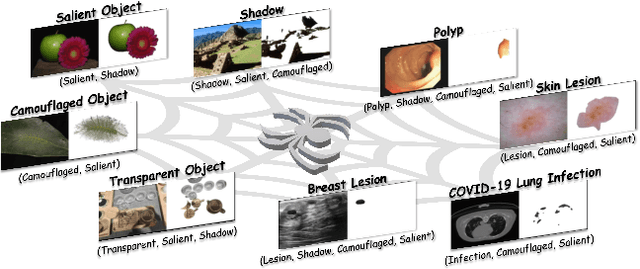
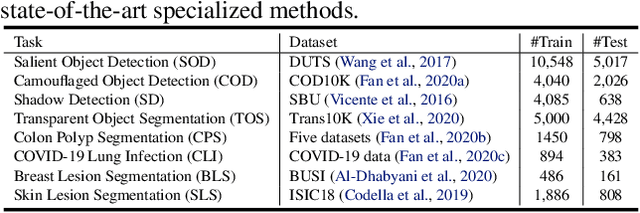
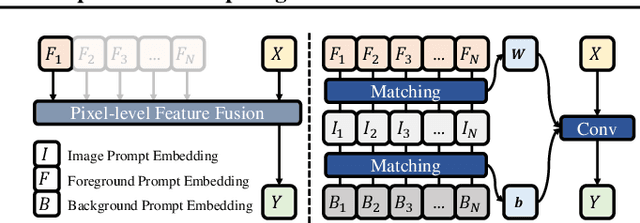
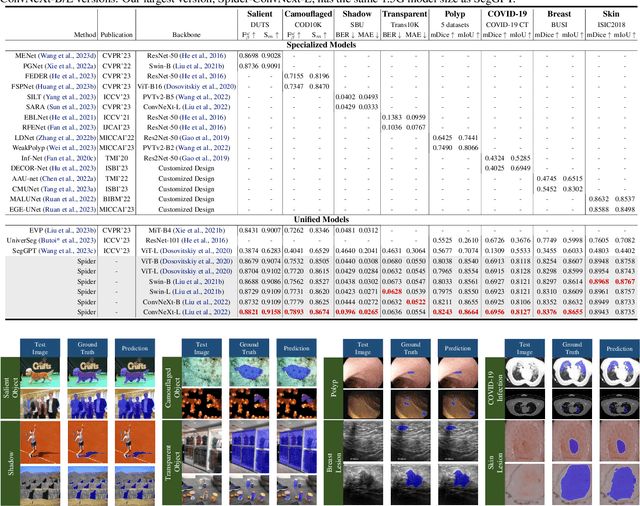
Different from the context-independent (CI) concepts such as human, car, and airplane, context-dependent (CD) concepts require higher visual understanding ability, such as camouflaged object and medical lesion. Despite the rapid advance of many CD understanding tasks in respective branches, the isolated evolution leads to their limited cross-domain generalisation and repetitive technique innovation. Since there is a strong coupling relationship between foreground and background context in CD tasks, existing methods require to train separate models in their focused domains. This restricts their real-world CD concept understanding towards artificial general intelligence (AGI). We propose a unified model with a single set of parameters, Spider, which only needs to be trained once. With the help of the proposed concept filter driven by the image-mask group prompt, Spider is able to understand and distinguish diverse strong context-dependent concepts to accurately capture the Prompter's intention. Without bells and whistles, Spider significantly outperforms the state-of-the-art specialized models in 8 different context-dependent segmentation tasks, including 4 natural scenes (salient, camouflaged, and transparent objects and shadow) and 4 medical lesions (COVID-19, polyp, breast, and skin lesion with color colonoscopy, CT, ultrasound, and dermoscopy modalities). Besides, Spider shows obvious advantages in continuous learning. It can easily complete the training of new tasks by fine-tuning parameters less than 1\% and bring a tolerable performance degradation of less than 5\% for all old tasks. The source code will be publicly available at \href{https://github.com/Xiaoqi-Zhao-DLUT/Spider-UniCDSeg}{Spider-UniCDSeg}.
Multi-view Aggregation Network for Dichotomous Image Segmentation
Apr 11, 2024Dichotomous Image Segmentation (DIS) has recently emerged towards high-precision object segmentation from high-resolution natural images. When designing an effective DIS model, the main challenge is how to balance the semantic dispersion of high-resolution targets in the small receptive field and the loss of high-precision details in the large receptive field. Existing methods rely on tedious multiple encoder-decoder streams and stages to gradually complete the global localization and local refinement. Human visual system captures regions of interest by observing them from multiple views. Inspired by it, we model DIS as a multi-view object perception problem and provide a parsimonious multi-view aggregation network (MVANet), which unifies the feature fusion of the distant view and close-up view into a single stream with one encoder-decoder structure. With the help of the proposed multi-view complementary localization and refinement modules, our approach established long-range, profound visual interactions across multiple views, allowing the features of the detailed close-up view to focus on highly slender structures.Experiments on the popular DIS-5K dataset show that our MVANet significantly outperforms state-of-the-art methods in both accuracy and speed. The source code and datasets will be publicly available at \href{https://github.com/qianyu-dlut/MVANet}{MVANet}.