 Add to Chrome
 Add to Firefox
 Add to Edge
Grounded by Experience: Generative Healthcare Prediction Augmented with Hierarchical Agentic Retrieval
Nov 17, 2025
Accurate healthcare prediction is critical for improving patient outcomes and reducing operational costs. Bolstered by growing reasoning capabilities, large language models (LLMs) offer a promising path to enhance healthcare predictions by drawing on their rich parametric knowledge. However, LLMs are prone to factual inaccuracies due to limitations in the reliability and coverage of their embedded knowledge. While retrieval-augmented generation (RAG) frameworks, such as GraphRAG and its variants, have been proposed to mitigate these issues by incorporating external knowledge, they face two key challenges in the healthcare scenario: (1) identifying the clinical necessity to activate the retrieval mechanism, and (2) achieving synergy between the retriever and the generator to craft contextually appropriate retrievals. To address these challenges, we propose GHAR, a \underline{g}enerative \underline{h}ierarchical \underline{a}gentic \underline{R}AG framework that simultaneously resolves when to retrieve and how to optimize the collaboration between submodules in healthcare. Specifically, for the first challenge, we design a dual-agent architecture comprising Agent-Top and Agent-Low. Agent-Top acts as the primary physician, iteratively deciding whether to rely on parametric knowledge or to initiate retrieval, while Agent-Low acts as the consulting service, summarising all task-relevant knowledge once retrieval was triggered. To tackle the second challenge, we innovatively unify the optimization of both agents within a formal Markov Decision Process, designing diverse rewards to align their shared goal of accurate prediction while preserving their distinct roles. Extensive experiments on three benchmark datasets across three popular tasks demonstrate our superiority over state-of-the-art baselines, highlighting the potential of hierarchical agentic RAG in advancing healthcare systems.

Radiology Workflow-Guided Hierarchical Reinforcement Fine-Tuning for Medical Report Generation
Nov 13, 2025Radiologists compose diagnostic reports through a structured workflow: they describe visual findings, summarize them into impressions, and carefully refine statements in clinically critical cases. However, most existing medical report generation (MRG) systems treat reports as flat sequences, overlooking this hierarchical organization and leading to inconsistencies between descriptive and diagnostic content. To align model behavior with real-world reporting practices, we propose RadFlow, a hierarchical workflow-guided reinforcement optimization framework that explicitly models the structured nature of clinical reporting. RadFlow introduces a clinically grounded reward hierarchy that mirrors the organization of radiological reports. At the global level, the reward integrates linguistic fluency, medical-domain correctness, and cross-sectional consistency between Finding and Impression, promoting coherent and clinically faithful narratives. At the local level, a section-specific reward emphasizes Impression quality, reflecting its central role in diagnostic accuracy. Furthermore, a critical-aware policy optimization mechanism adaptively regularizes learning for high-risk or clinically sensitive cases, emulating the cautious refinement behavior of radiologists when documenting critical findings. Together, these components translate the structured reporting paradigm into the reinforcement fine-tuning process, enabling the model to generate reports that are both linguistically consistent and clinically aligned. Experiments on chest X-ray and carotid ultrasound datasets demonstrate that RadFlow consistently improves diagnostic coherence and overall report quality compared with state-of-the-art baselines.
Evaluating LLM Understanding via Structured Tabular Decision Simulations
Nov 07, 2025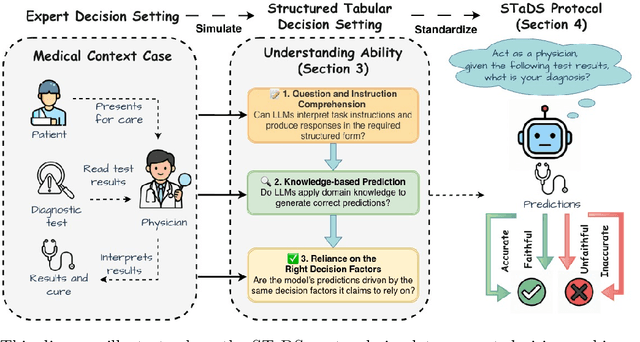
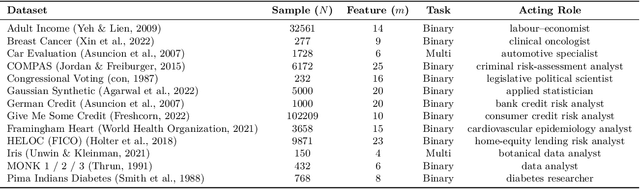
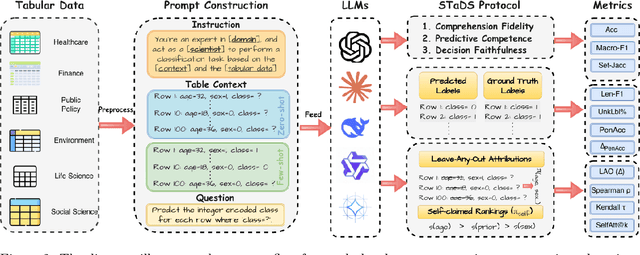
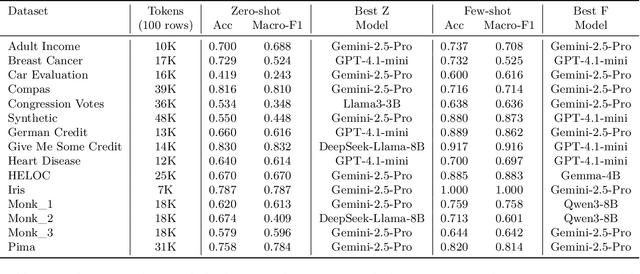
Large language models (LLMs) often achieve impressive predictive accuracy, yet correctness alone does not imply genuine understanding. True LLM understanding, analogous to human expertise, requires making consistent, well-founded decisions across multiple instances and diverse domains, relying on relevant and domain-grounded decision factors. We introduce Structured Tabular Decision Simulations (STaDS), a suite of expert-like decision settings that evaluate LLMs as if they were professionals undertaking structured decision ``exams''. In this context, understanding is defined as the ability to identify and rely on the correct decision factors, features that determine outcomes within a domain. STaDS jointly assesses understanding through: (i) question and instruction comprehension, (ii) knowledge-based prediction, and (iii) reliance on relevant decision factors. By analyzing 9 frontier LLMs across 15 diverse decision settings, we find that (a) most models struggle to achieve consistently strong accuracy across diverse domains; (b) models can be accurate yet globally unfaithful, and there are frequent mismatches between stated rationales and factors driving predictions. Our findings highlight the need for global-level understanding evaluation protocols and advocate for novel frameworks that go beyond accuracy to enhance LLMs' understanding ability.
MedSapiens: Taking a Pose to Rethink Medical Imaging Landmark Detection
Nov 06, 2025This paper does not introduce a novel architecture; instead, it revisits a fundamental yet overlooked baseline: adapting human-centric foundation models for anatomical landmark detection in medical imaging. While landmark detection has traditionally relied on domain-specific models, the emergence of large-scale pre-trained vision models presents new opportunities. In this study, we investigate the adaptation of Sapiens, a human-centric foundation model designed for pose estimation, to medical imaging through multi-dataset pretraining, establishing a new state of the art across multiple datasets. Our proposed model, MedSapiens, demonstrates that human-centric foundation models, inherently optimized for spatial pose localization, provide strong priors for anatomical landmark detection, yet this potential has remained largely untapped. We benchmark MedSapiens against existing state-of-the-art models, achieving up to 5.26% improvement over generalist models and up to 21.81% improvement over specialist models in the average success detection rate (SDR). To further assess MedSapiens adaptability to novel downstream tasks with few annotations, we evaluate its performance in limited-data settings, achieving 2.69% improvement over the few-shot state of the art in SDR. Code and model weights are available at https://github.com/xmed-lab/MedSapiens .
ZEBRA: Towards Zero-Shot Cross-Subject Generalization for Universal Brain Visual Decoding
Oct 31, 2025Recent advances in neural decoding have enabled the reconstruction of visual experiences from brain activity, positioning fMRI-to-image reconstruction as a promising bridge between neuroscience and computer vision. However, current methods predominantly rely on subject-specific models or require subject-specific fine-tuning, limiting their scalability and real-world applicability. In this work, we introduce ZEBRA, the first zero-shot brain visual decoding framework that eliminates the need for subject-specific adaptation. ZEBRA is built on the key insight that fMRI representations can be decomposed into subject-related and semantic-related components. By leveraging adversarial training, our method explicitly disentangles these components to isolate subject-invariant, semantic-specific representations. This disentanglement allows ZEBRA to generalize to unseen subjects without any additional fMRI data or retraining. Extensive experiments show that ZEBRA significantly outperforms zero-shot baselines and achieves performance comparable to fully finetuned models on several metrics. Our work represents a scalable and practical step toward universal neural decoding. Code and model weights are available at: https://github.com/xmed-lab/ZEBRA.
A Survey of Scientific Large Language Models: From Data Foundations to Agent Frontiers
Aug 28, 2025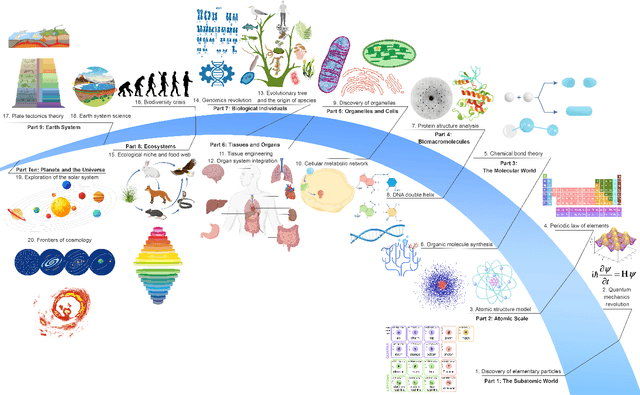
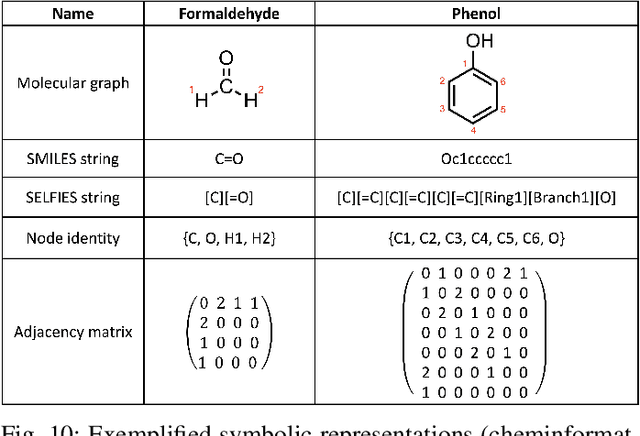
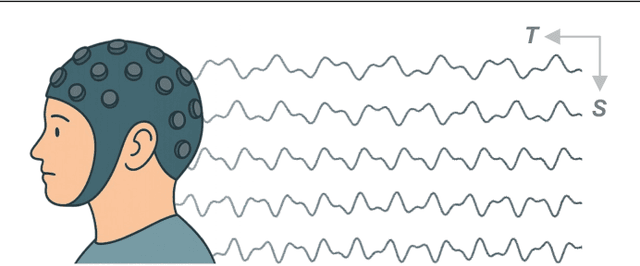
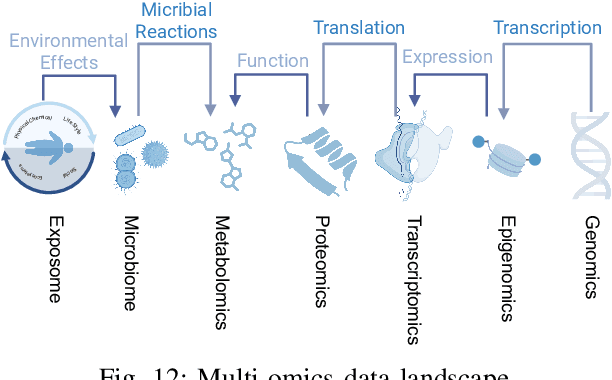
Scientific Large Language Models (Sci-LLMs) are transforming how knowledge is represented, integrated, and applied in scientific research, yet their progress is shaped by the complex nature of scientific data. This survey presents a comprehensive, data-centric synthesis that reframes the development of Sci-LLMs as a co-evolution between models and their underlying data substrate. We formulate a unified taxonomy of scientific data and a hierarchical model of scientific knowledge, emphasizing the multimodal, cross-scale, and domain-specific challenges that differentiate scientific corpora from general natural language processing datasets. We systematically review recent Sci-LLMs, from general-purpose foundations to specialized models across diverse scientific disciplines, alongside an extensive analysis of over 270 pre-/post-training datasets, showing why Sci-LLMs pose distinct demands -- heterogeneous, multi-scale, uncertainty-laden corpora that require representations preserving domain invariance and enabling cross-modal reasoning. On evaluation, we examine over 190 benchmark datasets and trace a shift from static exams toward process- and discovery-oriented assessments with advanced evaluation protocols. These data-centric analyses highlight persistent issues in scientific data development and discuss emerging solutions involving semi-automated annotation pipelines and expert validation. Finally, we outline a paradigm shift toward closed-loop systems where autonomous agents based on Sci-LLMs actively experiment, validate, and contribute to a living, evolving knowledge base. Collectively, this work provides a roadmap for building trustworthy, continually evolving artificial intelligence (AI) systems that function as a true partner in accelerating scientific discovery.
Cross-view Generalized Diffusion Model for Sparse-view CT Reconstruction
Aug 14, 2025Sparse-view computed tomography (CT) reduces radiation exposure by subsampling projection views, but conventional reconstruction methods produce severe streak artifacts with undersampled data. While deep-learning-based methods enable single-step artifact suppression, they often produce over-smoothed results under significant sparsity. Though diffusion models improve reconstruction via iterative refinement and generative priors, they require hundreds of sampling steps and struggle with stability in highly sparse regimes. To tackle these concerns, we present the Cross-view Generalized Diffusion Model (CvG-Diff), which reformulates sparse-view CT reconstruction as a generalized diffusion process. Unlike existing diffusion approaches that rely on stochastic Gaussian degradation, CvG-Diff explicitly models image-domain artifacts caused by angular subsampling as a deterministic degradation operator, leveraging correlations across sparse-view CT at different sample rates. To address the inherent artifact propagation and inefficiency of sequential sampling in generalized diffusion model, we introduce two innovations: Error-Propagating Composite Training (EPCT), which facilitates identifying error-prone regions and suppresses propagated artifacts, and Semantic-Prioritized Dual-Phase Sampling (SPDPS), an adaptive strategy that prioritizes semantic correctness before detail refinement. Together, these innovations enable CvG-Diff to achieve high-quality reconstructions with minimal iterations, achieving 38.34 dB PSNR and 0.9518 SSIM for 18-view CT using only \textbf{10} steps on AAPM-LDCT dataset. Extensive experiments demonstrate the superiority of CvG-Diff over state-of-the-art sparse-view CT reconstruction methods. The code is available at https://github.com/xmed-lab/CvG-Diff.
MOC: Meta-Optimized Classifier for Few-Shot Whole Slide Image Classification
Aug 13, 2025Recent advances in histopathology vision-language foundation models (VLFMs) have shown promise in addressing data scarcity for whole slide image (WSI) classification via zero-shot adaptation. However, these methods remain outperformed by conventional multiple instance learning (MIL) approaches trained on large datasets, motivating recent efforts to enhance VLFM-based WSI classification through fewshot learning paradigms. While existing few-shot methods improve diagnostic accuracy with limited annotations, their reliance on conventional classifier designs introduces critical vulnerabilities to data scarcity. To address this problem, we propose a Meta-Optimized Classifier (MOC) comprising two core components: (1) a meta-learner that automatically optimizes a classifier configuration from a mixture of candidate classifiers and (2) a classifier bank housing diverse candidate classifiers to enable a holistic pathological interpretation. Extensive experiments demonstrate that MOC outperforms prior arts in multiple few-shot benchmarks. Notably, on the TCGA-NSCLC benchmark, MOC improves AUC by 10.4% over the state-of-the-art few-shot VLFM-based methods, with gains up to 26.25% under 1-shot conditions, offering a critical advancement for clinical deployments where diagnostic training data is severely limited. Code is available at https://github.com/xmed-lab/MOC.
Diffmv: A Unified Diffusion Framework for Healthcare Predictions with Random Missing Views and View Laziness
May 17, 2025Advanced healthcare predictions offer significant improvements in patient outcomes by leveraging predictive analytics. Existing works primarily utilize various views of Electronic Health Record (EHR) data, such as diagnoses, lab tests, or clinical notes, for model training. These methods typically assume the availability of complete EHR views and that the designed model could fully leverage the potential of each view. However, in practice, random missing views and view laziness present two significant challenges that hinder further improvements in multi-view utilization. To address these challenges, we introduce Diffmv, an innovative diffusion-based generative framework designed to advance the exploitation of multiple views of EHR data. Specifically, to address random missing views, we integrate various views of EHR data into a unified diffusion-denoising framework, enriched with diverse contextual conditions to facilitate progressive alignment and view transformation. To mitigate view laziness, we propose a novel reweighting strategy that assesses the relative advantages of each view, promoting a balanced utilization of various data views within the model. Our proposed strategy achieves superior performance across multiple health prediction tasks derived from three popular datasets, including multi-view and multi-modality scenarios.
UniEval: Unified Holistic Evaluation for Unified Multimodal Understanding and Generation
May 15, 2025The emergence of unified multimodal understanding and generation models is rapidly attracting attention because of their ability to enhance instruction-following capabilities while minimizing model redundancy. However, there is a lack of a unified evaluation framework for these models, which would enable an elegant, simplified, and overall evaluation. Current models conduct evaluations on multiple task-specific benchmarks, but there are significant limitations, such as the lack of overall results, errors from extra evaluation models, reliance on extensive labeled images, benchmarks that lack diversity, and metrics with limited capacity for instruction-following evaluation. To tackle these challenges, we introduce UniEval, the first evaluation framework designed for unified multimodal models without extra models, images, or annotations. This facilitates a simplified and unified evaluation process. The UniEval framework contains a holistic benchmark, UniBench (supports both unified and visual generation models), along with the corresponding UniScore metric. UniBench includes 81 fine-grained tags contributing to high diversity. Experimental results indicate that UniBench is more challenging than existing benchmarks, and UniScore aligns closely with human evaluations, surpassing current metrics. Moreover, we extensively evaluated SoTA unified and visual generation models, uncovering new insights into Univeral's unique values.