 Add to Chrome
 Add to Firefox
 Add to Edge
Data-driven ensemble prediction of the global ocean
Mar 20, 2026
Data-driven models have advanced deterministic ocean forecasting, but extending machine learning to probabilistic global ocean prediction remains an open challenge. Here we introduce FuXi-ONS, the first machine-learning ensemble forecasting system for the global ocean, providing 5-day forecasts on a global 1° grid up to 365 days for sea-surface temperature, sea-surface height, subsurface temperature, salinity and ocean currents. Rather than relying on repeated integration of computationally expensive numerical models, FuXi-ONS learns physically structured perturbations and incorporates an atmospheric encoding module to stabilize long-range forecasts. Evaluated against GLORYS12 reanalysis, FuXi-ONS improves both ensemble-mean skill and probabilistic forecast quality relative to deterministic and noise-perturbed baselines, and shows competitive performance against established seasonal forecast references for SST and Niño3.4 variability, while running orders of magnitude faster than conventional ensemble systems. These results provide a strong example of machine learning advancing a core problem in ocean science, and establish a practical path toward efficient probabilistic ocean forecasting and climate risk assessment.

3DTCR: A Physics-Based Generative Framework for Vortex-Following 3D Reconstruction to Improve Tropical Cyclone Intensity Forecasting
Mar 16, 2026Tropical cyclone (TC) intensity forecasting remains challenging as current numerical and AI-based weather models fail to satisfactorily represent extreme TC structure and intensity. Although intensity time-series forecasting has achieved significant advances, it outputs intensity sequences rather than the three-dimensional inner-core fine-scale structure and physical mechanisms governing TC evolution. High-resolution numerical simulations can capture these features but remain computationally expensive and inefficient for large-scale operational applications. Here we present 3DTCR, a physics-based generative framework combining physical constraints with generative AI efficiency for 3D TC structure reconstruction. Trained on a six-year, 3-km-resolution moving-domain WRF dataset, 3DTCR enables region-adaptive vortex-following reconstruction using conditional Flow Matching(CFM), optimized via latent domain adaptation and two-stage transfer learning. The framework mitigates limitations imposed by low-resolution targets and over-smoothed forecasts, improving the representation of TC inner-core structure and intensity while maintaining track stability. Results demonstrate that 3DTCR outperforms the ECMWF high-resolution forecasting system (ECMWF-HRES) in TC intensity prediction at nearly all lead times up to 5 days and reduces the RMSE of maximum WS10M by 36.5% relative to its FuXi inputs. These findings highlight 3DTCR as a physics-based generative framework that efficiently resolves fine-scale structures at lower computational cost, which may offer a promising avenue for improving TC intensity forecasting.
FuXiWeather2: Learning accurate atmospheric state estimation for operational global weather forecasting
Mar 16, 2026Numerical weather prediction has long been constrained by the computational bottlenecks inherent in data assimilation and numerical modeling. While machine learning has accelerated forecasting, existing models largely serve as "emulators of reanalysis products," thereby retaining their systematic biases and operational latencies. Here, we present FuXiWeather2, a unified end-to-end neural framework for assimilation and forecasting. We align training objectives directly with a combination of real-world observations and reanalysis data, enabling the framework to effectively rectify inherent errors within reanalysis products. To address the distribution shift between NWP-derived background inputs during training and self-generated backgrounds during deployment, we introduce a recursive unrolling training method to enhance the precision and stability of analysis generation. Furthermore, our model is trained on a hybrid dataset of raw and simulated observations to mitigate the impact of observational distribution inconsistency. FuXiWeather2 generates high-resolution ($0.25^{\circ}$) global analysis fields and 10-day forecasts within minutes. The analysis fields surpass the NCEP-GFS across most variables and demonstrate superior accuracy over both ERA5 and the ECMWF-HRES system in lower-tropospheric and surface variables. These high-quality analysis fields drive deterministic forecasts that exceed the skill of the HRES system in 91\% of evaluated metrics. Additionally, its outstanding performance in typhoon track prediction underscores its practical value for rapid response to extreme weather events. The FuXiWeather2 analysis dataset is available at https://doi.org/10.5281/zenodo.18872728.
CLIP-driven Zero-shot Learning with Ambiguous Labels
Mar 05, 2026Zero-shot learning (ZSL) aims to recognize unseen classes by leveraging semantic information from seen classes, but most existing methods assume accurate class labels for training instances. However, in real-world scenarios, noise and ambiguous labels can significantly reduce the performance of ZSL. To address this, we propose a new CLIP-driven partial label zero-shot learning (CLIP-PZSL) framework to handle label ambiguity. First, we use CLIP to extract instance and label features. Then, a semantic mining block fuses these features to extract discriminative label embeddings. We also introduce a partial zero-shot loss, which assigns weights to candidate labels based on their relevance to the instance and aligns instance and label embeddings to minimize semantic mismatch. As the training goes on, the ground-truth labels are progressively identified, and the refined labels and label embeddings in turn help improve the semantic alignment of instance and label features. Comprehensive experiments on several datasets demonstrate the advantage of CLIP-PZSL.
AviaSafe: A Physics-Informed Data-Driven Model for Aviation Safety-Critical Cloud Forecasts
Feb 25, 2026Current AI weather forecasting models predict conventional atmospheric variables but cannot distinguish between cloud microphysical species critical for aviation safety. We introduce AviaSafe, a hierarchical, physics-informed neural forecaster that produces global, six-hourly predictions of these four hydrometeor species for lead times up to 7 days. Our approach addresses the unique challenges of cloud prediction: extreme sparsity, discontinuous distributions, and complex microphysical interactions between species. We integrate the Icing Condition (IC) index from aviation meteorology as a physics-based constraint that identifies regions where supercooled water fuels explosive ice crystal growth. The model employs a hierarchical architecture that first predicts cloud spatial distribution through masked attention, then quantifies species concentrations within identified regions. Training on ERA5 reanalysis data, our model achieves lower RMSE for cloud species compared to baseline and outperforms operational numerical models on certain key variables at 7-day lead times. The ability to forecast individual cloud species enables new applications in aviation route optimization where distinguishing between ice and liquid water determines engine icing risk.
A unified multimodal understanding and generation model for cross-disciplinary scientific research
Jan 04, 2026Scientific discovery increasingly relies on integrating heterogeneous, high-dimensional data across disciplines nowadays. While AI models have achieved notable success across various scientific domains, they typically remain domain-specific or lack the capability of simultaneously understanding and generating multimodal scientific data, particularly for high-dimensional data. Yet, many pressing global challenges and scientific problems are inherently cross-disciplinary and require coordinated progress across multiple fields. Here, we present FuXi-Uni, a native unified multimodal model for scientific understanding and high-fidelity generation across scientific domains within a single architecture. Specifically, FuXi-Uni aligns cross-disciplinary scientific tokens within natural language tokens and employs science decoder to reconstruct scientific tokens, thereby supporting both natural language conversation and scientific numerical prediction. Empirically, we validate FuXi-Uni in Earth science and Biomedicine. In Earth system modeling, the model supports global weather forecasting, tropical cyclone (TC) forecast editing, and spatial downscaling driven by only language instructions. FuXi-Uni generates 10-day global forecasts at 0.25° resolution that outperform the SOTA physical forecasting system. It shows superior performance for both TC track and intensity prediction relative to the SOTA physical model, and generates high-resolution regional weather fields that surpass standard interpolation baselines. Regarding biomedicine, FuXi-Uni outperforms leading multimodal large language models on multiple biomedical visual question answering benchmarks. By unifying heterogeneous scientific modalities within a native shared latent space while maintaining strong domain-specific performance, FuXi-Uni provides a step forward more general-purpose, multimodal scientific models.
A machine learning model for skillful climate system prediction
May 06, 2025Climate system models (CSMs), through integrating cross-sphere interactions among the atmosphere, ocean, land, and cryosphere, have emerged as pivotal tools for deciphering climate dynamics and improving forecasting capabilities. Recent breakthroughs in artificial intelligence (AI)-driven meteorological modeling have demonstrated remarkable success in single-sphere systems and partially spheres coupled systems. However, the development of a fully coupled AI-based climate system model encompassing atmosphere-ocean-land-sea ice interactions has remained an unresolved challenge. This paper introduces FengShun-CSM, an AI-based CSM model that provides 60-day global daily forecasts for 29 critical variables across atmospheric, oceanic, terrestrial, and cryospheric domains. The model significantly outperforms the European Centre for Medium-Range Weather Forecasts (ECMWF) subseasonal-to-seasonal (S2S) model in predicting most variables, particularly precipitation, land surface, and oceanic components. This enhanced capability is primarily attributed to its improved representation of intra-seasonal variability modes, most notably the Madden-Julian Oscillation (MJO). Remarkably, FengShun-CSM exhibits substantial potential in predicting subseasonal extreme events. Such breakthroughs will advance its applications in meteorological disaster mitigation, marine ecosystem conservation, and agricultural productivity enhancement. Furthermore, it validates the feasibility of developing AI-powered CSMs through machine learning technologies, establishing a transformative paradigm for next-generation Earth system modeling.
FuXi-RTM: A Physics-Guided Prediction Framework with Radiative Transfer Modeling
Mar 25, 2025


Similar to conventional video generation, current deep learning-based weather prediction frameworks often lack explicit physical constraints, leading to unphysical outputs that limit their reliability for operational forecasting. Among various physical processes requiring proper representation, radiation plays a fundamental role as it drives Earth's weather and climate systems. However, accurate simulation of radiative transfer processes remains challenging for traditional numerical weather prediction (NWP) models due to their inherent complexity and high computational costs. Here, we propose FuXi-RTM, a hybrid physics-guided deep learning framework designed to enhance weather forecast accuracy while enforcing physical consistency. FuXi-RTM integrates a primary forecasting model (FuXi) with a fixed deep learning-based radiative transfer model (DLRTM) surrogate that efficiently replaces conventional radiation parameterization schemes. This represents the first deep learning-based weather forecasting framework to explicitly incorporate physical process modeling. Evaluated over a comprehensive 5-year dataset, FuXi-RTM outperforms its unconstrained counterpart in 88.51% of 3320 variable and lead time combinations, with improvements in radiative flux predictions. By incorporating additional physical processes, FuXi-RTM paves the way for next-generation weather forecasting systems that are both accurate and physically consistent.
Compressing high-resolution data through latent representation encoding for downscaling large-scale AI weather forecast model
Oct 10, 2024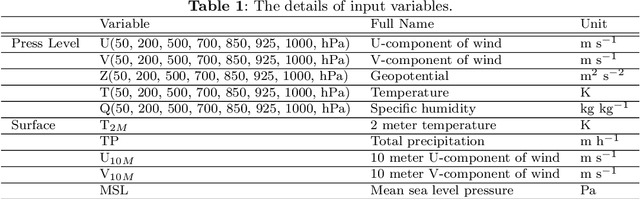
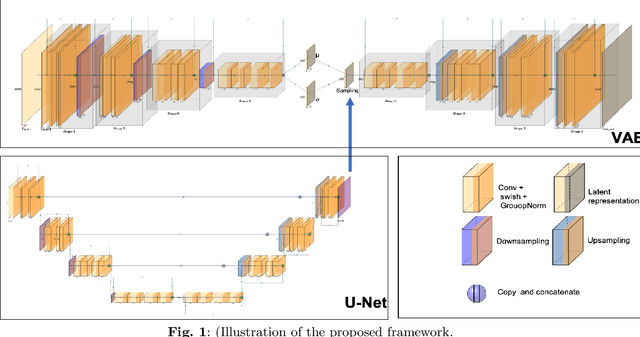

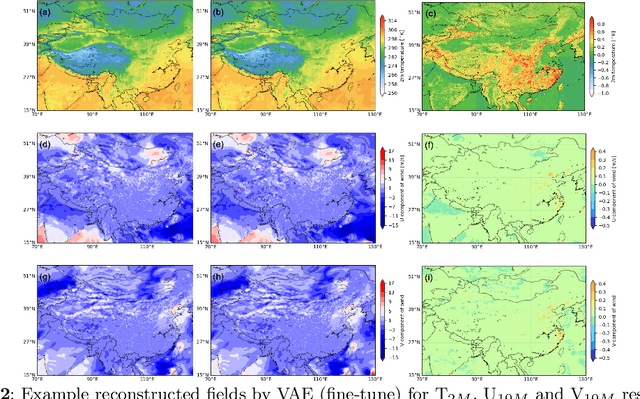
The rapid advancement of artificial intelligence (AI) in weather research has been driven by the ability to learn from large, high-dimensional datasets. However, this progress also poses significant challenges, particularly regarding the substantial costs associated with processing extensive data and the limitations of computational resources. Inspired by the Neural Image Compression (NIC) task in computer vision, this study seeks to compress weather data to address these challenges and enhance the efficiency of downstream applications. Specifically, we propose a variational autoencoder (VAE) framework tailored for compressing high-resolution datasets, specifically the High Resolution China Meteorological Administration Land Data Assimilation System (HRCLDAS) with a spatial resolution of 1 km. Our framework successfully reduced the storage size of 3 years of HRCLDAS data from 8.61 TB to just 204 GB, while preserving essential information. In addition, we demonstrated the utility of the compressed data through a downscaling task, where the model trained on the compressed dataset achieved accuracy comparable to that of the model trained on the original data. These results highlight the effectiveness and potential of the compressed data for future weather research.
FuXi-2.0: Advancing machine learning weather forecasting model for practical applications
Sep 11, 2024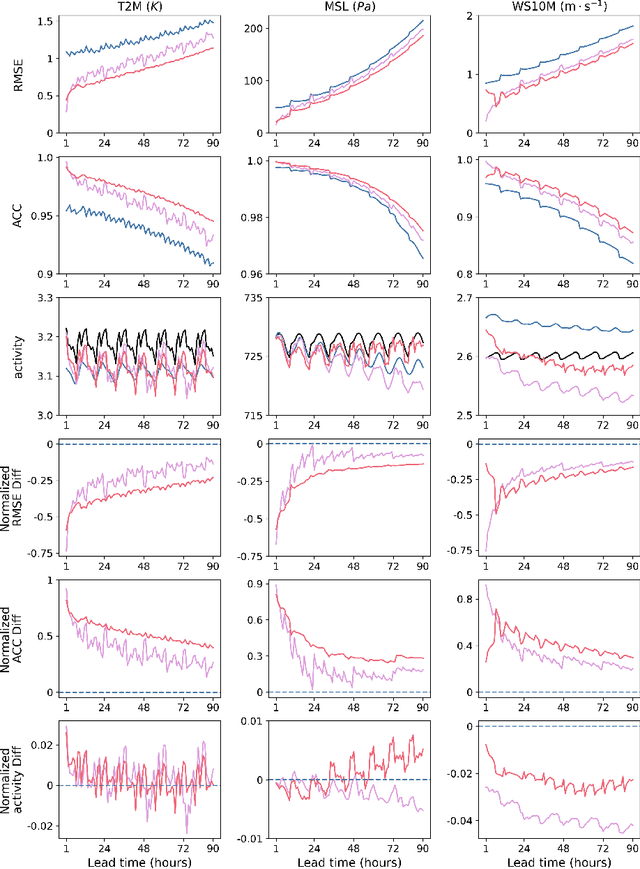
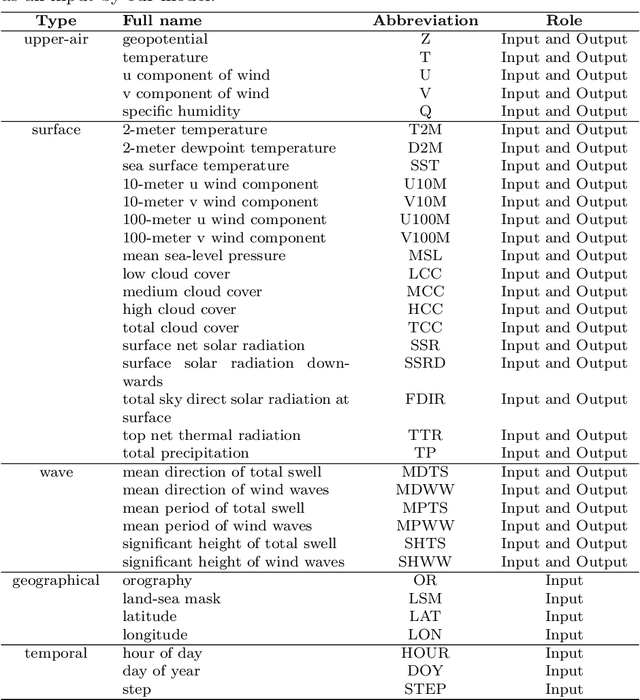
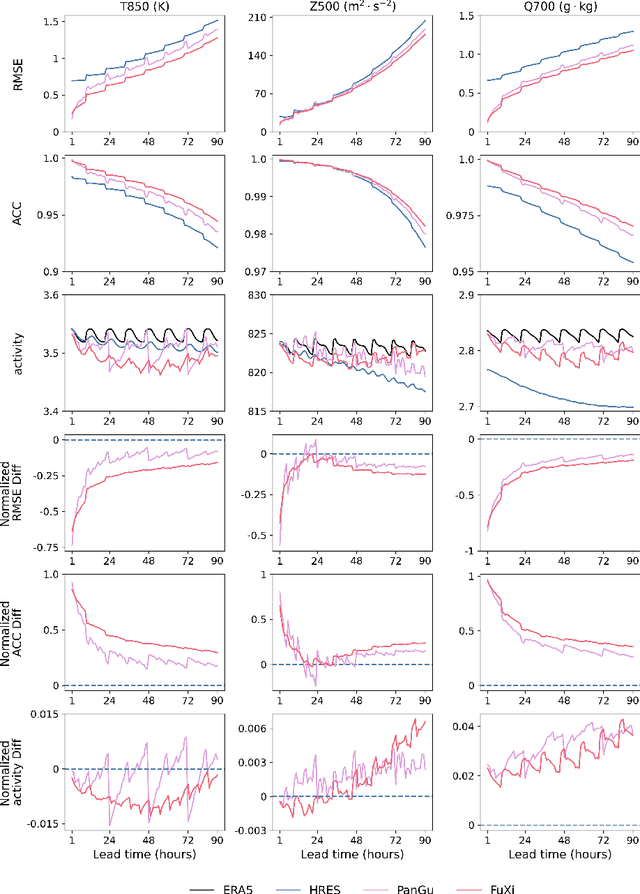
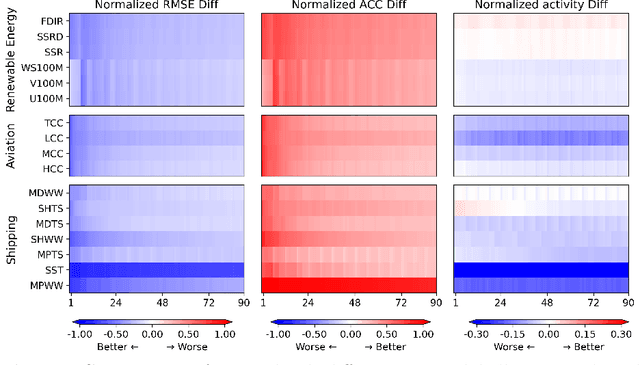
Machine learning (ML) models have become increasingly valuable in weather forecasting, providing forecasts that not only lower computational costs but often match or exceed the accuracy of traditional numerical weather prediction (NWP) models. Despite their potential, ML models typically suffer from limitations such as coarse temporal resolution, typically 6 hours, and a limited set of meteorological variables, limiting their practical applicability. To overcome these challenges, we introduce FuXi-2.0, an advanced ML model that delivers 1-hourly global weather forecasts and includes a comprehensive set of essential meteorological variables, thereby expanding its utility across various sectors like wind and solar energy, aviation, and marine shipping. Our study conducts comparative analyses between ML-based 1-hourly forecasts and those from the high-resolution forecast (HRES) of the European Centre for Medium-Range Weather Forecasts (ECMWF) for various practical scenarios. The results demonstrate that FuXi-2.0 consistently outperforms ECMWF HRES in forecasting key meteorological variables relevant to these sectors. In particular, FuXi-2.0 shows superior performance in wind power forecasting compared to ECMWF HRES, further validating its efficacy as a reliable tool for scenarios demanding precise weather forecasts. Additionally, FuXi-2.0 also integrates both atmospheric and oceanic components, representing a significant step forward in the development of coupled atmospheric-ocean models. Further comparative analyses reveal that FuXi-2.0 provides more accurate forecasts of tropical cyclone intensity than its predecessor, FuXi-1.0, suggesting that there are benefits of an atmosphere-ocean coupled model over atmosphere-only models.