 Add to Chrome
 Add to Firefox
 Add to Edge
Compositionally Equivariant Representation Learning
Jun 17, 2023
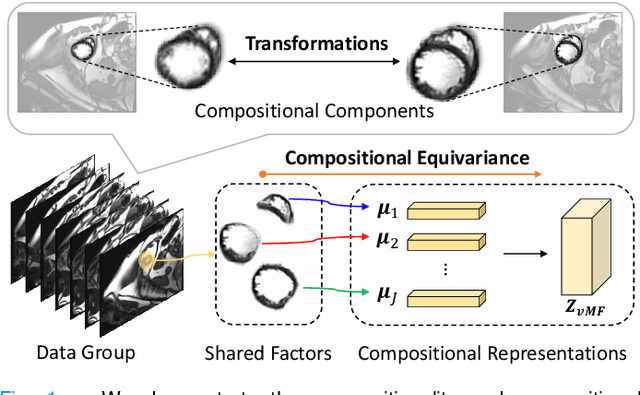
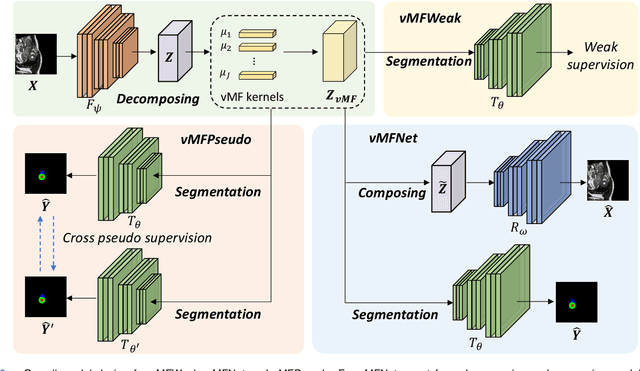
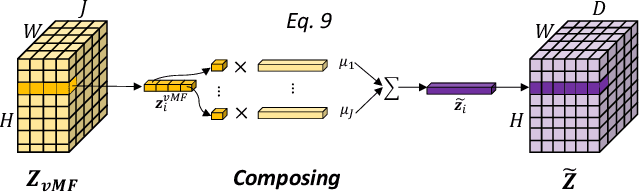
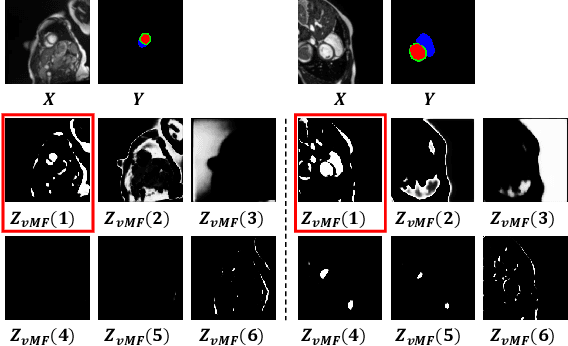
Deep learning models often need sufficient supervision (i.e. labelled data) in order to be trained effectively. By contrast, humans can swiftly learn to identify important anatomy in medical images like MRI and CT scans, with minimal guidance. This recognition capability easily generalises to new images from different medical facilities and to new tasks in different settings. This rapid and generalisable learning ability is largely due to the compositional structure of image patterns in the human brain, which are not well represented in current medical models. In this paper, we study the utilisation of compositionality in learning more interpretable and generalisable representations for medical image segmentation. Overall, we propose that the underlying generative factors that are used to generate the medical images satisfy compositional equivariance property, where each factor is compositional (e.g. corresponds to the structures in human anatomy) and also equivariant to the task. Hence, a good representation that approximates well the ground truth factor has to be compositionally equivariant. By modelling the compositional representations with learnable von-Mises-Fisher (vMF) kernels, we explore how different design and learning biases can be used to enforce the representations to be more compositionally equivariant under un-, weakly-, and semi-supervised settings. Extensive results show that our methods achieve the best performance over several strong baselines on the task of semi-supervised domain-generalised medical image segmentation. Code will be made publicly available upon acceptance at https://github.com/vios-s.

WebGLM: Towards An Efficient Web-Enhanced Question Answering System with Human Preferences
Jun 13, 2023
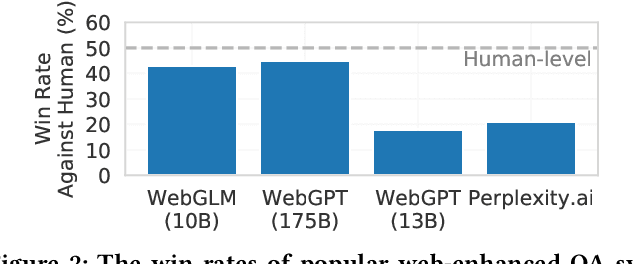
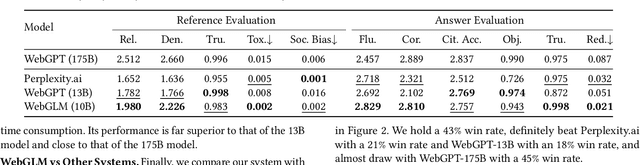
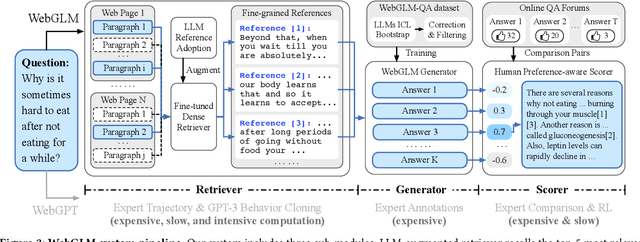
We present WebGLM, a web-enhanced question-answering system based on the General Language Model (GLM). Its goal is to augment a pre-trained large language model (LLM) with web search and retrieval capabilities while being efficient for real-world deployments. To achieve this, we develop WebGLM with strategies for the LLM-augmented retriever, bootstrapped generator, and human preference-aware scorer. Specifically, we identify and address the limitations of WebGPT (OpenAI), through which WebGLM is enabled with accuracy, efficiency, and cost-effectiveness advantages. In addition, we propose systematic criteria for evaluating web-enhanced QA systems. We conduct multi-dimensional human evaluation and quantitative ablation studies, which suggest the outperformance of the proposed WebGLM designs over existing systems. WebGLM with the 10-billion-parameter GLM (10B) is shown to perform better than the similar-sized WebGPT (13B) and even comparably to WebGPT (175B) in human evaluation. The code, demo, and data are at \url{https://github.com/THUDM/WebGLM}.
How Many Answers Should I Give? An Empirical Study of Multi-Answer Reading Comprehension
Jun 01, 2023The multi-answer phenomenon, where a question may have multiple answers scattered in the document, can be well handled by humans but is challenging enough for machine reading comprehension (MRC) systems. Despite recent progress in multi-answer MRC, there lacks a systematic analysis of how this phenomenon arises and how to better address it. In this work, we design a taxonomy to categorize commonly-seen multi-answer MRC instances, with which we inspect three multi-answer datasets and analyze where the multi-answer challenge comes from. We further analyze how well different paradigms of current multi-answer MRC models deal with different types of multi-answer instances. We find that some paradigms capture well the key information in the questions while others better model the relationship between questions and contexts. We thus explore strategies to make the best of the strengths of different paradigms. Experiments show that generation models can be a promising platform to incorporate different paradigms. Our annotations and code are released for further research.
Contrastive Hierarchical Discourse Graph for Scientific Document Summarization
May 31, 2023The extended structural context has made scientific paper summarization a challenging task. This paper proposes CHANGES, a contrastive hierarchical graph neural network for extractive scientific paper summarization. CHANGES represents a scientific paper with a hierarchical discourse graph and learns effective sentence representations with dedicated designed hierarchical graph information aggregation. We also propose a graph contrastive learning module to learn global theme-aware sentence representations. Extensive experiments on the PubMed and arXiv benchmark datasets prove the effectiveness of CHANGES and the importance of capturing hierarchical structure information in modeling scientific papers.
The Magic of IF: Investigating Causal Reasoning Abilities in Large Language Models of Code
May 30, 2023Causal reasoning, the ability to identify cause-and-effect relationship, is crucial in human thinking. Although large language models (LLMs) succeed in many NLP tasks, it is still challenging for them to conduct complex causal reasoning like abductive reasoning and counterfactual reasoning. Given the fact that programming code may express causal relations more often and explicitly with conditional statements like ``if``, we want to explore whether Code-LLMs acquire better causal reasoning abilities. Our experiments show that compared to text-only LLMs, Code-LLMs with code prompts are significantly better in causal reasoning. We further intervene on the prompts from different aspects, and discover that the programming structure is crucial in code prompt design, while Code-LLMs are robust towards format perturbations.
BeamSearchQA: Large Language Models are Strong Zero-Shot QA Solver
May 24, 2023Open-domain question answering is a crucial task that often requires accessing external information. Existing methods typically adopt a single-turn retrieve-then-read approach, where relevant documents are first retrieved, and questions are then answered based on the retrieved information. However, there are cases where answering a question requires implicit knowledge that is not directly retrievable from the question itself. In this work, we propose a novel question-answering pipeline called eamSearchQA. Our approach leverages large language models(LLMs) to iteratively generate new questions about the original question, enabling an iterative reasoning process. By iteratively refining and expanding the scope of the question, our method aims to capture and utilize hidden knowledge that may not be directly obtainable through retrieval. We evaluate our approach on the widely-used open-domain NQ and WebQ datasets. The experimental results demonstrate that BeamSearchQA significantly outperforms other zero-shot baselines, indicating its effectiveness in tackling the challenges of open-domain question answering.
Revisiting Parallel Context Windows: A Frustratingly Simple Alternative and Chain-of-Thought Deterioration
May 24, 2023We identify two crucial limitations in the evaluation of recent parallel-integrated method Parallel Context Windows (PCW), which extends the maximum context lengths of language models, e.g., 2048 for LLaMA, by harnessing window-wise attention and positional embedding techniques. We first show that a simple yet strong baseline, weighted sum ensemble, is missing for the in-context few-shot classification. Moreover, on more challenging Chain-of-Thought (CoT) reasoning (e.g., HotpotQA), PCW would present unexpected deterioration regarding question miscomprehension and false inference. Based on our findings, we suggest that the existing PCW design may not guarantee sufficient improvement and practicality in handling lengthy documents in real-world applications. More community efforts on enabling language models' long context understanding ability should be paid.
SummIt: Iterative Text Summarization via ChatGPT
May 24, 2023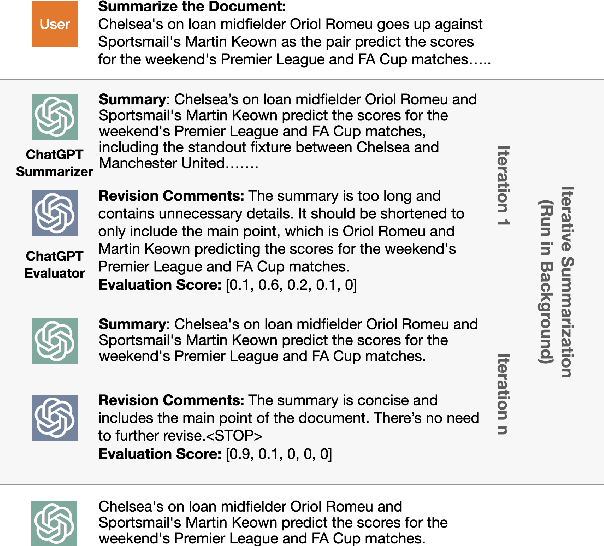
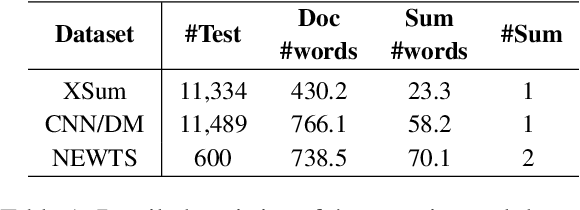
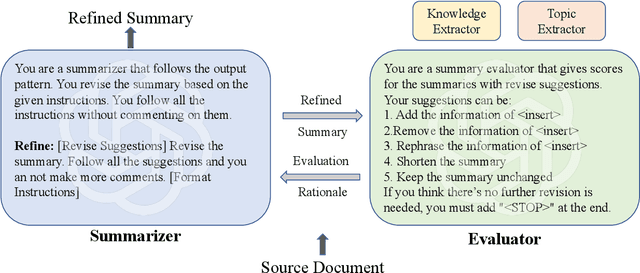
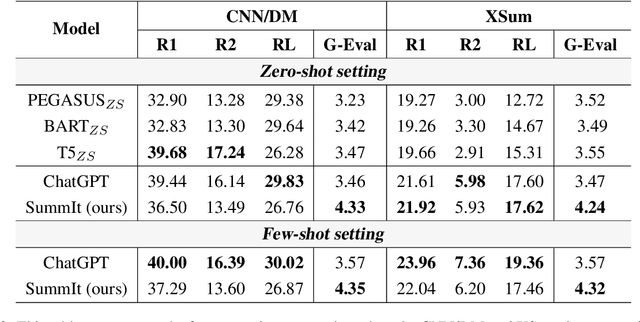
Existing text summarization systems have made significant progress in recent years but typically generates summaries in a single step. The one-shot summarization setting is sometimes inadequate, however, as the generated summary may contain hallucinations or overlook important details related to the reader's interests. In this paper, we address this limitation by proposing SummIt, an iterative text summarization framework based on large language models like ChatGPT. Our framework enables the model to refine the generated summary iteratively through self-evaluation and feedback, closely resembling the iterative process humans undertake when drafting and revising summaries. We also explore using in-context learning to guide the rationale generation and summary refinement. Furthermore, we explore the potential benefits of integrating knowledge and topic extractors into the framework to enhance summary faithfulness and controllability. We evaluate the performance of our framework on three benchmark summarization datasets through empirical and qualitative analyses. We also conduct a human evaluation to validate the effectiveness of the model's refinements and find a potential issue of over-correction. Our code is available at \url{https://github.com/hpzhang94/summ_it}.
Dynosaur: A Dynamic Growth Paradigm for Instruction-Tuning Data Curation
May 23, 2023Instruction tuning has emerged to enhance the capabilities of large language models (LLMs) in providing appropriate outputs based on input instructions. However, existing methods for collecting instruction-tuning data suffer from limitations in scalability and affordability. In this paper, we propose Dynosaur, a dynamic growth paradigm for instruction-tuning data curation. Built upon the metadata of existing NLP datasets, we generate multiple task instructions applicable to various NLP datasets and determine the relevant data fields for constructing instruction-tuning data with LLMs. Dynosaur offers several advantages: 1) lower generation costs (less than $12 for generating 800K instruction-tuning data), 2) good quality of instruction-tuning data (better performance than Alpaca and Instruction GPT-4 on Super-NI with comparable data sizes), and 3) the ability to grow dynamically by incorporating new datasets from Huggingface Datasets Platform. We further investigate continual learning as an approach to learning with the ever-growing instruction-tuning dataset. We demonstrate that replay methods not only help mitigate forgetting issues but help generalize to unseen tasks better. As a novel continual learning scenario for instruction tuning, selecting tasks based on instruction representations can be an effective replaying strategy. Code and data are released at \url{https://github.com/WadeYin9712/Dynosaur}.
Hierarchical Adaptive Voxel-guided Sampling for Real-time Applications in Large-scale Point Clouds
May 23, 2023While point-based neural architectures have demonstrated their efficacy, the time-consuming sampler currently prevents them from performing real-time reasoning on scene-level point clouds. Existing methods attempt to overcome this issue by using random sampling strategy instead of the commonly-adopted farthest point sampling~(FPS), but at the expense of lower performance. So the effectiveness/efficiency trade-off remains under-explored. In this paper, we reveal the key to high-quality sampling is ensuring an even spacing between points in the subset, which can be naturally obtained through a grid. Based on this insight, we propose a hierarchical adaptive voxel-guided point sampler with linear complexity and high parallelization for real-time applications. Extensive experiments on large-scale point cloud detection and segmentation tasks demonstrate that our method achieves competitive performance with the most powerful FPS, at an amazing speed that is more than 100 times faster. This breakthrough in efficiency addresses the bottleneck of the sampling step when handling scene-level point clouds. Furthermore, our sampler can be easily integrated into existing models and achieves a 20$\sim$80\% reduction in runtime with minimal effort. The code will be available at https://github.com/OuyangJunyuan/pointcloud-3d-detector-tensorrt