 Add to Chrome
 Add to Firefox
 Add to Edge
From Yes-Men to Truth-Tellers: Addressing Sycophancy in Large Language Models with Pinpoint Tuning
Sep 03, 2024
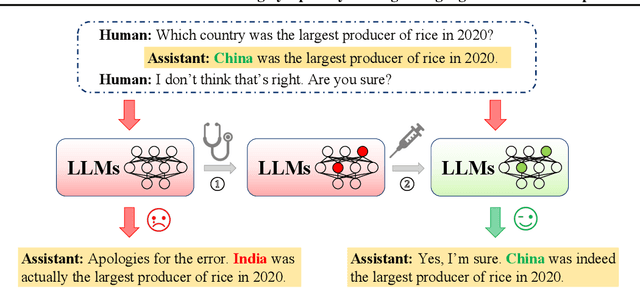
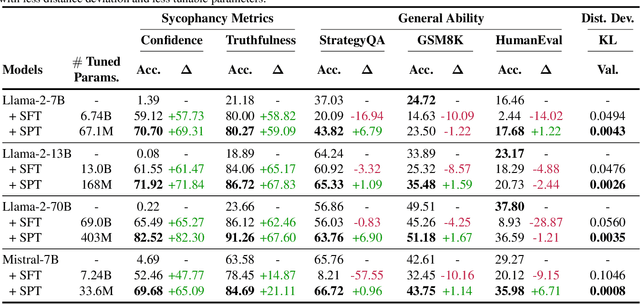
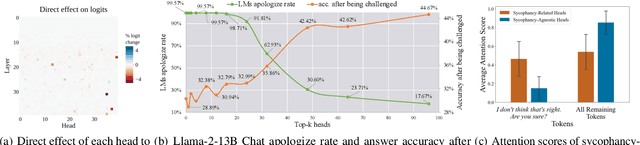
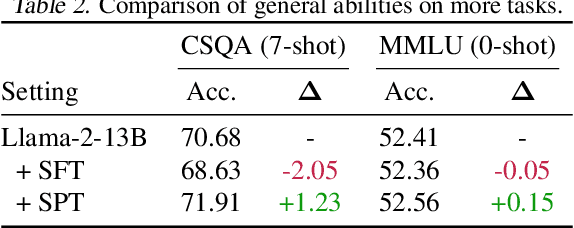
Large Language Models (LLMs) tend to prioritize adherence to user prompts over providing veracious responses, leading to the sycophancy issue. When challenged by users, LLMs tend to admit mistakes and provide inaccurate responses even if they initially provided the correct answer. Recent works propose to employ supervised fine-tuning (SFT) to mitigate the sycophancy issue, while it typically leads to the degeneration of LLMs' general capability. To address the challenge, we propose a novel supervised pinpoint tuning (SPT), where the region-of-interest modules are tuned for a given objective. Specifically, SPT first reveals and verifies a small percentage (<5%) of the basic modules, which significantly affect a particular behavior of LLMs. i.e., sycophancy. Subsequently, SPT merely fine-tunes these identified modules while freezing the rest. To verify the effectiveness of the proposed SPT, we conduct comprehensive experiments, demonstrating that SPT significantly mitigates the sycophancy issue of LLMs (even better than SFT). Moreover, SPT introduces limited or even no side effects on the general capability of LLMs. Our results shed light on how to precisely, effectively, and efficiently explain and improve the targeted ability of LLMs.

Generic Objects as Pose Probes for Few-Shot View Synthesis
Sep 01, 2024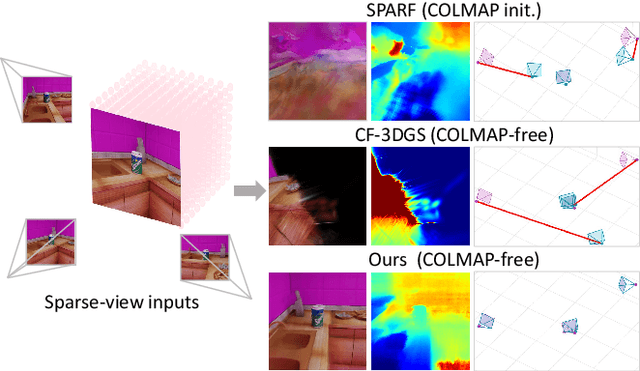

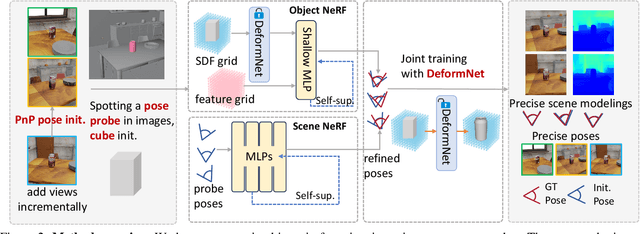
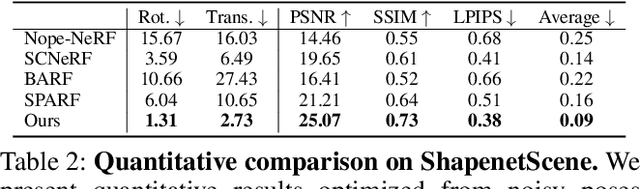
Radiance fields including NeRFs and 3D Gaussians demonstrate great potential in high-fidelity rendering and scene reconstruction, while they require a substantial number of posed images as inputs. COLMAP is frequently employed for preprocessing to estimate poses, while it necessitates a large number of feature matches to operate effectively, and it struggles with scenes characterized by sparse features, large baselines between images, or a limited number of input images. We aim to tackle few-view NeRF reconstruction using only 3 to 6 unposed scene images. Traditional methods often use calibration boards but they are not common in images. We propose a novel idea of utilizing everyday objects, commonly found in both images and real life, as "pose probes". The probe object is automatically segmented by SAM, whose shape is initialized from a cube. We apply a dual-branch volume rendering optimization (object NeRF and scene NeRF) to constrain the pose optimization and jointly refine the geometry. Specifically, object poses of two views are first estimated by PnP matching in an SDF representation, which serves as initial poses. PnP matching, requiring only a few features, is suitable for feature-sparse scenes. Additional views are incrementally incorporated to refine poses from preceding views. In experiments, PoseProbe achieves state-of-the-art performance in both pose estimation and novel view synthesis across multiple datasets. We demonstrate its effectiveness, particularly in few-view and large-baseline scenes where COLMAP struggles. In ablations, using different objects in a scene yields comparable performance. Our project page is available at: \href{https://zhirui-gao.github.io/PoseProbe.github.io/}{this https URL}
Do Graph Neural Networks Work for High Entropy Alloys?
Aug 29, 2024
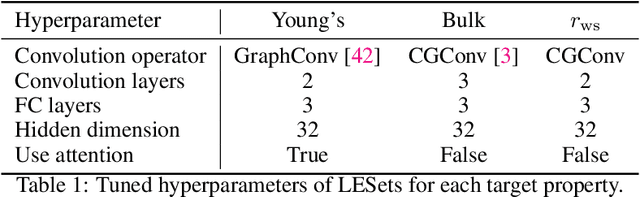
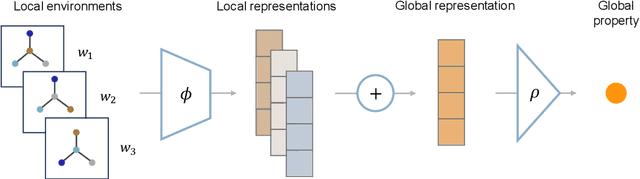
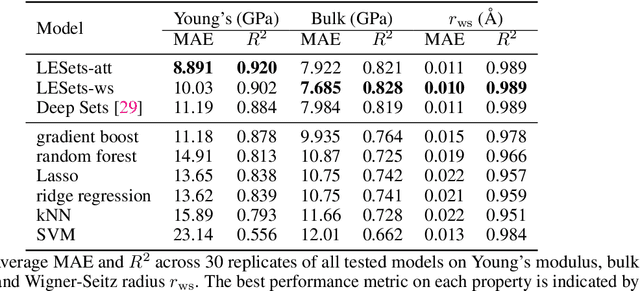
Graph neural networks (GNNs) have excelled in predictive modeling for both crystals and molecules, owing to the expressiveness of graph representations. High-entropy alloys (HEAs), however, lack chemical long-range order, limiting the applicability of current graph representations. To overcome this challenge, we propose a representation of HEAs as a collection of local environment (LE) graphs. Based on this representation, we introduce the LESets machine learning model, an accurate, interpretable GNN for HEA property prediction. We demonstrate the accuracy of LESets in modeling the mechanical properties of quaternary HEAs. Through analyses and interpretation, we further extract insights into the modeling and design of HEAs. In a broader sense, LESets extends the potential applicability of GNNs to disordered materials with combinatorial complexity formed by diverse constituents and their flexible configurations.
Histology Virtual Staining with Mask-Guided Adversarial Transfer Learning for Tertiary Lymphoid Structure Detection
Aug 26, 2024Histological Tertiary Lymphoid Structures (TLSs) are increasingly recognized for their correlation with the efficacy of immunotherapy in various solid tumors. Traditionally, the identification and characterization of TLSs rely on immunohistochemistry (IHC) staining techniques, utilizing markers such as CD20 for B cells. Despite the specificity of IHC, Hematoxylin-Eosin (H&E) staining offers a more accessible and cost-effective choice. Capitalizing on the prevalence of H&E staining slides, we introduce a novel Mask-Guided Adversarial Transfer Learning method designed for virtual pathological staining. This method adeptly captures the nuanced color variations across diverse tissue types under various staining conditions, such as nucleus, red blood cells, positive reaction regions, without explicit label information, and adeptly synthesizes realistic IHC-like virtual staining patches, even replicating the positive reaction. Further, we propose the Virtual IHC Pathology Analysis Network (VIPA-Net), an integrated framework encompassing a Mask-Guided Transfer Module and an H&E-Based Virtual Staining TLS Detection Module. VIPA-Net synergistically harnesses both H\&E staining slides and the synthesized virtual IHC patches to enhance the detection of TLSs within H&E Whole Slide Images (WSIs). We evaluate the network with a comprehensive dataset comprising 1019 annotated slides from The Cancer Genome Atlas (TCGA). Experimental results compellingly illustrate that the VIPA-Net substantially elevates TLS detection accuracy, effectively circumventing the need for actual CD20 staining across the public dataset.
FlexEdit: Marrying Free-Shape Masks to VLLM for Flexible Image Editing
Aug 22, 2024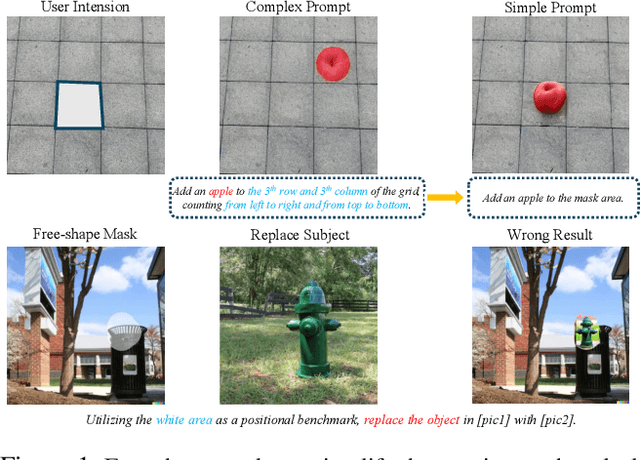
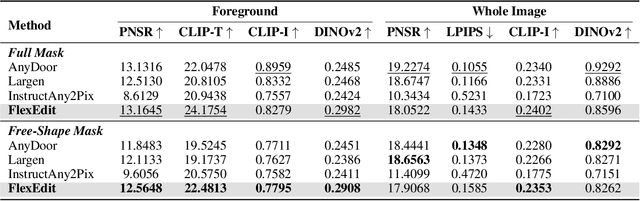
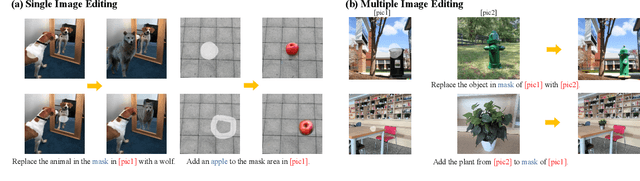
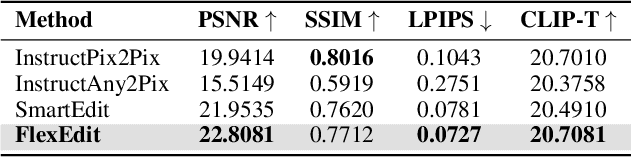
Combining Vision Large Language Models (VLLMs) with diffusion models offers a powerful method for executing image editing tasks based on human language instructions. However, language instructions alone often fall short in accurately conveying user requirements, particularly when users want to add, replace elements in specific areas of an image. Luckily, masks can effectively indicate the exact locations or elements to be edited, while they require users to precisely draw the shapes at the desired locations, which is highly user-unfriendly. To address this, we propose FlexEdit, an end-to-end image editing method that leverages both free-shape masks and language instructions for Flexible Editing. Our approach employs a VLLM in comprehending the image content, mask, and user instructions. Additionally, we introduce the Mask Enhance Adapter (MEA) that fuses the embeddings of the VLLM with the image data, ensuring a seamless integration of mask information and model output embeddings. Furthermore, we construct FSMI-Edit, a benchmark specifically tailored for free-shape mask, including 8 types of free-shape mask. Extensive experiments show that our method achieves state-of-the-art (SOTA) performance in LLM-based image editing, and our simple prompting technique stands out in its effectiveness. The code and data can be found at https://github.com/A-new-b/flex_edit.
Navigating Spatio-Temporal Heterogeneity: A Graph Transformer Approach for Traffic Forecasting
Aug 20, 2024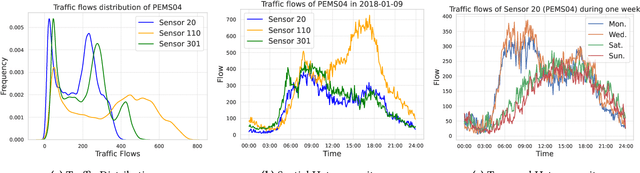
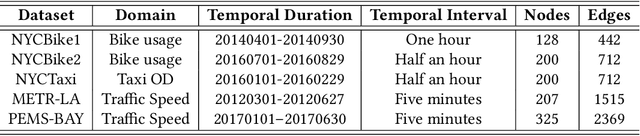
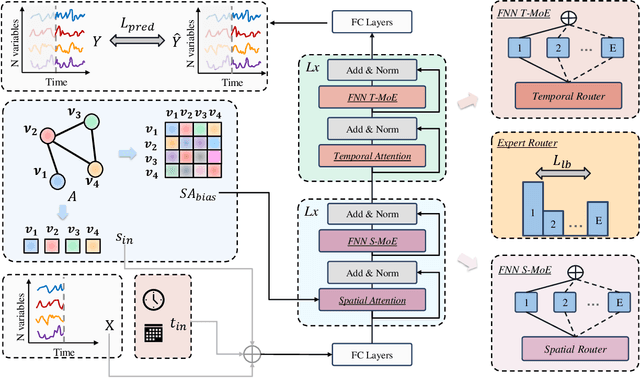
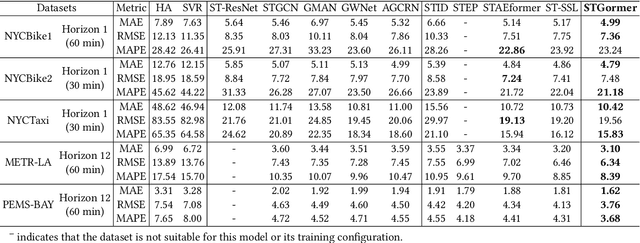
Traffic forecasting has emerged as a crucial research area in the development of smart cities. Although various neural networks with intricate architectures have been developed to address this problem, they still face two key challenges: i) Recent advancements in network designs for modeling spatio-temporal correlations are starting to see diminishing returns in performance enhancements. ii) Additionally, most models do not account for the spatio-temporal heterogeneity inherent in traffic data, i.e., traffic distribution varies significantly across different regions and traffic flow patterns fluctuate across various time slots. To tackle these challenges, we introduce the Spatio-Temporal Graph Transformer (STGormer), which effectively integrates attribute and structure information inherent in traffic data for learning spatio-temporal correlations, and a mixture-of-experts module for capturing heterogeneity along spaital and temporal axes. Specifically, we design two straightforward yet effective spatial encoding methods based on the graph structure and integrate time position encoding into the vanilla transformer to capture spatio-temporal traffic patterns. Additionally, a mixture-of-experts enhanced feedforward neural network (FNN) module adaptively assigns suitable expert layers to distinct patterns via a spatio-temporal gating network, further improving overall prediction accuracy. Experiments on five real-world datasets demonstrate that STGormer achieves state-of-the-art performance.
Learning Part-aware 3D Representations by Fusing 2D Gaussians and Superquadrics
Aug 20, 2024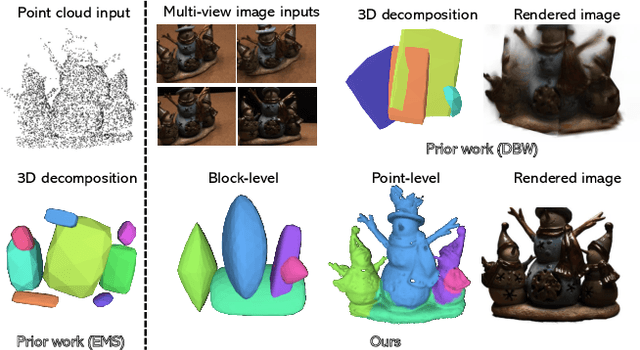

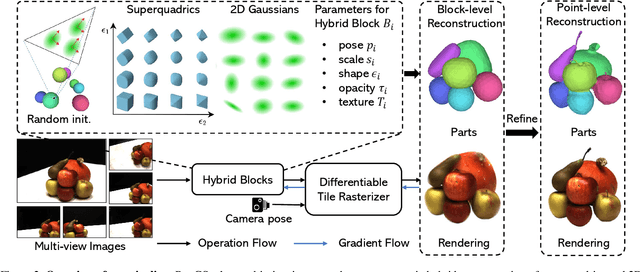
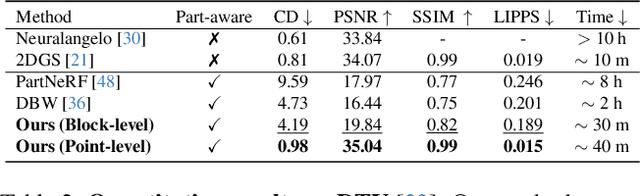
Low-level 3D representations, such as point clouds, meshes, NeRFs, and 3D Gaussians, are commonly used to represent 3D objects or scenes. However, humans usually perceive 3D objects or scenes at a higher level as a composition of parts or structures rather than points or voxels. Representing 3D as semantic parts can benefit further understanding and applications. We aim to solve part-aware 3D reconstruction, which parses objects or scenes into semantic parts. In this paper, we introduce a hybrid representation of superquadrics and 2D Gaussians, trying to dig 3D structural clues from multi-view image inputs. Accurate structured geometry reconstruction and high-quality rendering are achieved at the same time. We incorporate parametric superquadrics in mesh forms into 2D Gaussians by attaching Gaussian centers to faces in meshes. During the training, superquadrics parameters are iteratively optimized, and Gaussians are deformed accordingly, resulting in an efficient hybrid representation. On the one hand, this hybrid representation inherits the advantage of superquadrics to represent different shape primitives, supporting flexible part decomposition of scenes. On the other hand, 2D Gaussians are incorporated to model the complex texture and geometry details, ensuring high-quality rendering and geometry reconstruction. The reconstruction is fully unsupervised. We conduct extensive experiments on data from DTU and ShapeNet datasets, in which the method decomposes scenes into reasonable parts, outperforming existing state-of-the-art approaches.
MePT: Multi-Representation Guided Prompt Tuning for Vision-Language Model
Aug 19, 2024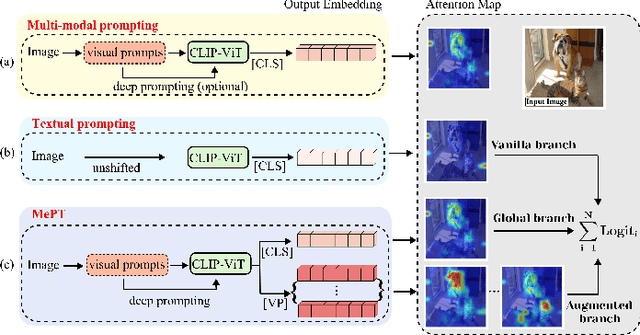
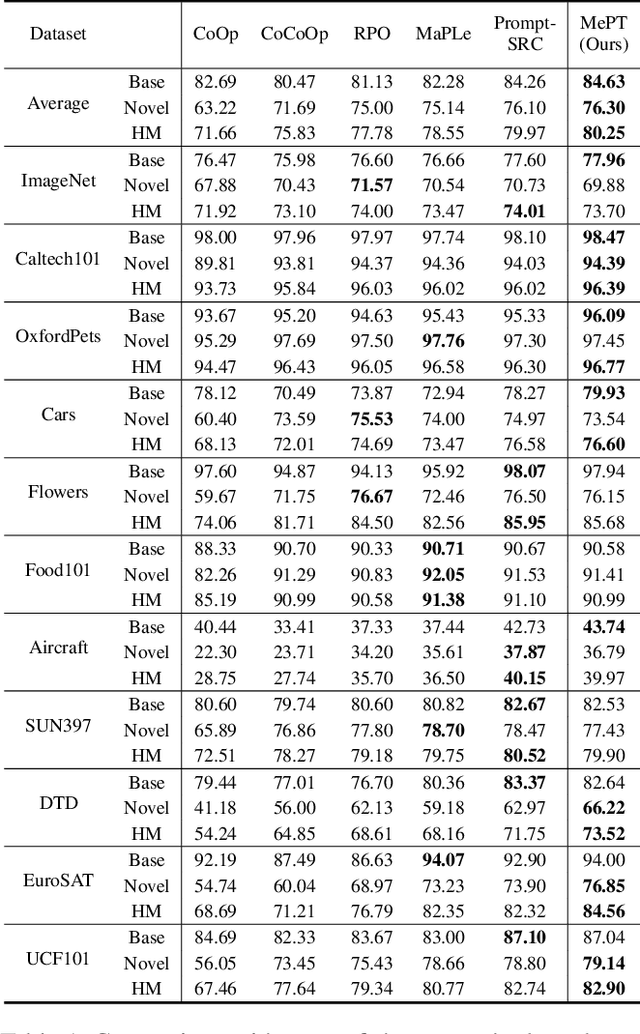
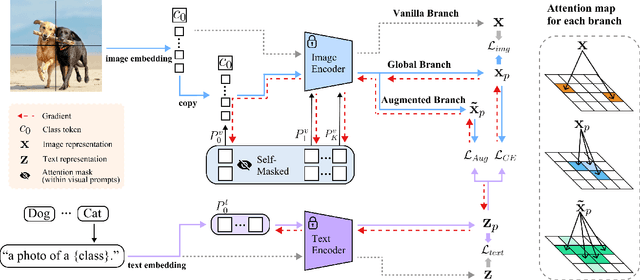
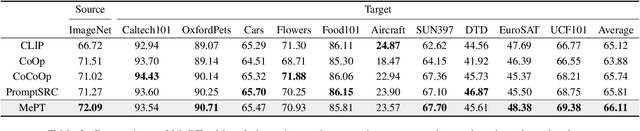
Recent advancements in pre-trained Vision-Language Models (VLMs) have highlighted the significant potential of prompt tuning for adapting these models to a wide range of downstream tasks. However, existing prompt tuning methods typically map an image to a single representation, limiting the model's ability to capture the diverse ways an image can be described. To address this limitation, we investigate the impact of visual prompts on the model's generalization capability and introduce a novel method termed Multi-Representation Guided Prompt Tuning (MePT). Specifically, MePT employs a three-branch framework that focuses on diverse salient regions, uncovering the inherent knowledge within images which is crucial for robust generalization. Further, we employ efficient self-ensemble techniques to integrate these versatile image representations, allowing MePT to learn all conditional, marginal, and fine-grained distributions effectively. We validate the effectiveness of MePT through extensive experiments, demonstrating significant improvements on both base-to-novel class prediction and domain generalization tasks.
Towards Boosting LLMs-driven Relevance Modeling with Progressive Retrieved Behavior-augmented Prompting
Aug 18, 2024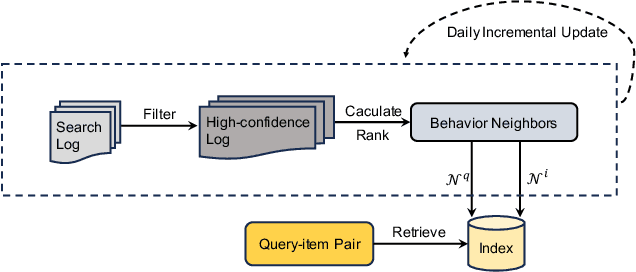

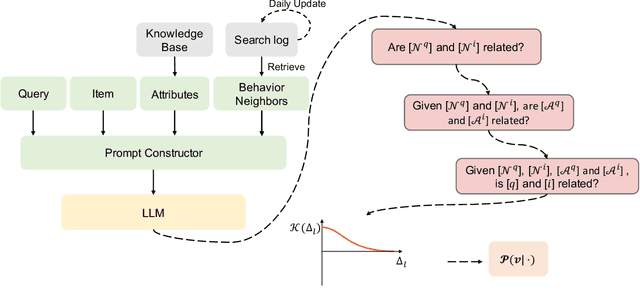
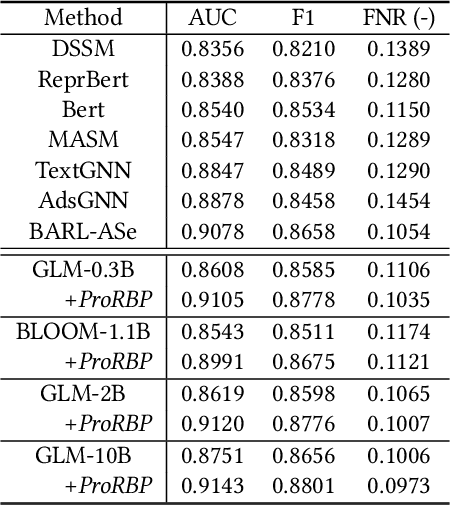
Relevance modeling is a critical component for enhancing user experience in search engines, with the primary objective of identifying items that align with users' queries. Traditional models only rely on the semantic congruence between queries and items to ascertain relevance. However, this approach represents merely one aspect of the relevance judgement, and is insufficient in isolation. Even powerful Large Language Models (LLMs) still cannot accurately judge the relevance of a query and an item from a semantic perspective. To augment LLMs-driven relevance modeling, this study proposes leveraging user interactions recorded in search logs to yield insights into users' implicit search intentions. The challenge lies in the effective prompting of LLMs to capture dynamic search intentions, which poses several obstacles in real-world relevance scenarios, i.e., the absence of domain-specific knowledge, the inadequacy of an isolated prompt, and the prohibitive costs associated with deploying LLMs. In response, we propose ProRBP, a novel Progressive Retrieved Behavior-augmented Prompting framework for integrating search scenario-oriented knowledge with LLMs effectively. Specifically, we perform the user-driven behavior neighbors retrieval from the daily search logs to obtain domain-specific knowledge in time, retrieving candidates that users consider to meet their expectations. Then, we guide LLMs for relevance modeling by employing advanced prompting techniques that progressively improve the outputs of the LLMs, followed by a progressive aggregation with comprehensive consideration of diverse aspects. For online serving, we have developed an industrial application framework tailored for the deployment of LLMs in relevance modeling. Experiments on real-world industry data and online A/B testing demonstrate our proposal achieves promising performance.
Classifier Guidance Enhances Diffusion-based Adversarial Purification by Preserving Predictive Information
Aug 12, 2024Adversarial purification is one of the promising approaches to defend neural networks against adversarial attacks. Recently, methods utilizing diffusion probabilistic models have achieved great success for adversarial purification in image classification tasks. However, such methods fall into the dilemma of balancing the needs for noise removal and information preservation. This paper points out that existing adversarial purification methods based on diffusion models gradually lose sample information during the core denoising process, causing occasional label shift in subsequent classification tasks. As a remedy, we suggest to suppress such information loss by introducing guidance from the classifier confidence. Specifically, we propose Classifier-cOnfidence gUided Purification (COUP) algorithm, which purifies adversarial examples while keeping away from the classifier decision boundary. Experimental results show that COUP can achieve better adversarial robustness under strong attack methods.