 Add to Chrome
 Add to Firefox
 Add to Edge
Compositional Foundation Models for Hierarchical Planning
Sep 21, 2023
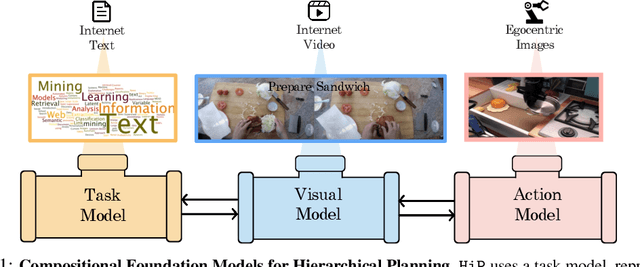
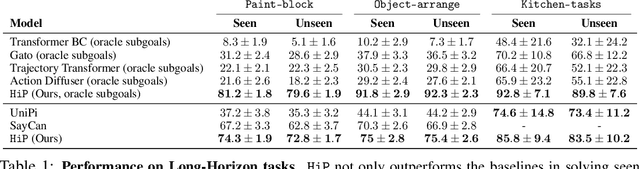
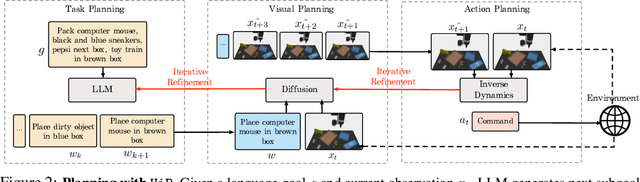

To make effective decisions in novel environments with long-horizon goals, it is crucial to engage in hierarchical reasoning across spatial and temporal scales. This entails planning abstract subgoal sequences, visually reasoning about the underlying plans, and executing actions in accordance with the devised plan through visual-motor control. We propose Compositional Foundation Models for Hierarchical Planning (HiP), a foundation model which leverages multiple expert foundation model trained on language, vision and action data individually jointly together to solve long-horizon tasks. We use a large language model to construct symbolic plans that are grounded in the environment through a large video diffusion model. Generated video plans are then grounded to visual-motor control, through an inverse dynamics model that infers actions from generated videos. To enable effective reasoning within this hierarchy, we enforce consistency between the models via iterative refinement. We illustrate the efficacy and adaptability of our approach in three different long-horizon table-top manipulation tasks.

A Function Interpretation Benchmark for Evaluating Interpretability Methods
Sep 07, 2023


Labeling neural network submodules with human-legible descriptions is useful for many downstream tasks: such descriptions can surface failures, guide interventions, and perhaps even explain important model behaviors. To date, most mechanistic descriptions of trained networks have involved small models, narrowly delimited phenomena, and large amounts of human labor. Labeling all human-interpretable sub-computations in models of increasing size and complexity will almost certainly require tools that can generate and validate descriptions automatically. Recently, techniques that use learned models in-the-loop for labeling have begun to gain traction, but methods for evaluating their efficacy are limited and ad-hoc. How should we validate and compare open-ended labeling tools? This paper introduces FIND (Function INterpretation and Description), a benchmark suite for evaluating the building blocks of automated interpretability methods. FIND contains functions that resemble components of trained neural networks, and accompanying descriptions of the kind we seek to generate. The functions are procedurally constructed across textual and numeric domains, and involve a range of real-world complexities, including noise, composition, approximation, and bias. We evaluate new and existing methods that use language models (LMs) to produce code-based and language descriptions of function behavior. We find that an off-the-shelf LM augmented with only black-box access to functions can sometimes infer their structure, acting as a scientist by forming hypotheses, proposing experiments, and updating descriptions in light of new data. However, LM-based descriptions tend to capture global function behavior and miss local corruptions. These results show that FIND will be useful for characterizing the performance of more sophisticated interpretability methods before they are applied to real-world models.
Translate Meanings, Not Just Words: IdiomKB's Role in Optimizing Idiomatic Translation with Language Models
Aug 26, 2023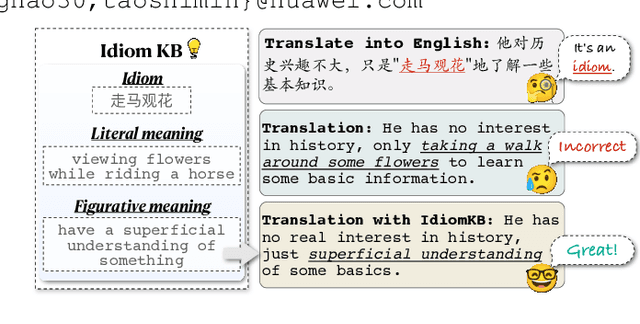
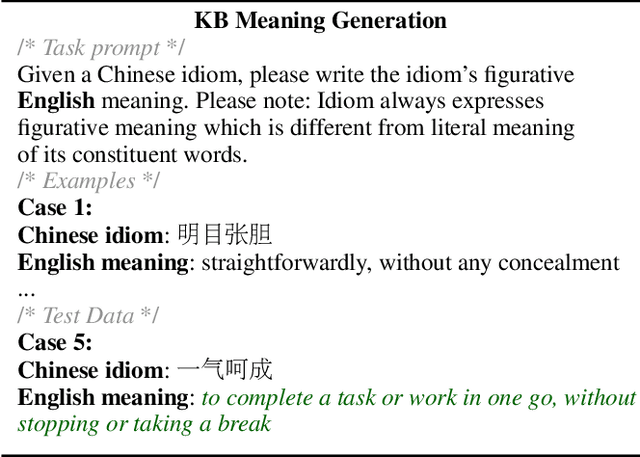
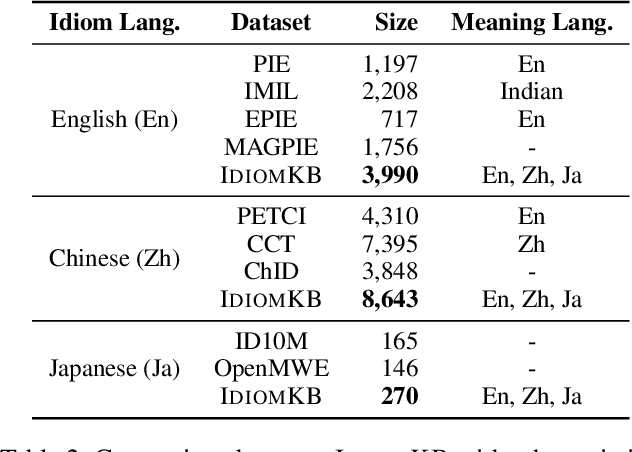
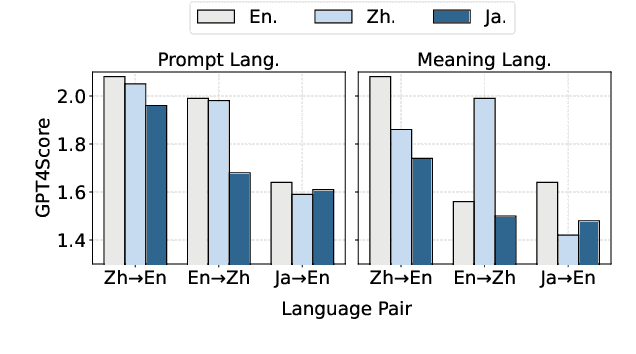
To translate well, machine translation (MT) systems and general-purposed language models (LMs) need a deep understanding of both source and target languages and cultures. Therefore, idioms, with their non-compositional nature, pose particular challenges for Transformer-based systems, as literal translations often miss the intended meaning. Traditional methods, which replace idioms using existing knowledge bases (KBs), often lack scale and context awareness. Addressing these challenges, our approach prioritizes context awareness and scalability, allowing for offline storage of idioms in a manageable KB size. This ensures efficient serving with smaller models and provides a more comprehensive understanding of idiomatic expressions. We introduce a multilingual idiom KB (IdiomKB) developed using large LMs to address this. This KB facilitates better translation by smaller models, such as BLOOMZ (7.1B), Alpaca (7B), and InstructGPT (6.7B), by retrieving idioms' figurative meanings. We present a novel, GPT-4-powered metric for human-aligned evaluation, demonstrating that IdiomKB considerably boosts model performance. Human evaluations further validate our KB's quality.
Reinforcement Logic Rule Learning for Temporal Point Processes
Aug 11, 2023We propose a framework that can incrementally expand the explanatory temporal logic rule set to explain the occurrence of temporal events. Leveraging the temporal point process modeling and learning framework, the rule content and weights will be gradually optimized until the likelihood of the observational event sequences is optimal. The proposed algorithm alternates between a master problem, where the current rule set weights are updated, and a subproblem, where a new rule is searched and included to best increase the likelihood. The formulated master problem is convex and relatively easy to solve using continuous optimization, whereas the subproblem requires searching the huge combinatorial rule predicate and relationship space. To tackle this challenge, we propose a neural search policy to learn to generate the new rule content as a sequence of actions. The policy parameters will be trained end-to-end using the reinforcement learning framework, where the reward signals can be efficiently queried by evaluating the subproblem objective. The trained policy can be used to generate new rules in a controllable way. We evaluate our methods on both synthetic and real healthcare datasets, obtaining promising results.
Hawkes Processes with Delayed Granger Causality
Aug 11, 2023We aim to explicitly model the delayed Granger causal effects based on multivariate Hawkes processes. The idea is inspired by the fact that a causal event usually takes some time to exert an effect. Studying this time lag itself is of interest. Given the proposed model, we first prove the identifiability of the delay parameter under mild conditions. We further investigate a model estimation method under a complex setting, where we want to infer the posterior distribution of the time lags and understand how this distribution varies across different scenarios. We treat the time lags as latent variables and formulate a Variational Auto-Encoder (VAE) algorithm to approximate the posterior distribution of the time lags. By explicitly modeling the time lags in Hawkes processes, we add flexibility to the model. The inferred time-lag posterior distributions are of scientific meaning and help trace the original causal time that supports the root cause analysis. We empirically evaluate our model's event prediction and time-lag inference accuracy on synthetic and real data, achieving promising results.
Discovering Intrinsic Spatial-Temporal Logic Rules to Explain Human Actions
Jun 21, 2023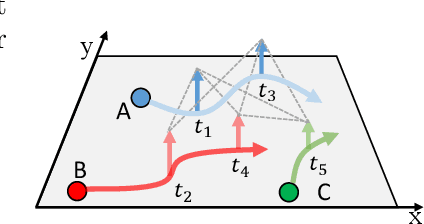


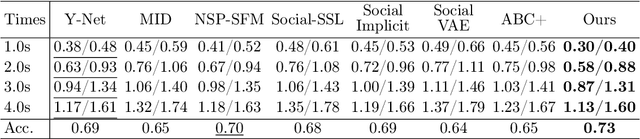
We propose a logic-informed knowledge-driven modeling framework for human movements by analyzing their trajectories. Our approach is inspired by the fact that human actions are usually driven by their intentions or desires, and are influenced by environmental factors such as the spatial relationships with surrounding objects. In this paper, we introduce a set of spatial-temporal logic rules as knowledge to explain human actions. These rules will be automatically discovered from observational data. To learn the model parameters and the rule content, we design an expectation-maximization (EM) algorithm, which treats the rule content as latent variables. The EM algorithm alternates between the E-step and M-step: in the E-step, the posterior distribution over the latent rule content is evaluated; in the M-step, the rule generator and model parameters are jointly optimized by maximizing the current expected log-likelihood. Our model may have a wide range of applications in areas such as sports analytics, robotics, and autonomous cars, where understanding human movements are essential. We demonstrate the model's superior interpretability and prediction performance on pedestrian and NBA basketball player datasets, both achieving promising results.
Variational Disentangled Graph Auto-Encoders for Link Prediction
Jun 20, 2023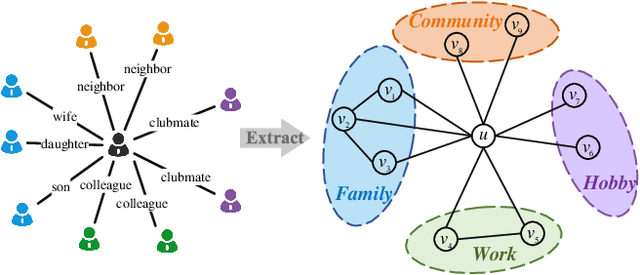
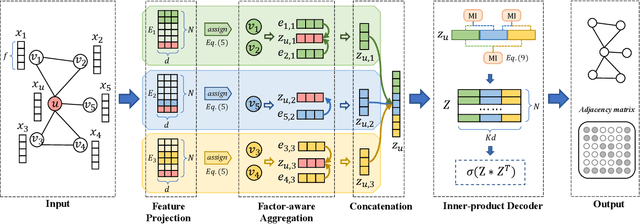
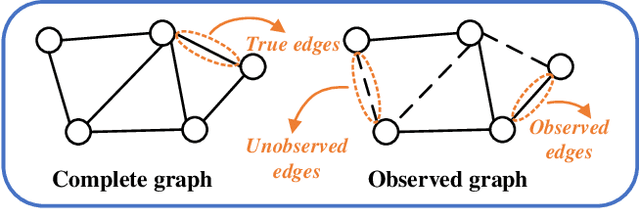
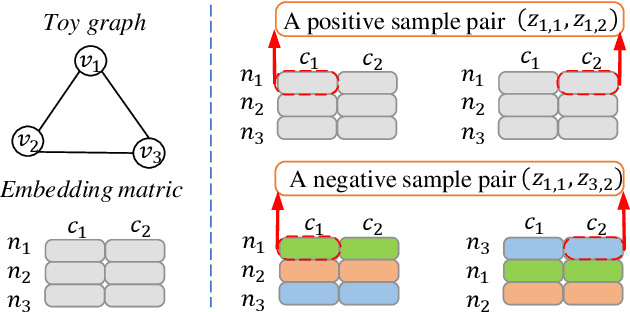
With the explosion of graph-structured data, link prediction has emerged as an increasingly important task. Embedding methods for link prediction utilize neural networks to generate node embeddings, which are subsequently employed to predict links between nodes. However, the existing embedding methods typically take a holistic strategy to learn node embeddings and ignore the entanglement of latent factors. As a result, entangled embeddings fail to effectively capture the underlying information and are vulnerable to irrelevant information, leading to unconvincing and uninterpretable link prediction results. To address these challenges, this paper proposes a novel framework with two variants, the disentangled graph auto-encoder (DGAE) and the variational disentangled graph auto-encoder (VDGAE). Our work provides a pioneering effort to apply the disentanglement strategy to link prediction. The proposed framework infers the latent factors that cause edges in the graph and disentangles the representation into multiple channels corresponding to unique latent factors, which contributes to improving the performance of link prediction. To further encourage the embeddings to capture mutually exclusive latent factors, we introduce mutual information regularization to enhance the independence among different channels. Extensive experiments on various real-world benchmarks demonstrate that our proposed methods achieve state-of-the-art results compared to a variety of strong baselines on link prediction tasks. Qualitative analysis on the synthetic dataset also illustrates that the proposed methods can capture distinct latent factors that cause links, providing empirical evidence that our models are able to explain the results of link prediction to some extent. All code will be made publicly available upon publication of the paper.
Contrastive Disentangled Learning on Graph for Node Classification
Jun 20, 2023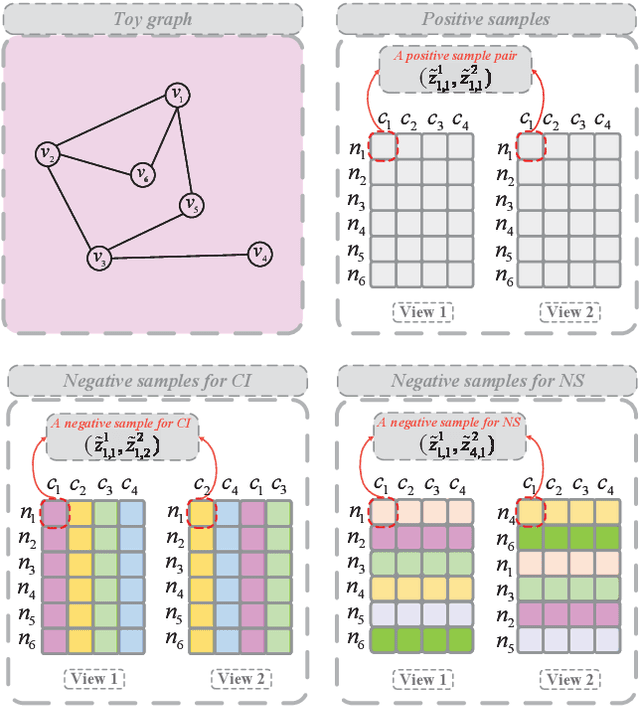
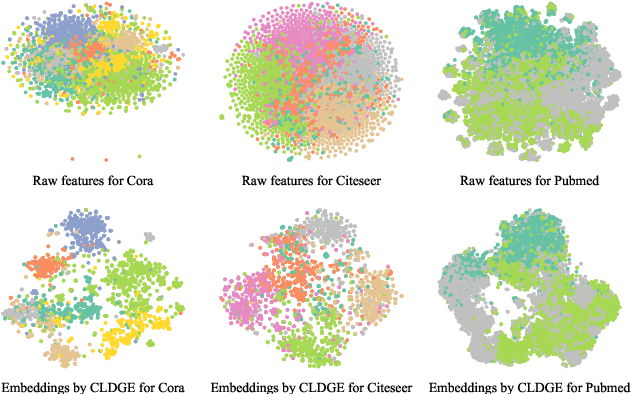
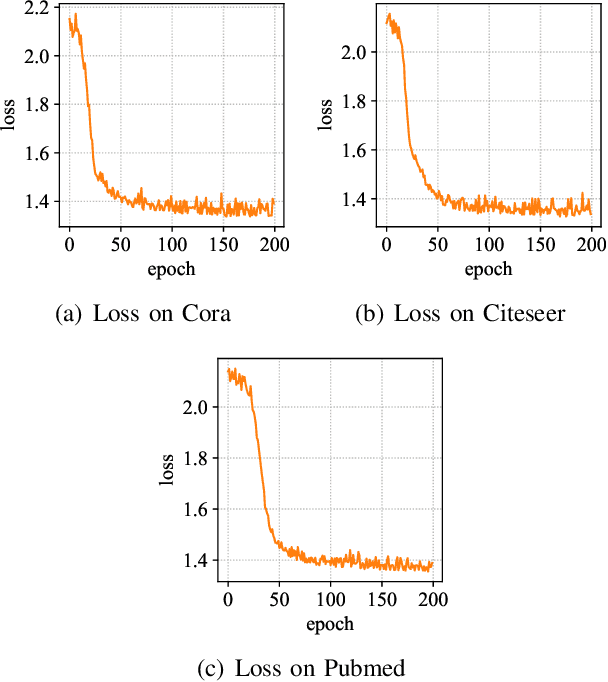
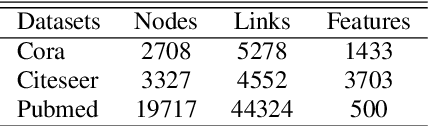
Contrastive learning methods have attracted considerable attention due to their remarkable success in analyzing graph-structured data. Inspired by the success of contrastive learning, we propose a novel framework for contrastive disentangled learning on graphs, employing a disentangled graph encoder and two carefully crafted self-supervision signals. Specifically, we introduce a disentangled graph encoder to enforce the framework to distinguish various latent factors corresponding to underlying semantic information and learn the disentangled node embeddings. Moreover, to overcome the heavy reliance on labels, we design two self-supervision signals, namely node specificity and channel independence, which capture informative knowledge without the need for labeled data, thereby guiding the automatic disentanglement of nodes. Finally, we perform node classification tasks on three citation networks by using the disentangled node embeddings, and the relevant analysis is provided. Experimental results validate the effectiveness of the proposed framework compared with various baselines.
Unsupervised Compositional Concepts Discovery with Text-to-Image Generative Models
Jun 08, 2023Text-to-image generative models have enabled high-resolution image synthesis across different domains, but require users to specify the content they wish to generate. In this paper, we consider the inverse problem -- given a collection of different images, can we discover the generative concepts that represent each image? We present an unsupervised approach to discover generative concepts from a collection of images, disentangling different art styles in paintings, objects, and lighting from kitchen scenes, and discovering image classes given ImageNet images. We show how such generative concepts can accurately represent the content of images, be recombined and composed to generate new artistic and hybrid images, and be further used as a representation for downstream classification tasks.
Stochastic Natural Thresholding Algorithms
Jun 07, 2023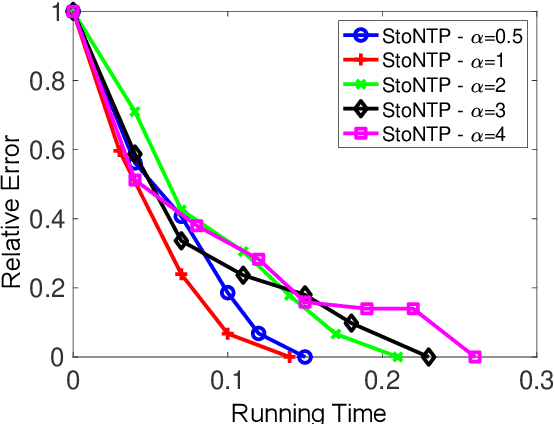
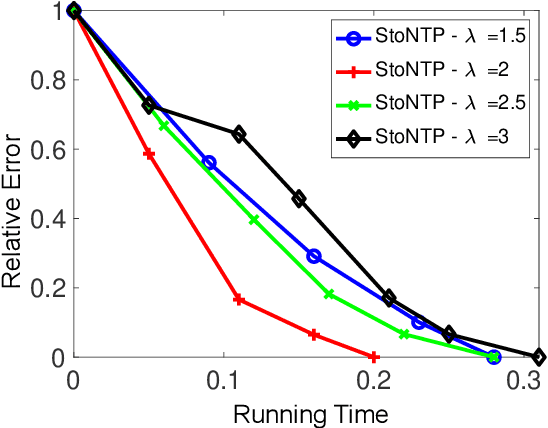
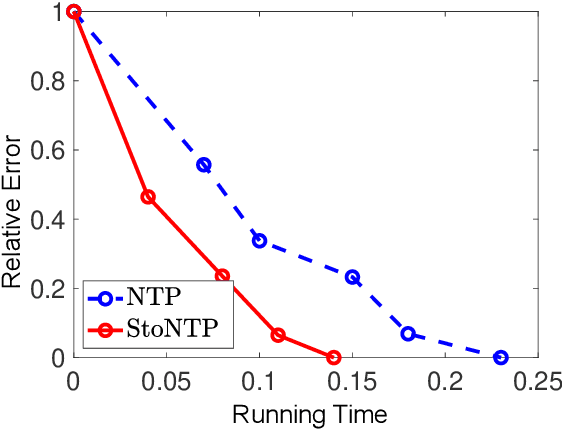
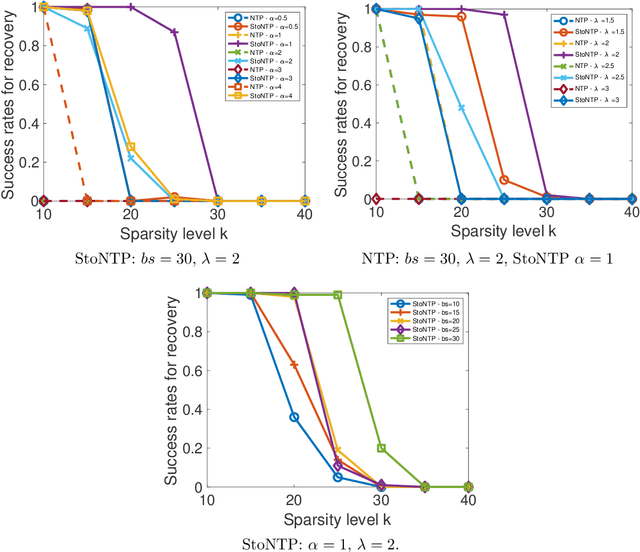
Sparse signal recovery is one of the most fundamental problems in various applications, including medical imaging and remote sensing. Many greedy algorithms based on the family of hard thresholding operators have been developed to solve the sparse signal recovery problem. More recently, Natural Thresholding (NT) has been proposed with improved computational efficiency. This paper proposes and discusses convergence guarantees for stochastic natural thresholding algorithms by extending the NT from the deterministic version with linear measurements to the stochastic version with a general objective function. We also conduct various numerical experiments on linear and nonlinear measurements to demonstrate the performance of StoNT.