 Add to Chrome
 Add to Firefox
 Add to Edge
Text Template Tokens Are Implicit Semantic Registers in Diffusion Transformers
Jul 21, 2026
Text-to-image diffusion transformers (DiTs) jointly process text and image tokens, yet their internal computation during denoising remains poorly understood. We introduce a causal interpretability framework for modern large-scale DiTs that combines attention decomposition with targeted interventions across token spans, heads, and layers. Using it to separate prompt-content tokens from structural template tokens, we find that the structural tokens carry little prompt-specific information at the encoder output. Yet surprisingly, they emerge as dominant image-to-text attention sinks and causally maintain object identity inside the DiT, acting as implicit semantic registers. We show that they acquire this identity indirectly, with prompt semantics first injected into the image latents and then read back into the template tokens rather than transferred directly from the prompt tokens. Inspired by the above findings, we design a training-free pruning rule for DiTs. Heads that attend most strongly to prompt tokens are dispensable, and pruning them removes $20\%$ of attention FLOPs with only a $1.4$-point drop on GenEval. We further reveal how generative computation in DiTs is organized across heads and depth, separating semantic routing from visual synthesis and progressing from identity formation to propagation and refinement. Our work not only reveals that the tokens encoding semantics at input need not be those that maintain it during generation, but also provides a causal view of internal mechanisms in DiTs.

RMISC: A Large-scale Real-world Multivariate Corpus for Time Series Foundation Models
Jul 07, 2026Recent years have witnessed the emergence of multivariate modeling using time series foundation models (TSFMs), which achieve advanced zero-shot generalization. Modern multivariate TSFMs are predominantly pretrained on multivariate synthetic data, which is easier to scale but may fail to capture the complex temporal dynamics and cross-variable relationships present in real-world time series. This raises a key question: Whether and to what extent the leading TSFMs trained with the real-world corpus perform better than those trained with synthetic data? To answer this, we establish the RMISC corpus, a considerably large-scale, high-quality, openly accessible, real-world, and multivariate time series archive that contains around 200 datasets and 142 billion time points across diverse domains. Furthermore, we pretrain four advanced TSFMs on univariate, synthetic multivariate, and real-world multivariate data and evaluate their zero-shot generalization capabilities on standard in-distribution and out-of-distribution benchmarks. Experimental results show that incorporating real-world multivariate data predominantly improves the generalization performance for both univariate and multivariate TSFMs. These results provide a deeper understanding of how real-world multivariate data contributes to the development of stronger TSFMs.
The Origins of Stochasticity: Comprehensive Investigations on Uncertainty Quantification for Large Language Models
Jun 22, 2026Recent advancements in Large Language Models (LLMs) have enabled sophisticated reasoning and content generation, yet their inherent stochasticity poses significant challenges for ensuring predictive credibility. While traditional uncertainty taxonomy paradigms, such as the dichotomy of aleatoric and epistemic uncertainties, provide conceptual foundations, they often fail to capture the multi-component and multi-stage nature of LLM generation and struggle to evaluate the effectiveness of various Uncertainty Quantification (UQ) methods. In this paper, we propose a granular uncertainty taxonomy that systematically attributes LLM uncertainty into input-level, parameter-level, token-level, and decoding-process sources. Correspondingly, we categorize existing UQ methods into Bayesian, ensemble, consensus-based, and single-pass approaches. Furthermore, we introduce a comprehensive evaluation framework covering diverse generation settings and metrics. We empirically evaluate 21 typical UQ methods across three prominent LLM families, including Qwen3, Llama 3.2, and DeepSeek-V3, on benchmarks such as TriviaQA, GSM8K, and HumanEval. Our experimental results demonstrate that (i) the effectiveness of UQ methods is sensitive to task types and generation settings; (ii) consensus-based methods, typed Deg and EigV, consistently outperform other UQ approaches; and (iii) larger model scales correlate with lower uncertainty estimates, suggesting an empirical scaling law for LLM uncertainty. This work bridges the gap between theoretical origins and practical deployment, providing a versatile diagnostic tool for systematically quantifying uncertainty in LLM applications.
On the Expressive Power of Weight Quantization in Large Language Models
Jun 20, 2026In recent years, weight quantization that encodes the learnable parameters of large language models in an $n$-bit format has garnered significant attention due to its potential for model compression and inference acceleration. Many practical techniques have been developed; however, the theoretical understanding of many aspects, especially the approximation and degradation of expressive power as the number of quantization bits decreases, remains unclear. In this paper, we provide a theoretical investigation into the expressive capability of large language models relative to the number of quantization bits. We argue that 1.58-bit is the limiting precision for weight quantization by establishing the universal approximation and expressive collapse properties of weight-quantized models with respect to the number of quantization bits. Additionally, we confirm that weight quantization leads to expressive degradation, in which the expressive capacity of weight-quantized models degrades polynomially as the number of quantization bits decreases. These theoretical findings provide a solid foundation for advancing weight quantization in the context of scaling laws and shed insights for future research in model compression and inference acceleration.
Rethinking Cross-Layer Information Routing in Diffusion Transformers
May 20, 2026Diffusion Transformers (DiTs) have become a de facto backbone of modern visual generation, and nearly every major axis of their design -- tokenization, attention, conditioning, objectives, and latent autoencoders -- has been extensively revisited. The residual stream that governs how information accumulates across layers, however, has been directly inherited from the original Transformer. In this paper, we present a systematic empirical analysis of cross-layer information flow in DiTs, jointly along depth and denoising timestep, and identify three concrete symptoms of traditional residual addition, namely monotonic forward magnitude inflation, sharp backward gradient decay, and pronounced block-wise redundancy. Motivated by this diagnosis, we propose Diffusion-Adaptive Routing (\textsc{DAR}), a drop-in residual replacement that performs \emph{learnable, timestep-adaptive, and non-incremental} aggregation over the history of sublayer outputs. Moreover, the proposed \textsc{DAR} is compatible with many modern Transformer enhancement methods, such as REPA. On ImageNet $256\times256$, \textsc{DAR} improves SiT-XL/2 by $2.11$ FID ($7.56$ vs.\ $9.67$) and matches the baseline's converged quality with $8.75\times$ fewer training iterations. Stacked on top of REPA, it yields a $2\times$ training acceleration in the early stage, suggesting cross-layer information routing as an underexplored design axis in diffusion modeling, one that operates orthogonally to existing representation-alignment objectives. Beyond pretraining, \textsc{DAR} can also be applied during the fine-tuning stage of large-scale T2I models and preserves high-frequency details during Distribution Matching Distillation.
Theoretical Investigation on Inductive Bias of Isolation Forest
May 19, 2025Isolation Forest (iForest) stands out as a widely-used unsupervised anomaly detector valued for its exceptional runtime efficiency and performance on large-scale tasks. Despite its widespread adoption, a theoretical foundation explaining iForest's success remains unclear. This paper theoretically investigates the conditions and extent of iForest's effectiveness by analyzing its inductive bias through the formulation of depth functions and growth processes. Since directly analyzing the depth function proves intractable due to iForest's random splitting mechanism, we model the growth process of iForest as a random walk, enabling us to derive the expected depth function using transition probabilities. Our case studies reveal key inductive biases: iForest exhibits lower sensitivity to central anomalies while demonstrating greater parameter adaptability compared to $k$-Nearest Neighbor anomaly detectors. Our study provides theoretical understanding of the effectiveness of iForest and establishes a foundation for further theoretical exploration.
Horizon-wise Learning Paradigm Promotes Gene Splicing Identification
Jun 15, 2024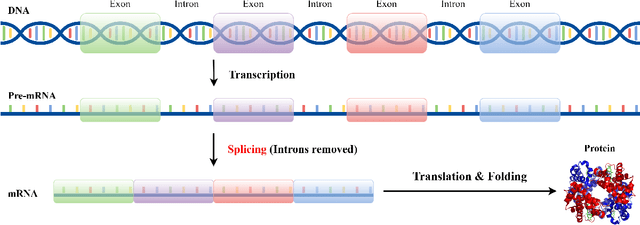
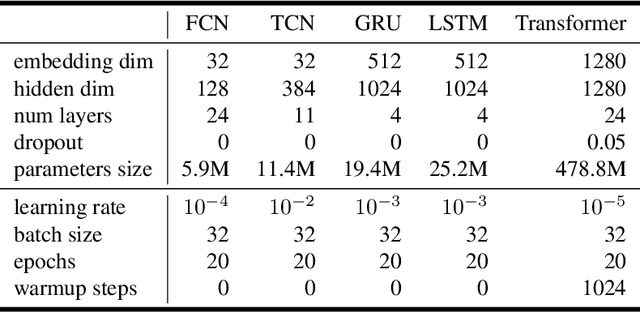
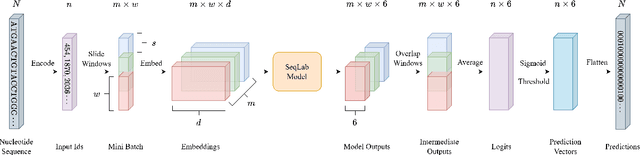
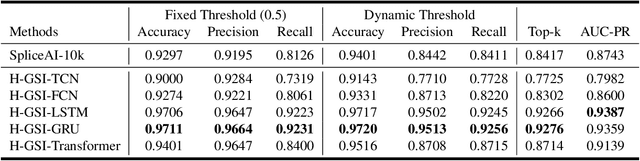
Identifying gene splicing is a core and significant task confronted in modern collaboration between artificial intelligence and bioinformatics. Past decades have witnessed great efforts on this concern, such as the bio-plausible splicing pattern AT-CG and the famous SpliceAI. In this paper, we propose a novel framework for the task of gene splicing identification, named Horizon-wise Gene Splicing Identification (H-GSI). The proposed H-GSI follows the horizon-wise identification paradigm and comprises four components: the pre-processing procedure transforming string data into tensors, the sliding window technique handling long sequences, the SeqLab model, and the predictor. In contrast to existing studies that process gene information with a truncated fixed-length sequence, H-GSI employs a horizon-wise identification paradigm in which all positions in a sequence are predicted with only one forward computation, improving accuracy and efficiency. The experiments conducted on the real-world Human dataset show that our proposed H-GSI outperforms SpliceAI and achieves the best accuracy of 97.20\%. The source code is available from this link.
A Unified Kernel for Neural Network Learning
Mar 26, 2024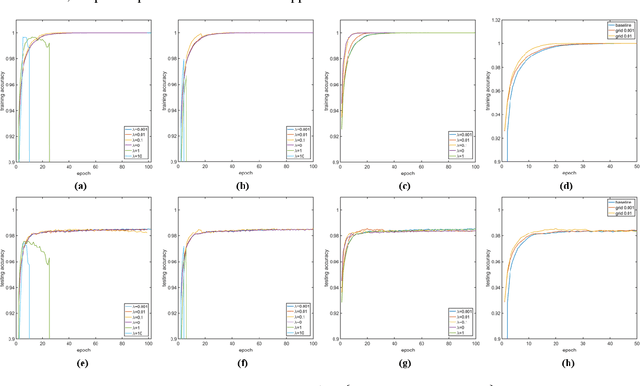
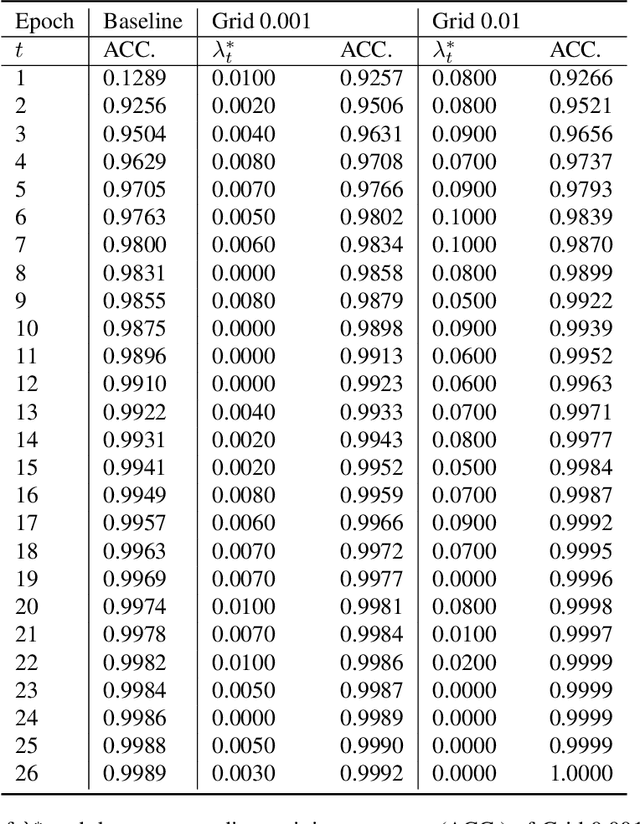
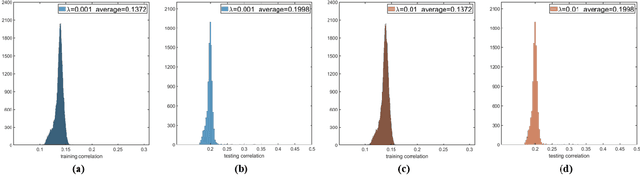
Past decades have witnessed a great interest in the distinction and connection between neural network learning and kernel learning. Recent advancements have made theoretical progress in connecting infinite-wide neural networks and Gaussian processes. Two predominant approaches have emerged: the Neural Network Gaussian Process (NNGP) and the Neural Tangent Kernel (NTK). The former, rooted in Bayesian inference, represents a zero-order kernel, while the latter, grounded in the tangent space of gradient descents, is a first-order kernel. In this paper, we present the Unified Neural Kernel (UNK), which characterizes the learning dynamics of neural networks with gradient descents and parameter initialization. The proposed UNK kernel maintains the limiting properties of both NNGP and NTK, exhibiting behaviors akin to NTK with a finite learning step and converging to NNGP as the learning step approaches infinity. Besides, we also theoretically characterize the uniform tightness and learning convergence of the UNK kernel, providing comprehensive insights into this unified kernel. Experimental results underscore the effectiveness of our proposed method.
On the Approximation and Complexity of Deep Neural Networks to Invariant Functions
Oct 27, 2022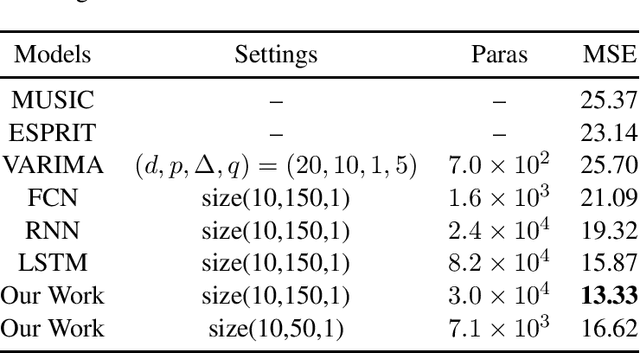
Recent years have witnessed a hot wave of deep neural networks in various domains; however, it is not yet well understood theoretically. A theoretical characterization of deep neural networks should point out their approximation ability and complexity, i.e., showing which architecture and size are sufficient to handle the concerned tasks. This work takes one step on this direction by theoretically studying the approximation and complexity of deep neural networks to invariant functions. We first prove that the invariant functions can be universally approximated by deep neural networks. Then we show that a broad range of invariant functions can be asymptotically approximated by various types of neural network models that includes the complex-valued neural networks, convolutional neural networks, and Bayesian neural networks using a polynomial number of parameters or optimization iterations. We also provide a feasible application that connects the parameter estimation and forecasting of high-resolution signals with our theoretical conclusions. The empirical results obtained on simulation experiments demonstrate the effectiveness of our method.
Towards Theoretical Understanding of Flexible Transmitter Networks via Approximation and Local Minima
Nov 11, 2021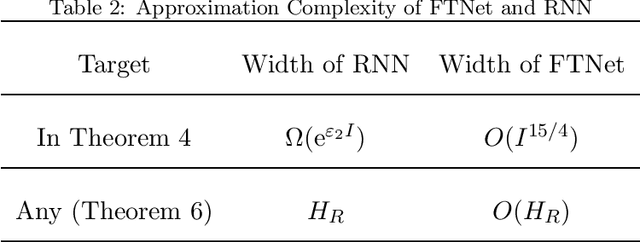
Flexible Transmitter Network (FTNet) is a recently proposed bio-plausible neural network and has achieved competitive performance with the state-of-the-art models when handling temporal-spatial data. However, there remains an open problem about the theoretical understanding of FTNet. This work investigates the theoretical properties of one-hidden-layer FTNet from the perspectives of approximation and local minima. Under mild assumptions, we show that: i) FTNet is a universal approximator; ii) the approximation complexity of FTNet can be exponentially smaller than those of real-valued neural networks with feedforward/recurrent architectures and is of the same order in the worst case; iii) any local minimum of FTNet is the global minimum, which suggests that it is possible for local search algorithms to converge to the global minimum. Our theoretical results indicate that FTNet can efficiently express target functions and has no concern about local minima, which complements the theoretical blank of FTNet and exhibits the possibility for ameliorating the FTNet.