 Add to Chrome
 Add to Firefox
 Add to Edge
RMISC: A Large-scale Real-world Multivariate Corpus for Time Series Foundation Models
Jul 07, 2026
Recent years have witnessed the emergence of multivariate modeling using time series foundation models (TSFMs), which achieve advanced zero-shot generalization. Modern multivariate TSFMs are predominantly pretrained on multivariate synthetic data, which is easier to scale but may fail to capture the complex temporal dynamics and cross-variable relationships present in real-world time series. This raises a key question: Whether and to what extent the leading TSFMs trained with the real-world corpus perform better than those trained with synthetic data? To answer this, we establish the RMISC corpus, a considerably large-scale, high-quality, openly accessible, real-world, and multivariate time series archive that contains around 200 datasets and 142 billion time points across diverse domains. Furthermore, we pretrain four advanced TSFMs on univariate, synthetic multivariate, and real-world multivariate data and evaluate their zero-shot generalization capabilities on standard in-distribution and out-of-distribution benchmarks. Experimental results show that incorporating real-world multivariate data predominantly improves the generalization performance for both univariate and multivariate TSFMs. These results provide a deeper understanding of how real-world multivariate data contributes to the development of stronger TSFMs.

A Unified Kernel for Neural Network Learning
Mar 26, 2024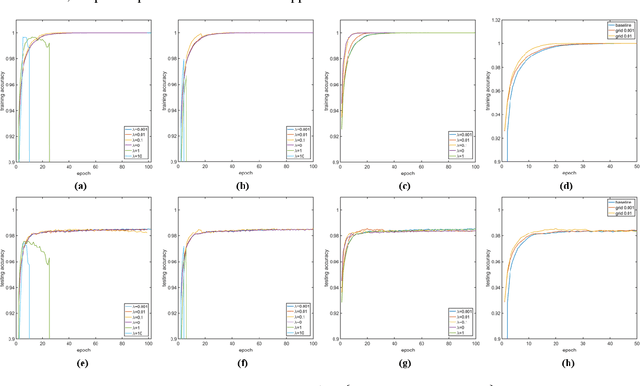
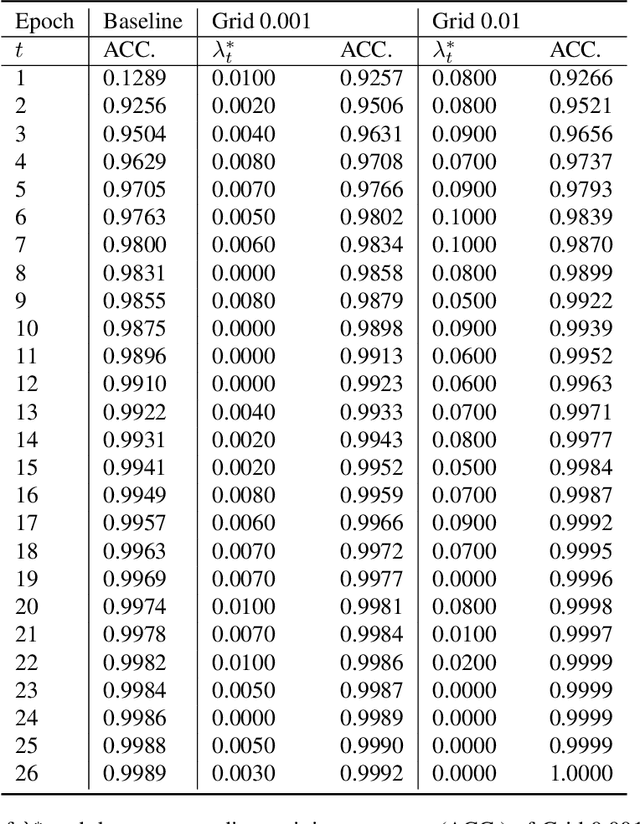
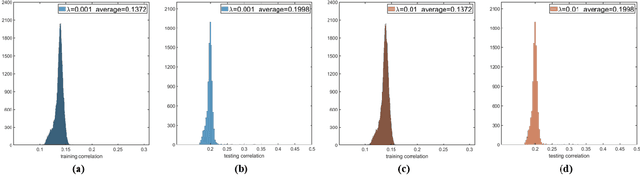
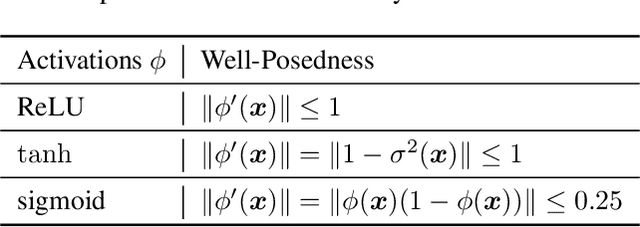
Past decades have witnessed a great interest in the distinction and connection between neural network learning and kernel learning. Recent advancements have made theoretical progress in connecting infinite-wide neural networks and Gaussian processes. Two predominant approaches have emerged: the Neural Network Gaussian Process (NNGP) and the Neural Tangent Kernel (NTK). The former, rooted in Bayesian inference, represents a zero-order kernel, while the latter, grounded in the tangent space of gradient descents, is a first-order kernel. In this paper, we present the Unified Neural Kernel (UNK), which characterizes the learning dynamics of neural networks with gradient descents and parameter initialization. The proposed UNK kernel maintains the limiting properties of both NNGP and NTK, exhibiting behaviors akin to NTK with a finite learning step and converging to NNGP as the learning step approaches infinity. Besides, we also theoretically characterize the uniform tightness and learning convergence of the UNK kernel, providing comprehensive insights into this unified kernel. Experimental results underscore the effectiveness of our proposed method.