 Add to Chrome
 Add to Firefox
 Add to Edge
LADDER: Multi-objective Backdoor Attack via Evolutionary Algorithm
Nov 28, 2024
Current black-box backdoor attacks in convolutional neural networks formulate attack objective(s) as single-objective optimization problems in single domain. Designing triggers in single domain harms semantics and trigger robustness as well as introduces visual and spectral anomaly. This work proposes a multi-objective black-box backdoor attack in dual domains via evolutionary algorithm (LADDER), the first instance of achieving multiple attack objectives simultaneously by optimizing triggers without requiring prior knowledge about victim model. In particular, we formulate LADDER as a multi-objective optimization problem (MOP) and solve it via multi-objective evolutionary algorithm (MOEA). MOEA maintains a population of triggers with trade-offs among attack objectives and uses non-dominated sort to drive triggers toward optimal solutions. We further apply preference-based selection to MOEA to exclude impractical triggers. We state that LADDER investigates a new dual-domain perspective for trigger stealthiness by minimizing the anomaly between clean and poisoned samples in the spectral domain. Lastly, the robustness against preprocessing operations is achieved by pushing triggers to low-frequency regions. Extensive experiments comprehensively showcase that LADDER achieves attack effectiveness of at least 99%, attack robustness with 90.23% (50.09% higher than state-of-the-art attacks on average), superior natural stealthiness (1.12x to 196.74x improvement) and excellent spectral stealthiness (8.45x enhancement) as compared to current stealthy attacks by the average $l_2$-norm across 5 public datasets.

Draft Model Knows When to Stop: A Self-Verification Length Policy for Speculative Decoding
Nov 27, 2024Speculative Decoding (SD) has become an important technique in accelerating the inference speed of large language models. Conventional SD methods employ a fixed draft length, which ignores the token generation difficulty across tasks. Consequently, in this paper, we address such an issue and introduce SVIP - a difficulty-aware dynamic draft length policy for speculative decoding systems. Based on a theoretical lower bound of draft token acceptance rate and its inference-time approximation, SVIP adaptively determines the lengths of draft sequences based on the entropy of each draft token distribution. Experimental results on mainstream SD benchmarks and frameworks demonstrate the superior performance of SVIP, achieving up to 20\% walltime speedup on SpecBench over baseline SD methods and 60\% speedup on MT-Bench for long-form generation of up to 8K tokens. Moreover, SVIP is totally training-free and compatible with any existing SD methods that generate draft tokens autoregressively. Experimental results also show that SVIP yields consistent walltime improvement on top of GliDe & CaPE and EAGLE-2.
OpenLS-DGF: An Adaptive Open-Source Dataset Generation Framework for Machine Learning Tasks in Logic Synthesis
Nov 16, 2024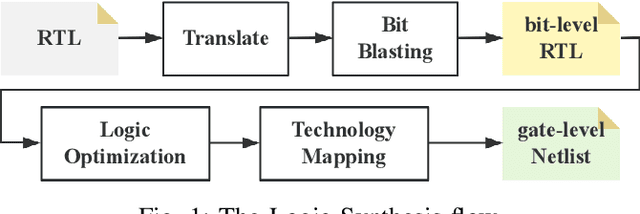
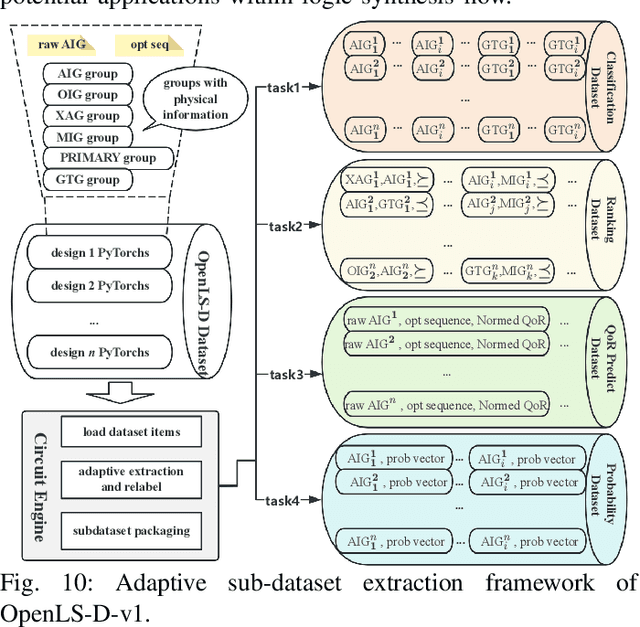
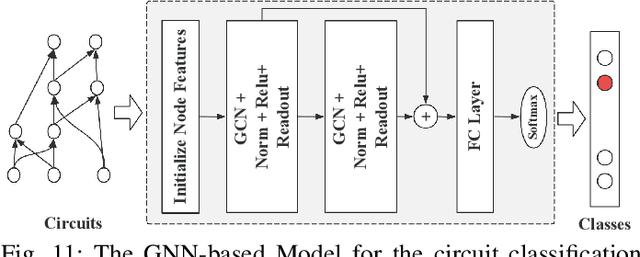
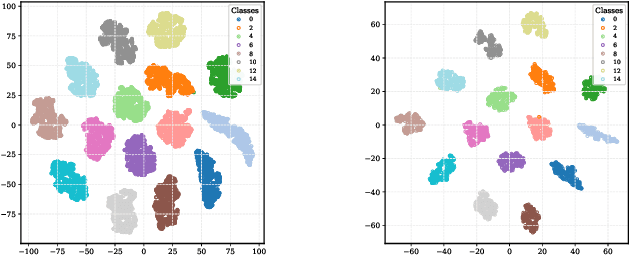
This paper introduces OpenLS-DGF, an adaptive logic synthesis dataset generation framework, to enhance machine learning~(ML) applications within the logic synthesis process. Previous dataset generation flows were tailored for specific tasks or lacked integrated machine learning capabilities. While OpenLS-DGF supports various machine learning tasks by encapsulating the three fundamental steps of logic synthesis: Boolean representation, logic optimization, and technology mapping. It preserves the original information in both Verilog and machine-learning-friendly GraphML formats. The verilog files offer semi-customizable capabilities, enabling researchers to insert additional steps and incrementally refine the generated dataset. Furthermore, OpenLS-DGF includes an adaptive circuit engine that facilitates the final dataset management and downstream tasks. The generated OpenLS-D-v1 dataset comprises 46 combinational designs from established benchmarks, totaling over 966,000 Boolean circuits. OpenLS-D-v1 supports integrating new data features, making it more versatile for new challenges. This paper demonstrates the versatility of OpenLS-D-v1 through four distinct downstream tasks: circuit classification, circuit ranking, quality of results (QoR) prediction, and probability prediction. Each task is chosen to represent essential steps of logic synthesis, and the experimental results show the generated dataset from OpenLS-DGF achieves prominent diversity and applicability. The source code and datasets are available at https://github.com/Logic-Factory/ACE/blob/master/OpenLS-DGF/readme.md.
SPDFusion: An Infrared and Visible Image Fusion Network Based on a Non-Euclidean Representation of Riemannian Manifolds
Nov 16, 2024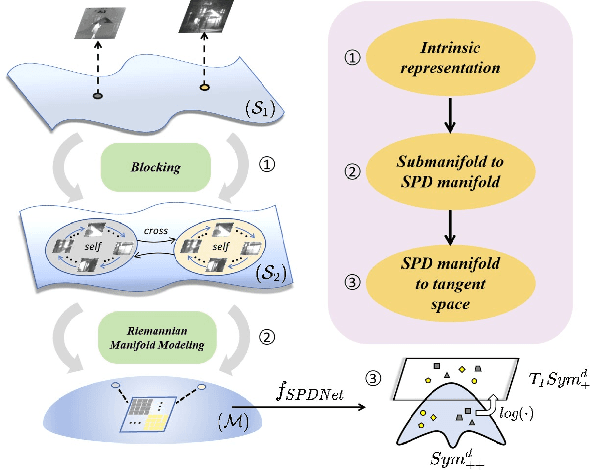
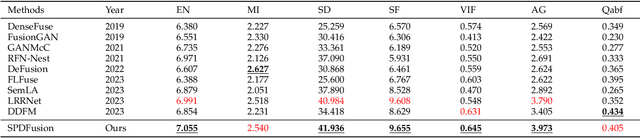
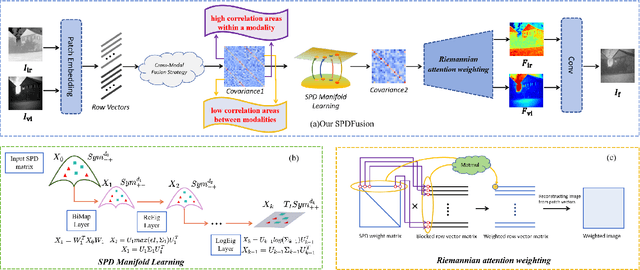
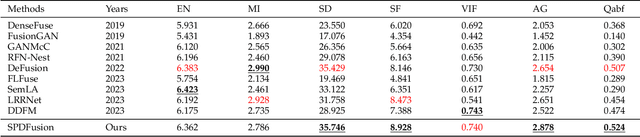
Euclidean representation learning methods have achieved commendable results in image fusion tasks, which can be attributed to their clear advantages in handling with linear space. However, data collected from a realistic scene usually have a non-Euclidean structure, where Euclidean metric might be limited in representing the true data relationships, degrading fusion performance. To address this issue, a novel SPD (symmetric positive definite) manifold learning framework is proposed for multi-modal image fusion, named SPDFusion, which extends the image fusion approach from the Euclidean space to the SPD manifolds. Specifically, we encode images according to the Riemannian geometry to exploit their intrinsic statistical correlations, thereby aligning with human visual perception. Actually, the SPD matrix underpins our network learning, with a cross-modal fusion strategy employed to harness modality-specific dependencies and augment complementary information. Subsequently, an attention module is designed to process the learned weight matrix, facilitating the weighting of spatial global correlation semantics via SPD matrix multiplication. Based on this, we design an end-to-end fusion network based on cross-modal manifold learning. Extensive experiments on public datasets demonstrate that our framework exhibits superior performance compared to the current state-of-the-art methods.
An Adaptive Open-Source Dataset Generation Framework for Machine Learning Tasks in Logic Synthesis
Nov 14, 2024This paper introduces an adaptive logic synthesis dataset generation framework designed to enhance machine learning applications within the logic synthesis process. Unlike previous dataset generation flows that were tailored for specific tasks or lacked integrated machine learning capabilities, the proposed framework supports a comprehensive range of machine learning tasks by encapsulating the three fundamental steps of logic synthesis: Boolean representation, logic optimization, and technology mapping. It preserves the original information in the intermediate files that can be stored in both Verilog and Graphmal format. Verilog files enable semi-customizability, allowing researchers to add steps and incrementally refine the generated dataset. The framework also includes an adaptive circuit engine to facilitate the loading of GraphML files for final dataset packaging and sub-dataset extraction. The generated OpenLS-D dataset comprises 46 combinational designs from established benchmarks, totaling over 966,000 Boolean circuits, with each design containing 21,000 circuits generated from 1000 synthesis recipes, including 7000 Boolean networks, 7000 ASIC netlists, and 7000 FPGA netlists. Furthermore, OpenLS-D supports integrating newly desired data features, making it more versatile for new challenges. The utility of OpenLS-D is demonstrated through four distinct downstream tasks: circuit classification, circuit ranking, quality of results (QoR) prediction, and probability prediction. Each task highlights different internal steps of logic synthesis, with the datasets extracted and relabeled from the OpenLS-D dataset using the circuit engine. The experimental results confirm the dataset's diversity and extensive applicability. The source code and datasets are available at https://github.com/Logic-Factory/ACE/blob/master/OpenLS-D/readme.md.
Evolutionary Algorithm with Detection Region Method for Constrained Multi-Objective Problems with Binary Constraints
Nov 13, 2024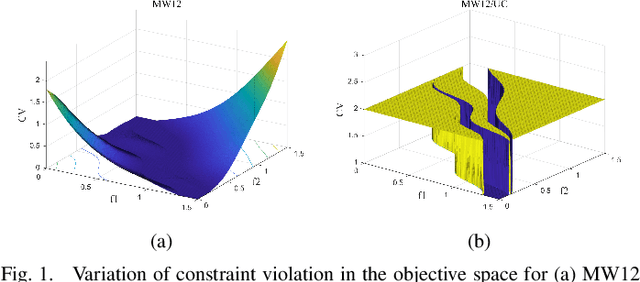


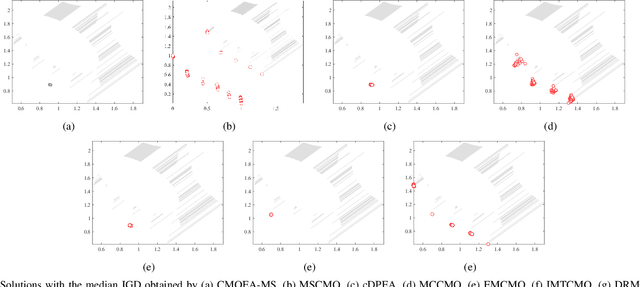
Solving constrained multi-objective optimization problems (CMOPs) is a challenging task. While many practical algorithms have been developed to tackle CMOPs, real-world scenarios often present cases where the constraint functions are unknown or unquantifiable, resulting in only binary outcomes (feasible or infeasible). This limitation reduces the effectiveness of constraint violation guidance, which can negatively impact the performance of existing algorithms that rely on this approach. Such challenges are particularly detrimental for algorithms employing the epsilon-based method, as they hinder effective relaxation of the feasible region. To address these challenges, this paper proposes a novel algorithm called DRMCMO based on the detection region method. In DRMCMO, detection regions dynamic monitor feasible solutions to enhance convergence, helping the population escape local optima. Additionally, these regions collaborate with the neighbor pairing strategy to improve population diversity within narrow feasible areas. We have modified three existing test suites to serve as benchmark test problems for CMOPs with binary constraints(CMOP/BC) and conducted comprehensive comparative experiments with state-of-the-art algorithms on these test suites and real-world problems. The results demonstrate the strong competitiveness of DRMCMO against state-of-the-art algorithms. Given the limited research on CMOP/BC, our study offers a new perspective for advancing this field.
Metric Learning for Tag Recommendation: Tackling Data Sparsity and Cold Start Issues
Nov 10, 2024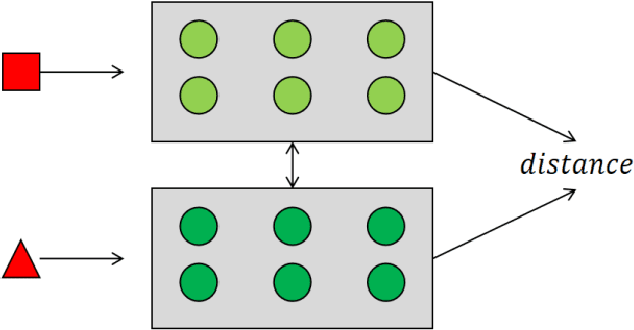
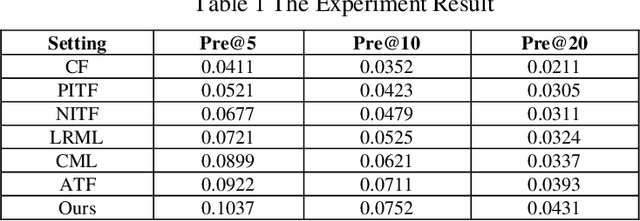
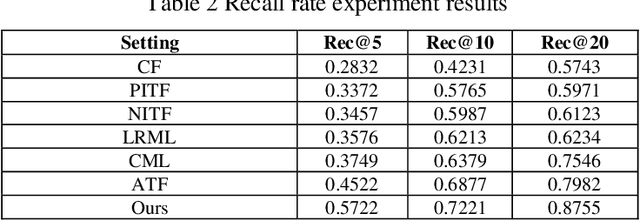
With the rapid growth of digital information, personalized recommendation systems have become an indispensable part of Internet services, especially in the fields of e-commerce, social media, and online entertainment. However, traditional collaborative filtering and content-based recommendation methods have limitations in dealing with data sparsity and cold start problems, especially in the face of largescale heterogeneous data, which makes it difficult to meet user expectations. This paper proposes a new label recommendation algorithm based on metric learning, which aims to overcome the challenges of traditional recommendation systems by learning effective distance or similarity metrics to capture the subtle differences between user preferences and item features. Experimental results show that the algorithm outperforms baseline methods including local response metric learning (LRML), collaborative metric learning (CML), and adaptive tensor factorization (ATF) based on adversarial learning on multiple evaluation metrics. In particular, it performs particularly well in the accuracy of the first few recommended items, while maintaining high robustness and maintaining high recommendation accuracy.
ZhoBLiMP: a Systematic Assessment of Language Models with Linguistic Minimal Pairs in Chinese
Nov 09, 2024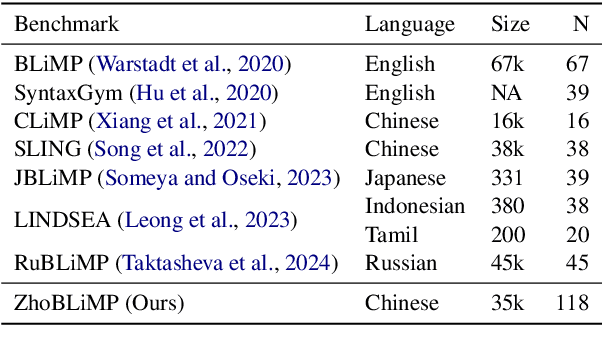
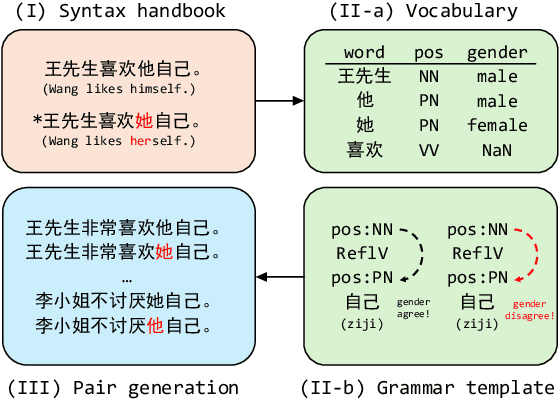

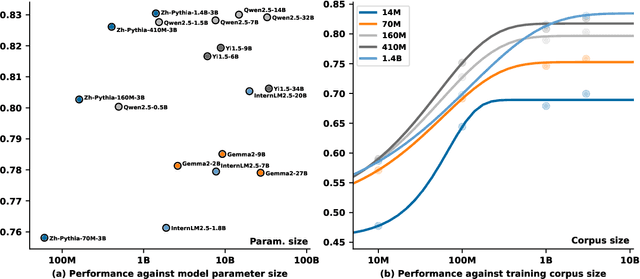
Whether and how language models (LMs) acquire the syntax of natural languages has been widely evaluated under the minimal pair paradigm. However, a lack of wide-coverage benchmarks in languages other than English has constrained systematic investigations into the issue. Addressing it, we first introduce ZhoBLiMP, the most comprehensive benchmark of linguistic minimal pairs for Chinese to date, with 118 paradigms, covering 15 linguistic phenomena. We then train 20 LMs of different sizes (14M to 1.4B) on Chinese corpora of various volumes (100M to 3B tokens) and evaluate them along with 14 off-the-shelf LLMs on ZhoBLiMP. The overall results indicate that Chinese grammar can be mostly learned by models with around 500M parameters, trained on 1B tokens with one epoch, showing limited benefits for further scaling. Most (N=95) linguistic paradigms are of easy or medium difficulty for LMs, while there are still 13 paradigms that remain challenging even for models with up to 32B parameters. In regard to how LMs acquire Chinese grammar, we observe a U-shaped learning pattern in several phenomena, similar to those observed in child language acquisition.
Predictor-Corrector Enhanced Transformers with Exponential Moving Average Coefficient Learning
Nov 05, 2024Residual networks, as discrete approximations of Ordinary Differential Equations (ODEs), have inspired significant advancements in neural network design, including multistep methods, high-order methods, and multi-particle dynamical systems. The precision of the solution to ODEs significantly affects parameter optimization, thereby impacting model performance. In this work, we present a series of advanced explorations of Transformer architecture design to minimize the error compared to the true ``solution.'' First, we introduce a predictor-corrector learning framework to minimize truncation errors, which consists of a high-order predictor and a multistep corrector. Second, we propose an exponential moving average-based coefficient learning method to strengthen our higher-order predictor. Extensive experiments on large-scale machine translation, abstractive summarization, language modeling, and natural language understanding benchmarks demonstrate the superiority of our approach. On the WMT'14 English-German and English-French tasks, our model achieved BLEU scores of 30.95 and 44.27, respectively. Furthermore, on the OPUS multilingual machine translation task, our model surpasses a robust 3.8B DeepNet by an average of 2.9 SacreBLEU, using only 1/3 parameters. Notably, it also beats LLama models by 5.7 accuracy points on the LM Harness Evaluation.
EnsIR: An Ensemble Algorithm for Image Restoration via Gaussian Mixture Models
Oct 30, 2024


Image restoration has experienced significant advancements due to the development of deep learning. Nevertheless, it encounters challenges related to ill-posed problems, resulting in deviations between single model predictions and ground-truths. Ensemble learning, as a powerful machine learning technique, aims to address these deviations by combining the predictions of multiple base models. Most existing works adopt ensemble learning during the design of restoration models, while only limited research focuses on the inference-stage ensemble of pre-trained restoration models. Regression-based methods fail to enable efficient inference, leading researchers in academia and industry to prefer averaging as their choice for post-training ensemble. To address this, we reformulate the ensemble problem of image restoration into Gaussian mixture models (GMMs) and employ an expectation maximization (EM)-based algorithm to estimate ensemble weights for aggregating prediction candidates. We estimate the range-wise ensemble weights on a reference set and store them in a lookup table (LUT) for efficient ensemble inference on the test set. Our algorithm is model-agnostic and training-free, allowing seamless integration and enhancement of various pre-trained image restoration models. It consistently outperforms regression based methods and averaging ensemble approaches on 14 benchmarks across 3 image restoration tasks, including super-resolution, deblurring and deraining. The codes and all estimated weights have been released in Github.