 Add to Chrome
 Add to Firefox
 Add to Edge
Re-Examine Distantly Supervised NER: A New Benchmark and a Simple Approach
Feb 26, 2024
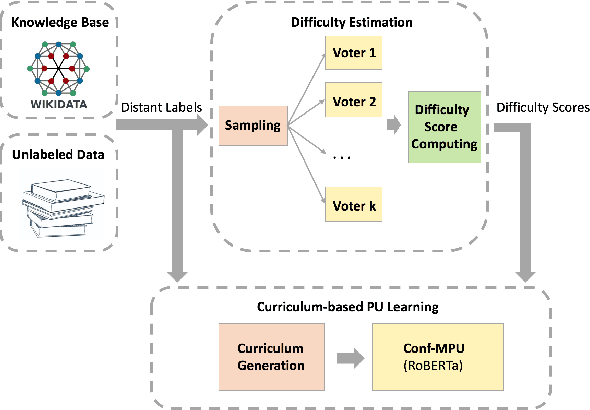
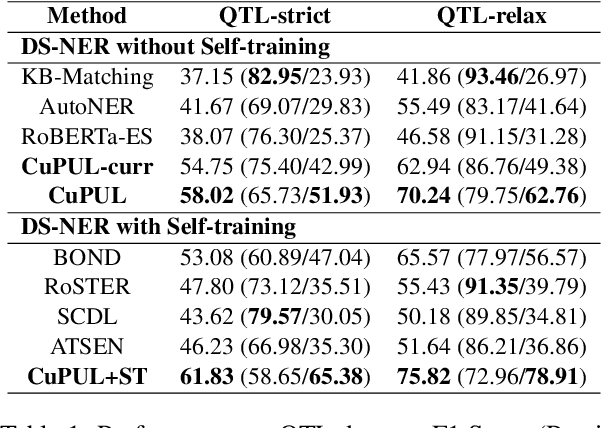
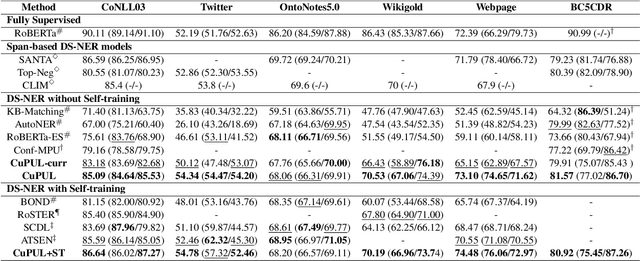
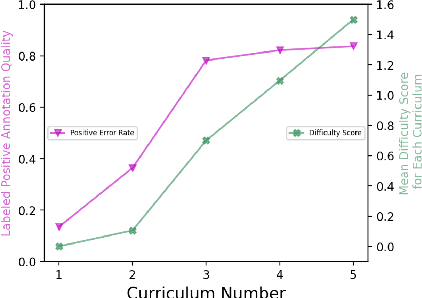
This paper delves into Named Entity Recognition (NER) under the framework of Distant Supervision (DS-NER), where the main challenge lies in the compromised quality of labels due to inherent errors such as false positives, false negatives, and positive type errors. We critically assess the efficacy of current DS-NER methodologies using a real-world benchmark dataset named QTL, revealing that their performance often does not meet expectations. To tackle the prevalent issue of label noise, we introduce a simple yet effective approach, Curriculum-based Positive-Unlabeled Learning CuPUL, which strategically starts on "easy" and cleaner samples during the training process to enhance model resilience to noisy samples. Our empirical results highlight the capability of CuPUL to significantly reduce the impact of noisy labels and outperform existing methods. QTL dataset and our code is available on GitHub.

Low Complexity Turbo SIC-MMSE Detection for Orthogonal Time Frequency Space Modulation
Jan 19, 2024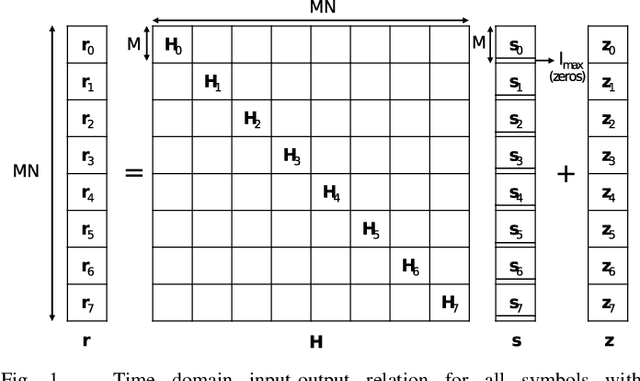
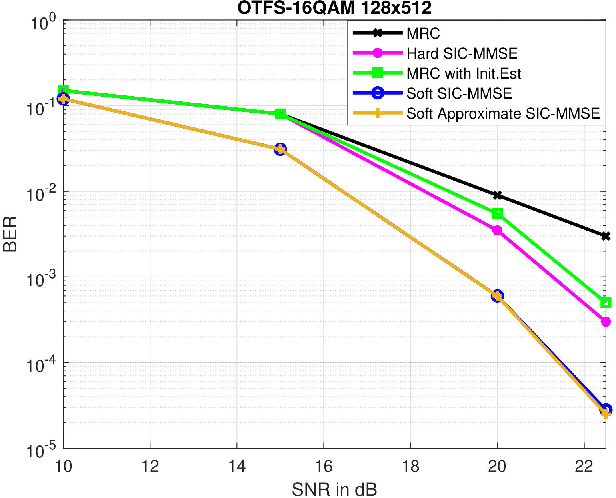
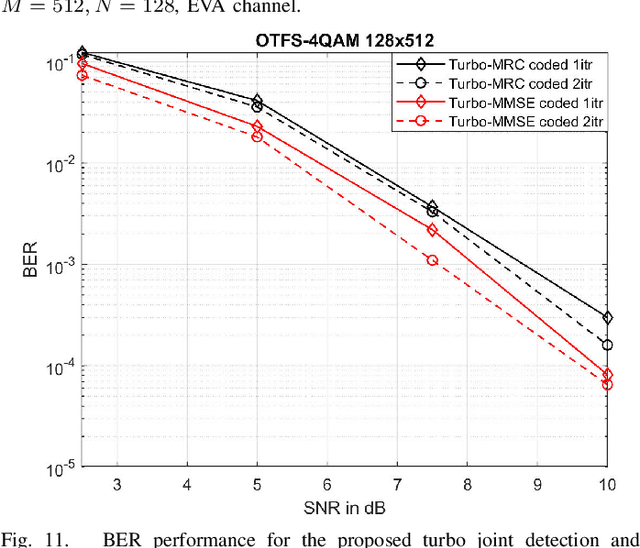
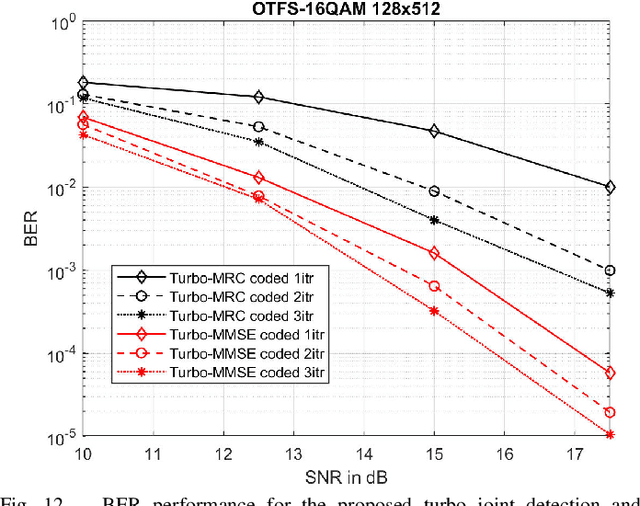
Recently, orthogonal time frequency space (OTFS) modulation has garnered considerable attention due to its robustness against doubly-selective wireless channels. In this paper, we propose a low-complexity iterative successive interference cancellation based minimum mean squared error (SIC-MMSE) detection algorithm for zero-padded OTFS (ZP-OTFS) modulation. In the proposed algorithm, signals are detected based on layers processed by multiple SIC-MMSE linear filters for each sub-channel, with interference on the targeted signal layer being successively canceled either by hard or soft information. To reduce the complexity of computing individual layer filter coefficients, we also propose a novel filter coefficients recycling approach in place of generating the exact form of MMSE filter weights. Moreover, we design a joint detection and decoding algorithm for ZP-OTFS to enhance error performance. Compared to the conventional SIC-MMSE detection, our proposed algorithms outperform other linear detectors, e.g., maximal ratio combining (MRC), for ZP-OTFS with up to 3 dB gain while maintaining comparable computation complexity.
Deep Linear Array Pushbroom Image Restoration: A Degradation Pipeline and Jitter-Aware Restoration Network
Jan 16, 2024
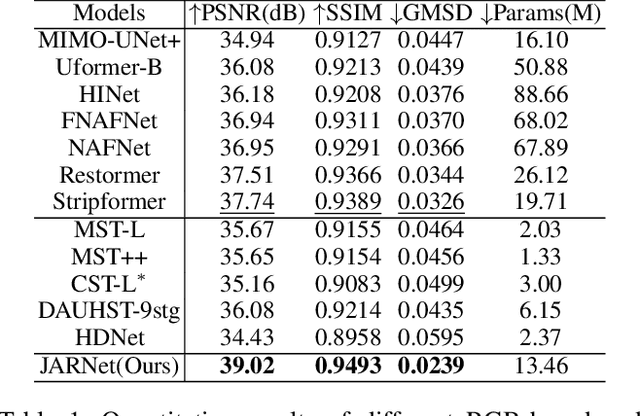
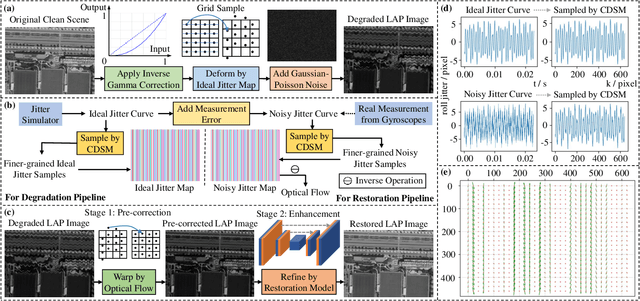
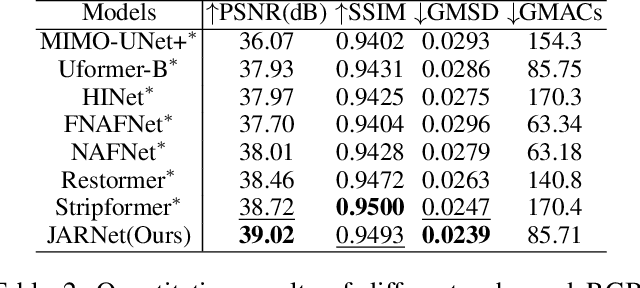
Linear Array Pushbroom (LAP) imaging technology is widely used in the realm of remote sensing. However, images acquired through LAP always suffer from distortion and blur because of camera jitter. Traditional methods for restoring LAP images, such as algorithms estimating the point spread function (PSF), exhibit limited performance. To tackle this issue, we propose a Jitter-Aware Restoration Network (JARNet), to remove the distortion and blur in two stages. In the first stage, we formulate an Optical Flow Correction (OFC) block to refine the optical flow of the degraded LAP images, resulting in pre-corrected images where most of the distortions are alleviated. In the second stage, for further enhancement of the pre-corrected images, we integrate two jitter-aware techniques within the Spatial and Frequency Residual (SFRes) block: 1) introducing Coordinate Attention (CoA) to the SFRes block in order to capture the jitter state in orthogonal direction; 2) manipulating image features in both spatial and frequency domains to leverage local and global priors. Additionally, we develop a data synthesis pipeline, which applies Continue Dynamic Shooting Model (CDSM) to simulate realistic degradation in LAP images. Both the proposed JARNet and LAP image synthesis pipeline establish a foundation for addressing this intricate challenge. Extensive experiments demonstrate that the proposed two-stage method outperforms state-of-the-art image restoration models. Code is available at https://github.com/JHW2000/JARNet.
Risk Taxonomy, Mitigation, and Assessment Benchmarks of Large Language Model Systems
Jan 11, 2024


Large language models (LLMs) have strong capabilities in solving diverse natural language processing tasks. However, the safety and security issues of LLM systems have become the major obstacle to their widespread application. Many studies have extensively investigated risks in LLM systems and developed the corresponding mitigation strategies. Leading-edge enterprises such as OpenAI, Google, Meta, and Anthropic have also made lots of efforts on responsible LLMs. Therefore, there is a growing need to organize the existing studies and establish comprehensive taxonomies for the community. In this paper, we delve into four essential modules of an LLM system, including an input module for receiving prompts, a language model trained on extensive corpora, a toolchain module for development and deployment, and an output module for exporting LLM-generated content. Based on this, we propose a comprehensive taxonomy, which systematically analyzes potential risks associated with each module of an LLM system and discusses the corresponding mitigation strategies. Furthermore, we review prevalent benchmarks, aiming to facilitate the risk assessment of LLM systems. We hope that this paper can help LLM participants embrace a systematic perspective to build their responsible LLM systems.
MIVC: Multiple Instance Visual Component for Visual-Language Models
Dec 28, 2023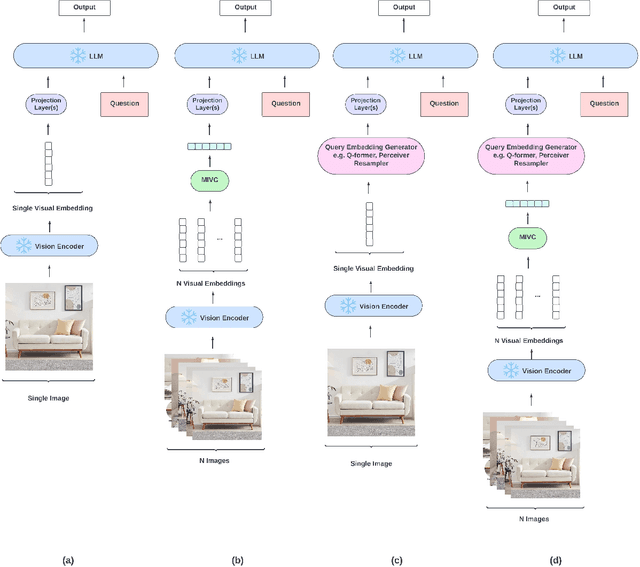
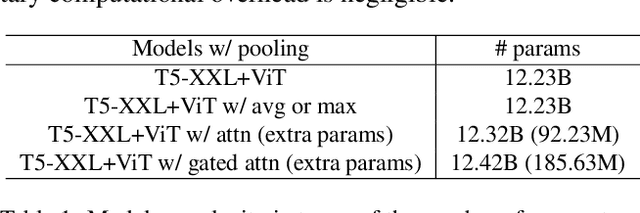
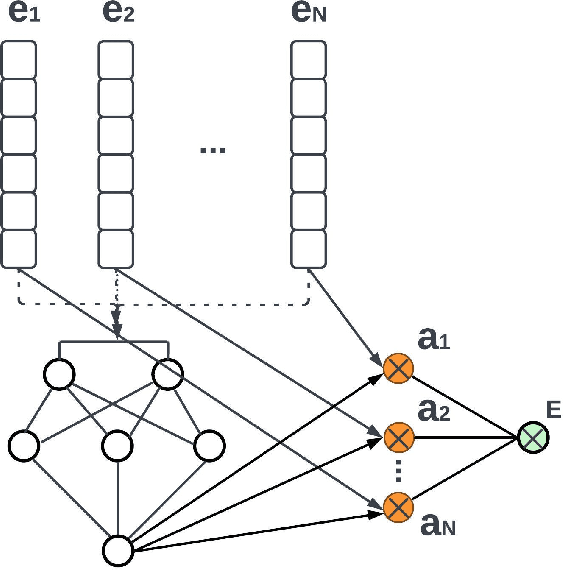
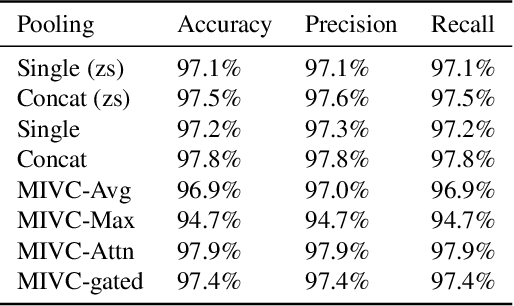
Vision-language models have been widely explored across a wide range of tasks and achieve satisfactory performance. However, it's under-explored how to consolidate entity understanding through a varying number of images and to align it with the pre-trained language models for generative tasks. In this paper, we propose MIVC, a general multiple instance visual component to bridge the gap between various image inputs with off-the-shelf vision-language models by aggregating visual representations in a permutation-invariant fashion through a neural network. We show that MIVC could be plugged into the visual-language models to improve the model performance consistently on visual question answering, classification and captioning tasks on a public available e-commerce dataset with multiple images per product. Furthermore, we show that the component provides insight into the contribution of each image to the downstream tasks.
A Comprehensive Evaluation of Parameter-Efficient Fine-Tuning on Software Engineering Tasks
Dec 25, 2023Pre-trained models (PTMs) have achieved great success in various Software Engineering (SE) downstream tasks following the ``pre-train then fine-tune'' paradigm. As fully fine-tuning all parameters of PTMs can be computationally expensive, a widely used solution is parameter-efficient fine-tuning (PEFT), which freezes PTMs while introducing extra parameters. Though work has been done to test PEFT methods in the SE field, a comprehensive evaluation is still lacking. This paper aims to fill in this gap by evaluating the effectiveness of five PEFT methods on eight PTMs and four SE downstream tasks. For different tasks and PEFT methods, we seek answers to the following research questions: 1) Is it more effective to use PTMs trained specifically on source code, or is it sufficient to use PTMs trained on natural language text? 2) What is the impact of varying model sizes? 3) How does the model architecture affect the performance? Besides effectiveness, we also discuss the efficiency of PEFT methods, concerning the costs of required training time and GPU resource consumption. We hope that our findings can provide a deeper understanding of PEFT methods on various PTMs and SE downstream tasks. All the codes and data are available at \url{https://github.com/zwtnju/PEFT.git}.
Produce Once, Utilize Twice for Anomaly Detection
Dec 20, 2023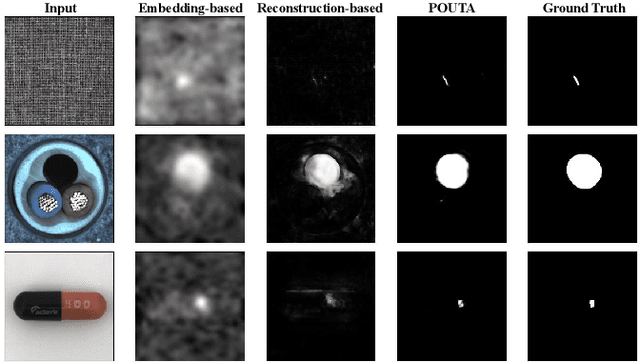
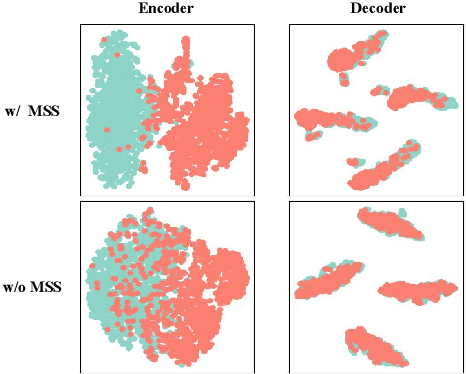
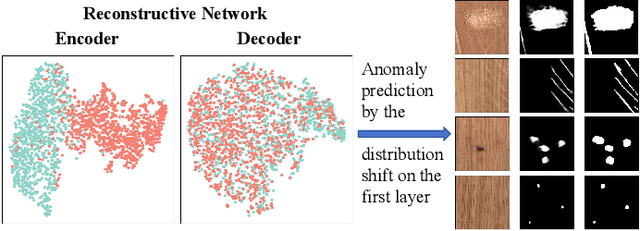

Visual anomaly detection aims at classifying and locating the regions that deviate from the normal appearance. Embedding-based methods and reconstruction-based methods are two main approaches for this task. However, they are either not efficient or not precise enough for the industrial detection. To deal with this problem, we derive POUTA (Produce Once Utilize Twice for Anomaly detection), which improves both the accuracy and efficiency by reusing the discriminant information potential in the reconstructive network. We observe that the encoder and decoder representations of the reconstructive network are able to stand for the features of the original and reconstructed image respectively. And the discrepancies between the symmetric reconstructive representations provides roughly accurate anomaly information. To refine this information, a coarse-to-fine process is proposed in POUTA, which calibrates the semantics of each discriminative layer by the high-level representations and supervision loss. Equipped with the above modules, POUTA is endowed with the ability to provide a more precise anomaly location than the prior arts. Besides, the representation reusage also enables to exclude the feature extraction process in the discriminative network, which reduces the parameters and improves the efficiency. Extensive experiments show that, POUTA is superior or comparable to the prior methods with even less cost. Furthermore, POUTA also achieves better performance than the state-of-the-art few-shot anomaly detection methods without any special design, showing that POUTA has strong ability to learn representations inherent in the training data.
ActiveClean: Generating Line-Level Vulnerability Data via Active Learning
Dec 04, 2023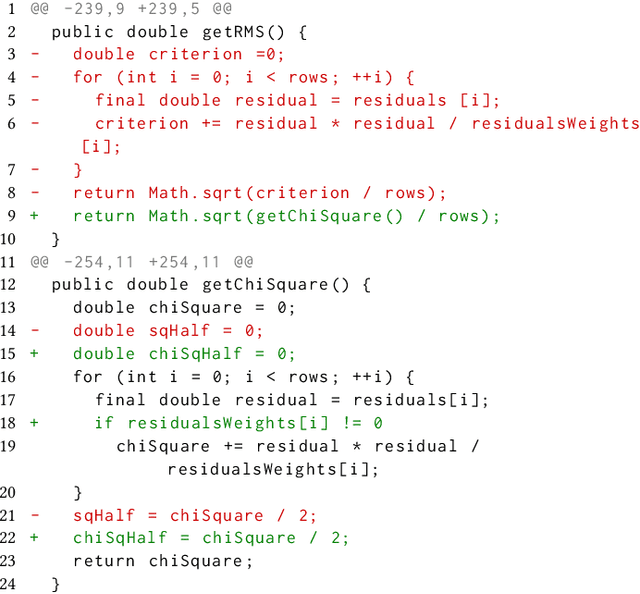
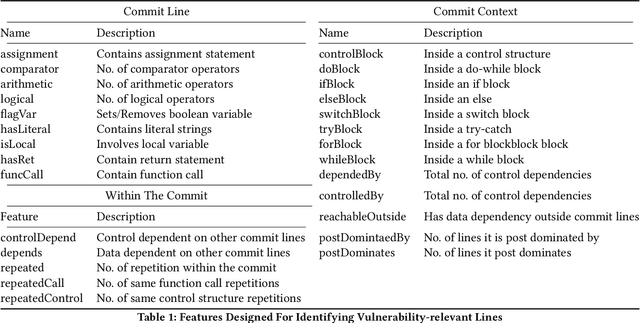
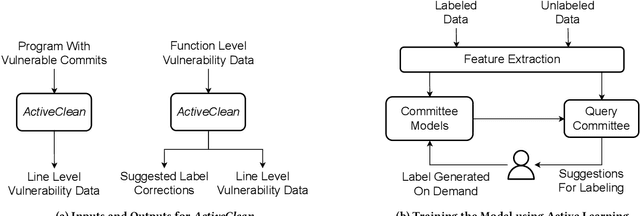
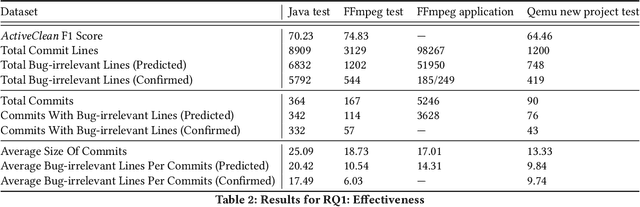
Deep learning vulnerability detection tools are increasing in popularity and have been shown to be effective. These tools rely on large volume of high quality training data, which are very hard to get. Most of the currently available datasets provide function-level labels, reporting whether a function is vulnerable or not vulnerable. However, for a vulnerability detection to be useful, we need to also know the lines that are relevant to the vulnerability. This paper makes efforts towards developing systematic tools and proposes. ActiveClean to generate the large volume of line-level vulnerability data from commits. That is, in addition to function-level labels, it also reports which lines in the function are likely responsible for vulnerability detection. In the past, static analysis has been applied to clean commits to generate line-level data. Our approach based on active learning, which is easy to use and scalable, provide a complementary approach to static analysis. We designed semantic and syntactic properties from commit lines and use them to train the model. We evaluated our approach on both Java and C datasets processing more than 4.3K commits and 119K commit lines. AcitveClean achieved an F1 score between 70-74. Further, we also show that active learning is effective by using just 400 training data to reach F1 score of 70.23. Using ActiveClean, we generate the line-level labels for the entire FFMpeg project in the Devign dataset, including 5K functions, and also detected incorrect function-level labels. We demonstrated that using our cleaned data, LineVul, a SOTA line-level vulnerability detection tool, detected 70 more vulnerable lines and 18 more vulnerable functions, and improved Top 10 accuracy from 66% to 73%.
Improving Unsupervised Relation Extraction by Augmenting Diverse Sentence Pairs
Dec 01, 2023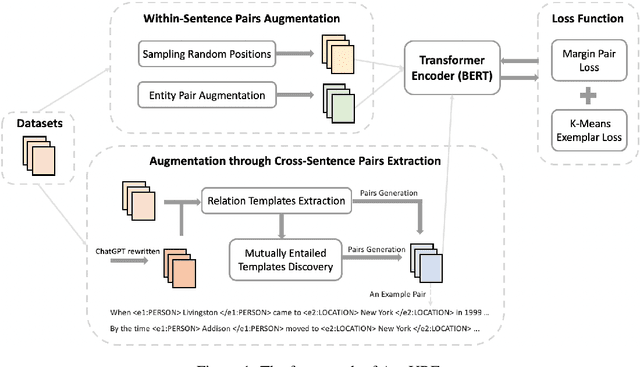
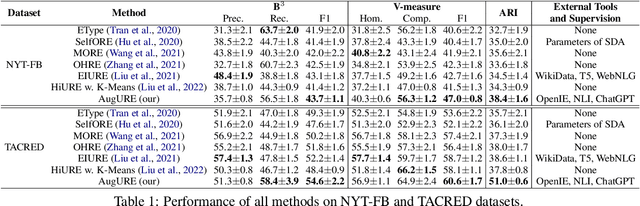
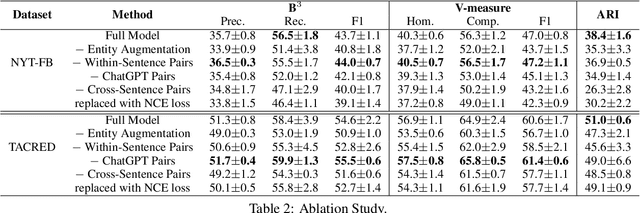
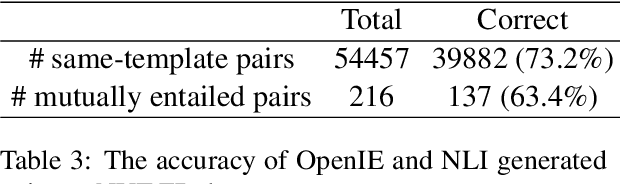
Unsupervised relation extraction (URE) aims to extract relations between named entities from raw text without requiring manual annotations or pre-existing knowledge bases. In recent studies of URE, researchers put a notable emphasis on contrastive learning strategies for acquiring relation representations. However, these studies often overlook two important aspects: the inclusion of diverse positive pairs for contrastive learning and the exploration of appropriate loss functions. In this paper, we propose AugURE with both within-sentence pairs augmentation and augmentation through cross-sentence pairs extraction to increase the diversity of positive pairs and strengthen the discriminative power of contrastive learning. We also identify the limitation of noise-contrastive estimation (NCE) loss for relation representation learning and propose to apply margin loss for sentence pairs. Experiments on NYT-FB and TACRED datasets demonstrate that the proposed relation representation learning and a simple K-Means clustering achieves state-of-the-art performance.
CoRec: An Easy Approach for Coordination Recognition
Nov 30, 2023In this paper, we observe and address the challenges of the coordination recognition task. Most existing methods rely on syntactic parsers to identify the coordinators in a sentence and detect the coordination boundaries. However, state-of-the-art syntactic parsers are slow and suffer from errors, especially for long and complicated sentences. To better solve the problems, we propose a pipeline model COordination RECognizer (CoRec). It consists of two components: coordinator identifier and conjunct boundary detector. The experimental results on datasets from various domains demonstrate the effectiveness and efficiency of the proposed method. Further experiments show that CoRec positively impacts downstream tasks, improving the yield of state-of-the-art Open IE models.