 Add to Chrome
 Add to Firefox
 Add to Edge
From Scores to Gibbs Correctors: Accelerating Uniform-Rate Discrete Diffusion Models
May 26, 2026
Discrete diffusion models have achieved strong empirical performance in text and other symbolic domains, but, especially for uniform-rate models, they often require many steps to generate a single sample. Existing acceleration methods either rely on training additional quantities or suffer from slow mixing. In this work, we propose a novel Gibbs-based corrector for discrete diffusion models, termed Gibbs-Accelerated Discrete Diffusion (GADD). GADD leverages the structure of the concrete score function to construct Gibbs posterior likelihoods directly, without requiring any additional training beyond standard score estimation. We show that GADD achieves an overall sampling complexity of $\mathcal{O}(\mathrm{polylog} (\varepsilon^{-1}))$, yielding the first such rate for diffusion-based samplers for uniform-rate discrete diffusion models. We also conduct numerical experiments demonstrating the practical advantages of GADD across synthetic data, zero-shot text sampling, and zero-shot conditional music generation. These results corroborate the theory and show that GADD consistently improves sample quality and wall-clock efficiency over standard baselines, including vanilla Euler methods and CTMC correctors. Beyond this, our theoretical analysis introduces a novel framework for analyzing predictor-corrector methods in discrete diffusion models, which may be of independent interest. Unlike existing approaches that rely on the Girsanov change-of-measure technique, our method is based on an induction argument that tracks error propagation across predictor iterations while accounting for inaccuracies in the corrector updates.

Sharp Convergence Rates for Masked Diffusion Models
Feb 26, 2026Discrete diffusion models have achieved strong empirical performance in text and other symbolic domains, with masked (absorbing-rate) variants emerging as competitive alternatives to autoregressive models. Among existing samplers, the Euler method remains the standard choice in many applications, and more recently, the First-Hitting Sampler (FHS) has shown considerable promise for masked diffusion models. Despite their practical success, the theoretical understanding of these samplers remains limited. Existing analyses are conducted in Kullback-Leibler (KL) divergence, which often yields loose parameter dependencies and requires strong assumptions on score estimation. Moreover, these guarantees do not cover recently developed high-performance sampler of FHS. In this work, we first develop a direct total-variation (TV) based analysis for the Euler method that overcomes these limitations. Our results relax assumptions on score estimation, improve parameter dependencies, and establish convergence guarantees without requiring any surrogate initialization. Also for this setting, we provide the first convergence lower bound for the Euler sampler, establishing tightness with respect to both the data dimension $d$ and the target accuracy $\varepsilon$. Finally, we analyze the FHS sampler and show that it incurs no sampling error beyond that induced by score estimation, which we show to be tight with a matching lower error bound. Overall, our analysis introduces a direct TV-based error decomposition along the CTMC trajectory and a decoupling-based path-wise analysis for FHS, which may be of independent interest.
Provable Last-Iterate Convergence for Multi-Objective Safe LLM Alignment via Optimistic Primal-Dual
Feb 25, 2026Reinforcement Learning from Human Feedback (RLHF) plays a significant role in aligning Large Language Models (LLMs) with human preferences. While RLHF with expected reward constraints can be formulated as a primal-dual optimization problem, standard primal-dual methods only guarantee convergence with a distributional policy where the saddle-point problem is in convex-concave form. Moreover, standard primal-dual methods may exhibit instability or divergence in the last iterate under policy parameterization in practical applications. In this work, we propose a universal primal-dual framework for safe RLHF that unifies a broad class of existing alignment algorithms, including safe-RLHF, one-shot, and multi-shot based methods. Building on this framework, we introduce an optimistic primal-dual (OPD) algorithm that incorporates predictive updates for both primal and dual variables to stabilize saddle-point dynamics. We establish last-iterate convergence guarantees for the proposed method, covering both exact policy optimization in the distributional space and convergence to a neighborhood of the optimal solution whose gap is related to approximation error and bias under parameterized policies. Our analysis reveals that optimism plays a crucial role in mitigating oscillations inherent to constrained alignment objectives, thereby closing a key theoretical gap between constrained RL and practical RLHF.
Learnable Chernoff Baselines for Inference-Time Alignment
Feb 08, 2026We study inference-time reward-guided alignment for generative models. Existing methods often rely on either architecture-specific adaptations or computationally costly inference procedures. We introduce Learnable Chernoff Baselines (LCBs) as a method for efficiently and approximately sampling from the exponentially tilted kernels that arise from KL-regularized reward alignment. Using only black-box sampling access to the pretrained model, LCBs implement a form of rejection sampling with adaptively selected acceptance probabilities, which allows fine-grained control over inference-compute scaling. We establish total-variation guarantees to the ideal aligned model, and demonstrate in both continuous and discrete diffusion settings that LCB sampling closely matches ideal rejection sampling while using substantially fewer queries to the pretrained model.
Large Language Models Achieve Gold Medal Performance at International Astronomy & Astrophysics Olympiad
Oct 06, 2025While task-specific demonstrations show early success in applying large language models (LLMs) to automate some astronomical research tasks, they only provide incomplete views of all necessary capabilities in solving astronomy problems, calling for more thorough understanding of LLMs' strengths and limitations. So far, existing benchmarks and evaluations focus on simple question-answering that primarily tests astronomical knowledge and fails to evaluate the complex reasoning required for real-world research in the discipline. Here, we address this gap by systematically benchmarking five state-of-the-art LLMs on the International Olympiad on Astronomy and Astrophysics (IOAA) exams, which are designed to examine deep conceptual understanding, multi-step derivations, and multimodal analysis. With average scores of 85.6% and 84.2%, Gemini 2.5 Pro and GPT-5 (the two top-performing models) not only achieve gold medal level performance but also rank in the top two among ~200-300 participants in all four IOAA theory exams evaluated (2022-2025). In comparison, results on the data analysis exams show more divergence. GPT-5 still excels in the exams with an 88.5% average score, ranking top 10 among the participants in the four most recent IOAAs, while other models' performances drop to 48-76%. Furthermore, our in-depth error analysis underscores conceptual reasoning, geometric reasoning, and spatial visualization (52-79% accuracy) as consistent weaknesses among all LLMs. Hence, although LLMs approach peak human performance in theory exams, critical gaps must be addressed before they can serve as autonomous research agents in astronomy.
Artificial Intelligence of Things: A Survey
Oct 25, 2024


The integration of the Internet of Things (IoT) and modern Artificial Intelligence (AI) has given rise to a new paradigm known as the Artificial Intelligence of Things (AIoT). In this survey, we provide a systematic and comprehensive review of AIoT research. We examine AIoT literature related to sensing, computing, and networking & communication, which form the three key components of AIoT. In addition to advancements in these areas, we review domain-specific AIoT systems that are designed for various important application domains. We have also created an accompanying GitHub repository, where we compile the papers included in this survey: https://github.com/AIoT-MLSys-Lab/AIoT-Survey. This repository will be actively maintained and updated with new research as it becomes available. As both IoT and AI become increasingly critical to our society, we believe AIoT is emerging as an essential research field at the intersection of IoT and modern AI. We hope this survey will serve as a valuable resource for those engaged in AIoT research and act as a catalyst for future explorations to bridge gaps and drive advancements in this exciting field.
* Accepted in ACM Transactions on Sensor Networks (TOSN)
Theory on Score-Mismatched Diffusion Models and Zero-Shot Conditional Samplers
Oct 17, 2024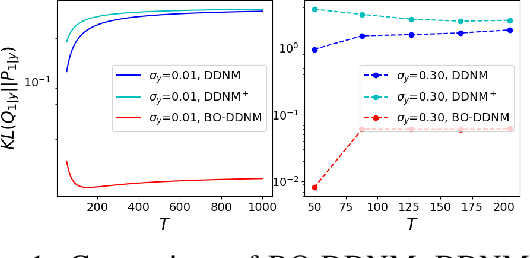
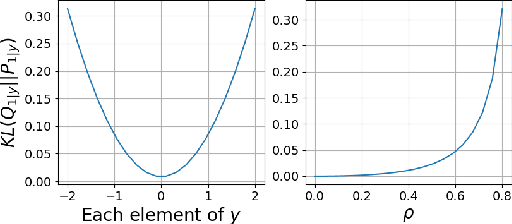
The denoising diffusion model has recently emerged as a powerful generative technique, capable of transforming noise into meaningful data. While theoretical convergence guarantees for diffusion models are well established when the target distribution aligns with the training distribution, practical scenarios often present mismatches. One common case is in zero-shot conditional diffusion sampling, where the target conditional distribution is different from the (unconditional) training distribution. These score-mismatched diffusion models remain largely unexplored from a theoretical perspective. In this paper, we present the first performance guarantee with explicit dimensional dependencies for general score-mismatched diffusion samplers, focusing on target distributions with finite second moments. We show that score mismatches result in an asymptotic distributional bias between the target and sampling distributions, proportional to the accumulated mismatch between the target and training distributions. This result can be directly applied to zero-shot conditional samplers for any conditional model, irrespective of measurement noise. Interestingly, the derived convergence upper bound offers useful guidance for designing a novel bias-optimal zero-shot sampler in linear conditional models that minimizes the asymptotic bias. For such bias-optimal samplers, we further establish convergence guarantees with explicit dependencies on dimension and conditioning, applied to several interesting target distributions, including those with bounded support and Gaussian mixtures. Our findings are supported by numerical studies.
Can We Theoretically Quantify the Impacts of Local Updates on the Generalization Performance of Federated Learning?
Sep 05, 2024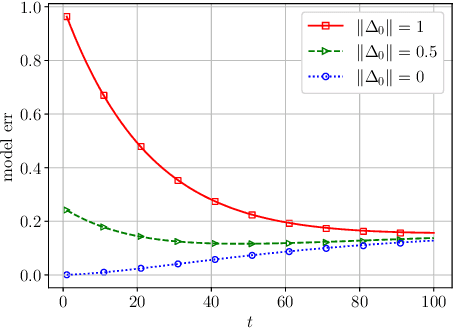
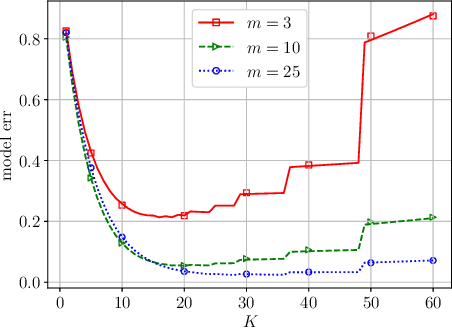

Federated Learning (FL) has gained significant popularity due to its effectiveness in training machine learning models across diverse sites without requiring direct data sharing. While various algorithms along with their optimization analyses have shown that FL with local updates is a communication-efficient distributed learning framework, the generalization performance of FL with local updates has received comparatively less attention. This lack of investigation can be attributed to the complex interplay between data heterogeneity and infrequent communication due to the local updates within the FL framework. This motivates us to investigate a fundamental question in FL: Can we quantify the impact of data heterogeneity and local updates on the generalization performance for FL as the learning process evolves? To this end, we conduct a comprehensive theoretical study of FL's generalization performance using a linear model as the first step, where the data heterogeneity is considered for both the stationary and online/non-stationary cases. By providing closed-form expressions of the model error, we rigorously quantify the impact of the number of the local updates (denoted as $K$) under three settings ($K=1$, $K<\infty$, and $K=\infty$) and show how the generalization performance evolves with the number of rounds $t$. Our investigation also provides a comprehensive understanding of how different configurations (including the number of model parameters $p$ and the number of training samples $n$) contribute to the overall generalization performance, thus shedding new insights (such as benign overfitting) for implementing FL over networks.
Non-asymptotic Convergence of Discrete-time Diffusion Models: New Approach and Improved Rate
Feb 21, 2024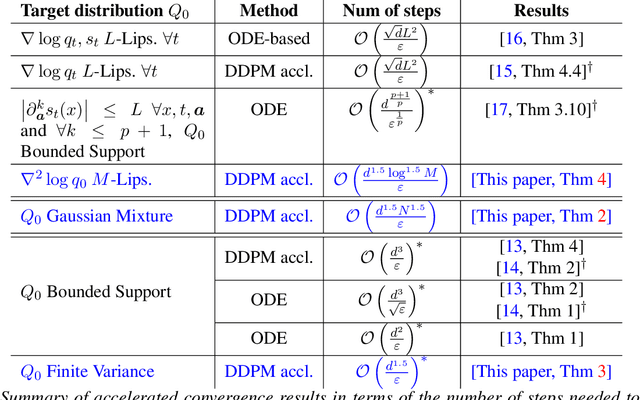

The denoising diffusion model emerges recently as a powerful generative technique that converts noise into data. Theoretical convergence guarantee has been mainly studied for continuous-time diffusion models, and has been obtained for discrete-time diffusion models only for distributions with bounded support in the literature. In this paper, we establish the convergence guarantee for substantially larger classes of distributions under discrete-time diffusion models and further improve the convergence rate for distributions with bounded support. In particular, we first establish the convergence rates for both smooth and general (possibly non-smooth) distributions having finite second moment. We then specialize our results to a number of interesting classes of distributions with explicit parameter dependencies, including distributions with Lipschitz scores, Gaussian mixture distributions, and distributions with bounded support. We further propose a novel accelerated sampler and show that it improves the convergence rates of the corresponding regular sampler by orders of magnitude with respect to all system parameters. For distributions with bounded support, our result improves the dimensional dependence of the previous convergence rate by orders of magnitude. Our study features a novel analysis technique that constructs tilting factor representation of the convergence error and exploits Tweedie's formula for handling Taylor expansion power terms.
Hoeffding's Inequality for Markov Chains under Generalized Concentrability Condition
Oct 04, 2023
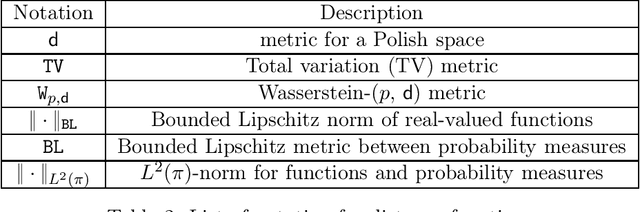
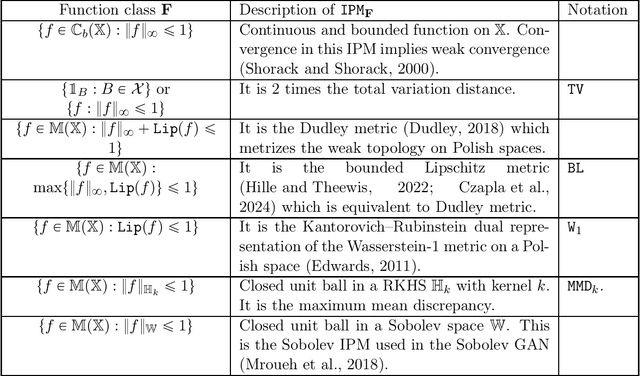
This paper studies Hoeffding's inequality for Markov chains under the generalized concentrability condition defined via integral probability metric (IPM). The generalized concentrability condition establishes a framework that interpolates and extends the existing hypotheses of Markov chain Hoeffding-type inequalities. The flexibility of our framework allows Hoeffding's inequality to be applied beyond the ergodic Markov chains in the traditional sense. We demonstrate the utility by applying our framework to several non-asymptotic analyses arising from the field of machine learning, including (i) a generalization bound for empirical risk minimization with Markovian samples, (ii) a finite sample guarantee for Ployak-Ruppert averaging of SGD, and (iii) a new regret bound for rested Markovian bandits with general state space.