 Add to Chrome
 Add to Firefox
 Add to Edge
Flow Matching with Missing Data
Jul 30, 2026
Flow matching assumes fully observed training data, which many real-world applications rarely provide. We propose Missing-Data Flow Matching, which treats the missing coordinates of training samples as latent variables and averages the flow matching loss over the values they could take. We first prove the correction is exact rather than approximate. Under missing completely at random with true completions, the incomplete-data objective equals the complete-data objective, so missingness changes nothing about what flow matching learns and the entire difficulty relocates to the completion model. Our finite-sample analysis then answers design questions that the algorithm leaves open, and the answers are not the ones intuition suggests. Missingness transfers estimator variance rather than adding it, one completion per example already matches complete-data variance exactly, and under a fixed evaluation budget one completion is optimal. A learned completion model contributes a single irreducible bias, which we bound by its expected conditional Wasserstein distance to the true completion law. Experiments numerically validate the theoretical predictions, show that deterministic rather than frozen imputation is what collapses the generated distribution, and place our method alongside strong classical and deep imputation baselines on real tabular data.

FoA-SR: Faithful or Aesthetic? Profile-Aware Preference Optimization for Real-World Image Super-Resolution
Jun 09, 2026Real-world image super-resolution (SR) is often designed with a single restoration objective, despite the current capacity of generative models to produce multiple high-quality reconstructions for the same input. In this paper, we argue that the best restoration strategy is subject to the specific restoration profile: a Faithful restoration prioritizes reference consistency, structure preservation, and hallucination suppression, whereas an Aesthetic restoration prioritizes visually pleasing and natural-looking details. We propose FoA-SR, a novel preference optimization approach to real-world SR based on profiles. To achieve this goal, FoA-SR starts with our supervised FLUX.2-based SR adapter (Flux2SR) trained with LR latent conditioning, flow matching, and image-space reconstruction losses for paired LR-to-HR image super-resolution. Following the development of the shared supervised super-resolution adapter, FoA-SR generates a shared stochastic candidate pool for each input image and ranks the same candidates using profile-specific Faithful and Aesthetic rewards to mine winner-loser pairs. These pairs are used to fine-tune separate LoRA adapters while keeping the base model frozen. Experiments on RealSR and DIV2K show that FoA-SR can steer the same SR adapter towards distinct restoration objectives: a Faithful adapter improves reference-consistent metrics while an Aesthetic adapter boosts metrics that measure perceptual quality without reference. Our candidate-pool analysis shows that Faithful and Aesthetic rewards frequently select different winners, and a Hybrid-LoRA ablation shows that collapsing both profiles into one reward yields an implicit compromise rather than explicit profile control.
Discrete Flow Matching for Offline-to-Online Reinforcement Learning
May 12, 2026Many reinforcement learning (RL) tasks have discrete action spaces, but most generative policy methods based on diffusion and flow matching are designed for continuous control. Meanwhile, generative policies usually rely heavily on offline datasets and offline-to-online RL is itself challenging, as the policy must improve from new interaction without losing useful behavior learned from static data. To address those challenges, we introduce DRIFT, an online fine-tuning method that updates an offline pretrained continuous-time Markov chain (CTMC) policy with an advantage-weighted discrete flow matching loss. To preserve useful pretrained knowledge, we add a path-space penalty that regularizes the full CTMC trajectory distribution, rather than only the final action distribution. For large discrete action spaces, we introduce a candidate-set approximation that updates the actor over a small subset of actions sampled from reference-policy rollouts and uniform exploration. Our theoretical analysis shows that the candidate-set error is controlled by missing target probability mass, and the induced CTMC generator error decreases as the candidate set covers more high-probability actions. Experiments on prevailing discrete action RL task show that our method provides stable offline-to-online improvement across all tasks, achieving the highest average score on Jericho with a simple GRU encoder while outperforming methods that use pretrained language models. Controlled experiments further confirm that the path-space penalty remains bounded during fine-tuning and that the CTMC generator adapts to shifted rewards faster than deterministic baselines. The candidate-set mechanism is supported by a stability analysis showing that the generator error decreases exponentially with candidate coverage.
Discrete MeanFlow: One-Step Generation via Conditional Transition Kernels
May 12, 2026MeanFlow enables one-step generation in continuous spaces by learning an average velocity over a time interval rather than the instantaneous velocity field of flow matching. However, discrete state spaces do not have smooth trajectories or spatial derivatives, so the continuous formulation does not directly apply. We introduce Discrete MeanFlow, which replaces the motion of a point with the transport of probability mass over finite states. Our key object is the conditional transition kernel of a continuous-time Markov chain (CTMC), from which we define a mean discrete rate that measures the average change in transition probability over a time interval. We prove a Discrete MeanFlow identity that relates this finite-interval rate to the instantaneous CTMC generator at the endpoint, with the Kolmogorov forward equation replacing the spatial chain rule of continuous MeanFlow. Based on this identity, we parameterize the transition kernel directly using a boundary-by-construction design that guarantees valid probability outputs and exact boundary conditions without auxiliary losses. Since the learned kernel is itself a probability distribution, generation reduces to a single forward pass followed by one categorical draw meaning no iterative denoising, ODE integration, or multi-step refinement is required. We validate the framework on exact finite-state Markov chains, where the learned kernel recovers the analytical ground truth to high precision, and on factorized synthetic sequence generation tasks with varying alphabet sizes and sequence lengths.
An LP-based Sampling Policy for Multi-Armed Bandits with Side-Observations and Stochastic Availability
Mar 27, 2026We study the stochastic multi-armed bandit (MAB) problem where an underlying network structure enables side-observations across related actions. We use a bipartite graph to link actions to a set of unknowns, such that selecting an action reveals observations for all the unknowns it is connected to. While previous works rely on the assumption that all actions are permanently accessible, we investigate the more practical setting of stochastic availability, where the set of feasible actions (the "activation set") varies dynamically in each round. This framework models real-world systems with both structural dependencies and volatility, such as social networks where users provide side-information about their peers' preferences, yet are not always online to be queried. To address this challenge, we propose UCB-LP-A, a novel policy that leverages a Linear Programming (LP) approach to optimize exploration-exploitation trade-offs under stochastic availability. Unlike standard network bandit algorithms that assume constant access, UCB-LP-A computes an optimal sampling distribution over the realizable activation sets, ensuring that the necessary observations are gathered using only the currently active arms. We derive a theoretical upper bound on the regret of our policy, characterizing the impact of both the network structure and the activation probabilities. Finally, we demonstrate through numerical simulations that UCB-LP-A significantly outperforms existing heuristics that ignore either the side-information or the availability constraints.
Provable Last-Iterate Convergence for Multi-Objective Safe LLM Alignment via Optimistic Primal-Dual
Feb 25, 2026Reinforcement Learning from Human Feedback (RLHF) plays a significant role in aligning Large Language Models (LLMs) with human preferences. While RLHF with expected reward constraints can be formulated as a primal-dual optimization problem, standard primal-dual methods only guarantee convergence with a distributional policy where the saddle-point problem is in convex-concave form. Moreover, standard primal-dual methods may exhibit instability or divergence in the last iterate under policy parameterization in practical applications. In this work, we propose a universal primal-dual framework for safe RLHF that unifies a broad class of existing alignment algorithms, including safe-RLHF, one-shot, and multi-shot based methods. Building on this framework, we introduce an optimistic primal-dual (OPD) algorithm that incorporates predictive updates for both primal and dual variables to stabilize saddle-point dynamics. We establish last-iterate convergence guarantees for the proposed method, covering both exact policy optimization in the distributional space and convergence to a neighborhood of the optimal solution whose gap is related to approximation error and bias under parameterized policies. Our analysis reveals that optimism plays a crucial role in mitigating oscillations inherent to constrained alignment objectives, thereby closing a key theoretical gap between constrained RL and practical RLHF.
Flow Matching for Offline Reinforcement Learning with Discrete Actions
Feb 05, 2026Generative policies based on diffusion models and flow matching have shown strong promise for offline reinforcement learning (RL), but their applicability remains largely confined to continuous action spaces. To address a broader range of offline RL settings, we extend flow matching to a general framework that supports discrete action spaces with multiple objectives. Specifically, we replace continuous flows with continuous-time Markov chains, trained using a Q-weighted flow matching objective. We then extend our design to multi-agent settings, mitigating the exponential growth of joint action spaces via a factorized conditional path. We theoretically show that, under idealized conditions, optimizing this objective recovers the optimal policy. Extensive experiments further demonstrate that our method performs robustly in practical scenarios, including high-dimensional control, multi-modal decision-making, and dynamically changing preferences over multiple objectives. Our discrete framework can also be applied to continuous-control problems through action quantization, providing a flexible trade-off between representational complexity and performance.
Evaluating Sparse Autoencoders for Monosemantic Representation
Aug 20, 2025A key barrier to interpreting large language models is polysemanticity, where neurons activate for multiple unrelated concepts. Sparse autoencoders (SAEs) have been proposed to mitigate this issue by transforming dense activations into sparse, more interpretable features. While prior work suggests that SAEs promote monosemanticity, there has been no quantitative comparison with their base models. This paper provides the first systematic evaluation of SAEs against base models concerning monosemanticity. We introduce a fine-grained concept separability score based on the Jensen-Shannon distance, which captures how distinctly a neuron's activation distributions vary across concepts. Using Gemma-2-2B and multiple SAE variants across five benchmarks, we show that SAEs reduce polysemanticity and achieve higher concept separability. However, greater sparsity of SAEs does not always yield better separability and often impairs downstream performance. To assess practical utility, we evaluate concept-level interventions using two strategies: full neuron masking and partial suppression. We find that, compared to base models, SAEs enable more precise concept-level control when using partial suppression. Building on this, we propose Attenuation via Posterior Probabilities (APP), a new intervention method that uses concept-conditioned activation distributions for targeted suppression. APP outperforms existing approaches in targeted concept removal.
FSL-SAGE: Accelerating Federated Split Learning via Smashed Activation Gradient Estimation
May 29, 2025Collaborative training methods like Federated Learning (FL) and Split Learning (SL) enable distributed machine learning without sharing raw data. However, FL assumes clients can train entire models, which is infeasible for large-scale models. In contrast, while SL alleviates the client memory constraint in FL by offloading most training to the server, it increases network latency due to its sequential nature. Other methods address the conundrum by using local loss functions for parallel client-side training to improve efficiency, but they lack server feedback and potentially suffer poor accuracy. We propose FSL-SAGE (Federated Split Learning via Smashed Activation Gradient Estimation), a new federated split learning algorithm that estimates server-side gradient feedback via auxiliary models. These auxiliary models periodically adapt to emulate server behavior on local datasets. We show that FSL-SAGE achieves a convergence rate of $\mathcal{O}(1/\sqrt{T})$, where $T$ is the number of communication rounds. This result matches FedAvg, while significantly reducing communication costs and client memory requirements. Our empirical results also verify that it outperforms existing state-of-the-art FSL methods, offering both communication efficiency and accuracy.
BeST -- A Novel Source Selection Metric for Transfer Learning
Jan 19, 2025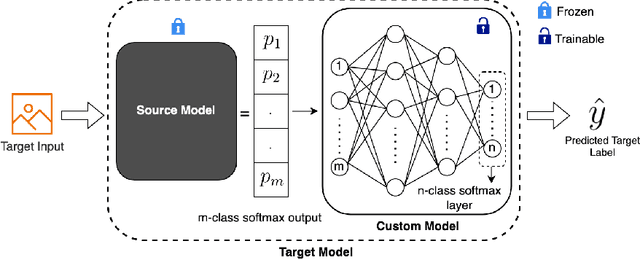
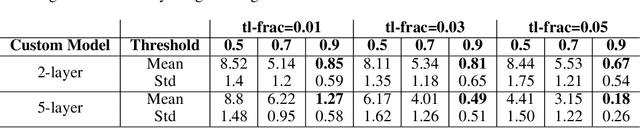
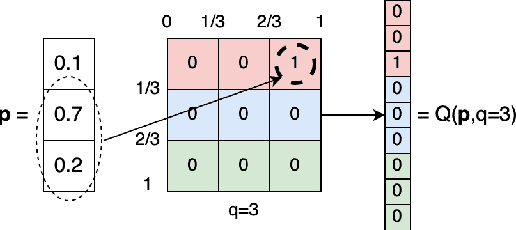

One of the most fundamental, and yet relatively less explored, goals in transfer learning is the efficient means of selecting top candidates from a large number of previously trained models (optimized for various "source" tasks) that would perform the best for a new "target" task with a limited amount of data. In this paper, we undertake this goal by developing a novel task-similarity metric (BeST) and an associated method that consistently performs well in identifying the most transferrable source(s) for a given task. In particular, our design employs an innovative quantization-level optimization procedure in the context of classification tasks that yields a measure of similarity between a source model and the given target data. The procedure uses a concept similar to early stopping (usually implemented to train deep neural networks (DNNs) to ensure generalization) to derive a function that approximates the transfer learning mapping without training. The advantage of our metric is that it can be quickly computed to identify the top candidate(s) for a given target task before a computationally intensive transfer operation (typically using DNNs) can be implemented between the selected source and the target task. As such, our metric can provide significant computational savings for transfer learning from a selection of a large number of possible source models. Through extensive experimental evaluations, we establish that our metric performs well over different datasets and varying numbers of data samples.