 Add to Chrome
 Add to Firefox
 Add to Edge
SABRE: Scalable and Automated Benchmarking of VLMs under Stress
Aug 07, 2026
Vision-language models (VLMs) are improving rapidly, but benchmark development lags behind, making weaknesses hard to identify. Building stress tests is costly: samples must satisfy controlled conditions, remain answerable, and challenge current models. We present SABRE, a scalable, automated pipeline that converts a Test Primer (a Markdown Task Design with Data Schema) into structured specifications, generated or edited images, and question-answer pairs. Automated filtering removes candidates solved by a Filtering VLM, while human review verifies candidate validity and supports annotation correction and localized image repair. We instantiate SABRE-Prior to test whether VLMs follow visual evidence instead of relying on world priors -- learned expectations about familiar objects and scenes. Its 600 images and 1,000 questions span Context (unexpected entities in familiar scenes), Texture (counterfactual materials), Attribute (noncanonical component counts), and Language Elicitation (answers suggested by language but unsupported by the image). Across six VLMs, macro-average accuracy ranges from 17.8% to 31.3% (22.6% mean). A real-image Attribute control is comparably difficult for the Filtering VLM. SABRE-Counting and SABRE-Spatial pilots show that the workflow supports other stress-test settings. These results establish SABRE as a reusable framework for constructing and refreshing VLM stress tests rather than a single fixed benchmark.

Flow-based Policy Adaptation without Policy Updates
Jun 04, 2026Leveraging prior knowledge from pretrained policies, foundation models, or human operators offers an efficient alternative to learning robot skills from scratch. However, these agents often provide actions that are suboptimal, noisy, or misaligned with task-specific expert behavior. We propose GLOVES, a family of flow-based adaptation methods that correct non-expert actions by transporting them toward an expert action distribution. Rather than replacing agentic control with full autonomy, GLOVES performs selective action-level adaptation, improving task success while preserving agent intent. The learned flow also provides a natural in-distribution scoring mechanism through reverse flow evaluation. We use this signal as an intervention gate: actions that appear consistent with the expert distribution are passed through unchanged, while anomalous or out-of-distribution (OOD) actions are corrected. In this way, assistance is only provided when necessary. GLOVES requires only limited expert supervision, using a small number of demonstrations or reusable successful skill segments. By learning local expert action patterns and stitching them during execution, GLOVES provides a lightweight shared-control module for robust action adaptation across tasks and environments. Code and demos are available at ripl.github.io/GLOVES_web.
CLAW: Learning Continuous Latent Action World Models via Adversarial Latent Regularization
Jun 02, 2026We introduce CLAW, a fully end-to-end self-supervised framework for learning a world model jointly with continuous latent action representations directly from action-free videos. Our approach leverages adversarial latent regularization and diffusion-based video generation to capture structured and semantically meaningful action representations while modeling rich, predictive environment dynamics, without relying on any action labels or annotations. By simultaneously training the Latent Action Model and world model, CLAW learns to reason about how inferred actions induce environment transitions from visual observations alone. We show that the resulting latent action world model supports both imitation learning from observation and goal-directed planning. In imitation learning, latent actions extracted from raw videos enable behavior cloning. For planning, CLAW generates sequences of latent actions and maps them to executable actions to reach desired goals. Extensive experiments across diverse tasks and embodiments demonstrate that CLAW produces semantically meaningful latent action representations, supports effective action transfer, and enables planning and imitation from observation, outperforming existing methods.
Seeing without Looking: Do Vision-Language Benchmarks Really Test Vision?
May 21, 2026Benchmark accuracy is often implicitly assumed to reflect grounded visual understanding in vision-language models (VLMs), yet it remains unclear to what extent such scores truly reflect reliance on visual evidence. Motivated by a surprising observation that removing a substantial fraction of image tokens only degrades model performance very slightly on a widely used hallucination benchmark, we systematically investigate this mismatch in a set of open-source VLMs. Our analysis spans multiple levels of granularity, spanning global visual degradation, localized occlusion, question reformulation, answer-space expansion, and decision-level analyses beyond standard accuracy. We further complement these behavioral results with a layer-wise analysis of vision-token geometry. Throughout the experiments, we find that although VLMs do incorporate visual input, their predictions are less sensitive to the loss of fine-grained visual evidence that standard accuracy should have suggested. Even when the final prediction remains unchanged, the model's internal support for the correct answer may already be weakened. We further complement a representation-level analysis, which shows increasing similarity among visual tokens in deeper layers, providing a possible explanation for our findings. Together, these results suggest that current benchmarks are not sufficient to reliably evaluate fine-grained visual grounding in VLMs.
HapCompass: A Rotational Haptic Device for Contact-Rich Robotic Teleoperation
Mar 31, 2026The contact-rich nature of manipulation makes it a significant challenge for robotic teleoperation. While haptic feedback is critical for contact-rich tasks, providing intuitive directional cues within wearable teleoperation interfaces remains a bottleneck. Existing solutions, such as non-directional vibrations from handheld controllers, provide limited information, while vibrotactile arrays are prone to perceptual interference. To address these limitations, we propose HapCompass, a novel, low-cost wearable haptic device that renders 2D directional cues by mechanically rotating a single linear resonant actuator (LRA). We evaluated HapCompass's ability to convey directional cues to human operators and showed that it increased the success rate, decreased the completion time and the maximum contact force for teleoperated manipulation tasks when compared to vision-only and non-directional feedback baselines. Furthermore, we conducted a preliminary imitation-learning evaluation, suggesting that the directional feedback provided by HapCompass enhances the quality of demonstration data and, in turn, the trained policy. We release the design of the HapCompass device along with the code that implements our teleoperation interface: https://ripl.github.io/HapCompass/.
Revealing Positive and Negative Role Models to Help People Make Good Decisions
Mar 03, 2026We consider a setting where agents take action by following their role models in a social network, and study strategies for a social planner to help agents by revealing whether the role models are positive or negative. Specifically, agents observe a local neighborhood of possible role models they can emulate, but do not know their true labels. Revealing a positive label encourages emulation, while revealing a negative one redirects agents toward alternative options. The social planner observes all labels, but operates under a limited disclosure budget that it selectively allocates to maximize social welfare (the expected number of agents who emulate adjacent positive role models). We consider both algorithms and hardness results for welfare maximization, and provide a sample-complexity guarantee when the planner observes a sampled subset of agents. We also consider fairness guarantees when agents belong to different groups. It is a technical challenge that the ability to reveal negative role models breaks submodularity. We thus introduce a proxy welfare function that remains submodular even when revealed targets include negative ones. When each agent has at most a constant number of negative target neighbors, we use this proxy to achieve a constant-factor approximation to the true optimal welfare gain. When agents belong to different groups, we also show that each group's welfare gain is within a constant factor of the optimum achievable if the full budget were allocated to that group. Beyond this basic model, we also propose an intervention model that directly connects high-risk agents to positive role models, and a coverage radius model that expands the visibility of selected positive role models. Lastly, we conduct extensive experiments on four real-world datasets to support our theoretical results and assess the effectiveness of the proposed algorithms.
Do You Know Where Your Camera Is? View-Invariant Policy Learning with Camera Conditioning
Oct 02, 2025We study view-invariant imitation learning by explicitly conditioning policies on camera extrinsics. Using Plucker embeddings of per-pixel rays, we show that conditioning on extrinsics significantly improves generalization across viewpoints for standard behavior cloning policies, including ACT, Diffusion Policy, and SmolVLA. To evaluate policy robustness under realistic viewpoint shifts, we introduce six manipulation tasks in RoboSuite and ManiSkill that pair "fixed" and "randomized" scene variants, decoupling background cues from camera pose. Our analysis reveals that policies without extrinsics often infer camera pose using visual cues from static backgrounds in fixed scenes; this shortcut collapses when workspace geometry or camera placement shifts. Conditioning on extrinsics restores performance and yields robust RGB-only control without depth. We release the tasks, demonstrations, and code at https://ripl.github.io/know_your_camera/ .
FlashBack: Consistency Model-Accelerated Shared Autonomy
May 22, 2025Shared autonomy is an enabling technology that provides users with control authority over robots that would otherwise be difficult if not impossible to directly control. Yet, standard methods make assumptions that limit their adoption in practice-for example, prior knowledge of the user's goals or the objective (i.e., reward) function that they wish to optimize, knowledge of the user's policy, or query-level access to the user during training. Diffusion-based approaches to shared autonomy do not make such assumptions and instead only require access to demonstrations of desired behaviors, while allowing the user to maintain control authority. However, these advantages have come at the expense of high computational complexity, which has made real-time shared autonomy all but impossible. To overcome this limitation, we propose Consistency Shared Autonomy (CSA), a shared autonomy framework that employs a consistency model-based formulation of diffusion. Key to CSA is that it employs the distilled probability flow of ordinary differential equations (PF ODE) to generate high-fidelity samples in a single step. This results in inference speeds significantly than what is possible with previous diffusion-based approaches to shared autonomy, enabling real-time assistance in complex domains with only a single function evaluation. Further, by intervening on flawed actions at intermediate states of the PF ODE, CSA enables varying levels of assistance. We evaluate CSA on a variety of challenging simulated and real-world robot control problems, demonstrating significant improvements over state-of-the-art methods both in terms of task performance and computational efficiency.
FastMap: Revisiting Dense and Scalable Structure from Motion
May 07, 2025We propose FastMap, a new global structure from motion method focused on speed and simplicity. Previous methods like COLMAP and GLOMAP are able to estimate high-precision camera poses, but suffer from poor scalability when the number of matched keypoint pairs becomes large. We identify two key factors leading to this problem: poor parallelization and computationally expensive optimization steps. To overcome these issues, we design an SfM framework that relies entirely on GPU-friendly operations, making it easily parallelizable. Moreover, each optimization step runs in time linear to the number of image pairs, independent of keypoint pairs or 3D points. Through extensive experiments, we show that FastMap is one to two orders of magnitude faster than COLMAP and GLOMAP on large-scale scenes with comparable pose accuracy.
From Vague Instructions to Task Plans: A Feedback-Driven HRC Task Planning Framework based on LLMs
Mar 02, 2025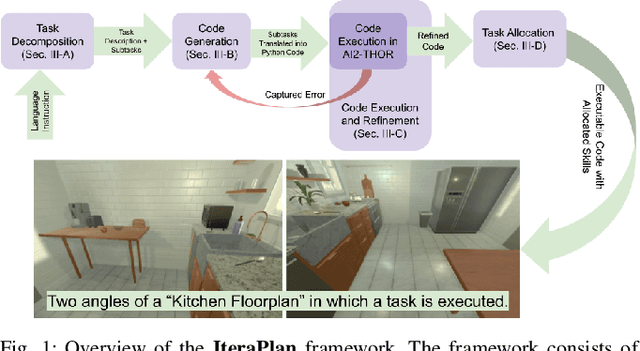
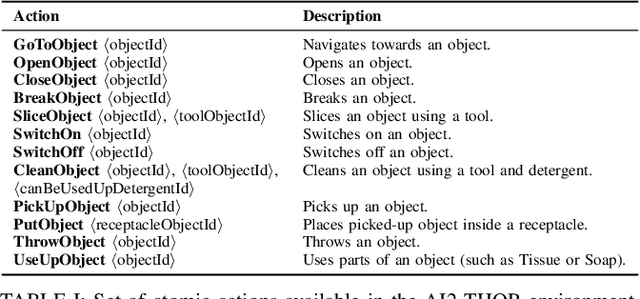
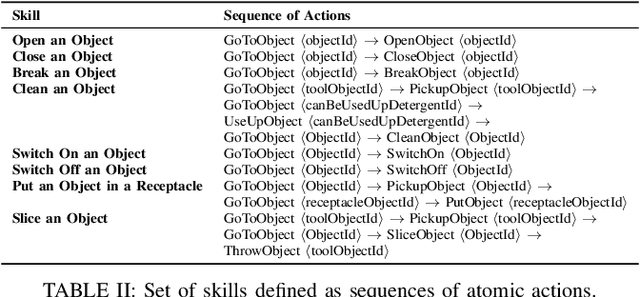
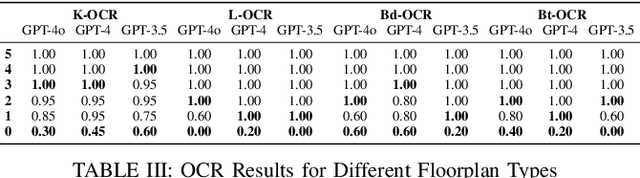
Recent advances in large language models (LLMs) have demonstrated their potential as planners in human-robot collaboration (HRC) scenarios, offering a promising alternative to traditional planning methods. LLMs, which can generate structured plans by reasoning over natural language inputs, have the ability to generalize across diverse tasks and adapt to human instructions. This paper investigates the potential of LLMs to facilitate planning in the context of human-robot collaborative tasks, with a focus on their ability to reason from high-level, vague human inputs, and fine-tune plans based on real-time feedback. We propose a novel hybrid framework that combines LLMs with human feedback to create dynamic, context-aware task plans. Our work also highlights how a single, concise prompt can be used for a wide range of tasks and environments, overcoming the limitations of long, detailed structured prompts typically used in prior studies. By integrating user preferences into the planning loop, we ensure that the generated plans are not only effective but aligned with human intentions.