 Add to Chrome
 Add to Firefox
 Add to Edge
Information-seeking failures of large language models in agentic clinical reasoning
Jul 11, 2026
Large language models achieve high scores on medical knowledge assessments, yet clinical reasoning requires actively deciding what to investigate under uncertainty. We developed an agentic evaluation framework in hematologic oncology in which models must proactively request clinical data across three sequential rounds before committing to a diagnosis and treatment plan. Across 32 frontier models, the best achieved only 68% overall accuracy. Information utilization, the fraction of available data actually requested, was the strongest predictor of diagnostic accuracy (R = 0.69, P < 0.001), yet utilization collapsed from 57% to 26% in the final round, leaving molecular and cytogenetic data critical for treatment selection unexamined. Reasoning traces scored high on a clinical reasoning rubric (91% above threshold) but decorrelated from accuracy, revealing a gap between locally coherent rationales and globally correct conclusions. Error analysis identified search satisficing, anchoring and premature closure as the dominant failure modes, the same cognitive biases that characterize novice clinicians under dual-process models of diagnostic reasoning. These findings demonstrate that the primary limitation of current models in clinical oncology is not insufficient medical knowledge but a systematic failure of information-seeking under uncertainty.

Routine laboratory trajectories encode the onset of organ-level complications in cancer
Jun 07, 2026Routine laboratory panels drawn during cancer treatment constitute longitudinal physiological recordings of organ function, yet their temporal structure is discarded by single-timepoint prognostic tools. A transformer trained on 2,777,595 laboratory measurements from 3,905 patients with multiple myeloma or ovarian cancer predicted the two-year onset of 162 treatment-associated complications, including therapy-related myelodysplastic syndromes, spanning eight clinical categories, achieving 1.5- to 6.1-fold enrichment above prevalence at the group level. It matched or outperformed non-sequential baselines across grouped endpoints (AUROC gains up to +0.11), demonstrating that longitudinal laboratory trajectories capture evolving complication-specific physiology inaccessible from isolated measurements. Predictions generalised across both cancers, divergence concentrating in disease-specific complications, and biomarker masking recovered signatures consistent with established pathophysiology. External validation on MIMIC-IV and MMRF CoMMpass confirmed transferability across independent healthcare systems (AUROC up to 0.85). Routine oncological laboratory data encode organ deterioration weeks to months before clinical onset, enabling complication-specific surveillance without additional testing infrastructure.
Whole-body CT attenuation and volume charts from routine clinical scans via evidence-grounded LLM report filtering
May 07, 2026Interpreting quantitative CT biomarkers, such as organ volume and tissue attenuation, requires large-scale healthy reference distributions. However, creating these is challenging because clinical datasets are often heavily enriched with pathology. Here, we develop an evidence-grounded, cross-verified large language model (LLM) ensemble to filter pathological findings from radiology reports, enabling the construction of pathology-reduced cohorts from over 350,000 CT examinations. Five LLMs, first, flag structure-level abnormality candidates grounded in verbatim report evidence and, second, resolve disagreements via cross-verification. Using distribution-aware generalized additive models for location, scale, and shape, we establish comprehensive whole-body reference charts for 106 anatomical structures (volumes and attenuation) across adulthood, accounting for age, sex, contrast enhancement, and acquisition parameters. Longitudinal analyses reveal structure- and contrast-dependent changes distinct from cross-sectional trends. These resources facilitate covariate-adjusted centile scoring from routine CT, supporting standardized quantitative phenotyping, multi-site imaging studies, and scalable opportunistic screening research.
Agentic clinical reasoning over longitudinal myeloma records: a retrospective evaluation against expert consensus
Apr 27, 2026Multiple myeloma is managed through sequential lines of therapy over years to decades, with each decision depending on cumulative disease history distributed across dozens to hundreds of heterogeneous clinical documents. Whether LLM-based systems can synthesise this evidence at a level approaching expert agreement has not been established. A retrospective evaluation was conducted on longitudinal clinical records of 811 myeloma patients treated at a tertiary centre (2001-2026), covering 44,962 documents and 1,334,677 laboratory values, with external validation on MIMIC-IV. An agentic reasoning system was compared against single-pass retrieval-augmented generation (RAG), iterative RAG, and full-context input on 469 patient-question pairs from 48 templates at three complexity levels. Reference labels came from double annotation by four oncologists with senior haematologist adjudication. Iterative RAG and full-context input converged on a shared ceiling (75.4% vs 75.8%, p = 1.00). The agentic system reached 79.6% concordance (95% CI 76.4-82.8), exceeding both baselines (+3.8 and +4.2 pp; p = 0.006 and 0.007). Gains rose with question complexity, reaching +9.4 pp on criteria-based synthesis (p = 0.032), and with record length, reaching +13.5 pp in the top decile (n = 10). The system error rate (12.2%) was comparable to expert disagreement (13.6%), but severity was inverted: 57.8% of system errors were clinically significant versus 18.8% of expert disagreements. Agentic reasoning was the only approach to exceed the shared ceiling, with gains concentrated on the most complex questions and longest records. The greater clinical consequence of residual system errors indicates that prospective evaluation in routine care is required before these findings translate into patient benefit.
Conditional Diffusion for 3D CT Volume Reconstruction from 2D X-rays
Mar 27, 2026Computed tomography (CT) provides rich 3D anatomical details but is often constrained by high radiation exposure, substantial costs, and limited availability. While standard chest X-rays are cost-effective and widely accessible, they only provide 2D projections with limited pathological information. Reconstructing 3D CT volumes from 2D X-rays offers a transformative solution to increase diagnostic accessibility, yet existing methods predominantly rely on synthetic X-ray projections, limiting clinical generalization. In this work, we propose AXON, a multi-stage diffusion-based framework that reconstructs high-fidelity 3D CT volumes directly from real X-rays. AXON employs a coarse-to-fine strategy, with a Brownian Bridge diffusion model-based initial stage for global structural synthesis, followed by a ControlNet-based refinement stage for local intensity optimization. It also supports bi-planar X-ray input to mitigate depth ambiguities inherent in 2D-to-3D reconstruction. A super-resolution network is integrated to upscale the generated volumes to achieve diagnostic-grade resolution. Evaluations on both public and external datasets demonstrate that AXON significantly outperforms state-of-the-art baselines, achieving a 11.9% improvement in PSNR and a 11.0% increase in SSIM with robust generalizability across disparate clinical distributions. Our code is available at https://github.com/ai-med/AXON.
Parametric shape models for vessels learned from segmentations via differentiable voxelization
Jul 03, 2025Vessels are complex structures in the body that have been studied extensively in multiple representations. While voxelization is the most common of them, meshes and parametric models are critical in various applications due to their desirable properties. However, these representations are typically extracted through segmentations and used disjointly from each other. We propose a framework that joins the three representations under differentiable transformations. By leveraging differentiable voxelization, we automatically extract a parametric shape model of the vessels through shape-to-segmentation fitting, where we learn shape parameters from segmentations without the explicit need for ground-truth shape parameters. The vessel is parametrized as centerlines and radii using cubic B-splines, ensuring smoothness and continuity by construction. Meshes are differentiably extracted from the learned shape parameters, resulting in high-fidelity meshes that can be manipulated post-fit. Our method can accurately capture the geometry of complex vessels, as demonstrated by the volumetric fits in experiments on aortas, aneurysms, and brain vessels.
From Text to Image: Exploring GPT-4Vision's Potential in Advanced Radiological Analysis across Subspecialties
Nov 24, 2023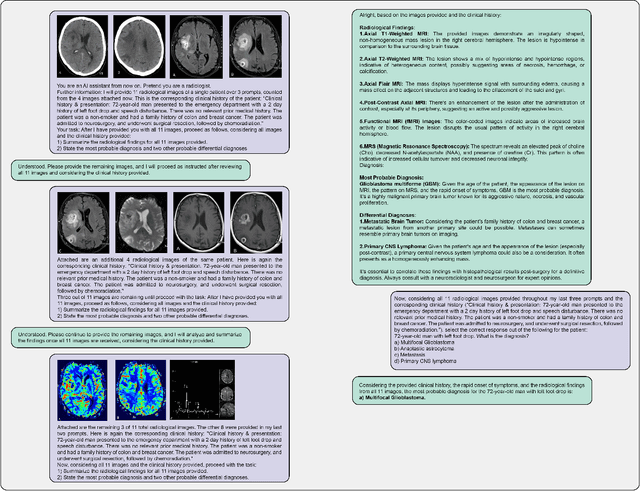
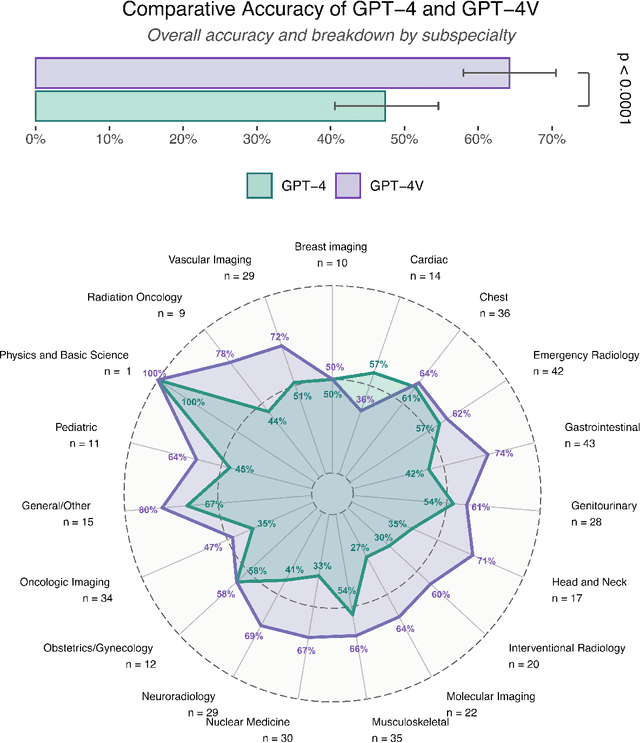
The study evaluates and compares GPT-4 and GPT-4Vision for radiological tasks, suggesting GPT-4Vision may recognize radiological features from images, thereby enhancing its diagnostic potential over text-based descriptions.
Evaluation of GPT-4 for chest X-ray impression generation: A reader study on performance and perception
Nov 12, 2023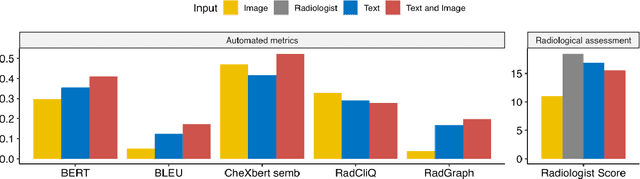
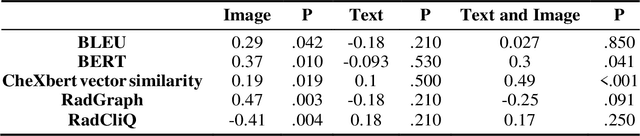
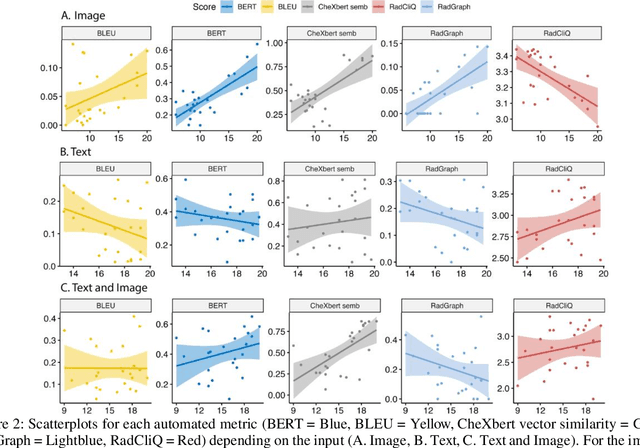
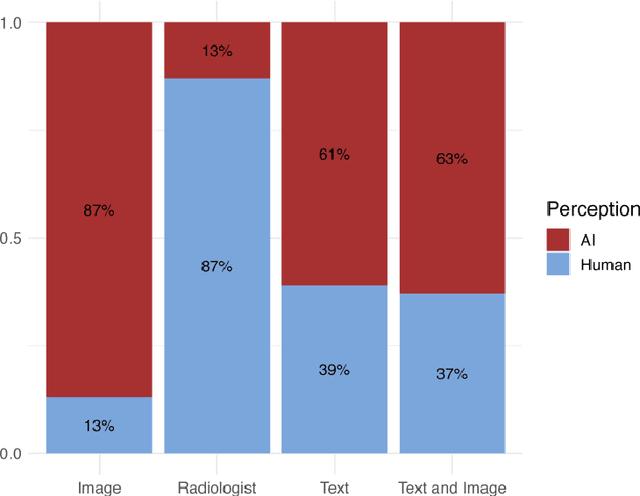
The remarkable generative capabilities of multimodal foundation models are currently being explored for a variety of applications. Generating radiological impressions is a challenging task that could significantly reduce the workload of radiologists. In our study we explored and analyzed the generative abilities of GPT-4 for Chest X-ray impression generation. To generate and evaluate impressions of chest X-rays based on different input modalities (image, text, text and image), a blinded radiological report was written for 25-cases of the publicly available NIH-dataset. GPT-4 was given image, finding section or both sequentially to generate an input dependent impression. In a blind randomized reading, 4-radiologists rated the impressions and were asked to classify the impression origin (Human, AI), providing justification for their decision. Lastly text model evaluation metrics and their correlation with the radiological score (summation of the 4 dimensions) was assessed. According to the radiological score, the human-written impression was rated highest, although not significantly different to text-based impressions. The automated evaluation metrics showed moderate to substantial correlations to the radiological score for the image impressions, however individual scores were highly divergent among inputs, indicating insufficient representation of radiological quality. Detection of AI-generated impressions varied by input and was 61% for text-based impressions. Impressions classified as AI-generated had significantly worse radiological scores even when written by a radiologist, indicating potential bias. Our study revealed significant discrepancies between a radiological assessment and common automatic evaluation metrics depending on the model input. The detection of AI-generated findings is subject to bias that highly rated impressions are perceived as human-written.
Private, fair and accurate: Training large-scale, privacy-preserving AI models in radiology
Feb 03, 2023Artificial intelligence (AI) models are increasingly used in the medical domain. However, as medical data is highly sensitive, special precautions to ensure the protection of said data are required. The gold standard for privacy preservation is the introduction of differential privacy (DP) to model training. However, prior work has shown that DP has negative implications on model accuracy and fairness. Therefore, the purpose of this study is to demonstrate that the privacy-preserving training of AI models for chest radiograph diagnosis is possible with high accuracy and fairness compared to non-private training. N=193,311 high quality clinical chest radiographs were retrospectively collected and manually labeled by experienced radiologists, who assigned one or more of the following diagnoses: cardiomegaly, congestion, pleural effusion, pneumonic infiltration and atelectasis, to each side (where applicable). The non-private AI models were compared with privacy-preserving (DP) models with respect to privacy-utility trade-offs (measured as area under the receiver-operator-characteristic curve (AUROC)), and privacy-fairness trade-offs (measured as Pearson-R or Statistical Parity Difference). The non-private AI model achieved an average AUROC score of 0.90 over all labels, whereas the DP AI model with a privacy budget of epsilon=7.89 resulted in an AUROC of 0.87, i.e., a mere 2.6% performance decrease compared to non-private training. The privacy-preserving training of diagnostic AI models can achieve high performance with a small penalty on model accuracy and does not amplify discrimination against age, sex or co-morbidity. We thus encourage practitioners to integrate state-of-the-art privacy-preserving techniques into medical AI model development.
Longitudinal Self-Supervision for COVID-19 Pathology Quantification
Mar 21, 2022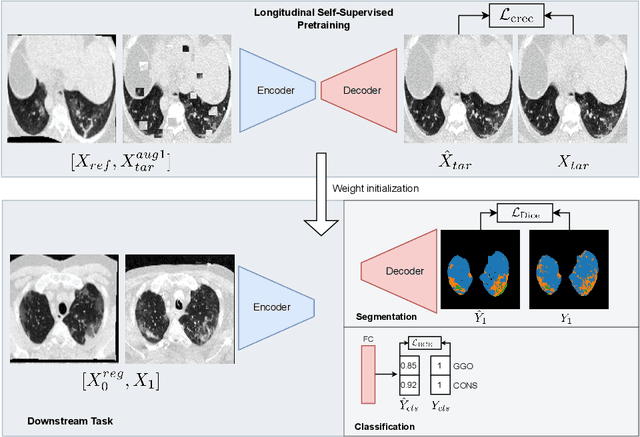
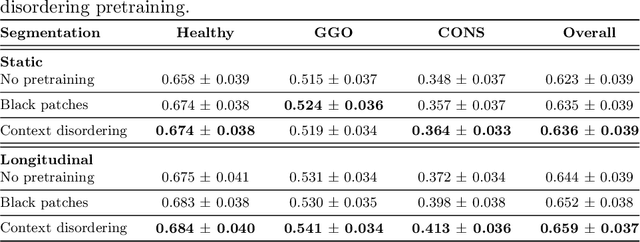
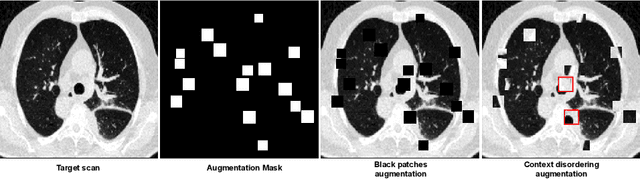

Quantifying COVID-19 infection over time is an important task to manage the hospitalization of patients during a global pandemic. Recently, deep learning-based approaches have been proposed to help radiologists automatically quantify COVID-19 pathologies on longitudinal CT scans. However, the learning process of deep learning methods demands extensive training data to learn the complex characteristics of infected regions over longitudinal scans. It is challenging to collect a large-scale dataset, especially for longitudinal training. In this study, we want to address this problem by proposing a new self-supervised learning method to effectively train longitudinal networks for the quantification of COVID-19 infections. For this purpose, longitudinal self-supervision schemes are explored on clinical longitudinal COVID-19 CT scans. Experimental results show that the proposed method is effective, helping the model better exploit the semantics of longitudinal data and improve two COVID-19 quantification tasks.