 Add to Chrome
 Add to Firefox
 Add to Edge
Machine-Type Communication Waveforms: An Exploration of New Dimensions
Jun 29, 2024


This paper derives a generalized class of waveforms with an application to machine-type communication (MTC) while studying its underlying structural characteristics in relation to conventional modulation waveforms. First, a canonical waveform of frequency-error tolerance is identified for a unified preamble and traffic signal design, ideal for MTC use as a composite waveform, commonly known as a transmission burst. It is shown that the most widely used modulation schemes for mIoT traffic signals, e.g., FSK and LoRa modulation, are simply subsets of the canonical waveform. The intrinsic characteristics and degrees of freedom the waveform offers are then explored. Most significantly, a new waveform dimension is uncovered and exploited as additional degrees of freedom for satisfying the MTC requirements, i.e., energy and resource efficiency and robustness. The corresponding benefits are evaluated analytically and numerically in AWGN, frequency-flat, and selective channels. We demonstrate that neither FSK nor LoRa can fully address the mIoT requirements since neither fully exploits the degrees of freedom from the perspective of the generalized waveform class. Finally, a solution is devised to optimize energy and resource efficiency under various deployment environments and practical constraints while maintaining the low-complexity property.

YuLan: An Open-source Large Language Model
Jun 28, 2024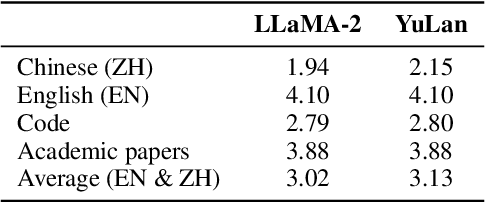

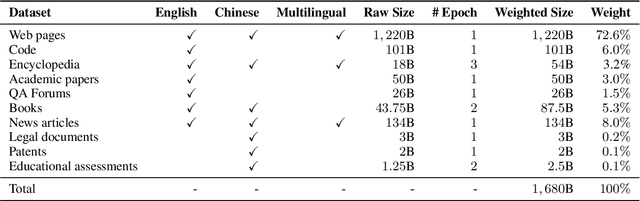

Large language models (LLMs) have become the foundation of many applications, leveraging their extensive capabilities in processing and understanding natural language. While many open-source LLMs have been released with technical reports, the lack of training details hinders further research and development. This paper presents the development of YuLan, a series of open-source LLMs with $12$ billion parameters. The base model of YuLan is pre-trained on approximately $1.7$T tokens derived from a diverse corpus, including massive English, Chinese, and multilingual texts. We design a three-stage pre-training method to enhance YuLan's overall capabilities. Subsequent phases of training incorporate instruction-tuning and human alignment, employing a substantial volume of high-quality synthesized data. To facilitate the learning of complex and long-tail knowledge, we devise a curriculum-learning framework throughout across these stages, which helps LLMs learn knowledge in an easy-to-hard manner. YuLan's training is finished on Jan, 2024 and has achieved performance on par with state-of-the-art LLMs across various English and Chinese benchmarks. This paper outlines a comprehensive technical roadmap for developing LLMs from scratch. Our model and codes are available at https://github.com/RUC-GSAI/YuLan-Chat.
T-MAC: CPU Renaissance via Table Lookup for Low-Bit LLM Deployment on Edge
Jun 25, 2024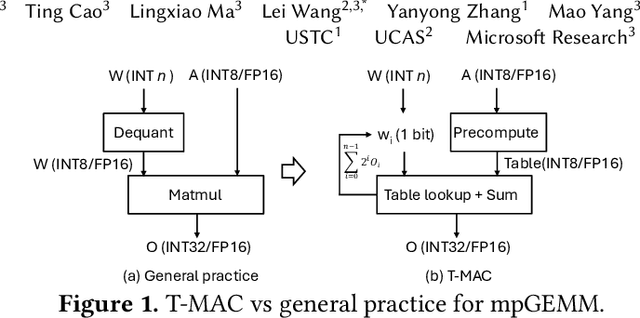
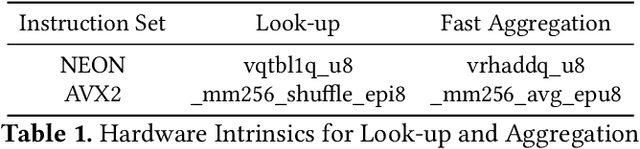
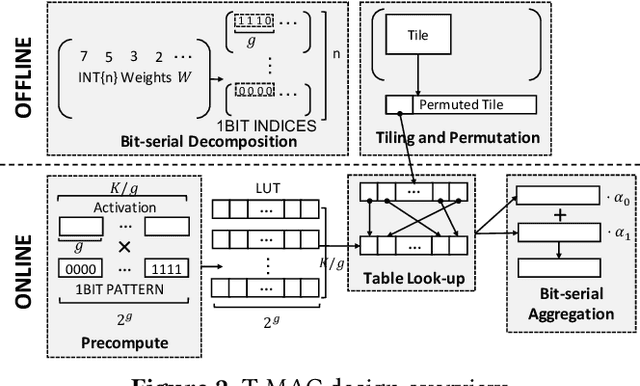
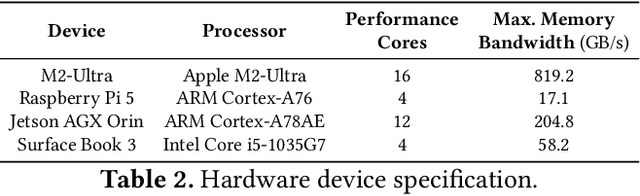
The deployment of Large Language Models (LLMs) on edge devices is increasingly important to enhance on-device intelligence. Weight quantization is crucial for reducing the memory footprint of LLMs on devices. However, low-bit LLMs necessitate mixed precision matrix multiplication (mpGEMM) of low precision weights and high precision activations during inference. Existing systems, lacking native support for mpGEMM, resort to dequantize weights for high precision computation. Such an indirect way can lead to a significant inference overhead. In this paper, we introduce T-MAC, an innovative lookup table(LUT)-based method designed for efficient low-bit LLM (i.e., weight-quantized LLM) inference on CPUs. T-MAC directly supports mpGEMM without dequantization, while simultaneously eliminating multiplications and reducing additions required. Specifically, T-MAC transforms the traditional data-type-centric multiplication to bit-wise table lookup, and enables a unified and scalable mpGEMM solution. Our LUT-based kernels scale linearly to the weight bit-width. Evaluated on low-bit Llama and BitNet models, T-MAC demonstrates up to 4x increase in throughput and 70% reduction in energy consumption compared to llama.cpp. For BitNet-b1.58-3B, T-MAC delivers a token generation throughput of 30 tokens/s with a single core and 71 tokens/s with eight cores on M2-Ultra, and 11 tokens/s on lower-end devices like Raspberry Pi 5, which significantly exceeds the adult average reading speed. T-MAC with LUT-based computing paradigm, paves the way for the practical deployment of low-bit LLMs on resource-constrained edge devices without compromising computational efficiency. The system is open-sourced at https://github.com/microsoft/T-MAC.
Compensate Quantization Errors: Make Weights Hierarchical to Compensate Each Other
Jun 24, 2024Emergent Large Language Models (LLMs) use their extraordinary performance and powerful deduction capacity to discern from traditional language models. However, the expenses of computational resources and storage for these LLMs are stunning, quantization then arises as a trending conversation. To address accuracy decay caused by quantization, two streams of works in post-training quantization methods stand out. One uses other weights to compensate existing quantization error, while the other transfers the quantization difficulty to other parts in the model. Combining both merits, we introduce Learnable Singular value Increment (LSI) as an advanced solution. LSI uses Singular Value Decomposition to extract singular values of the weights and make them learnable to help weights compensate each other conditioned on activation. Incorporating LSI with existing techniques, we achieve state-of-the-art performance in diverse quantization settings, no matter in weight-only, weight-activation or extremely low bit scenarios. By unleashing the potential of LSI, efficient finetuning on quantized model is no longer a prohibitive problem.
You Only Acquire Sparse-channel (YOAS): A Unified Framework for Dense-channel EEG Generation
Jun 21, 2024


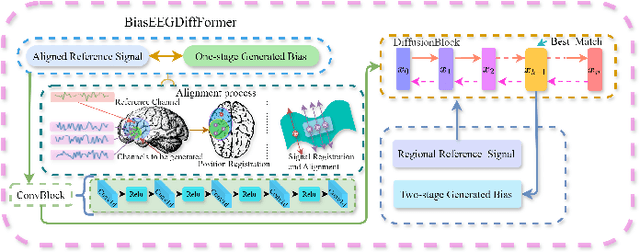
High-precision acquisition of dense-channel electroencephalogram (EEG) signals is often impeded by the costliness and lack of portability of equipment. In contrast, generating dense-channel EEG signals effectively from sparse channels shows promise and economic viability. However, sparse-channel EEG poses challenges such as reduced spatial resolution, information loss, signal mixing, and heightened susceptibility to noise and interference. To address these challenges, we first theoretically formulate the dense-channel EEG generation problem as by optimizing a set of cross-channel EEG signal generation problems. Then, we propose the YOAS framework for generating dense-channel data from sparse-channel EEG signals. The YOAS totally consists of four sequential stages: Data Preparation, Data Preprocessing, Biased-EEG Generation, and Synthetic EEG Generation. Data Preparation and Preprocessing carefully consider the distribution of EEG electrodes and low signal-to-noise ratio problem of EEG signals. Biased-EEG Generation includes sub-modules of BiasEEGGanFormer and BiasEEGDiffFormer, which facilitate long-term feature extraction with attention and generate signals by combining electrode position alignment with diffusion model, respectively. Synthetic EEG Generation synthesizes the final signals, employing a deduction paradigm for multi-channel EEG generation. Extensive experiments confirmed YOAS's feasibility, efficiency, and theoretical validity, even remarkably enhancing data discernibility. This breakthrough in dense-channel EEG signal generation from sparse-channel data opens new avenues for exploration in EEG signal processing and application.
STEMO: Early Spatio-temporal Forecasting with Multi-Objective Reinforcement Learning
Jun 18, 2024Accuracy and timeliness are indeed often conflicting goals in prediction tasks. Premature predictions may yield a higher rate of false alarms, whereas delaying predictions to gather more information can render them too late to be useful. In applications such as wildfires, crimes, and traffic jams, timely forecasting are vital for safeguarding human life and property. Consequently, finding a balance between accuracy and timeliness is crucial. In this paper, we propose an early spatio-temporal forecasting model based on Multi-Objective reinforcement learning that can either implement an optimal policy given a preference or infer the preference based on a small number of samples. The model addresses two primary challenges: 1) enhancing the accuracy of early forecasting and 2) providing the optimal policy for determining the most suitable prediction time for each area. Our method demonstrates superior performance on three large-scale real-world datasets, surpassing existing methods in early spatio-temporal forecasting tasks.
Unsupervised Monocular Depth Estimation Based on Hierarchical Feature-Guided Diffusion
Jun 14, 2024
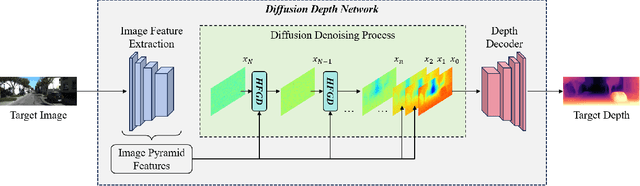
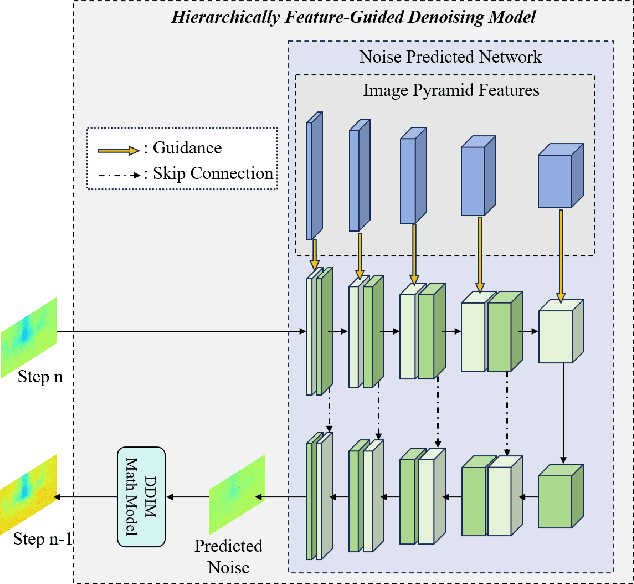
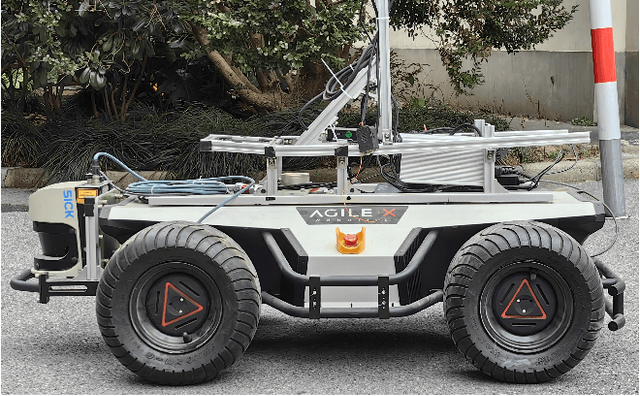
Unsupervised monocular depth estimation has received widespread attention because of its capability to train without ground truth. In real-world scenarios, the images may be blurry or noisy due to the influence of weather conditions and inherent limitations of the camera. Therefore, it is particularly important to develop a robust depth estimation model. Benefiting from the training strategies of generative networks, generative-based methods often exhibit enhanced robustness. In light of this, we employ a well-converging diffusion model among generative networks for unsupervised monocular depth estimation. Additionally, we propose a hierarchical feature-guided denoising module. This model significantly enriches the model's capacity for learning and interpreting depth distribution by fully leveraging image features to guide the denoising process. Furthermore, we explore the implicit depth within reprojection and design an implicit depth consistency loss. This loss function serves to enhance the performance of the model and ensure the scale consistency of depth within a video sequence. We conduct experiments on the KITTI, Make3D, and our self-collected SIMIT datasets. The results indicate that our approach stands out among generative-based models, while also showcasing remarkable robustness.
Spatio-temporal Early Prediction based on Multi-objective Reinforcement Learning
Jun 06, 2024Accuracy and timeliness are indeed often conflicting goals in prediction tasks. Premature predictions may yield a higher rate of false alarms, whereas delaying predictions to gather more information can render them too late to be useful. In applications such as wildfires, crimes, and traffic jams, timely predictions are vital for safeguarding human life and property. Consequently, finding a balance between accuracy and timeliness is crucial. In this paper, we propose a spatio-temporal early prediction model based on Multi-Objective reinforcement learning that can either implement an optimal policy given a preference or infer the preference based on a small number of samples. The model addresses two primary challenges: 1) enhancing the accuracy of early predictions and 2) providing the optimal policy for determining the most suitable prediction time for each area. Our method demonstrates superior performance on three large-scale real-world datasets, surpassing existing methods in early spatio-temporal prediction tasks.
NUMCoT: Numerals and Units of Measurement in Chain-of-Thought Reasoning using Large Language Models
Jun 05, 2024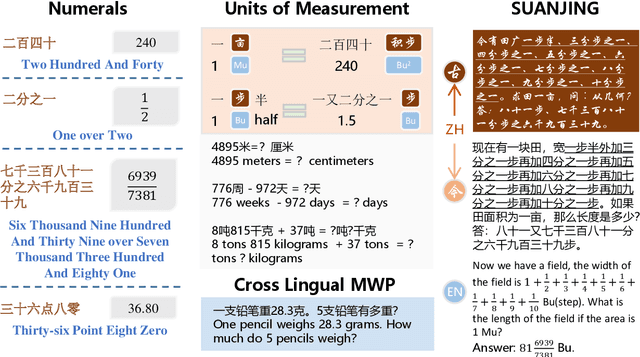
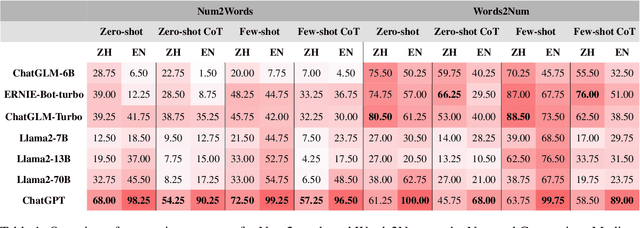
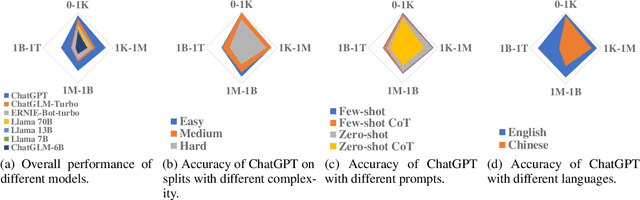
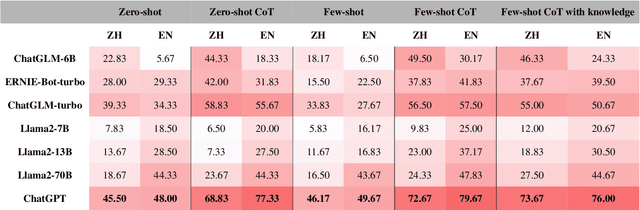
Numeral systems and units of measurement are two conjoined topics in activities of human beings and have mutual effects with the languages expressing them. Currently, the evaluation of Large Language Models (LLMs) often involves mathematical reasoning, yet little attention is given to how minor changes in numbers or units can drastically alter the complexity of problems and the performance of LLMs. In this paper, we scrutinize existing LLMs on processing of numerals and units of measurement by constructing datasets with perturbations. We first anatomize the reasoning of math word problems to different sub-procedures like numeral conversions from language to numbers and measurement conversions based on units. Then we further annotate math word problems from ancient Chinese arithmetic works which are challenging in numerals and units of measurement. Experiments on perturbed datasets demonstrate that LLMs still encounter difficulties in handling numeral and measurement conversions.
Information Leakage from Embedding in Large Language Models
May 22, 2024

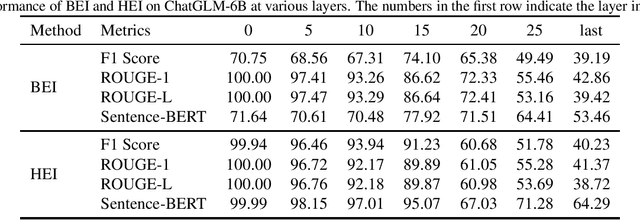
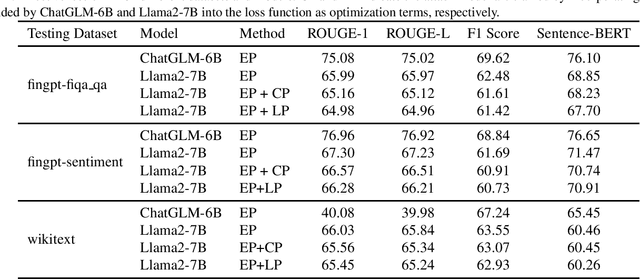
The widespread adoption of large language models (LLMs) has raised concerns regarding data privacy. This study aims to investigate the potential for privacy invasion through input reconstruction attacks, in which a malicious model provider could potentially recover user inputs from embeddings. We first propose two base methods to reconstruct original texts from a model's hidden states. We find that these two methods are effective in attacking the embeddings from shallow layers, but their effectiveness decreases when attacking embeddings from deeper layers. To address this issue, we then present Embed Parrot, a Transformer-based method, to reconstruct input from embeddings in deep layers. Our analysis reveals that Embed Parrot effectively reconstructs original inputs from the hidden states of ChatGLM-6B and Llama2-7B, showcasing stable performance across various token lengths and data distributions. To mitigate the risk of privacy breaches, we introduce a defense mechanism to deter exploitation of the embedding reconstruction process. Our findings emphasize the importance of safeguarding user privacy in distributed learning systems and contribute valuable insights to enhance the security protocols within such environments.