 Add to Chrome
 Add to Firefox
 Add to Edge
ABot-N1: Toward a General Visual Language Navigation Foundation Model
Jul 14, 2026
Visual Language Navigation foundation models aim to unify deep reasoning for grounded spatial decisions with broad versatility for diverse embodied tasks. Current approaches typically achieve this integration via monolithic policies that map observations directly to actions, yet they often suffer from coordinate drift and poor handling of long-tail semantics. Furthermore, these black-box mappings lack interpretability, hindering the simultaneous achievement of generality, robustness, and transparency. We present ABot-N1, a step toward a general Visual Language Navigation foundation model, that addresses these challenges by decoupling cognition from control via a slow-fast architecture guided by dual visual-language signals. More specifically, a slow vision-language reasoner performs explicit Chain-of-Thought reasoning while producing a pixel goal. This compact set of image-space anchor points serves as a universal interface for diverse tasks, including point-goal, object-goal, poi-goal, instruction-following, and person-following. Subsequently, a fast action expert leverages both the textual cues and the pixel guidance to generate continuous waypoints at the native control frequency. By bridging high-level intents and low-level control through pixel-grounded anchors paired with explicit linguistic traces, our approach ensures robust, generalizable, and interpretable navigation across simulation and real-world benchmarks. ABot-N1 establishes new state-of-the-art records, delivering massive gains specifically in urban-scale navigation: boosting POI arrival by 35.0% (to 77.3%) and achieving 95.4%/92.9% SR in complex indoor and outdoor scenes. It also maintains superior robustness across object-reaching, person-following, and instruction-following tasks. New Point-Goal/POI-Goal benchmarks are released as open source to advance the field of urban-scale navigation.

ABot-AgentOS: A General Robotic Agent OS with Lifelong Multi-modal Memory
Jul 11, 2026Recent VLM and VLA systems have improved robotic perception and action prediction, yet long-horizon embodied agents still require a general runtime layer for reasoning, memory, tool use, verification, and cross-embodiment execution. We present ABot-AgentOS, a general robotic Agent Operating System that sits above low-level controllers and provides a deliberative agent layer for scene-conditioned planning, context-isolated skill execution, multi-stage verification, multi-modal memory, and edge-cloud collaboration. To evaluate such systems, we introduce EmbodiedWorldBench, an executable benchmark with 16 indoor, outdoor, and hybrid scenes, four difficulty levels, and over 200 tasks involving navigation, object search, NPC dialogue, dynamic events, and trace-grounded scoring. ABot-AgentOS further introduces Universal Multi-modal Graph Memory, a persistent source-grounded substrate that converts dialogue, visual observations, spatial context, temporal relations, and task traces into typed nodes and edges. A failure-driven self-evolution loop converts diagnosed memory failures into gated runtime evo-assets that are promoted only to later evaluation splits, preventing current-split ground-truth leakage while enabling continual improvement. On an initial EmbodiedWorldBench subset, ABot-AgentOS improves over a single-controller baseline in both task success and goal completion. Across memory benchmarks, ABot-AgentOS Static achieves 87.5 on LoCoMo, 59.9 on OpenEQA EM-EQA, 88.6 on Mem-Gallery, and 76.5 Acc@All on NExT-QA; self-evolution further improves LoCoMo to 88.7, OpenEQA to 60.4, and Mem-Gallery to 89.0. These results suggest that a general Agent OS layer can improve long-horizon embodied execution while providing persistent, auditable memory for continual interaction.
ABot-N0: Technical Report on the VLA Foundation Model for Versatile Embodied Navigation
Feb 12, 2026Embodied navigation has long been fragmented by task-specific architectures. We introduce ABot-N0, a unified Vision-Language-Action (VLA) foundation model that achieves a ``Grand Unification'' across 5 core tasks: Point-Goal, Object-Goal, Instruction-Following, POI-Goal, and Person-Following. ABot-N0 utilizes a hierarchical ``Brain-Action'' architecture, pairing an LLM-based Cognitive Brain for semantic reasoning with a Flow Matching-based Action Expert for precise, continuous trajectory generation. To support large-scale learning, we developed the ABot-N0 Data Engine, curating 16.9M expert trajectories and 5.0M reasoning samples across 7,802 high-fidelity 3D scenes (10.7 $\text{km}^2$). ABot-N0 achieves new SOTA performance across 7 benchmarks, significantly outperforming specialized models. Furthermore, our Agentic Navigation System integrates a planner with hierarchical topological memory, enabling robust, long-horizon missions in dynamic real-world environments.
WorldGrow: Generating Infinite 3D World
Oct 24, 2025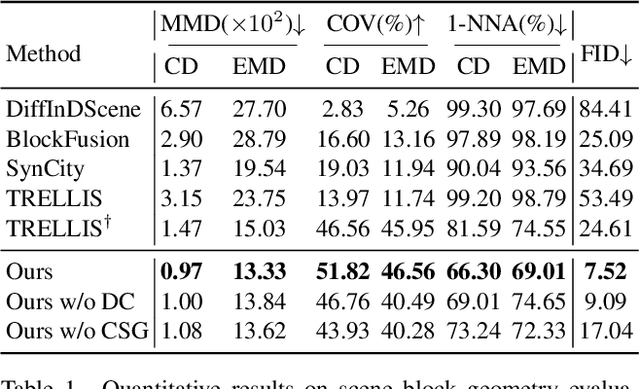
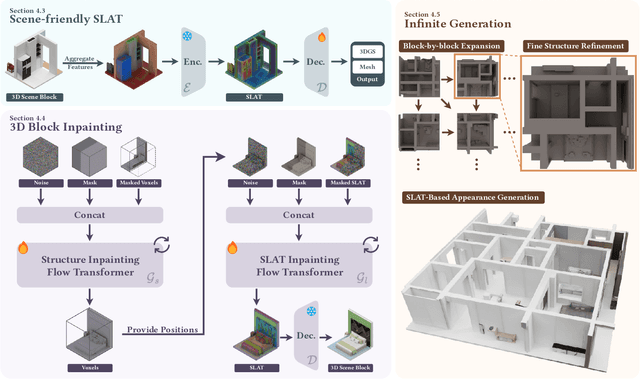
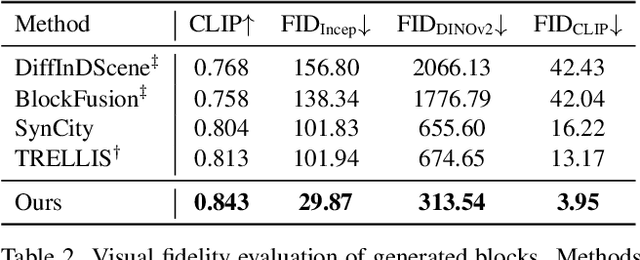
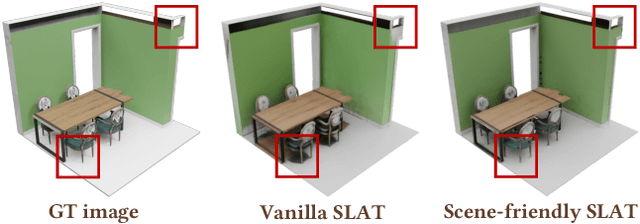
We tackle the challenge of generating the infinitely extendable 3D world -- large, continuous environments with coherent geometry and realistic appearance. Existing methods face key challenges: 2D-lifting approaches suffer from geometric and appearance inconsistencies across views, 3D implicit representations are hard to scale up, and current 3D foundation models are mostly object-centric, limiting their applicability to scene-level generation. Our key insight is leveraging strong generation priors from pre-trained 3D models for structured scene block generation. To this end, we propose WorldGrow, a hierarchical framework for unbounded 3D scene synthesis. Our method features three core components: (1) a data curation pipeline that extracts high-quality scene blocks for training, making the 3D structured latent representations suitable for scene generation; (2) a 3D block inpainting mechanism that enables context-aware scene extension; and (3) a coarse-to-fine generation strategy that ensures both global layout plausibility and local geometric/textural fidelity. Evaluated on the large-scale 3D-FRONT dataset, WorldGrow achieves SOTA performance in geometry reconstruction, while uniquely supporting infinite scene generation with photorealistic and structurally consistent outputs. These results highlight its capability for constructing large-scale virtual environments and potential for building future world models.
Snap-Snap: Taking Two Images to Reconstruct 3D Human Gaussians in Milliseconds
Aug 20, 2025Reconstructing 3D human bodies from sparse views has been an appealing topic, which is crucial to broader the related applications. In this paper, we propose a quite challenging but valuable task to reconstruct the human body from only two images, i.e., the front and back view, which can largely lower the barrier for users to create their own 3D digital humans. The main challenges lie in the difficulty of building 3D consistency and recovering missing information from the highly sparse input. We redesign a geometry reconstruction model based on foundation reconstruction models to predict consistent point clouds even input images have scarce overlaps with extensive human data training. Furthermore, an enhancement algorithm is applied to supplement the missing color information, and then the complete human point clouds with colors can be obtained, which are directly transformed into 3D Gaussians for better rendering quality. Experiments show that our method can reconstruct the entire human in 190 ms on a single NVIDIA RTX 4090, with two images at a resolution of 1024x1024, demonstrating state-of-the-art performance on the THuman2.0 and cross-domain datasets. Additionally, our method can complete human reconstruction even with images captured by low-cost mobile devices, reducing the requirements for data collection. Demos and code are available at https://hustvl.github.io/Snap-Snap/.
You Only Acquire Sparse-channel (YOAS): A Unified Framework for Dense-channel EEG Generation
Jun 21, 2024


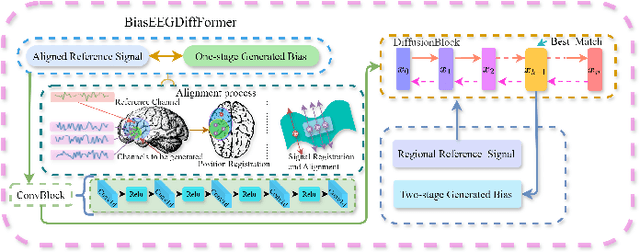
High-precision acquisition of dense-channel electroencephalogram (EEG) signals is often impeded by the costliness and lack of portability of equipment. In contrast, generating dense-channel EEG signals effectively from sparse channels shows promise and economic viability. However, sparse-channel EEG poses challenges such as reduced spatial resolution, information loss, signal mixing, and heightened susceptibility to noise and interference. To address these challenges, we first theoretically formulate the dense-channel EEG generation problem as by optimizing a set of cross-channel EEG signal generation problems. Then, we propose the YOAS framework for generating dense-channel data from sparse-channel EEG signals. The YOAS totally consists of four sequential stages: Data Preparation, Data Preprocessing, Biased-EEG Generation, and Synthetic EEG Generation. Data Preparation and Preprocessing carefully consider the distribution of EEG electrodes and low signal-to-noise ratio problem of EEG signals. Biased-EEG Generation includes sub-modules of BiasEEGGanFormer and BiasEEGDiffFormer, which facilitate long-term feature extraction with attention and generate signals by combining electrode position alignment with diffusion model, respectively. Synthetic EEG Generation synthesizes the final signals, employing a deduction paradigm for multi-channel EEG generation. Extensive experiments confirmed YOAS's feasibility, efficiency, and theoretical validity, even remarkably enhancing data discernibility. This breakthrough in dense-channel EEG signal generation from sparse-channel data opens new avenues for exploration in EEG signal processing and application.
MLPSVM:A new parallel support vector machine to multi-label learning
Apr 13, 2020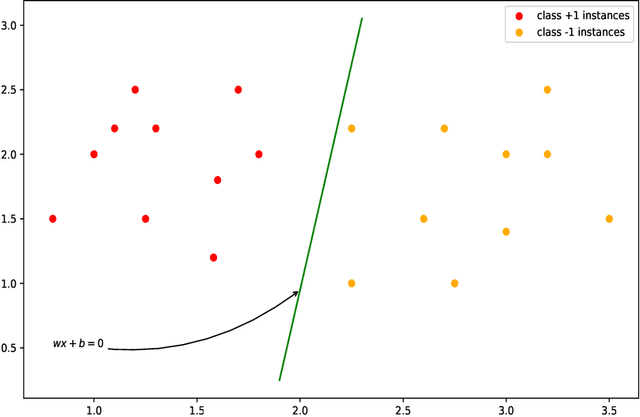
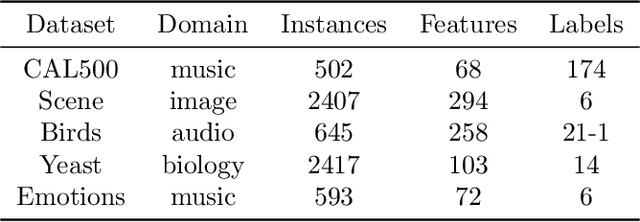
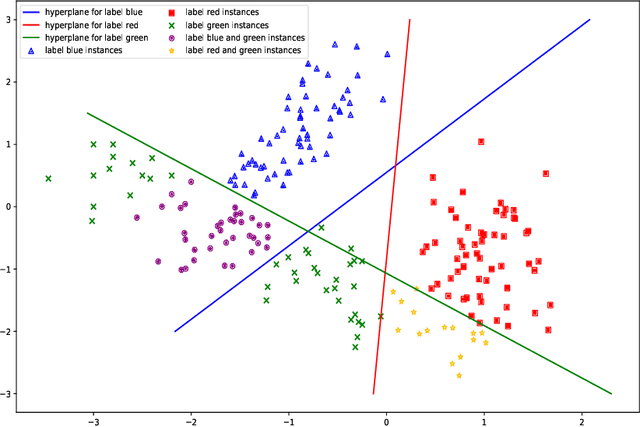
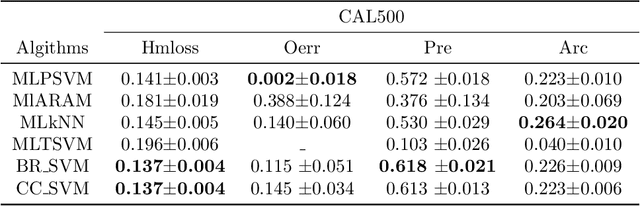
Multi-label learning has attracted the attention of the machine learning community. The problem conversion method Binary Relevance converts a familiar single label into a multi-label algorithm. The binary relevance method is widely used because of its simple structure and efficient algorithm. But binary relevance does not consider the links between labels, making it cumbersome to handle some tasks. This paper proposes a multi-label learning algorithm that can also be used for single-label classification. It is based on standard support vector machines and changes the original single decision hyperplane into two parallel decision hyper-planes, which call multi-label parallel support vector machine (MLPSVM). At the end of the article, MLPSVM is compared with other multi-label learning algorithms. The experimental results show that the algorithm performs well on data sets.
ZerNet: Convolutional Neural Networks on Arbitrary Surfaces via Zernike Local Tangent Space Estimation
Dec 03, 2018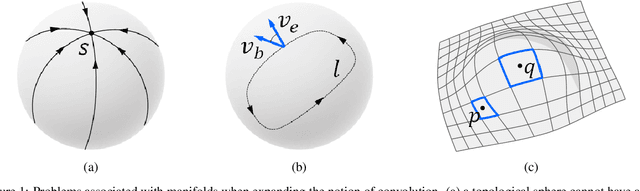
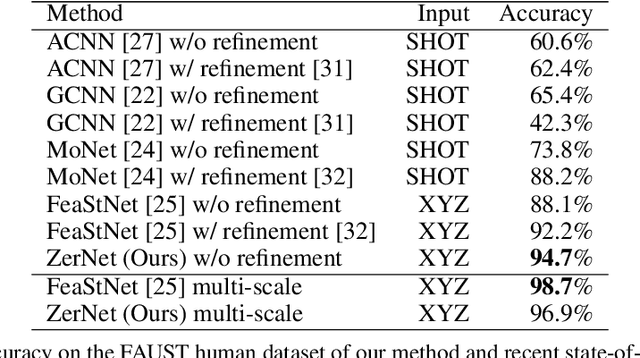
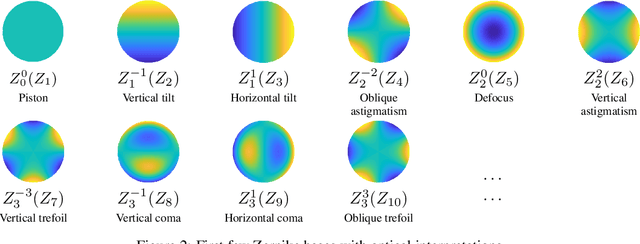
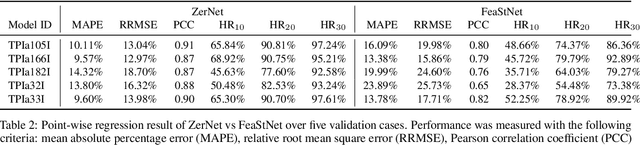
The research community has observed a massive success of convolutional neural networks (CNN) in visual recognition tasks. Such powerful CNNs, however, do not generalize well to arbitrary-shaped mainfold domains. Thus, still many visual recognition problems defined on arbitrary manifolds cannot benefit much from the success of CNNs, if at all. Technical difficulties hindering generalization of CNNs are rooted in the lack of a canonical grid-like representation, the notion of consistent orientation, and a compatible local topology across the domain. Unfortunately, except for a few pioneering works, only very little has been studied in this regard. To this end, in this paper, we propose a novel mathematical formulation to extend CNNs onto two-dimensional (2D) manifold domains. More specifically, we approximate a tensor field defined over a manifold using orthogonal basis functions, called Zernike polynomials, on local tangent spaces. We prove that the convolution of two functions can be represented as a simple dot product between Zernike polynomial coefficients. We also prove that a rotation of a convolution kernel equates to a 2 by 2 rotation matrix applied to Zernike polynomial coefficients, which can be critical in manifold domains. As such, the key contribution of this work resides in a concise but rigorous mathematical generalization of the CNN building blocks. Furthermore, comparative to the other state-of-the-art methods, our method demonstrates substantially better performance on both classification and regression tasks.
Wall Stress Estimation of Cerebral Aneurysm based on Zernike Convolutional Neural Networks
Jun 20, 2018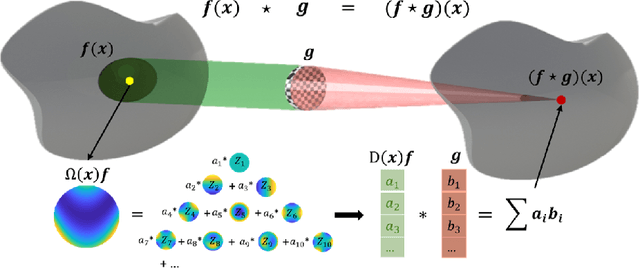
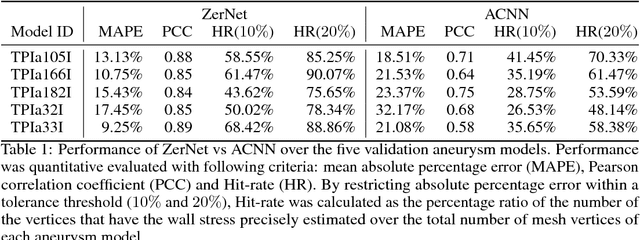
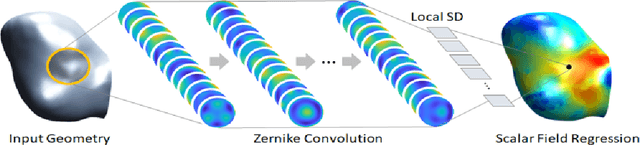
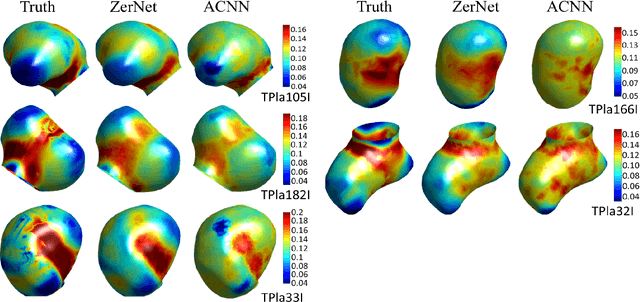
Convolutional neural networks (ConvNets) have demonstrated an exceptional capacity to discern visual patterns from digital images and signals. Unfortunately, such powerful ConvNets do not generalize well to arbitrary-shaped manifolds, where data representation does not fit into a tensor-like grid. Hence, many fields of science and engineering, where data points possess some manifold structure, cannot enjoy the full benefits of the recent advances in ConvNets. The aneurysm wall stress estimation problem introduced in this paper is one of many such problems. The problem is well-known to be of a paramount clinical importance, but yet, traditional ConvNets cannot be applied due to the manifold structure of the data, neither does the state-of-the-art geometric ConvNets perform well. Motivated by this, we propose a new geometric ConvNet method named ZerNet, which builds upon our novel mathematical generalization of convolution and pooling operations on manifolds. Our study shows that the ZerNet outperforms the other state-of-the-art geometric ConvNets in terms of accuracy.