 Add to Chrome
 Add to Firefox
 Add to Edge
VLM- and LLM-Driven Multi-Agent System for PET Image Denoising
Aug 13, 2026
Positron emission tomography (PET) imaging suffers from limited spatial resolution and low signal-to-noise ratio, which can compromise quantitative accuracy and lesion detectability. Deep learning-based denoising methods have demonstrated strong potential for improving PET image quality. However, their practical deployment in real-world settings remains challenging, often requiring multiple specialized models and expert interventions, such as identifying motion-induced misregistration artifacts, estimating noise levels to select an appropriate denoiser, and performing lesion-focused quantitative assessment after denoising. Recent advances in vision-language models (VLMs) for image quality understanding and large language models (LLMs) for contextual reasoning provide new opportunities for automated, decision-driven workflows. Inspired by expert workflows for PET image quality enhancement, we propose an VLM- and LLM-driven multi-agent PET denoising framework that dynamically assesses image quality and lesion status, autonomously selects optimal denoising models and parameters, and enables closed-loop feedback with rollback mechanisms. Experiments were conducted on Siemens Biograph Vision Quadra PET/CT data with 1/20 and 1/50 low-dose settings. Individual module evaluations demonstrated the reliability of the agentic components, while the complete framework achieved higher PSNR and SSIM than UNet, GAN, and DDPM baselines at both dose levels. These preliminary results demonstrate the feasibility of using a closed-loop multi-agent framework to adapt PET denoising strategies to different image conditions.

CT-Conditioned Diffusion Prior with Physics-Constrained Sampling for PET Super-Resolution
Mar 14, 2026PET super-resolution is highly under-constrained because paired multi-resolution scans from the same subject are rarely available, and effective resolution is determined by scanner-specific physics (e.g., PSF, detector geometry, and acquisition settings). This limits supervised end-to-end training and makes purely image-domain generative restoration prone to hallucinated structures when anatomical and physical constraints are weak. We formulate PET super-resolution as posterior inference under heterogeneous system configurations and propose a CT-conditioned diffusion framework with physics-constrained sampling. During training, a conditional diffusion prior is learned from high-quality PET/CT pairs using cross-attention for anatomical guidance, without requiring paired LR--HR PET data. During inference, measurement consistency is enforced through a scanner-aware forward model with explicit PSF effects and gradient-based data-consistency refinement. Under both standard and OOD settings, the proposed method consistently improves experimental metrics and lesion-level clinical relevance indicators over strong baselines, while reducing hallucination artifacts and improving structural fidelity.
TheraAgent: Multi-Agent Framework with Self-Evolving Memory and Evidence-Calibrated Reasoning for PET Theranostics
Mar 14, 2026PET theranostics is transforming precision oncology, yet treatment response varies substantially; many patients receiving 177Lu-PSMA radioligand therapy (RLT) for metastatic castration-resistant prostate cancer (mCRPC) fail to respond, demanding reliable pre-therapy prediction. While LLM-based agents have shown remarkable potential in complex medical diagnosis, their application to PET theranostic outcome prediction remains unexplored, which faces three key challenges: (1) data and knowledge scarcity: RLT was only FDA-approved in 2022, yielding few training cases and insufficient domain knowledge in general LLMs; (2) heterogeneous information integration: robust prediction hinges on structured knowledge extraction from PET/CT, laboratory tests, and free-text clinical documentation; (3) evidence-grounded reasoning: clinical decisions must be anchored in trial evidence rather than LLM hallucinations. In this paper, we present TheraAgent, to our knowledge, the first agentic framework for PET theranostics, with three core innovations: (1) Multi-Expert Feature Extraction with Confidence-Weighted Consensus, where three specialized experts process heterogeneous inputs with uncertainty quantification; (2) Self-Evolving Agentic Memory (SEA-Mem), which learns prognostic patterns from accumulated cases, enabling case-based reasoning from limited data; (3) Evidence-Calibrated Reasoning, integrating a curated theranostics knowledge base to ground predictions in VISION/TheraP trial evidence. Evaluated on 35 real patients and 400 synthetic cases, TheraAgent achieves 75.7% overall accuracy on real patients and 87.0% on synthetic cases, outperforming MDAgents and MedAgent-Pro by over 20%. These results highlight a promising blueprint for trustworthy AI agents in PET theranostics, enabling trial-calibrated, multi-source decision support. Code will be released upon acceptance.
Developing Foundation Models for Universal Segmentation from 3D Whole-Body Positron Emission Tomography
Mar 12, 2026Positron emission tomography (PET) is a key nuclear medicine imaging modality that visualizes radiotracer distributions to quantify in vivo physiological and metabolic processes, playing an irreplaceable role in disease management. Despite its clinical importance, the development of deep learning models for quantitative PET image analysis remains severely limited, driven by both the inherent segmentation challenge from PET's paucity of anatomical contrast and the high costs of data acquisition and annotation. To bridge this gap, we develop generalist foundational models for universal segmentation from 3D whole-body PET imaging. We first build the largest and most comprehensive PET dataset to date, comprising 11041 3D whole-body PET scans with 59831 segmentation masks for model development. Based on this dataset, we present SegAnyPET, an innovative foundational model with general-purpose applicability to diverse segmentation tasks. Built on a 3D architecture with a prompt engineering strategy for mask generation, SegAnyPET enables universal and scalable organ and lesion segmentation, supports efficient human correction with minimal effort, and enables a clinical human-in-the-loop workflow. Extensive evaluations on multi-center, multi-tracer, multi-disease datasets demonstrate that SegAnyPET achieves strong zero-shot performance across a wide range of segmentation tasks, highlighting its potential to advance the clinical applications of molecular imaging.
DECADE: A Temporally-Consistent Unsupervised Diffusion Model for Enhanced Rb-82 Dynamic Cardiac PET Image Denoising
Mar 08, 2026Rb-82 dynamic cardiac PET imaging is widely used for the clinical diagnosis of coronary artery disease (CAD), but its short half-life results in high noise levels that degrade dynamic frame quality and parametric imaging. The lack of paired clean-noisy training data, rapid tracer kinetics, and frame-dependent noise variations further limit the effectiveness of existing deep learning denoising methods. We propose DECADE (A Temporally-Consistent Unsupervised Diffusion model for Enhanced Rb-82 CArdiac PET DEnoising), an unsupervised diffusion framework that generalizes across early- to late-phase dynamic frames. DECADE incorporates temporal consistency during both training and iterative sampling, using noisy frames as guidance to preserve quantitative accuracy. The method was trained and evaluated on datasets acquired from Siemens Vision 450 and Siemens Biograph Vision Quadra scanners. On the Vision 450 dataset, DECADE consistently produced high-quality dynamic and parametric images with reduced noise while preserving myocardial blood flow (MBF) and myocardial flow reserve (MFR). On the Quadra dataset, using 15%-count images as input and full-count images as reference, DECADE outperformed UNet-based and other diffusion models in image quality and K1/MBF quantification. The proposed framework enables effective unsupervised denoising of Rb-82 dynamic cardiac PET without paired training data, supporting clearer visualization while maintaining quantitative integrity.
Artificial intelligence for simplified patient-centered dosimetry in radiopharmaceutical therapies
Oct 14, 2025KEY WORDS: Artificial Intelligence (AI), Theranostics, Dosimetry, Radiopharmaceutical Therapy (RPT), Patient-friendly dosimetry KEY POINTS - The rapid evolution of radiopharmaceutical therapy (RPT) highlights the growing need for personalized and patient-centered dosimetry. - Artificial Intelligence (AI) offers solutions to the key limitations in current dosimetry calculations. - The main advances on AI for simplified dosimetry toward patient-friendly RPT are reviewed. - Future directions on the role of AI in RPT dosimetry are discussed.
Fed-NDIF: A Noise-Embedded Federated Diffusion Model For Low-Count Whole-Body PET Denoising
Mar 20, 2025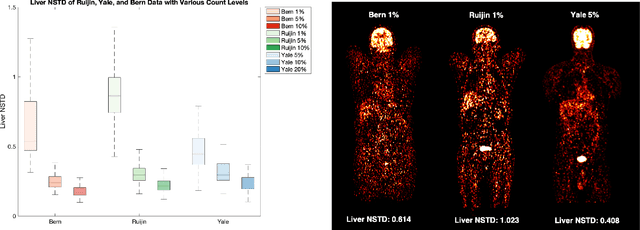
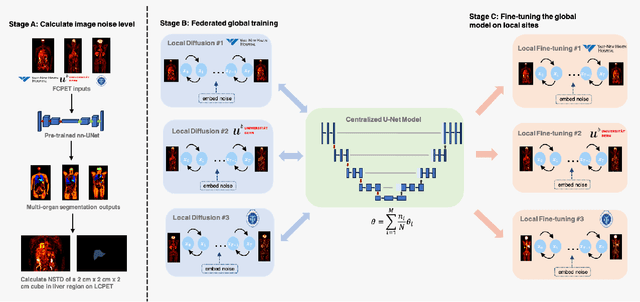
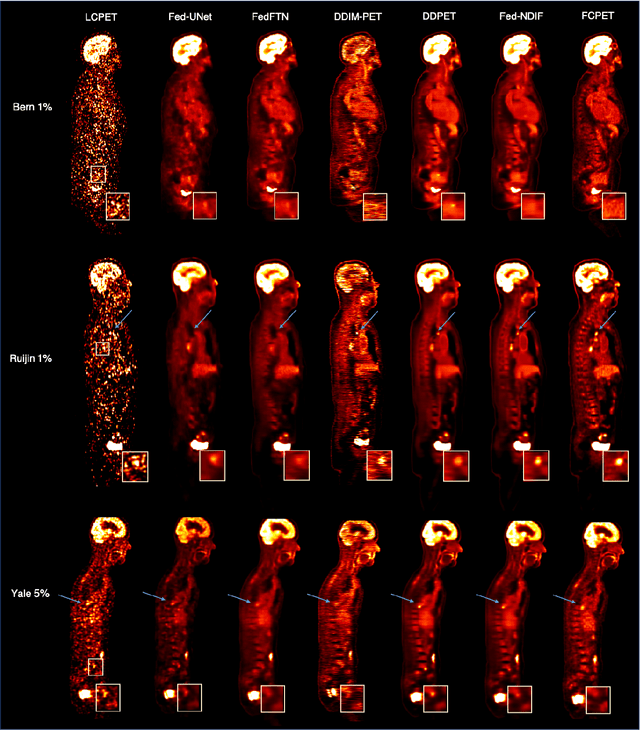
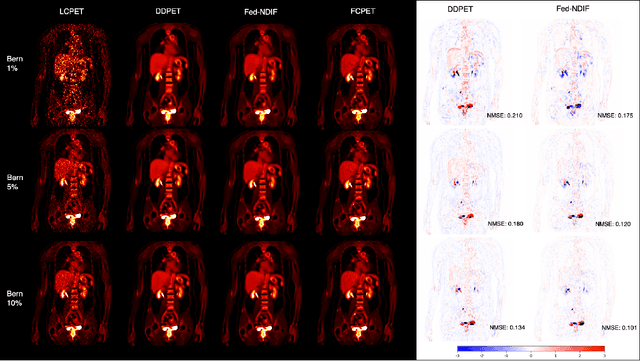
Low-count positron emission tomography (LCPET) imaging can reduce patients' exposure to radiation but often suffers from increased image noise and reduced lesion detectability, necessitating effective denoising techniques. Diffusion models have shown promise in LCPET denoising for recovering degraded image quality. However, training such models requires large and diverse datasets, which are challenging to obtain in the medical domain. To address data scarcity and privacy concerns, we combine diffusion models with federated learning -- a decentralized training approach where models are trained individually at different sites, and their parameters are aggregated on a central server over multiple iterations. The variation in scanner types and image noise levels within and across institutions poses additional challenges for federated learning in LCPET denoising. In this study, we propose a novel noise-embedded federated learning diffusion model (Fed-NDIF) to address these challenges, leveraging a multicenter dataset and varying count levels. Our approach incorporates liver normalized standard deviation (NSTD) noise embedding into a 2.5D diffusion model and utilizes the Federated Averaging (FedAvg) algorithm to aggregate locally trained models into a global model, which is subsequently fine-tuned on local datasets to optimize performance and obtain personalized models. Extensive validation on datasets from the University of Bern, Ruijin Hospital in Shanghai, and Yale-New Haven Hospital demonstrates the superior performance of our method in enhancing image quality and improving lesion quantification. The Fed-NDIF model shows significant improvements in PSNR, SSIM, and NMSE of the entire 3D volume, as well as enhanced lesion detectability and quantification, compared to local diffusion models and federated UNet-based models.
Semi-Supervised Learning for Dose Prediction in Targeted Radionuclide: A Synthetic Data Study
Mar 07, 2025Targeted Radionuclide Therapy (TRT) is a modern strategy in radiation oncology that aims to administer a potent radiation dose specifically to cancer cells using cancer-targeting radiopharmaceuticals. Accurate radiation dose estimation tailored to individual patients is crucial. Deep learning, particularly with pre-therapy imaging, holds promise for personalizing TRT doses. However, current methods require large time series of SPECT imaging, which is hardly achievable in routine clinical practice, and thus raises issues of data availability. Our objective is to develop a semi-supervised learning (SSL) solution to personalize dosimetry using pre-therapy images. The aim is to develop an approach that achieves accurate results when PET/CT images are available, but are associated with only a few post-therapy dosimetry data provided by SPECT images. In this work, we introduce an SSL method using a pseudo-label generation approach for regression tasks inspired by the FixMatch framework. The feasibility of the proposed solution was preliminarily evaluated through an in-silico study using synthetic data and Monte Carlo simulation. Experimental results for organ dose prediction yielded promising outcomes, showing that the use of pseudo-labeled data provides better accuracy compared to using only labeled data.
Developing a PET/CT Foundation Model for Cross-Modal Anatomical and Functional Imaging
Mar 04, 2025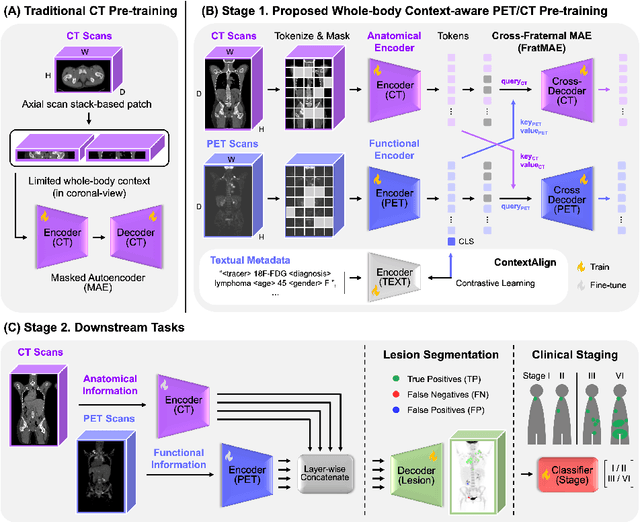
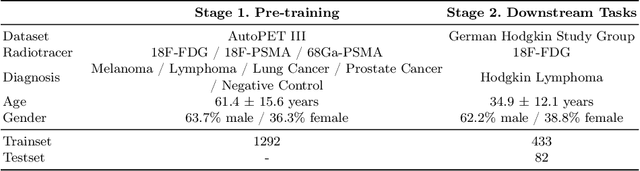

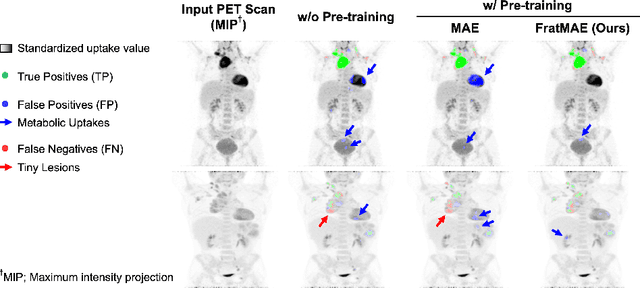
In oncology, Positron Emission Tomography-Computed Tomography (PET/CT) is widely used in cancer diagnosis, staging, and treatment monitoring, as it combines anatomical details from CT with functional metabolic activity and molecular marker expression information from PET. However, existing artificial intelligence-driven PET/CT analyses rely predominantly on task-specific models trained from scratch or on limited datasets, limiting their generalizability and robustness. To address this, we propose a foundation model approach specifically designed for multimodal PET/CT imaging. We introduce the Cross-Fraternal Twin Masked Autoencoder (FratMAE), a novel framework that effectively integrates whole-body anatomical and functional or molecular information. FratMAE employs separate Vision Transformer (ViT) encoders for PET and CT scans, along with cross-attention decoders that enable synergistic interactions between modalities during masked autoencoder training. Additionally, it incorporates textual metadata to enhance PET representation learning. By pre-training on PET/CT datasets, FratMAE captures intricate cross-modal relationships and global uptake patterns, achieving superior performance on downstream tasks and demonstrating its potential as a generalizable foundation model.
PET Image Denoising via Text-Guided Diffusion: Integrating Anatomical Priors through Text Prompts
Feb 28, 2025Low-dose Positron Emission Tomography (PET) imaging presents a significant challenge due to increased noise and reduced image quality, which can compromise its diagnostic accuracy and clinical utility. Denoising diffusion probabilistic models (DDPMs) have demonstrated promising performance for PET image denoising. However, existing DDPM-based methods typically overlook valuable metadata such as patient demographics, anatomical information, and scanning parameters, which should further enhance the denoising performance if considered. Recent advances in vision-language models (VLMs), particularly the pre-trained Contrastive Language-Image Pre-training (CLIP) model, have highlighted the potential of incorporating text-based information into visual tasks to improve downstream performance. In this preliminary study, we proposed a novel text-guided DDPM for PET image denoising that integrated anatomical priors through text prompts. Anatomical text descriptions were encoded using a pre-trained CLIP text encoder to extract semantic guidance, which was then incorporated into the diffusion process via the cross-attention mechanism. Evaluations based on paired 1/20 low-dose and normal-dose 18F-FDG PET datasets demonstrated that the proposed method achieved better quantitative performance than conventional UNet and standard DDPM methods at both the whole-body and organ levels. These results underscored the potential of leveraging VLMs to integrate rich metadata into the diffusion framework to enhance the image quality of low-dose PET scans.