 Add to Chrome
 Add to Firefox
 Add to Edge
Constrained Sampling to Guide Universal Manipulation RL
Feb 09, 2026
We consider how model-based solvers can be leveraged to guide training of a universal policy to control from any feasible start state to any feasible goal in a contact-rich manipulation setting. While Reinforcement Learning (RL) has demonstrated its strength in such settings, it may struggle to sufficiently explore and discover complex manipulation strategies, especially in sparse-reward settings. Our approach is based on the idea of a lower-dimensional manifold of feasible, likely-visited states during such manipulation and to guide RL with a sampler from this manifold. We propose Sample-Guided RL, which uses model-based constraint solvers to efficiently sample feasible configurations (satisfying differentiable collision, contact, and force constraints) and leverage them to guide RL for universal (goal-conditioned) manipulation policies. We study using this data directly to bias state visitation, as well as using black-box optimization of open-loop trajectories between random configurations to impose a state bias and optionally add a behavior cloning loss. In a minimalistic double sphere manipulation setting, Sample-Guided RL discovers complex manipulation strategies and achieves high success rates in reaching any statically stable state. In a more challenging panda arm setting, our approach achieves a significant success rate over a near-zero baseline, and demonstrates a breadth of complex whole-body-contact manipulation strategies.

Variance-Reduced Model Predictive Path Integral via Quadratic Model Approximation
Feb 03, 2026Sampling-based controllers, such as Model Predictive Path Integral (MPPI) methods, offer substantial flexibility but often suffer from high variance and low sample efficiency. To address these challenges, we introduce a hybrid variance-reduced MPPI framework that integrates a prior model into the sampling process. Our key insight is to decompose the objective function into a known approximate model and a residual term. Since the residual captures only the discrepancy between the model and the objective, it typically exhibits a smaller magnitude and lower variance than the original objective. Although this principle applies to general modeling choices, we demonstrate that adopting a quadratic approximation enables the derivation of a closed-form, model-guided prior that effectively concentrates samples in informative regions. Crucially, the framework is agnostic to the source of geometric information, allowing the quadratic model to be constructed from exact derivatives, structural approximations (e.g., Gauss- or Quasi-Newton), or gradient-free randomized smoothing. We validate the approach on standard optimization benchmarks, a nonlinear, underactuated cart-pole control task, and a contact-rich manipulation problem with non-smooth dynamics. Across these domains, we achieve faster convergence and superior performance in low-sample regimes compared to standard MPPI. These results suggest that the method can make sample-based control strategies more practical in scenarios where obtaining samples is expensive or limited.
Frictional Contact Solving for Material Point Method
Feb 02, 2026Accurately handling contact with friction remains a core bottleneck for Material Point Method (MPM), from reliable contact point detection to enforcing frictional contact laws (non-penetration, Coulomb friction, and maximum dissipation principle). In this paper, we introduce a frictional-contact pipeline for implicit MPM that is both precise and robust. During the collision detection phase, contact points are localized with particle-centric geometric primitives; during the contact resolution phase, we cast frictional contact as a Nonlinear Complementarity Problem (NCP) over contact impulses and solve it with an Alternating Direction Method of Multipliers (ADMM) scheme. Crucially, the formulation reuses the same implicit MPM linearization, yielding efficiency and numerical stability. The method integrates seamlessly into the implicit MPM loop and is agnostic to modeling choices, including material laws, interpolation functions, and transfer schemes. We evaluate it across seven representative scenes that span elastic and elasto-plastic responses, simple and complex deformable geometries, and a wide range of contact conditions. Overall, the proposed method enables accurate contact localization, reliable frictional handling, and broad generality, making it a practical solution for MPM-based simulations in robotics and related domains.
KernelSOS for Global Sampling-Based Optimal Control and Estimation via Semidefinite Programming
Jul 23, 2025Global optimization has gained attraction over the past decades, thanks to the development of both theoretical foundations and efficient numerical routines to cope with optimization problems of various complexities. Among recent methods, Kernel Sum of Squares (KernelSOS) appears as a powerful framework, leveraging the potential of sum of squares methods from the polynomial optimization community with the expressivity of kernel methods widely used in machine learning. This paper applies the kernel sum of squares framework for solving control and estimation problems, which exhibit poor local minima. We demonstrate that KernelSOS performs well on a selection of problems from both domains. In particular, we show that KernelSOS is competitive with other sum of squares approaches on estimation problems, while being applicable to non-polynomial and non-parametric formulations. The sample-based nature of KernelSOS allows us to apply it to trajectory optimization problems with an integrated simulator treated as a black box, both as a standalone method and as a powerful initialization method for local solvers, facilitating the discovery of better solutions.
Multi-step manipulation task and motion planning guided by video demonstration
May 13, 2025This work aims to leverage instructional video to solve complex multi-step task-and-motion planning tasks in robotics. Towards this goal, we propose an extension of the well-established Rapidly-Exploring Random Tree (RRT) planner, which simultaneously grows multiple trees around grasp and release states extracted from the guiding video. Our key novelty lies in combining contact states and 3D object poses extracted from the guiding video with a traditional planning algorithm that allows us to solve tasks with sequential dependencies, for example, if an object needs to be placed at a specific location to be grasped later. We also investigate the generalization capabilities of our approach to go beyond the scene depicted in the instructional video. To demonstrate the benefits of the proposed video-guided planning approach, we design a new benchmark with three challenging tasks: (I) 3D re-arrangement of multiple objects between a table and a shelf, (ii) multi-step transfer of an object through a tunnel, and (iii) transferring objects using a tray similar to a waiter transfers dishes. We demonstrate the effectiveness of our planning algorithm on several robots, including the Franka Emika Panda and the KUKA KMR iiwa. For a seamless transfer of the obtained plans to the real robot, we develop a trajectory refinement approach formulated as an optimal control problem (OCP).
Optimal Control of Walkers with Parallel Actuation
Apr 01, 2025Legged robots with closed-loop kinematic chains are increasingly prevalent due to their increased mobility and efficiency. Yet, most motion generation methods rely on serial-chain approximations, sidestepping their specific constraints and dynamics. This leads to suboptimal motions and limits the adaptability of these methods to diverse kinematic structures. We propose a comprehensive motion generation method that explicitly incorporates closed-loop kinematics and their associated constraints in an optimal control problem, integrating kinematic closure conditions and their analytical derivatives. This allows the solver to leverage the non-linear transmission effects inherent to closed-chain mechanisms, reducing peak actuator efforts and expanding their effective operating range. Unlike previous methods, our framework does not require serial approximations, enabling more accurate and efficient motion strategies. We also are able to generate the motion of more complex robots for which an approximate serial chain does not exist. We validate our approach through simulations and experiments, demonstrating superior performance in complex tasks such as rapid locomotion and stair negotiation. This method enhances the capabilities of current closed-loop robots and broadens the design space for future kinematic architectures.
PhysPose: Refining 6D Object Poses with Physical Constraints
Mar 30, 2025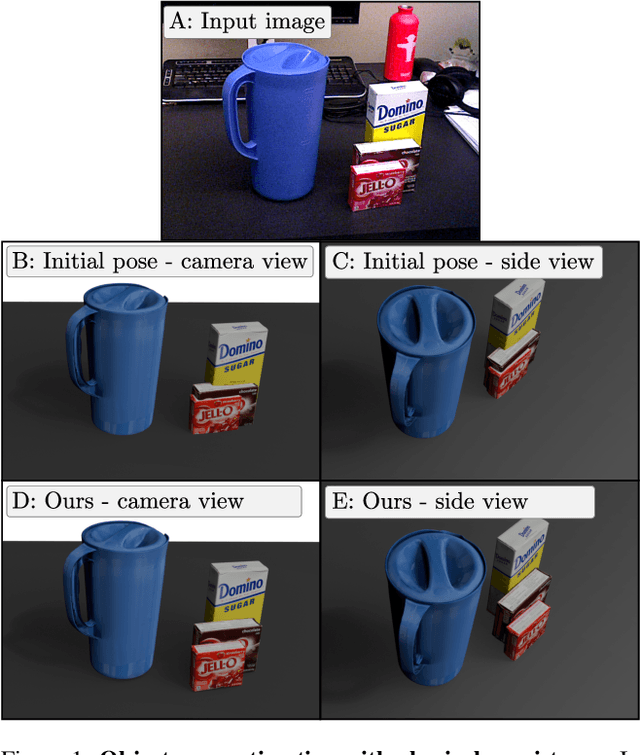
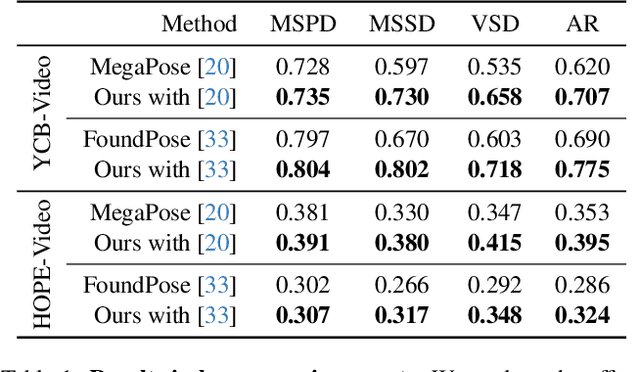
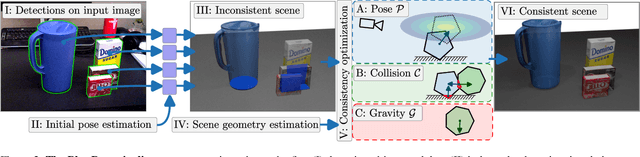
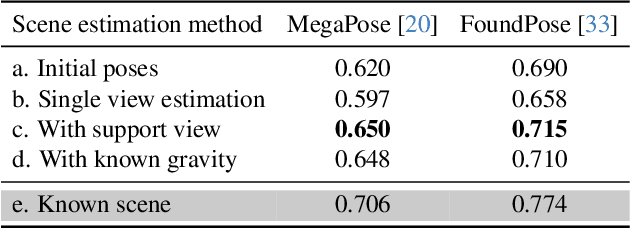
Accurate 6D object pose estimation from images is a key problem in object-centric scene understanding, enabling applications in robotics, augmented reality, and scene reconstruction. Despite recent advances, existing methods often produce physically inconsistent pose estimates, hindering their deployment in real-world scenarios. We introduce PhysPose, a novel approach that integrates physical reasoning into pose estimation through a postprocessing optimization enforcing non-penetration and gravitational constraints. By leveraging scene geometry, PhysPose refines pose estimates to ensure physical plausibility. Our approach achieves state-of-the-art accuracy on the YCB-Video dataset from the BOP benchmark and improves over the state-of-the-art pose estimation methods on the HOPE-Video dataset. Furthermore, we demonstrate its impact in robotics by significantly improving success rates in a challenging pick-and-place task, highlighting the importance of physical consistency in real-world applications.
Infinite-Horizon Value Function Approximation for Model Predictive Control
Feb 10, 2025Model Predictive Control has emerged as a popular tool for robots to generate complex motions. However, the real-time requirement has limited the use of hard constraints and large preview horizons, which are necessary to ensure safety and stability. In practice, practitioners have to carefully design cost functions that can imitate an infinite horizon formulation, which is tedious and often results in local minima. In this work, we study how to approximate the infinite horizon value function of constrained optimal control problems with neural networks using value iteration and trajectory optimization. Furthermore, we demonstrate how using this value function approximation as a terminal cost provides global stability to the model predictive controller. The approach is validated on two toy problems and a real-world scenario with online obstacle avoidance on an industrial manipulator where the value function is conditioned to the goal and obstacle.
Differentiable Simulation of Soft Robots with Frictional Contacts
Jan 31, 2025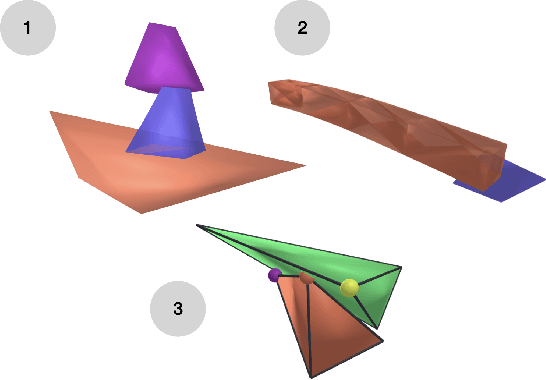
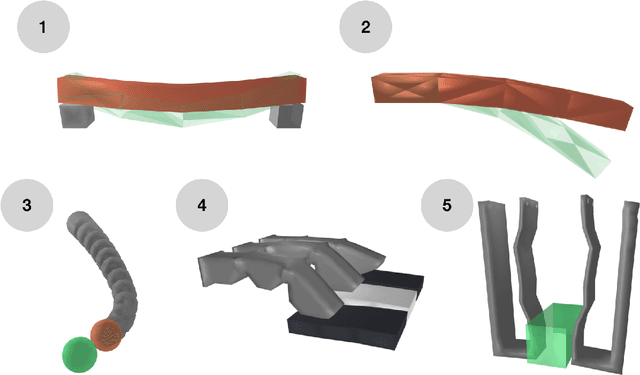
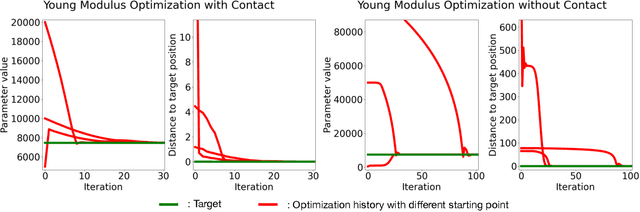
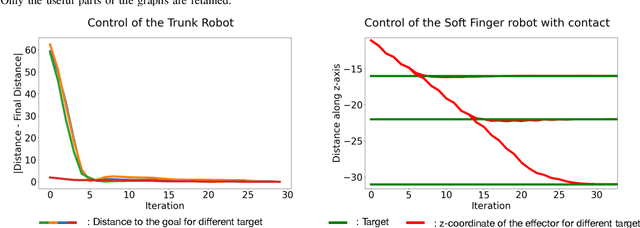
In recent years, soft robotics simulators have evolved to offer various functionalities, including the simulation of different material types (e.g., elastic, hyper-elastic) and actuation methods (e.g., pneumatic, cable-driven, servomotor). These simulators also provide tools for various tasks, such as calibration, design, and control. However, efficiently and accurately computing derivatives within these simulators remains a challenge, particularly in the presence of physical contact interactions. Incorporating these derivatives can, for instance, significantly improve the convergence speed of control methods like reinforcement learning and trajectory optimization, enable gradient-based techniques for design, or facilitate end-to-end machine-learning approaches for model reduction. This paper addresses these challenges by introducing a unified method for computing the derivatives of mechanical equations within the finite element method framework, including contact interactions modeled as a nonlinear complementarity problem. The proposed approach handles both collision and friction phases, accounts for their nonsmooth dynamics, and leverages the sparsity introduced by mesh-based models. Its effectiveness is demonstrated through several examples of controlling and calibrating soft systems.
End-to-End and Highly-Efficient Differentiable Simulation for Robotics
Sep 11, 2024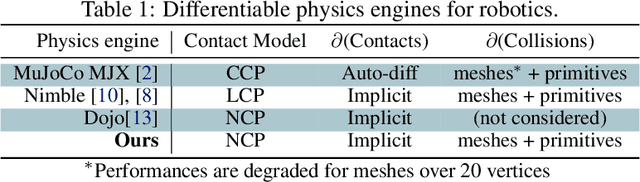
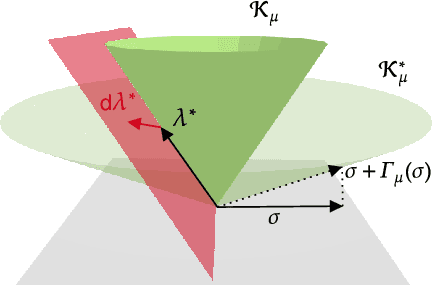
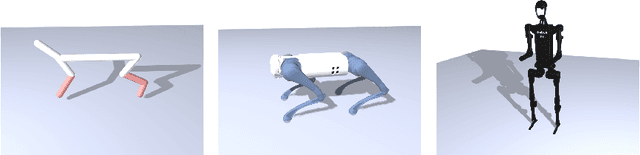

Over the past few years, robotics simulators have largely improved in efficiency and scalability, enabling them to generate years of simulated data in a few hours. Yet, efficiently and accurately computing the simulation derivatives remains an open challenge, with potentially high gains on the convergence speed of reinforcement learning and trajectory optimization algorithms, especially for problems involving physical contact interactions. This paper contributes to this objective by introducing a unified and efficient algorithmic solution for computing the analytical derivatives of robotic simulators. The approach considers both the collision and frictional stages, accounting for their intrinsic nonsmoothness and also exploiting the sparsity induced by the underlying multibody systems. These derivatives have been implemented in C++, and the code will be open-sourced in the Simple simulator. They depict state-of-the-art timings ranging from 5 microseconds for a 7-dof manipulator up to 95 microseconds for 36-dof humanoid, outperforming alternative solutions by a factor of at least 100.