 Add to Chrome
 Add to Firefox
 Add to Edge
Knowledge in Superposition: Unveiling the Failures of Lifelong Knowledge Editing for Large Language Models
Aug 14, 2024
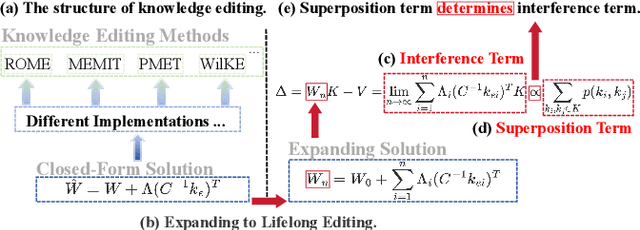
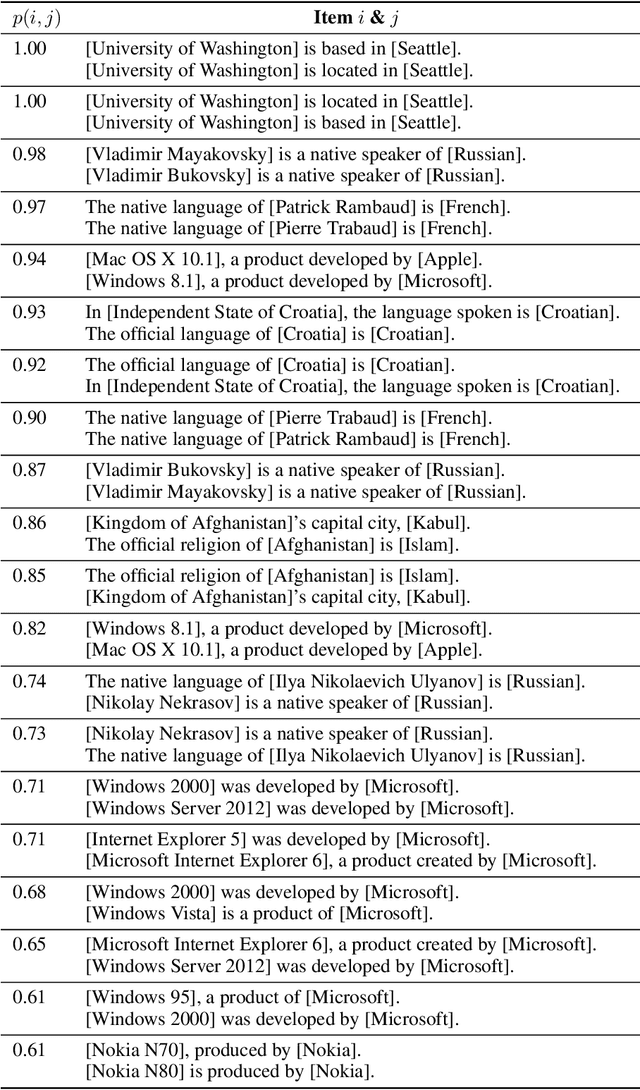
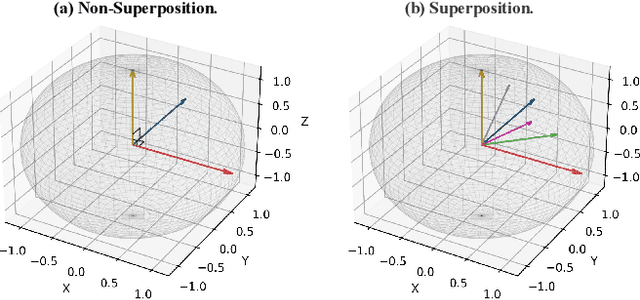
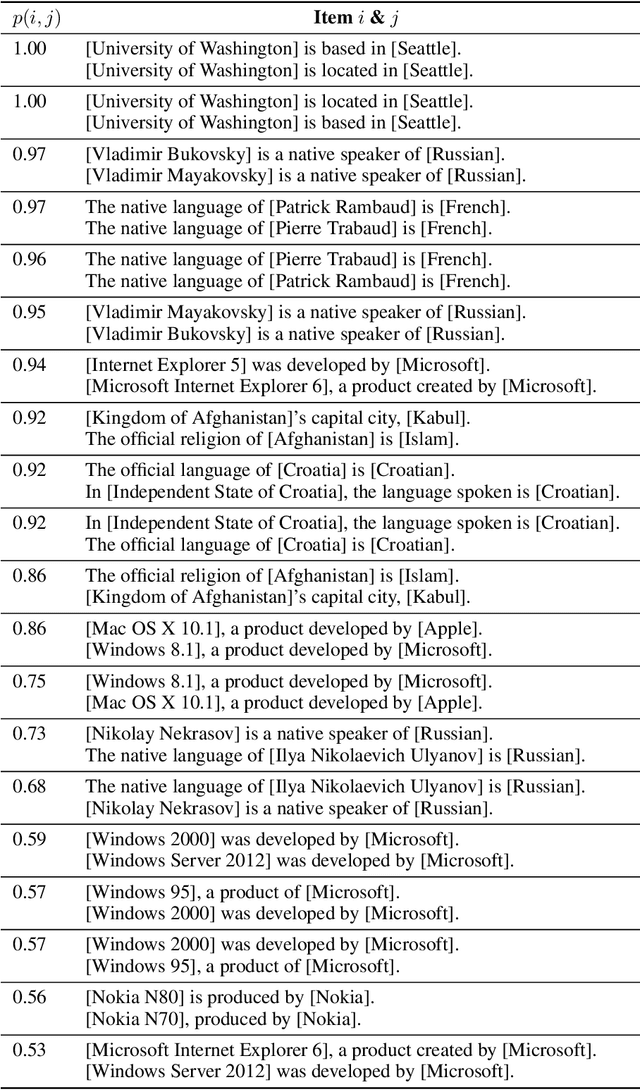
Knowledge editing aims to update outdated or incorrect knowledge in large language models (LLMs). However, current knowledge editing methods have limited scalability for lifelong editing. This study explores the fundamental reason why knowledge editing fails in lifelong editing. We begin with the closed-form solution derived from linear associative memory, which underpins state-of-the-art knowledge editing methods. We extend the solution from single editing to lifelong editing, and through rigorous mathematical derivation, identify an interference term in the final solution, suggesting that editing knowledge may impact irrelevant knowledge. Further analysis of the interference term reveals a close relationship with superposition between knowledge representations. When knowledge superposition does not exist in language models, the interference term vanishes, allowing for lossless knowledge editing. Experiments across numerous language models reveal that knowledge superposition is universal, exhibiting high kurtosis, zero mean, and heavy-tailed distributions with clear scaling laws. Ultimately, by combining theory and experiments, we demonstrate that knowledge superposition is the fundamental reason for the failure of lifelong editing. Moreover, this is the first study to investigate knowledge editing from the perspective of superposition and provides a comprehensive observation of superposition across numerous real-world language models. Code available at https://github.com/ChenhuiHu/knowledge_in_superposition.

TransferTOD: A Generalizable Chinese Multi-Domain Task-Oriented Dialogue System with Transfer Capabilities
Jul 31, 2024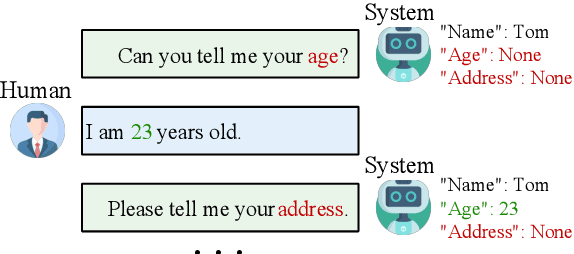


Task-oriented dialogue (TOD) systems aim to efficiently handle task-oriented conversations, including information gathering. How to utilize ToD accurately, efficiently and effectively for information gathering has always been a critical and challenging task. Recent studies have demonstrated that Large Language Models (LLMs) excel in dialogue, instruction generation, and reasoning, and can significantly enhance the performance of TOD through fine-tuning. However, current datasets primarily cater to user-led systems and are limited to predefined specific scenarios and slots, thereby necessitating improvements in the proactiveness, diversity, and capabilities of TOD. In this study, we present a detailed multi-domain task-oriented data construction process for conversations, and a Chinese dialogue dataset generated based on this process, \textbf{TransferTOD}, which authentically simulates human-machine dialogues in 30 popular life service scenarios. Leveraging this dataset, we trained a \textbf{TransferTOD-7B} model using full-parameter fine-tuning, showcasing notable abilities in slot filling and questioning. Our work has demonstrated its strong generalization capabilities in various downstream scenarios, significantly enhancing both data utilization efficiency and system performance. The data is released in https://github.com/KongLongGeFDU/TransferTOD.
Beyond Instruction Following: Evaluating Rule Following of Large Language Models
Jul 11, 2024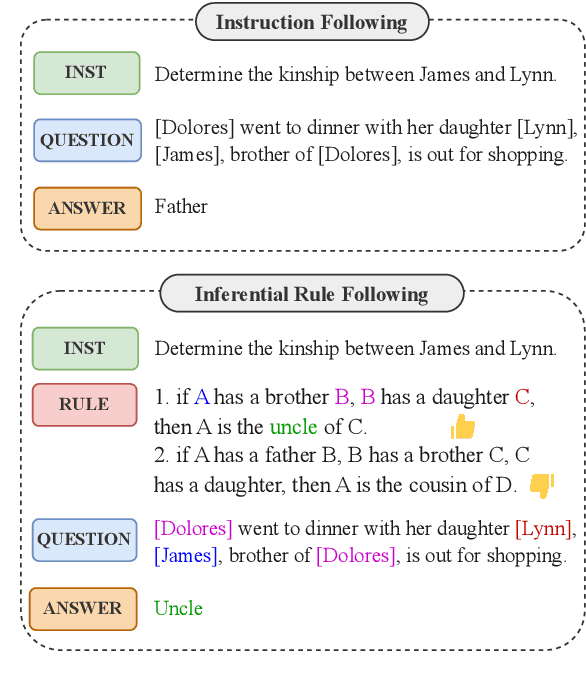
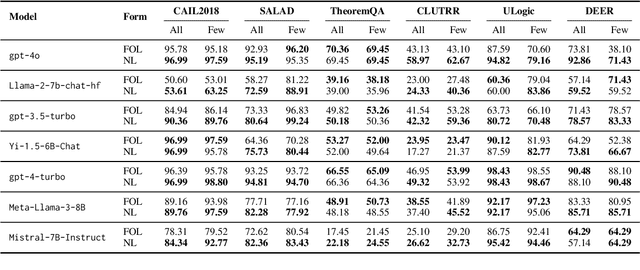
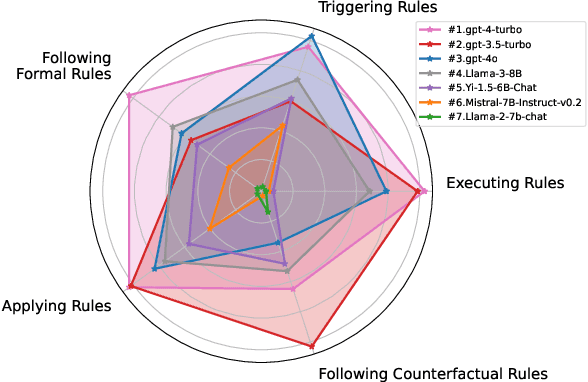
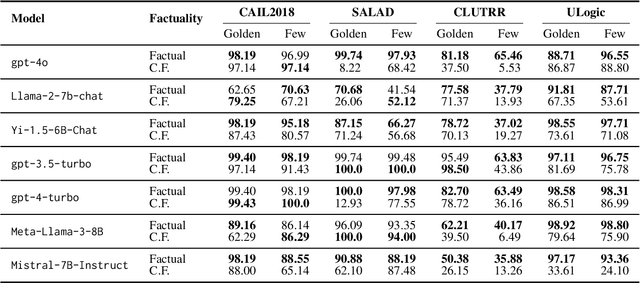
Although Large Language Models (LLMs) have demonstrated strong instruction-following ability to be helpful, they are further supposed to be controlled and guided by rules in real-world scenarios to be safe, and accurate in responses. This demands the possession of rule-following capability of LLMs. However, few works have made a clear evaluation of the rule-following capability of LLMs. Previous studies that try to evaluate the rule-following capability of LLMs fail to distinguish the rule-following scenarios from the instruction-following scenarios. Therefore, this paper first makes a clarification of the concept of rule-following, and curates a comprehensive benchmark, RuleBench, to evaluate a diversified range of rule-following abilities. Our experimental results on a variety of LLMs show that they are still limited in following rules. Our further analysis provides insights into the improvements for LLMs toward a better rule-following intelligent agent. The data and code can be found at: https://anonymous.4open.science/r/llm-rule-following-B3E3/
Multilingual Knowledge Graph Completion from Pretrained Language Models with Knowledge Constraints
Jun 26, 2024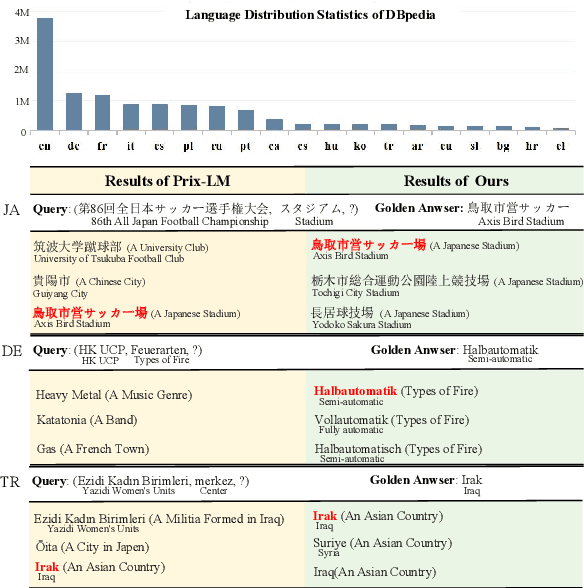
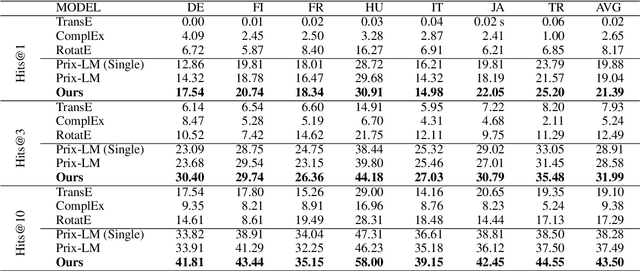
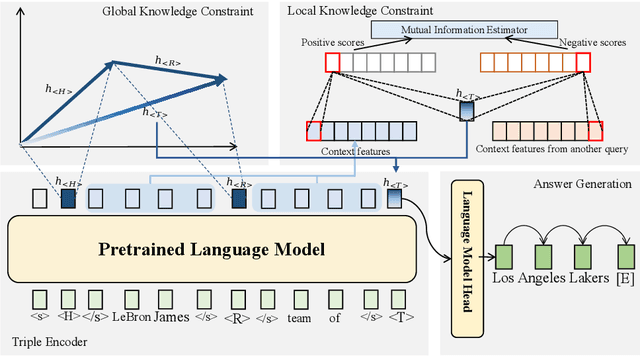
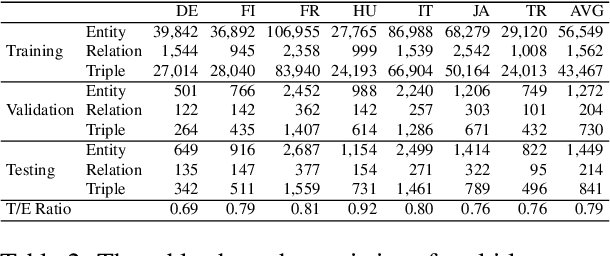
Multilingual Knowledge Graph Completion (mKGC) aim at solving queries like (h, r, ?) in different languages by reasoning a tail entity t thus improving multilingual knowledge graphs. Previous studies leverage multilingual pretrained language models (PLMs) and the generative paradigm to achieve mKGC. Although multilingual pretrained language models contain extensive knowledge of different languages, its pretraining tasks cannot be directly aligned with the mKGC tasks. Moreover, the majority of KGs and PLMs currently available exhibit a pronounced English-centric bias. This makes it difficult for mKGC to achieve good results, particularly in the context of low-resource languages. To overcome previous problems, this paper introduces global and local knowledge constraints for mKGC. The former is used to constrain the reasoning of answer entities, while the latter is used to enhance the representation of query contexts. The proposed method makes the pretrained model better adapt to the mKGC task. Experimental results on public datasets demonstrate that our method outperforms the previous SOTA on Hits@1 and Hits@10 by an average of 12.32% and 16.03%, which indicates that our proposed method has significant enhancement on mKGC.
Find Parent then Label Children: A Two-stage Taxonomy Completion Method with Pre-trained Language Model
Jun 25, 2024Taxonomies, which organize domain concepts into hierarchical structures, are crucial for building knowledge systems and downstream applications. As domain knowledge evolves, taxonomies need to be continuously updated to include new concepts. Previous approaches have mainly focused on adding concepts to the leaf nodes of the existing hierarchical tree, which does not fully utilize the taxonomy's knowledge and is unable to update the original taxonomy structure (usually involving non-leaf nodes). In this paper, we propose a two-stage method called ATTEMPT for taxonomy completion. Our method inserts new concepts into the correct position by finding a parent node and labeling child nodes. Specifically, by combining local nodes with prompts to generate natural sentences, we take advantage of pre-trained language models for hypernym/hyponymy recognition. Experimental results on two public datasets (including six domains) show that ATTEMPT performs best on both taxonomy completion and extension tasks, surpassing existing methods.
CogMG: Collaborative Augmentation Between Large Language Model and Knowledge Graph
Jun 25, 2024Large language models have become integral to question-answering applications despite their propensity for generating hallucinations and factually inaccurate content. Querying knowledge graphs to reduce hallucinations in LLM meets the challenge of incomplete knowledge coverage in knowledge graphs. On the other hand, updating knowledge graphs by information extraction and knowledge graph completion faces the knowledge update misalignment issue. In this work, we introduce a collaborative augmentation framework, CogMG, leveraging knowledge graphs to address the limitations of LLMs in QA scenarios, explicitly targeting the problems of incomplete knowledge coverage and knowledge update misalignment. The LLMs identify and decompose required knowledge triples that are not present in the KG, enriching them and aligning updates with real-world demands. We demonstrate the efficacy of this approach through a supervised fine-tuned LLM within an agent framework, showing significant improvements in reducing hallucinations and enhancing factual accuracy in QA responses. Our code and video are publicly available.
Unlocking the Future: Exploring Look-Ahead Planning Mechanistic Interpretability in Large Language Models
Jun 23, 2024Planning, as the core module of agents, is crucial in various fields such as embodied agents, web navigation, and tool using. With the development of large language models (LLMs), some researchers treat large language models as intelligent agents to stimulate and evaluate their planning capabilities. However, the planning mechanism is still unclear. In this work, we focus on exploring the look-ahead planning mechanism in large language models from the perspectives of information flow and internal representations. First, we study how planning is done internally by analyzing the multi-layer perception (MLP) and multi-head self-attention (MHSA) components at the last token. We find that the output of MHSA in the middle layers at the last token can directly decode the decision to some extent. Based on this discovery, we further trace the source of MHSA by information flow, and we reveal that MHSA mainly extracts information from spans of the goal states and recent steps. According to information flow, we continue to study what information is encoded within it. Specifically, we explore whether future decisions have been encoded in advance in the representation of flow. We demonstrate that the middle and upper layers encode a few short-term future decisions to some extent when planning is successful. Overall, our research analyzes the look-ahead planning mechanisms of LLMs, facilitating future research on LLMs performing planning tasks.
Improving Zero-shot LLM Re-Ranker with Risk Minimization
Jun 19, 2024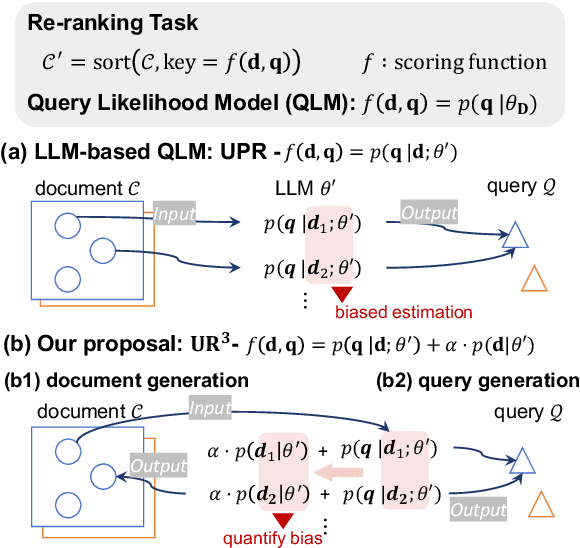
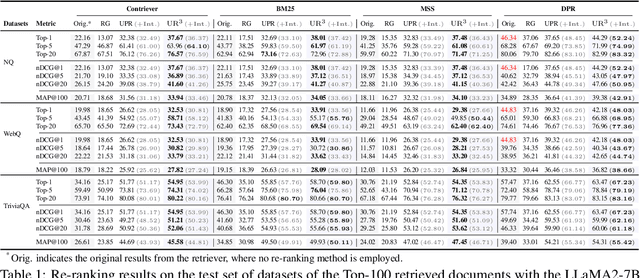
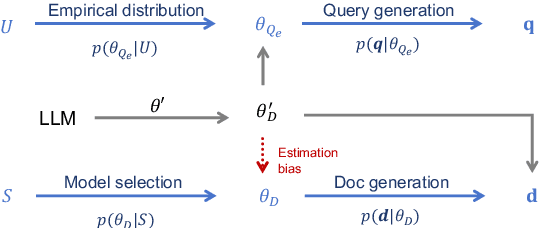
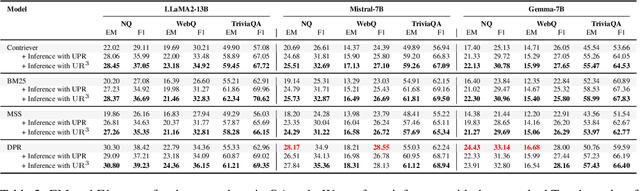
In the Retrieval-Augmented Generation (RAG) system, advanced Large Language Models (LLMs) have emerged as effective Query Likelihood Models (QLMs) in an unsupervised way, which re-rank documents based on the probability of generating the query given the content of a document. However, directly prompting LLMs to approximate QLMs inherently is biased, where the estimated distribution might diverge from the actual document-specific distribution. In this study, we introduce a novel framework, $\mathrm{UR^3}$, which leverages Bayesian decision theory to both quantify and mitigate this estimation bias. Specifically, $\mathrm{UR^3}$ reformulates the problem as maximizing the probability of document generation, thereby harmonizing the optimization of query and document generation probabilities under a unified risk minimization objective. Our empirical results indicate that $\mathrm{UR^3}$ significantly enhances re-ranking, particularly in improving the Top-1 accuracy. It benefits the QA tasks by achieving higher accuracy with fewer input documents.
Parameter Training Efficiency Aware Resource Allocation for AIGC in Space-Air-Ground Integrated Networks
Jun 19, 2024With the evolution of artificial intelligence-generated content (AIGC) techniques and the development of space-air-ground integrated networks (SAGIN), there will be a growing opportunity to enhance more users' mobile experience with customized AIGC applications. This is made possible through the use of parameter-efficient fine-tuning (PEFT) training alongside mobile edge computing. In this paper, we formulate the optimization problem of maximizing the parameter training efficiency of the SAGIN system over wireless networks under limited resource constraints. We propose the Parameter training efficiency Aware Resource Allocation (PARA) technique to jointly optimize user association, data offloading, and communication and computational resource allocation. Solid proofs are presented to solve this difficult sum of ratios problem based on quadratically constrained quadratic programming (QCQP), semidefinite programming (SDP), graph theory, and fractional programming (FP) techniques. Our proposed PARA technique is effective in finding a stationary point of this non-convex problem. The simulation results demonstrate that the proposed PARA method outperforms other baselines.
From Instance Training to Instruction Learning: Task Adapters Generation from Instructions
Jun 18, 2024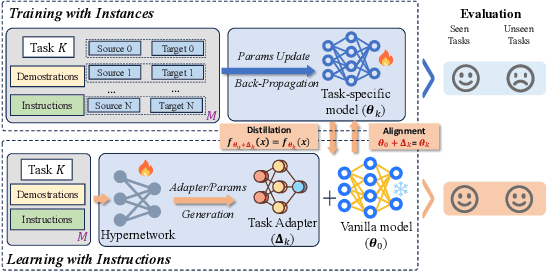
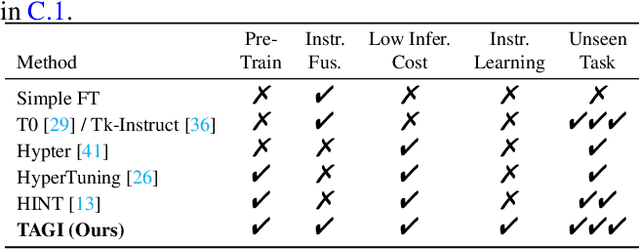
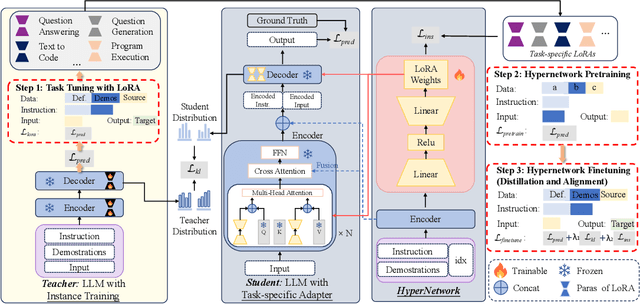
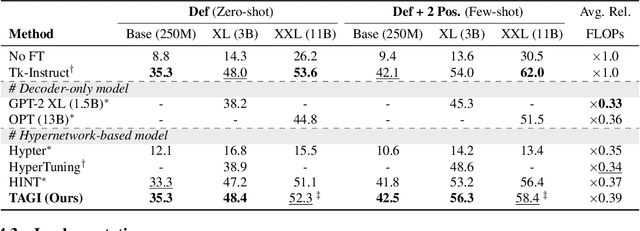
Large language models (LLMs) have acquired the ability to solve general tasks by utilizing instruction finetuning (IFT). However, IFT still relies heavily on instance training of extensive task data, which greatly limits the adaptability of LLMs to real-world scenarios where labeled task instances are scarce and broader task generalization becomes paramount. Contrary to LLMs, humans acquire skills and complete tasks not merely through repeated practice but also by understanding and following instructional guidelines. This paper is dedicated to simulating human learning to address the shortcomings of instance training, focusing on instruction learning to enhance cross-task generalization. Within this context, we introduce Task Adapters Generation from Instructions (TAGI), which automatically constructs the task-specific model in a parameter generation manner based on the given task instructions without retraining for unseen tasks. Specifically, we utilize knowledge distillation to enhance the consistency between TAGI developed through Learning with Instruction and task-specific models developed through Training with Instance, by aligning the labels, output logits, and adapter parameters between them. TAGI is endowed with cross-task generalization capabilities through a two-stage training process that includes hypernetwork pretraining and finetuning. We evaluate TAGI on the Super-Natural Instructions and P3 datasets. The experimental results demonstrate that TAGI can match or even outperform traditional meta-trained models and other hypernetwork models, while significantly reducing computational requirements.