 Add to Chrome
 Add to Firefox
 Add to Edge
Lessons from Learning to Spin "Pens"
Jul 26, 2024

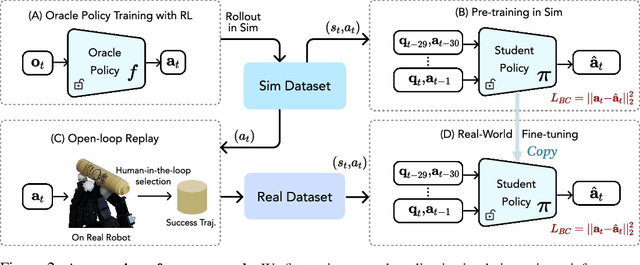


In-hand manipulation of pen-like objects is an important skill in our daily lives, as many tools such as hammers and screwdrivers are similarly shaped. However, current learning-based methods struggle with this task due to a lack of high-quality demonstrations and the significant gap between simulation and the real world. In this work, we push the boundaries of learning-based in-hand manipulation systems by demonstrating the capability to spin pen-like objects. We first use reinforcement learning to train an oracle policy with privileged information and generate a high-fidelity trajectory dataset in simulation. This serves two purposes: 1) pre-training a sensorimotor policy in simulation; 2) conducting open-loop trajectory replay in the real world. We then fine-tune the sensorimotor policy using these real-world trajectories to adapt it to the real world dynamics. With less than 50 trajectories, our policy learns to rotate more than ten pen-like objects with different physical properties for multiple revolutions. We present a comprehensive analysis of our design choices and share the lessons learned during development.

SQLfuse: Enhancing Text-to-SQL Performance through Comprehensive LLM Synergy
Jul 19, 2024
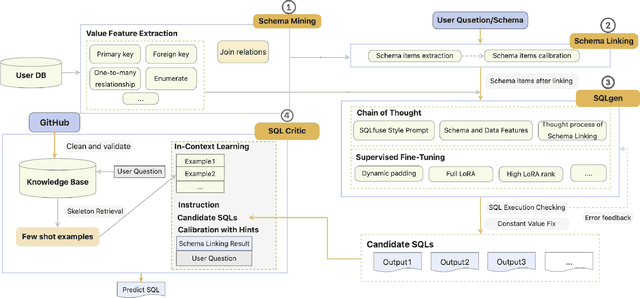
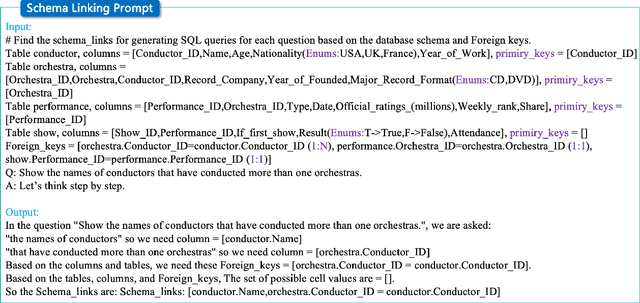
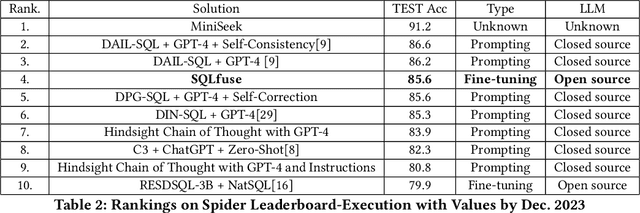
Text-to-SQL conversion is a critical innovation, simplifying the transition from complex SQL to intuitive natural language queries, especially significant given SQL's prevalence in the job market across various roles. The rise of Large Language Models (LLMs) like GPT-3.5 and GPT-4 has greatly advanced this field, offering improved natural language understanding and the ability to generate nuanced SQL statements. However, the potential of open-source LLMs in Text-to-SQL applications remains underexplored, with many frameworks failing to leverage their full capabilities, particularly in handling complex database queries and incorporating feedback for iterative refinement. Addressing these limitations, this paper introduces SQLfuse, a robust system integrating open-source LLMs with a suite of tools to enhance Text-to-SQL translation's accuracy and usability. SQLfuse features four modules: schema mining, schema linking, SQL generation, and a SQL critic module, to not only generate but also continuously enhance SQL query quality. Demonstrated by its leading performance on the Spider Leaderboard and deployment by Ant Group, SQLfuse showcases the practical merits of open-source LLMs in diverse business contexts.
EaDeblur-GS: Event assisted 3D Deblur Reconstruction with Gaussian Splatting
Jul 18, 2024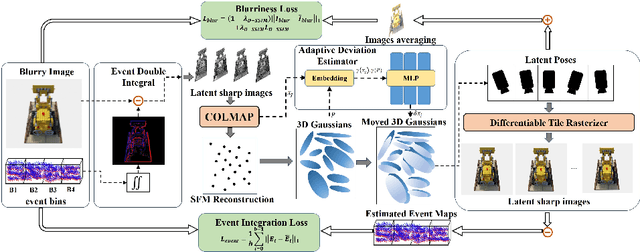


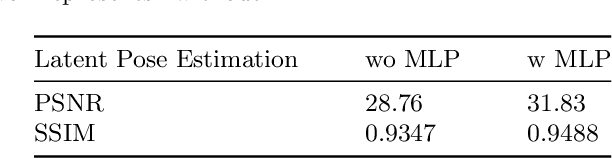
3D deblurring reconstruction techniques have recently seen significant advancements with the development of Neural Radiance Fields (NeRF) and 3D Gaussian Splatting (3DGS). Although these techniques can recover relatively clear 3D reconstructions from blurry image inputs, they still face limitations in handling severe blurring and complex camera motion. To address these issues, we propose Event-assisted 3D Deblur Reconstruction with Gaussian Splatting (EaDeblur-GS), which integrates event camera data to enhance the robustness of 3DGS against motion blur. By employing an Adaptive Deviation Estimator (ADE) network to estimate Gaussian center deviations and using novel loss functions, EaDeblur-GS achieves sharp 3D reconstructions in real-time, demonstrating performance comparable to state-of-the-art methods.
Don't Throw Away Data: Better Sequence Knowledge Distillation
Jul 15, 2024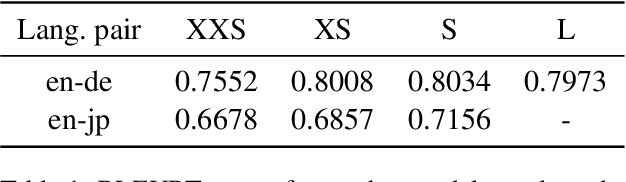
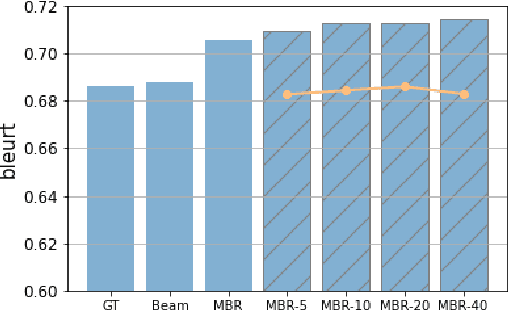

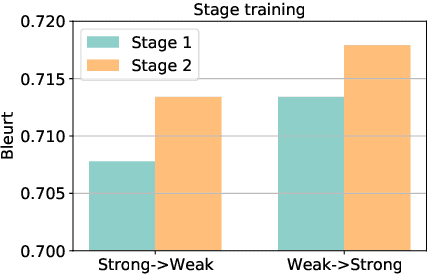
A critical component in knowledge distillation is the means of coupling the teacher and student. The predominant sequence knowledge distillation method involves supervised learning of the student against teacher-decoded outputs, and is exemplified by the current state of the art, which incorporates minimum Bayes risk (MBR) decoding. In this paper we seek to integrate MBR more tightly in distillation training, specifically by using several high scoring MBR translations, rather than a single selected sequence, thus capturing a rich diversity of teacher outputs. Our experiments on English to German and English to Japanese translation show consistent improvements over strong baseline methods for both tasks and with varying model sizes. Additionally, we conduct a detailed analysis focusing on data efficiency and capacity curse aspects to elucidate MBR-n and explore its further potential.
Tissue-Contrastive Semi-Masked Autoencoders for Segmentation Pretraining on Chest CT
Jul 12, 2024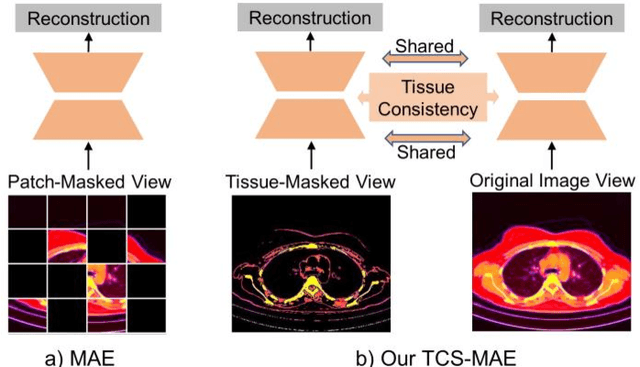
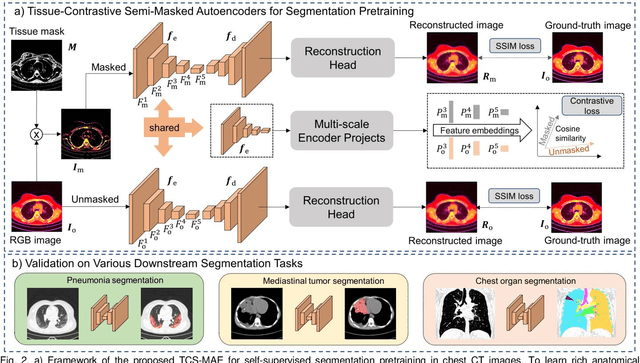
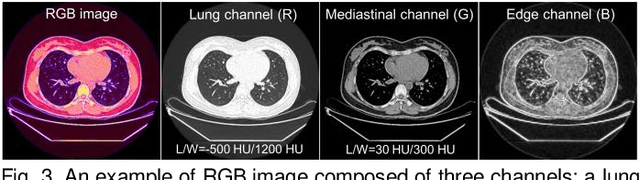
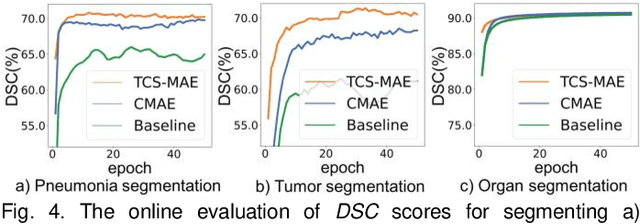
Existing Masked Image Modeling (MIM) depends on a spatial patch-based masking-reconstruction strategy to perceive objects'features from unlabeled images, which may face two limitations when applied to chest CT: 1) inefficient feature learning due to complex anatomical details presented in CT images, and 2) suboptimal knowledge transfer owing to input disparity between upstream and downstream models. To address these issues, we propose a new MIM method named Tissue-Contrastive Semi-Masked Autoencoder (TCS-MAE) for modeling chest CT images. Our method has two novel designs: 1) a tissue-based masking-reconstruction strategy to capture more fine-grained anatomical features, and 2) a dual-AE architecture with contrastive learning between the masked and original image views to bridge the gap of the upstream and downstream models. To validate our method, we systematically investigate representative contrastive, generative, and hybrid self-supervised learning methods on top of tasks involving segmenting pneumonia, mediastinal tumors, and various organs. The results demonstrate that, compared to existing methods, our TCS-MAE more effectively learns tissue-aware representations, thereby significantly enhancing segmentation performance across all tasks.
Human-like Episodic Memory for Infinite Context LLMs
Jul 12, 2024
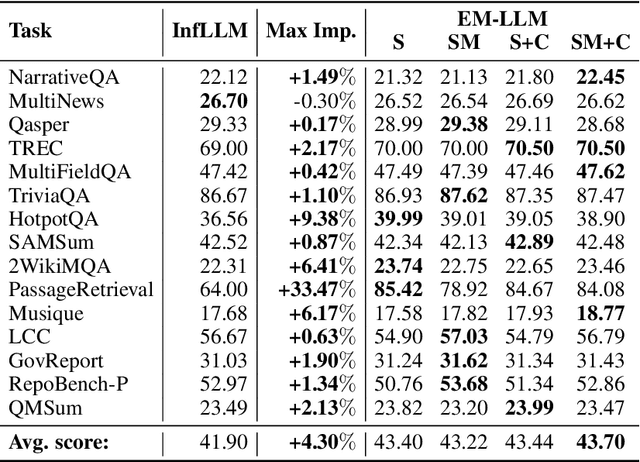
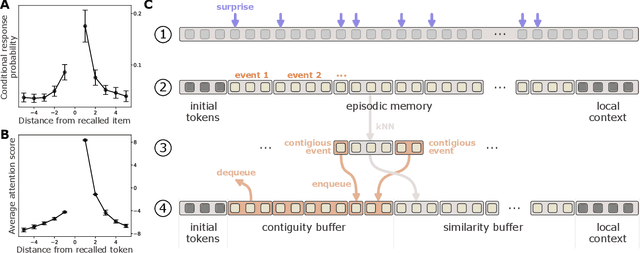
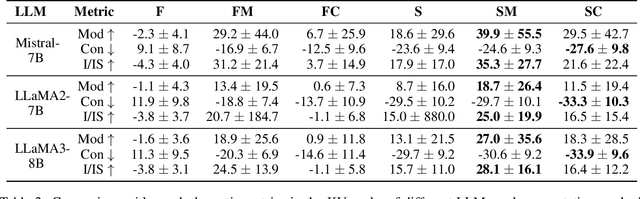
Large language models (LLMs) have shown remarkable capabilities, but still struggle with processing extensive contexts, limiting their ability to maintain coherence and accuracy over long sequences. In contrast, the human brain excels at organising and retrieving episodic experiences across vast temporal scales, spanning a lifetime. In this work, we introduce EM-LLM, a novel approach that integrates key aspects of human episodic memory and event cognition into LLMs, enabling them to effectively handle practically infinite context lengths while maintaining computational efficiency. EM-LLM organises sequences of tokens into coherent episodic events using a combination of Bayesian surprise and graph-theoretic boundary refinement in an on-line fashion. When needed, these events are retrieved through a two-stage memory process, combining similarity-based and temporally contiguous retrieval for efficient and human-like access to relevant information. Experiments on the LongBench dataset demonstrate EM-LLM's superior performance, outperforming the state-of-the-art InfLLM model with an overall relative improvement of 4.3% across various tasks, including a 33% improvement on the PassageRetrieval task. Furthermore, our analysis reveals strong correlations between EM-LLM's event segmentation and human-perceived events, suggesting a bridge between this artificial system and its biological counterpart. This work not only advances LLM capabilities in processing extended contexts but also provides a computational framework for exploring human memory mechanisms, opening new avenues for interdisciplinary research in AI and cognitive science.
How Deep is your Guess? A Fresh Perspective on Deep Learning for Medical Time-Series Imputation
Jul 11, 2024We introduce a novel classification framework for time-series imputation using deep learning, with a particular focus on clinical data. By identifying conceptual gaps in the literature and existing reviews, we devise a taxonomy grounded on the inductive bias of neural imputation frameworks, resulting in a classification of existing deep imputation strategies based on their suitability for specific imputation scenarios and data-specific properties. Our review further examines the existing methodologies employed to benchmark deep imputation models, evaluating their effectiveness in capturing the missingness scenarios found in clinical data and emphasising the importance of reconciling mathematical abstraction with clinical insights. Our classification aims to serve as a guide for researchers to facilitate the selection of appropriate deep learning imputation techniques tailored to their specific clinical data. Our novel perspective also highlights the significance of bridging the gap between computational methodologies and medical insights to achieve clinically sound imputation models.
EDPNet: An Efficient Dual Prototype Network for Motor Imagery EEG Decoding
Jul 03, 2024Motor imagery electroencephalograph (MI-EEG) decoding plays a crucial role in developing motor imagery brain-computer interfaces (MI-BCIs). However, decoding intentions from MI remains challenging due to the inherent complexity of EEG signals relative to the small-sample size. In this paper, we propose an Efficient Dual Prototype Network (EDPNet) to enable accurate and fast MI decoding. EDPNet employs a lightweight adaptive spatial-spectral fusion module, which promotes more efficient information fusion between multiple EEG electrodes. Subsequently, a parameter-free multi-scale variance pooling module extracts more comprehensive temporal features. Furthermore, we introduce dual prototypical learning to optimize the feature space distribution and training process, thereby improving the model's generalization ability on small-sample MI datasets. Our experimental results show that the EDPNet outperforms state-of-the-art models with superior classification accuracy and kappa values (84.11% and 0.7881 for dataset BCI competition IV 2a, 86.65% and 0.7330 for dataset BCI competition IV 2b). Additionally, we use the BCI competition III IVa dataset with fewer training data to further validate the generalization ability of the proposed EDPNet. We also achieve superior performance with 82.03% classification accuracy. Benefiting from the lightweight parameters and superior decoding accuracy, our EDPNet shows great potential for MI-BCI applications. The code is publicly available at https://github.com/hancan16/EDPNet.
PocketLLM: Enabling On-Device Fine-Tuning for Personalized LLMs
Jul 01, 2024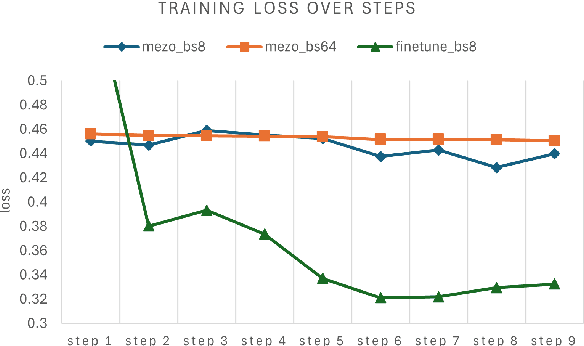
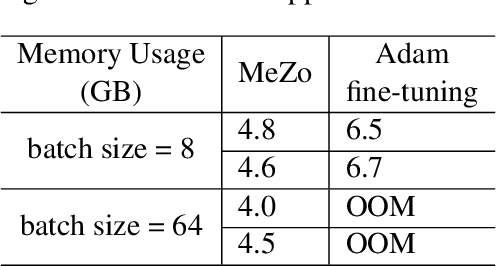
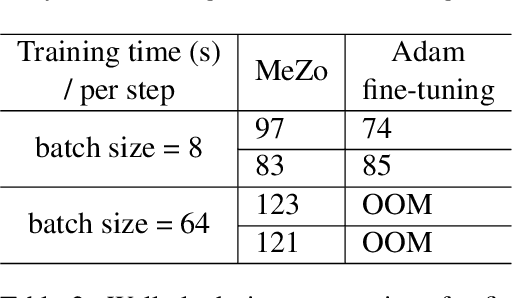
Recent advancements in large language models (LLMs) have indeed showcased their impressive capabilities. On mobile devices, the wealth of valuable, non-public data generated daily holds great promise for locally fine-tuning personalized LLMs, while maintaining privacy through on-device processing. However, the constraints of mobile device resources pose challenges to direct on-device LLM fine-tuning, mainly due to the memory-intensive nature of derivative-based optimization required for saving gradients and optimizer states. To tackle this, we propose employing derivative-free optimization techniques to enable on-device fine-tuning of LLM, even on memory-limited mobile devices. Empirical results demonstrate that the RoBERTa-large model and OPT-1.3B can be fine-tuned locally on the OPPO Reno 6 smartphone using around 4GB and 6.5GB of memory respectively, using derivative-free optimization techniques. This highlights the feasibility of on-device LLM fine-tuning on mobile devices, paving the way for personalized LLMs on resource-constrained devices while safeguarding data privacy.
ROS-LLM: A ROS framework for embodied AI with task feedback and structured reasoning
Jun 28, 2024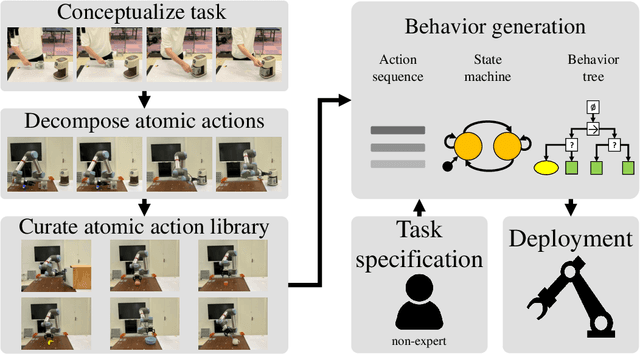
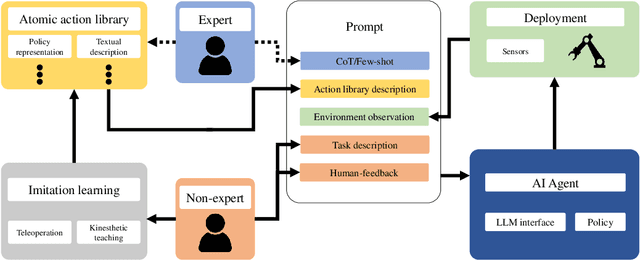
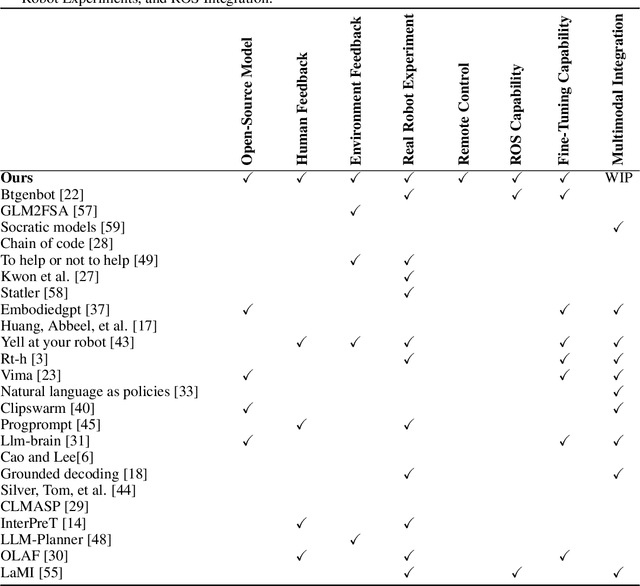
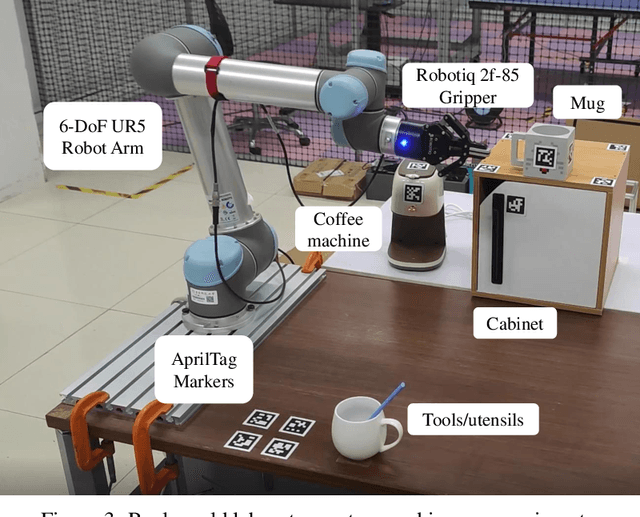
We present a framework for intuitive robot programming by non-experts, leveraging natural language prompts and contextual information from the Robot Operating System (ROS). Our system integrates large language models (LLMs), enabling non-experts to articulate task requirements to the system through a chat interface. Key features of the framework include: integration of ROS with an AI agent connected to a plethora of open-source and commercial LLMs, automatic extraction of a behavior from the LLM output and execution of ROS actions/services, support for three behavior modes (sequence, behavior tree, state machine), imitation learning for adding new robot actions to the library of possible actions, and LLM reflection via human and environment feedback. Extensive experiments validate the framework, showcasing robustness, scalability, and versatility in diverse scenarios, including long-horizon tasks, tabletop rearrangements, and remote supervisory control. To facilitate the adoption of our framework and support the reproduction of our results, we have made our code open-source. You can access it at: https://github.com/huawei-noah/HEBO/tree/master/ROSLLM.