 Add to Chrome
 Add to Firefox
 Add to Edge
Hyperball May Not Be a Free Lunch
Jul 24, 2026
For scale-invariant deep networks, Hyperball-style optimizers have shown strong performance in large-scale training by fixing the norms of matrix-valued parameters and normalizing updates. However, the source of their advantage remains unclear. Starting from the angular displacement between consecutive parameter states, we derive an angular effective learning rate that accounts for the parameter-update angle, parameter norm, and update norm. We also show that the conventional norm-based measure is a special case under parameter-update orthogonality. We then decompose optimizer updates into radial and tangential components and analyze how radial updates affect one-step angular displacement. Under the training configurations considered, numerical results show that the radial component has only a limited direct effect on the angular effective learning rate. It therefore cannot explain why MuonH converges more slowly than MuonWD early in training but overtakes it later. To further isolate the underlying mechanism, we devise a heuristic experiment that modifies only the learning-rate schedule so that the dynamics of each optimizer reproduce those of the other. The results suggest that their main difference stems from the evolution of the effective step size rather than an intrinsically superior update direction induced by Hyperball. Our pretraining experiments further show that more aggressive learning-rate decay can accelerate MuonH early in training but may impair its later performance. Thus, maintaining a constant angular velocity does not eliminate the learning-rate-scheduling problem; careful scheduling remains essential to realizing the potential of Hyperball-style optimizers. Our code is publicly available at https://github.com/mangocrazz/hyperball-may-not-be-a-free-lunch.

Towards Understanding the Power and Limits of the Muon Optimizer: A River-Valley Perspective
Jun 19, 2026Recently, Muon has gained substantial attention as an appealing alternative to Adam-like optimizers, with many works highlighting its advantages through spectral normalization and improved conditioning. Yet this positive theoretical narrative contrasts with its empirical performance in large language model (LLM) training, where Muon's gains over Adam/AdamW are often mixed, schedule-sensitive, and not uniformly superior. To address this gap, we develop a trajectory-level theory characterizing both the strengths and limitations of Muon. We introduce a mixed-spiked matrix sensing model whose sensing operator decomposes into signal, spike, and bulk components, capturing a mixture of anisotropic structure and long-tail information reminiscent of LLM training. On top of it, we adopted a river-valley perspective in which we view the landscape as composed of a river direction flowing to the desired solution and hill directions encoding nuisance or task-irrelevant information. In the momentum-free setting, we show that Muon moves faster along the information-bearing river direction during early optimization, but can converge much more slowly near the river bottom than gradient descent. We then extend the river-valley perspective to general nonconvex objectives with momentum by studying points on the spectral river. There, while Muon converges faster early on, its orthogonalized update removes residual scale information, making it prone to overshooting and oscillation near the target solution. Together, these results suggest that our characterizations extend beyond spiked matrix sensing and motivate switching to GD-like refinement optimizers in the final phase, rather than relying only on a fixed learning-rate schedule for Muon. We also provide preliminary evidence supporting this two-stage approach in language model training experiments.
Theoretical Analysis of Sparse Optimization with Reparameterization, Weight Decay, and Adaptive Learning Rate
May 27, 2026Sparse optimization is a fundamental challenge in various practical applications. A popular approach to sparse optimization is $\ell_p$ regularization. However, it may encounter optimization instability due to the unbounded gradients when $0<p<1$. In this paper, we introduce a novel approach to sparse optimization termed ReWA, based on Reparameterization, Weight decay, and Adaptive learning rate. ReWA is closely connected to $\ell_p$-regularization, yet it unveils a distinct optimization landscape that helps mitigate instability issues. Experiments on CIFAR-10 and ImageNet with ResNets demonstrate that ReWA leads to significant sparsity improvements over the $\ell_1$-regularization approach while preserving test accuracy.
Questioning the Coverage-Length Metric in Conformal Prediction: When Shorter Intervals Are Not Better
Jan 29, 2026Conformal prediction (CP) has become a cornerstone of distribution-free uncertainty quantification, conventionally evaluated by its coverage and interval length. This work critically examines the sufficiency of these standard metrics. We demonstrate that the interval length might be deceptively improved through a counter-intuitive approach termed Prejudicial Trick (PT), while the coverage remains valid. Specifically, for any given test sample, PT probabilistically returns an interval, which is either null or constructed using an adjusted confidence level, thereby preserving marginal coverage. While PT potentially yields a deceptively lower interval length, it introduces practical vulnerabilities: the same input can yield completely different prediction intervals across repeated runs of the algorithm. We formally derive the conditions under which PT achieves these misleading improvements and provides extensive empirical evidence across various regression and classification tasks. Furthermore, we introduce a new metric interval stability which helps detect whether a new CP method implicitly improves the length based on such PT-like techniques.
Smoothing-Based Conformal Prediction for Balancing Efficiency and Interpretability
Sep 26, 2025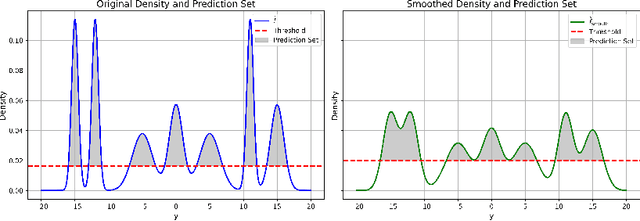
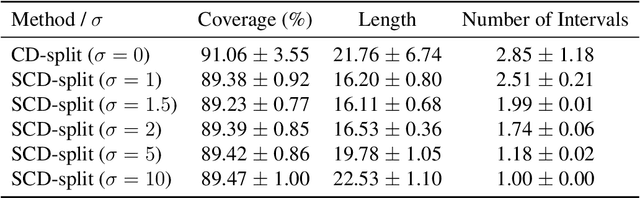
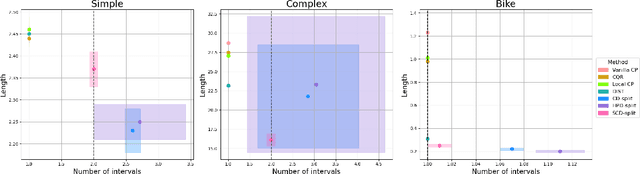
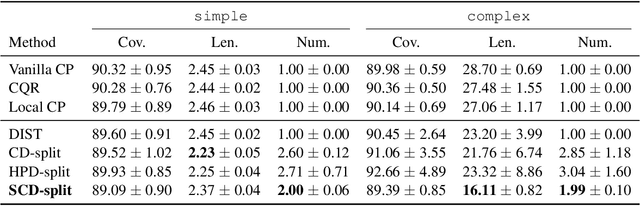
Conformal Prediction (CP) is a distribution-free framework for constructing statistically rigorous prediction sets. While popular variants such as CD-split improve CP's efficiency, they often yield prediction sets composed of multiple disconnected subintervals, which are difficult to interpret. In this paper, we propose SCD-split, which incorporates smoothing operations into the CP framework. Such smoothing operations potentially help merge the subintervals, thus leading to interpretable prediction sets. Experimental results on both synthetic and real-world datasets demonstrate that SCD-split balances the interval length and the number of disconnected subintervals. Theoretically, under specific conditions, SCD-split provably reduces the number of disconnected subintervals while maintaining comparable coverage guarantees and interval length compared with CD-split.
Disentangling Feature Structure: A Mathematically Provable Two-Stage Training Dynamics in Transformers
Feb 28, 2025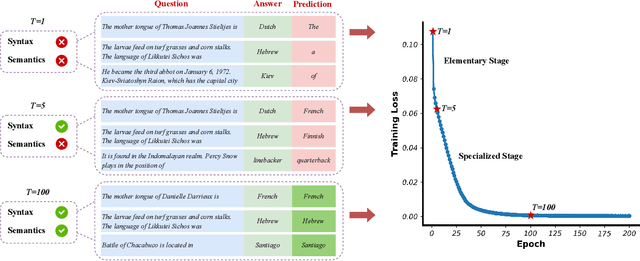
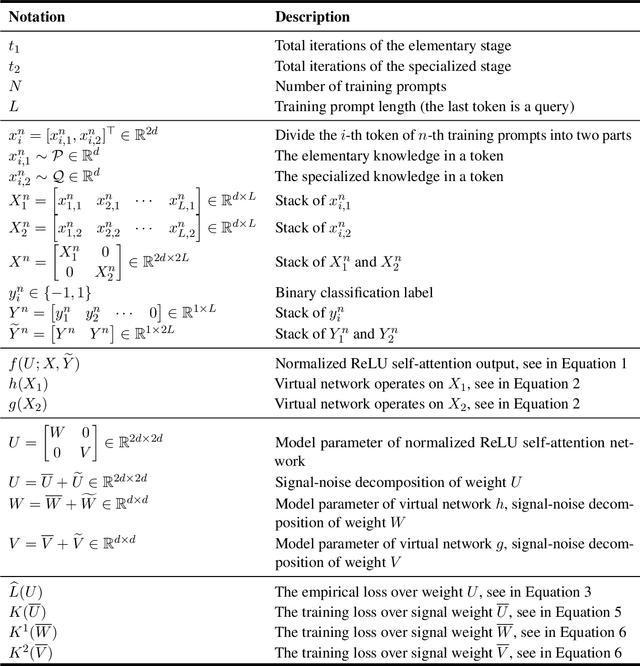
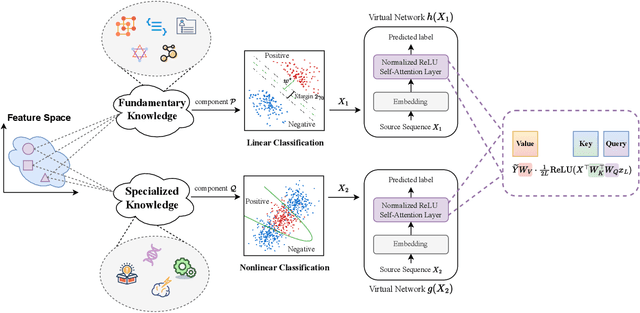
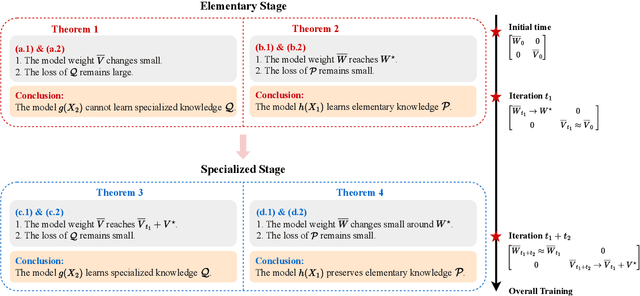
Transformers may exhibit two-stage training dynamics during the real-world training process. For instance, when training GPT-2 on the Counterfact dataset, the answers progress from syntactically incorrect to syntactically correct to semantically correct. However, existing theoretical analyses hardly account for this two-stage phenomenon. In this paper, we theoretically demonstrate how such two-stage training dynamics occur in transformers. Specifically, we analyze the dynamics of transformers using feature learning techniques under in-context learning regimes, based on a disentangled two-type feature structure. Such disentanglement of feature structure is general in practice, e.g., natural languages contain syntax and semantics, and proteins contain primary and secondary structures. To our best known, this is the first rigorous result regarding a two-stage optimization process in transformers. Additionally, a corollary indicates that such a two-stage process is closely related to the spectral properties of the attention weights, which accords well with empirical findings.
Predictive Inference With Fast Feature Conformal Prediction
Dec 01, 2024Conformal prediction is widely adopted in uncertainty quantification, due to its post-hoc, distribution-free, and model-agnostic properties. In the realm of modern deep learning, researchers have proposed Feature Conformal Prediction (FCP), which deploys conformal prediction in a feature space, yielding reduced band lengths. However, the practical utility of FCP is limited due to the time-consuming non-linear operations required to transform confidence bands from feature space to output space. In this paper, we introduce Fast Feature Conformal Prediction (FFCP), which features a novel non-conformity score and is convenient for practical applications. FFCP serves as a fast version of FCP, in that it equivalently employs a Taylor expansion to approximate the aforementioned non-linear operations in FCP. Empirical validations showcase that FFCP performs comparably with FCP (both outperforming the vanilla version) while achieving a significant reduction in computational time by approximately 50x. The code is available at https://github.com/ElvisWang1111/FastFeatureCP
On Uni-Modal Feature Learning in Supervised Multi-Modal Learning
May 03, 2023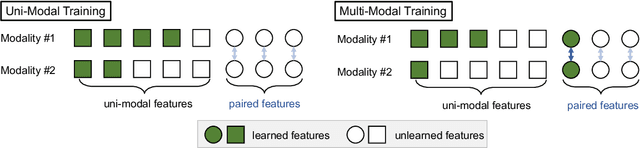

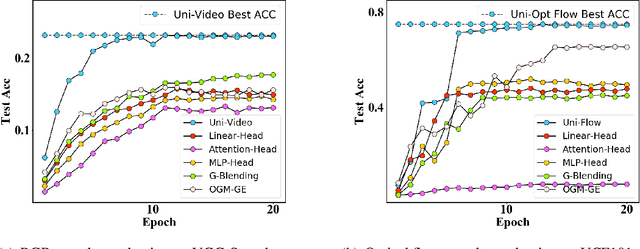
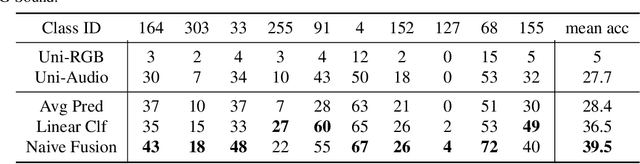
We abstract the features (i.e. learned representations) of multi-modal data into 1) uni-modal features, which can be learned from uni-modal training, and 2) paired features, which can only be learned from cross-modal interactions. Multi-modal models are expected to benefit from cross-modal interactions on the basis of ensuring uni-modal feature learning. However, recent supervised multi-modal late-fusion training approaches still suffer from insufficient learning of uni-modal features on each modality. We prove that this phenomenon does hurt the model's generalization ability. To this end, we propose to choose a targeted late-fusion learning method for the given supervised multi-modal task from Uni-Modal Ensemble(UME) and the proposed Uni-Modal Teacher(UMT), according to the distribution of uni-modal and paired features. We demonstrate that, under a simple guiding strategy, we can achieve comparable results to other complex late-fusion or intermediate-fusion methods on various multi-modal datasets, including VGG-Sound, Kinetics-400, UCF101, and ModelNet40.
Lower Generalization Bounds for GD and SGD in Smooth Stochastic Convex Optimization
Mar 19, 2023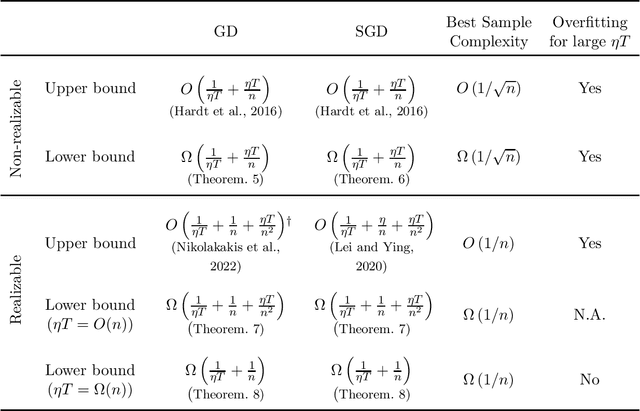
Recent progress was made in characterizing the generalization error of gradient methods for general convex loss by the learning theory community. In this work, we focus on how training longer might affect generalization in smooth stochastic convex optimization (SCO) problems. We first provide tight lower bounds for general non-realizable SCO problems. Furthermore, existing upper bound results suggest that sample complexity can be improved by assuming the loss is realizable, i.e. an optimal solution simultaneously minimizes all the data points. However, this improvement is compromised when training time is long and lower bounds are lacking. Our paper examines this observation by providing excess risk lower bounds for gradient descent (GD) and stochastic gradient descent (SGD) in two realizable settings: 1) realizable with $T = O(n)$, and (2) realizable with $T = \Omega(n)$, where $T$ denotes the number of training iterations and $n$ is the size of the training dataset. These bounds are novel and informative in characterizing the relationship between $T$ and $n$. In the first small training horizon case, our lower bounds almost tightly match and provide the first optimal certificates for the corresponding upper bounds. However, for the realizable case with $T = \Omega(n)$, a gap exists between the lower and upper bounds. We provide a conjecture to address this problem, that the gap can be closed by improving upper bounds, which is supported by our analyses in one-dimensional and linear regression scenarios.
Predictive Inference with Feature Conformal Prediction
Oct 01, 2022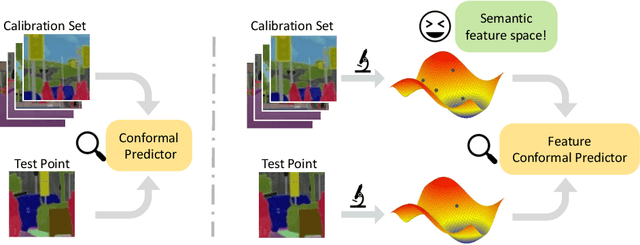

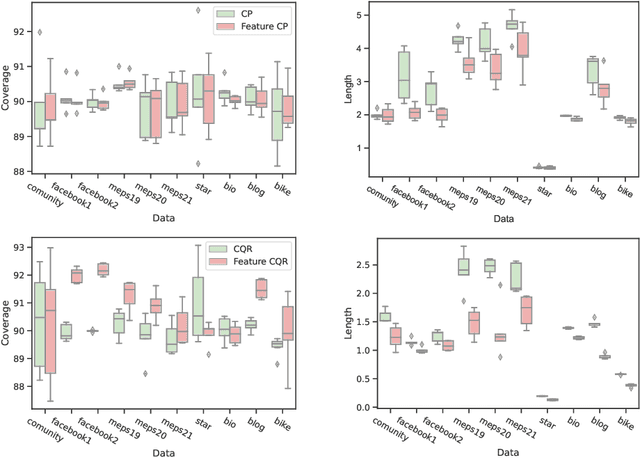
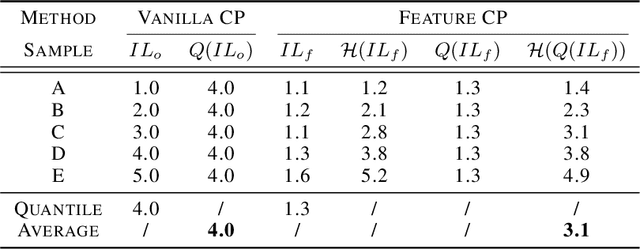
Conformal prediction is a distribution-free technique for establishing valid prediction intervals. Although conventionally people conduct conformal prediction in the output space, this is not the only possibility. In this paper, we propose feature conformal prediction, which extends the scope of conformal prediction to semantic feature spaces by leveraging the inductive bias of deep representation learning. From a theoretical perspective, we demonstrate that feature conformal prediction provably outperforms regular conformal prediction under mild assumptions. Our approach could be combined with not only vanilla conformal prediction, but also other adaptive conformal prediction methods. Experiments on various predictive inference tasks corroborate the efficacy of our method.