 Add to Chrome
 Add to Firefox
 Add to Edge
Hyperball May Not Be a Free Lunch
Jul 24, 2026
For scale-invariant deep networks, Hyperball-style optimizers have shown strong performance in large-scale training by fixing the norms of matrix-valued parameters and normalizing updates. However, the source of their advantage remains unclear. Starting from the angular displacement between consecutive parameter states, we derive an angular effective learning rate that accounts for the parameter-update angle, parameter norm, and update norm. We also show that the conventional norm-based measure is a special case under parameter-update orthogonality. We then decompose optimizer updates into radial and tangential components and analyze how radial updates affect one-step angular displacement. Under the training configurations considered, numerical results show that the radial component has only a limited direct effect on the angular effective learning rate. It therefore cannot explain why MuonH converges more slowly than MuonWD early in training but overtakes it later. To further isolate the underlying mechanism, we devise a heuristic experiment that modifies only the learning-rate schedule so that the dynamics of each optimizer reproduce those of the other. The results suggest that their main difference stems from the evolution of the effective step size rather than an intrinsically superior update direction induced by Hyperball. Our pretraining experiments further show that more aggressive learning-rate decay can accelerate MuonH early in training but may impair its later performance. Thus, maintaining a constant angular velocity does not eliminate the learning-rate-scheduling problem; careful scheduling remains essential to realizing the potential of Hyperball-style optimizers. Our code is publicly available at https://github.com/mangocrazz/hyperball-may-not-be-a-free-lunch.

Statistical MIA: Rethinking Membership Inference Attack for Reliable Unlearning Auditing
Feb 01, 2026Machine unlearning (MU) is essential for enforcing the right to be forgotten in machine learning systems. A key challenge of MU is how to reliably audit whether a model has truly forgotten specified training data. Membership Inference Attacks (MIAs) are widely used for unlearning auditing, where samples that evade membership detection are often regarded as successfully forgotten. After carefully revisiting the reliability of MIA, we show that this assumption is flawed: failed membership inference does not imply true forgetting. We theoretically demonstrate that MIA-based auditing, when formulated as a binary classification problem, inevitably incurs statistical errors whose magnitude cannot be observed during the auditing process. This leads to overly optimistic evaluations of unlearning performance, while incurring substantial computational overhead due to shadow model training. To address these limitations, we propose Statistical Membership Inference Attack (SMIA), a novel training-free and highly effective auditing framework. SMIA directly compares the distributions of member and non-member data using statistical tests, eliminating the need for learned attack models. Moreover, SMIA outputs both a forgetting rate and a corresponding confidence interval, enabling quantified reliability of the auditing results. Extensive experiments show that SMIA provides more reliable auditing with significantly lower computational cost than existing MIA-based approaches. Notably, the theoretical guarantees and empirical effectiveness of SMIA suggest it as a new paradigm for reliable machine unlearning auditing.
Taming Generative Synthetic Data for X-ray Prohibited Item Detection
Nov 19, 2025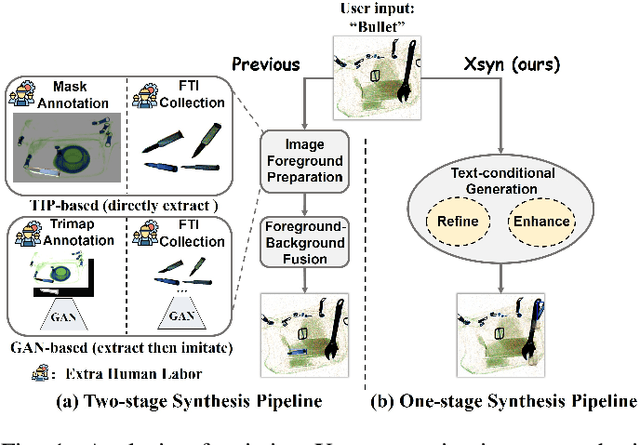
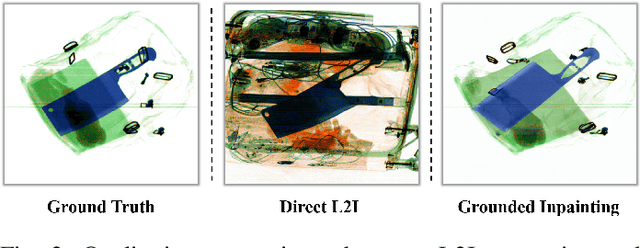
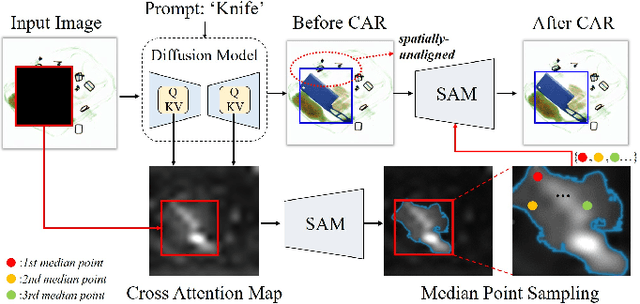
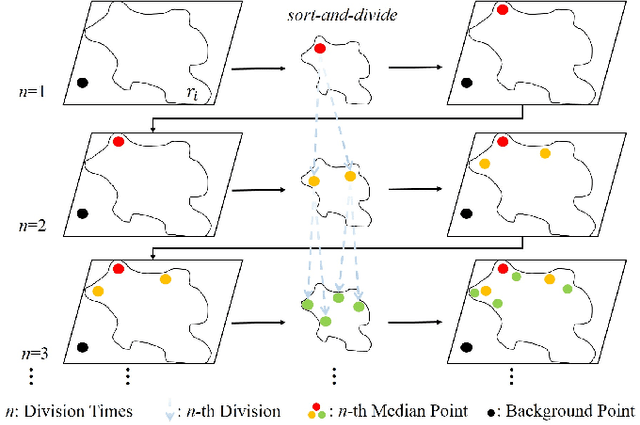
Training prohibited item detection models requires a large amount of X-ray security images, but collecting and annotating these images is time-consuming and laborious. To address data insufficiency, X-ray security image synthesis methods composite images to scale up datasets. However, previous methods primarily follow a two-stage pipeline, where they implement labor-intensive foreground extraction in the first stage and then composite images in the second stage. Such a pipeline introduces inevitable extra labor cost and is not efficient. In this paper, we propose a one-stage X-ray security image synthesis pipeline (Xsyn) based on text-to-image generation, which incorporates two effective strategies to improve the usability of synthetic images. The Cross-Attention Refinement (CAR) strategy leverages the cross-attention map from the diffusion model to refine the bounding box annotation. The Background Occlusion Modeling (BOM) strategy explicitly models background occlusion in the latent space to enhance imaging complexity. To the best of our knowledge, compared with previous methods, Xsyn is the first to achieve high-quality X-ray security image synthesis without extra labor cost. Experiments demonstrate that our method outperforms all previous methods with 1.2% mAP improvement, and the synthetic images generated by our method are beneficial to improve prohibited item detection performance across various X-ray security datasets and detectors. Code is available at https://github.com/pILLOW-1/Xsyn/.