 Add to Chrome
 Add to Firefox
 Add to Edge
Are Agents Ready to Teach? A Multi-Stage Benchmark for Real-World Teaching Workflows
May 14, 2026
Language agents are increasingly deployed in complex professional workflows, with tutoring emerging as a particularly high-stakes capability that remains largely unmeasured in existing benchmarks. Effective tutor agents require more than producing correct answers or executing accurate tool calls: a robust tutor must diagnose learner state, adapt support over time, make pedagogically justified decisions grounded in educational evidence, and execute interventions within realistic learning-management systems. We introduce EduAgentBench, a source-grounded benchmark for holistically evaluating tutor agents across the full scope of teaching work. It contains 150 quality-controlled tasks across three capability surfaces: professional pedagogical judgment, situated multi-turn tutoring, and Canvas-style teaching workflow completion. Tasks are constructed through a pedagogical-insight-driven pipeline and evaluated with complementary verification signals and human review. Across a comprehensive evaluation of frontier models, our findings reveal that current models are generally capable of bounded pedagogical judgment, but still fall short of professional teaching standards in situated tutoring and autonomous teaching-workflow execution. To our knowledge, EduAgentBench is the first theory-grounded and realistic benchmark for evaluating the holistic teaching capability of tutor agents, providing a measurement foundation for developing future tutor agents that can support realistic teaching work.

CausalCine: Real-Time Autoregressive Generation for Multi-Shot Video Narratives
May 12, 2026Autoregressive video generation aims at real-time, open-ended synthesis. Yet, cinematic storytelling is not merely the endless extension of a single scene; it requires progressing through evolving events, viewpoint shifts, and discrete shot boundaries. Existing autoregressive models often struggle in this setting. Trained primarily for short-horizon continuation, they treat long sequences as extended single shots, inevitably suffering from motion stagnation and semantic drift during long rollouts. To bridge this gap, we introduce CausalCine, an interactive autoregressive framework that transforms multi-shot video generation into an online directing process. CausalCine generates causally across shot changes, accepts dynamic prompts on the fly, and reuses context without regenerating previous shots. To achieve this, we first train a causal base model on native multi-shot sequences to learn complex shot transitions prior to acceleration. We then propose Content-Aware Memory Routing (CAMR), which dynamically retrieves historical KV entries according to attention-based relevance scores rather than temporal proximity, preserving cross-shot coherence under bounded active memory. Finally, we distill the causal base model into a few-step generator for real-time interactive generation. Extensive experiments demonstrate that CausalCine significantly outperforms autoregressive baselines and approaches the capability of bidirectional models while unlocking the streaming interactivity of causal generation. Demo available at https://yihao-meng.github.io/CausalCine/
VeriLLMed: Interactive Visual Debugging of Medical Large Language Models with Knowledge Graphs
Apr 25, 2026Large language models (LLMs) show promise in medical diagnosis, but real-world deployment remains challenging due to high-stakes clinical decisions and imperfect reasoning reliability. As a result, careful inspection of model behavior is essential for assessing whether diagnostic reasoning is reliable and clinically grounded. However, debugging medical LLMs remains difficult. First, developers often lack sufficient medical domain expertise to interpret model errors in clinically meaningful terms. Second, models can fail across a large and diverse set of instances involving different input types, tasks, and reasoning steps, making it challenging for developers to prioritize which errors deserve focused inspection. Third, developers struggle to identify recurring error patterns across cases, as existing debugging practices are largely instance-centric and rely on manual inspection of isolated failures. To address these challenges, we present VeriLLMed, a visual analytics system that integrates external biomedical knowledge to audit and debug medical LLM diagnostic reasoning. VeriLLMed transforms model outputs into comparable reasoning paths, constructs knowledge graph-grounded reference paths, and identifies three recurring classes of diagnosis errors: relation errors, branch errors, and missing errors. Case studies and expert evaluation demonstrate that VeriLLMed helps developers identify clinically implausible reasoning and generate actionable insights that can inform the improvement of medical LLMs.
Navigating the Mirage: A Dual-Path Agentic Framework for Robust Misleading Chart Question Answering
Mar 30, 2026Despite the success of Vision-Language Models (VLMs), misleading charts remain a significant challenge due to their deceptive visual structures and distorted data representations. We present ChartCynics, an agentic dual-path framework designed to unmask visual deception via a "skeptical" reasoning paradigm. Unlike holistic models, ChartCynics decouples perception from verification: a Diagnostic Vision Path captures structural anomalies (e.g., inverted axes) through strategic ROI cropping, while an OCR-Driven Data Path ensures numerical grounding. To resolve cross-modal conflicts, we introduce an Agentic Summarizer optimized via a two-stage protocol: Oracle-Informed SFT for reasoning distillation and Deception-Aware GRPO for adversarial alignment. This pipeline effectively penalizes visual traps and enforces logical consistency. Evaluations on two benchmarks show that ChartCynics achieves 74.43% and 64.55% accuracy, providing an absolute performance boost of ~29% over the Qwen3-VL-8B backbone, outperforming state-of-the-art proprietary models. Our results demonstrate that specialized agentic workflows can grant smaller open-source models superior robustness, establishing a new foundation for trustworthy chart interpretation.
MedKGI: Iterative Differential Diagnosis with Medical Knowledge Graphs and Information-Guided Inquiring
Dec 30, 2025Recent advancements in Large Language Models (LLMs) have demonstrated significant promise in clinical diagnosis. However, current models struggle to emulate the iterative, diagnostic hypothesis-driven reasoning of real clinical scenarios. Specifically, current LLMs suffer from three critical limitations: (1) generating hallucinated medical content due to weak grounding in verified knowledge, (2) asking redundant or inefficient questions rather than discriminative ones that hinder diagnostic progress, and (3) losing coherence over multi-turn dialogues, leading to contradictory or inconsistent conclusions. To address these challenges, we propose MedKGI, a diagnostic framework grounded in clinical practices. MedKGI integrates a medical knowledge graph (KG) to constrain reasoning to validated medical ontologies, selects questions based on information gain to maximize diagnostic efficiency, and adopts an OSCE-format structured state to maintain consistent evidence tracking across turns. Experiments on clinical benchmarks show that MedKGI outperforms strong LLM baselines in both diagnostic accuracy and inquiry efficiency, improving dialogue efficiency by 30% on average while maintaining state-of-the-art accuracy.
VizDefender: Unmasking Visualization Tampering through Proactive Localization and Intent Inference
Dec 21, 2025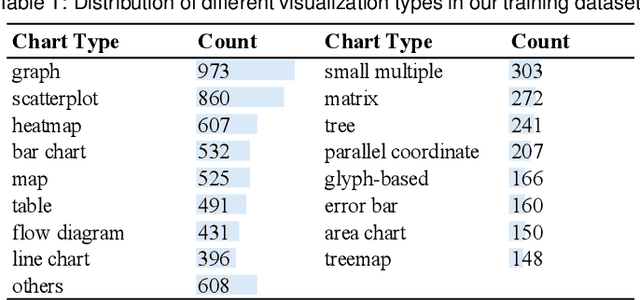
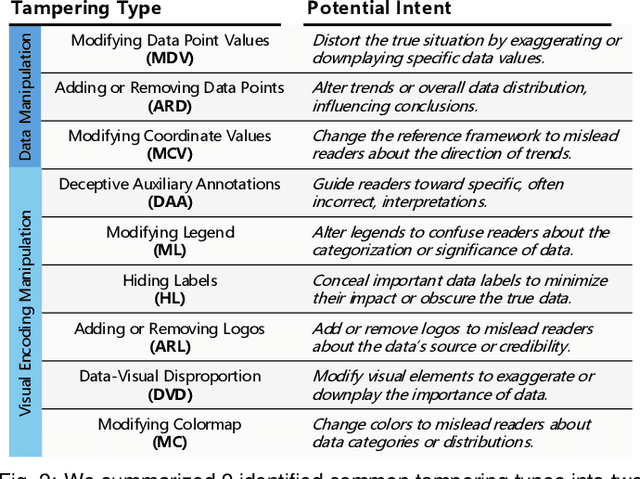
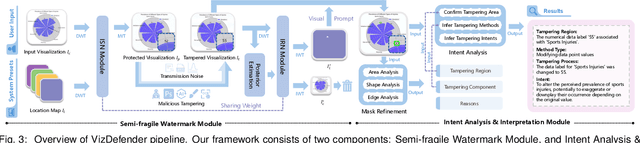
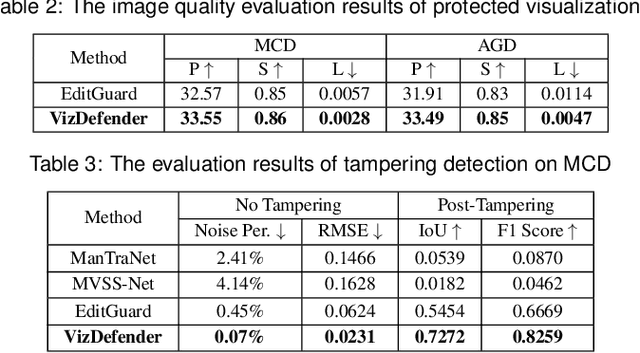
The integrity of data visualizations is increasingly threatened by image editing techniques that enable subtle yet deceptive tampering. Through a formative study, we define this challenge and categorize tampering techniques into two primary types: data manipulation and visual encoding manipulation. To address this, we present VizDefender, a framework for tampering detection and analysis. The framework integrates two core components: 1) a semi-fragile watermark module that protects the visualization by embedding a location map to images, which allows for the precise localization of tampered regions while preserving visual quality, and 2) an intent analysis module that leverages Multimodal Large Language Models (MLLMs) to interpret manipulation, inferring the attacker's intent and misleading effects. Extensive evaluations and user studies demonstrate the effectiveness of our methods.
Hollywood Town: Long-Video Generation via Cross-Modal Multi-Agent Orchestration
Oct 25, 2025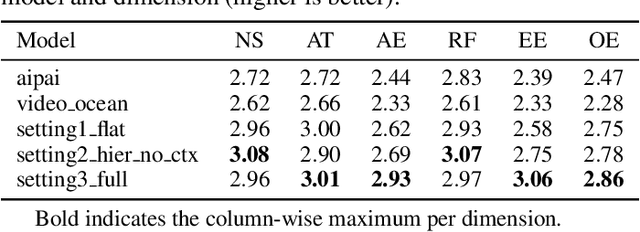
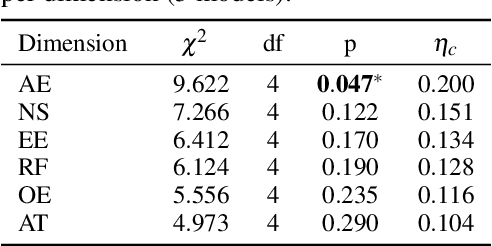
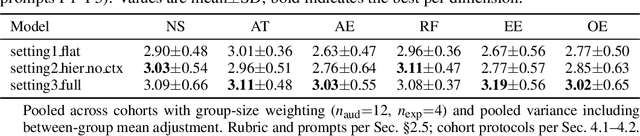
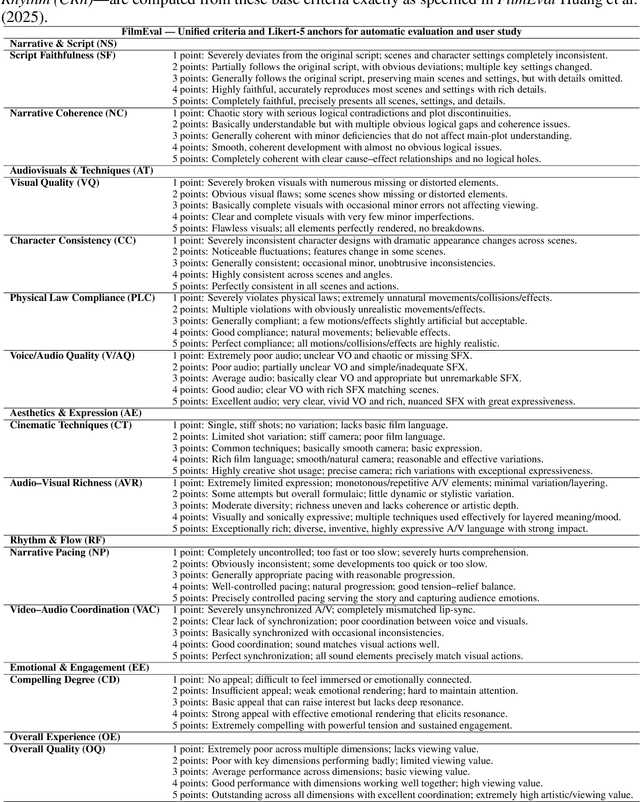
Recent advancements in multi-agent systems have demonstrated significant potential for enhancing creative task performance, such as long video generation. This study introduces three innovations to improve multi-agent collaboration. First, we propose OmniAgent, a hierarchical, graph-based multi-agent framework for long video generation that leverages a film-production-inspired architecture to enable modular specialization and scalable inter-agent collaboration. Second, inspired by context engineering, we propose hypergraph nodes that enable temporary group discussions among agents lacking sufficient context, reducing individual memory requirements while ensuring adequate contextual information. Third, we transition from directed acyclic graphs (DAGs) to directed cyclic graphs with limited retries, allowing agents to reflect and refine outputs iteratively, thereby improving earlier stages through feedback from subsequent nodes. These contributions lay the groundwork for developing more robust multi-agent systems in creative tasks.
HoloCine: Holistic Generation of Cinematic Multi-Shot Long Video Narratives
Oct 23, 2025State-of-the-art text-to-video models excel at generating isolated clips but fall short of creating the coherent, multi-shot narratives, which are the essence of storytelling. We bridge this "narrative gap" with HoloCine, a model that generates entire scenes holistically to ensure global consistency from the first shot to the last. Our architecture achieves precise directorial control through a Window Cross-Attention mechanism that localizes text prompts to specific shots, while a Sparse Inter-Shot Self-Attention pattern (dense within shots but sparse between them) ensures the efficiency required for minute-scale generation. Beyond setting a new state-of-the-art in narrative coherence, HoloCine develops remarkable emergent abilities: a persistent memory for characters and scenes, and an intuitive grasp of cinematic techniques. Our work marks a pivotal shift from clip synthesis towards automated filmmaking, making end-to-end cinematic creation a tangible future. Our code is available at: https://holo-cine.github.io/.
Reflection on Data Storytelling Tools in the Generative AI Era from the Human-AI Collaboration Perspective
Mar 04, 2025Human-AI collaborative tools attract attentions from the data storytelling community to lower the barrier of expertise and streamline the workflow. The recent advance in large-scale generative AI techniques, e.g., large language models (LLMs) and text-to-image models, has the potential to enhance data storytelling with their power in visual and narration generation. After two years since these techniques were publicly available, it is important to reflect our progress of applying them and have an outlook for future opportunities. To achieve the goal, we compare the collaboration patterns of the latest tools with those of earlier ones using a dedicated framework for understanding human-AI collaboration in data storytelling. Through comparison, we identify persistent collaboration patterns, e.g., human-creator + AI-assistant, and emerging ones, e.g., AI-creator + human-reviewer. The benefits of these AI techniques and other implications to human-AI collaboration are also revealed. We further propose future directions to hopefully ignite innovations.
AniDoc: Animation Creation Made Easier
Dec 18, 2024The production of 2D animation follows an industry-standard workflow, encompassing four essential stages: character design, keyframe animation, in-betweening, and coloring. Our research focuses on reducing the labor costs in the above process by harnessing the potential of increasingly powerful generative AI. Using video diffusion models as the foundation, AniDoc emerges as a video line art colorization tool, which automatically converts sketch sequences into colored animations following the reference character specification. Our model exploits correspondence matching as an explicit guidance, yielding strong robustness to the variations (e.g., posture) between the reference character and each line art frame. In addition, our model could even automate the in-betweening process, such that users can easily create a temporally consistent animation by simply providing a character image as well as the start and end sketches. Our code is available at: https://yihao-meng.github.io/AniDoc_demo.