 Add to Chrome
 Add to Firefox
 Add to Edge
Toward the Cognitive--Physical Limits of Embodied Intelligence through a World-Model-Centric Autonomous Racing Agent
Aug 11, 2026
Embodied artificial intelligence aims to develop agents that perceive, reason, and act through continuous interaction with the physical world. However, most embodied systems are still evaluated within conservative safety margins or moderate interaction regimes, leaving their capability boundaries under extreme conditions insufficiently understood. Autonomous racing provides a stringent testbed by combining high-frequency localization and perception, adversarial interaction, near-saturated vehicle dynamics, and strict safety constraints. Existing systems push high-speed performance but rarely model and refine cognitive and physical limits jointly. Here we show that a world-model-centric autonomous racing agent provides a concrete step toward exploring these coupled limits. The framework learns predictive world models from near-limit successes and failures to capture interaction evolution, ego dynamics, and feasible-motion boundaries, coupling world-state construction, future-aware reasoning, and near-limit control in a closed-loop refinement process. Training data were collected from real-vehicle autonomous racing, where the onboard system maintained robust localization and perception at speeds up to 256.3 km/h and peak lateral acceleration of 26.8 m/s$^2$. In full-scale simulated racing, the well trained world-model-centric agent achieves an 88.3% interaction success rate across various challenging simulated racing scenarios. Closed-loop refinement of the world model and policy further improved utilization of cognitive-physical limits, recovery from failure modes, and generalization across varying conditions and unseen circuits. These results suggest a boundary-aware methodology in which world models help embodied agents represent, predict, and continually refine their capability boundaries for safer real-world deployment.

Track-Guided Hierarchical Reinforcement Learning for Autonomous Vehicle Drifting with Minimum-Lap-Time Planning
Jul 31, 2026In Formula 1, drivers optimize racing lines within tire grip limits to minimize lap times; however, in rally racing, drivers intentionally break traction to drift on loose surfaces. This maneuver rapidly aligns the vehicle for corner exits, ultimately reducing lap time. Autonomously executing such maneuvers formulates a complex dual-objective control problem: stabilizing highly nonlinear drift dynamics while strictly minimizing lap time. Addressing this challenge motivates the development of advanced Minimum-Lap-Time (MLT) drift control architectures. This paper proposes a planning-control framework specifically designed for MLT drifting scenario. First, we formulate an optimal control problem to generate a MLT drift planning trajectory, which is used as prior data to train a deep reinforcement learning drift controller. Given that drifting involves extremely large sideslip angles and is therefore challenging to learn directly, a Track-guided Reinforcement Learning (TgRL) drift control method is proposed to enable progressive training in a step-by-step manner, from drift control policy, to drift corner policy, and finally to a comprehensive drift race policy. The reward function incorporates both an instant reward term and an end reward term derived from the Minimum-Lap-Time objective. Simulation results demonstrate that the proposed framework enables the agent to learn a drift racing policy that not only ensures vehicle motion control performance but also effectively reduces lap time.
Steeringless Drifting: Differential-Torque Control of a Four-Wheel Independently Driven Vehicle
Jul 26, 2026Control methods for emerging vehicle chassis architectures are important for autonomous driving near handling limits. Unlike conventional drift control, which relies on mechanical steering and rear-tire saturation, a steering-free four-wheel independently driven (4WID) vehicle can generate direct yaw moment through differential wheel torques. This paper proposes a differential-torque drift control method for such a vehicle. A double-track vehicle model incorporating four-wheel differential actuation is established, based on which a drift-equilibrium calculation method and a closed-loop drift controller are developed. The proposed approach is validated through simulations and experiments on a 1:10-scale vehicle. The results show that the vehicle can achieve steady circular drifting with a sideslip angle of approximately 20$^\circ$ and perform figure-eight drift tracking. This study demonstrates the feasibility of drift control using only differential wheel torques and provides a new perspective on near-limit control for steering-free vehicle architectures.
Ultra-Early Prediction of Tipping Points: Integrating Dynamical Measures with Reservoir Computing
Mar 16, 2026Complex dynamical systems-such as climate, ecosystems, and economics-can undergo catastrophic and potentially irreversible regime changes, often triggered by environmental parameter drift and stochastic disturbances. These critical thresholds, known as tipping points, pose a prediction problem of both theoretical and practical significance, yet remain largely unresolved. To address this, we articulate a model-free framework that integrates the measures characterizing the stability and sensitivity of dynamical systems with the reservoir computing (RC), a lightweight machine learning technique, using only observational time series data. The framework consists of two stages. The first stage involves using RC to robustly learn local complex dynamics from observational data segmented into windows. The second stage focuses on accurately detecting early warning signals of tipping points by analyzing the learned autonomous RC dynamics through dynamical measures, including the dominant eigenvalue of the Jacobian matrix, the maximum Floquet multiplier, and the maximum Lyapunov exponent. Furthermore, when these dynamical measures exhibit trend-like patterns, their extrapolation enables ultra-early prediction of tipping points significantly prior to the occurrence of critical transitions. We conduct a rigorous theoretical analysis of the proposed method and perform extensive numerical evaluations on a series of representative synthetic systems and eight real-world datasets, as well as quantitatively predict the tipping time of the Atlantic Meridional Overturning Circulation system. Experimental results demonstrate that our framework exhibits advantages over the baselines in comprehensive evaluations, particularly in terms of dynamical interpretability, prediction stability and robustness, and ultra-early prediction capability.
Governing equation discovery of a complex system from snapshots
Oct 22, 2024Complex systems in physics, chemistry, and biology that evolve over time with inherent randomness are typically described by stochastic differential equations (SDEs). A fundamental challenge in science and engineering is to determine the governing equations of a complex system from snapshot data. Traditional equation discovery methods often rely on stringent assumptions, such as the availability of the trajectory information or time-series data, and the presumption that the underlying system is deterministic. In this work, we introduce a data-driven, simulation-free framework, called Sparse Identification of Differential Equations from Snapshots (SpIDES), that discovers the governing equations of a complex system from snapshots by utilizing the advanced machine learning techniques to perform three essential steps: probability flow reconstruction, probability density estimation, and Bayesian sparse identification. We validate the effectiveness and robustness of SpIDES by successfully identifying the governing equation of an over-damped Langevin system confined within two potential wells. By extracting interpretable drift and diffusion terms from the SDEs, our framework provides deeper insights into system dynamics, enhances predictive accuracy, and facilitates more effective strategies for managing and simulating stochastic systems.
GAD-Generative Learning for HD Map-Free Autonomous Driving
May 01, 2024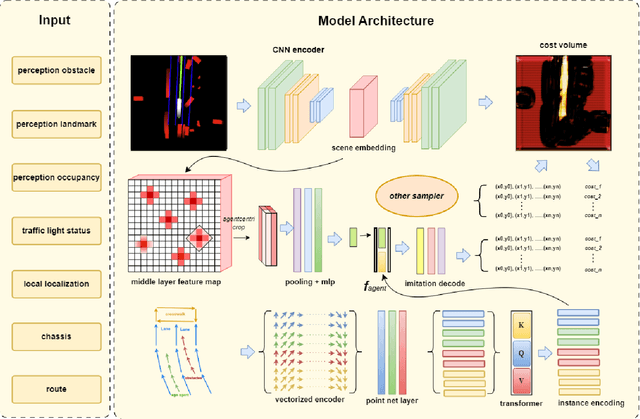

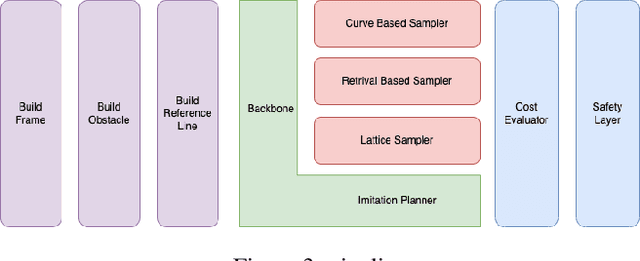
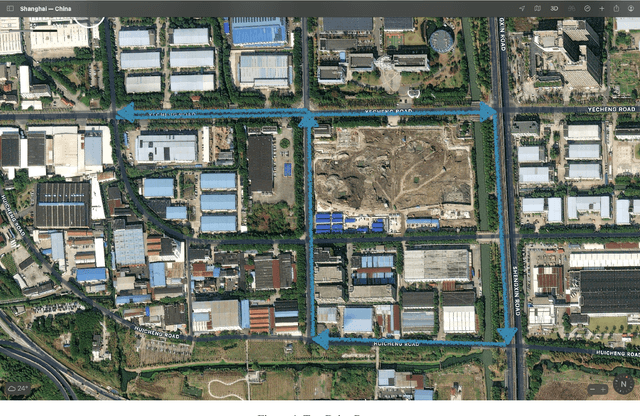
Deep-learning-based techniques have been widely adopted for autonomous driving software stacks for mass production in recent years, focusing primarily on perception modules, with some work extending this method to prediction modules. However, the downstream planning and control modules are still designed with hefty handcrafted rules, dominated by optimization-based methods such as quadratic programming or model predictive control. This results in a performance bottleneck for autonomous driving systems in that corner cases simply cannot be solved by enumerating hand-crafted rules. We present a deep-learning-based approach that brings prediction, decision, and planning modules together with the attempt to overcome the rule-based methods' deficiency in real-world applications of autonomous driving, especially for urban scenes. The DNN model we proposed is solely trained with 10 hours of human driver data, and it supports all mass-production ADAS features available on the market to date. This method is deployed onto a Jiyue test car with no modification to its factory-ready sensor set and compute platform. the feasibility, usability, and commercial potential are demonstrated in this article.
Dynamic Typography: Bringing Text to Life via Video Diffusion Prior
Apr 18, 2024
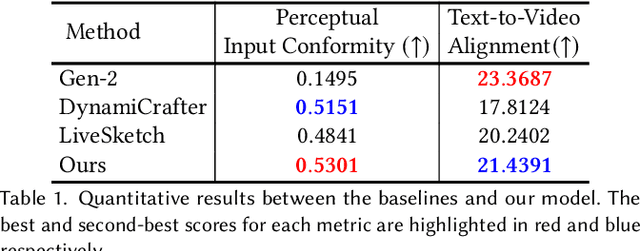
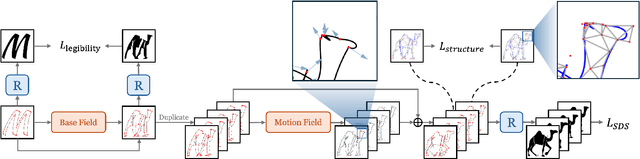
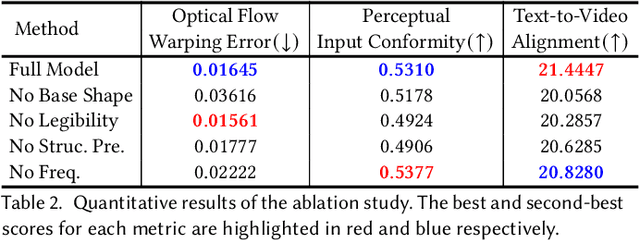
Text animation serves as an expressive medium, transforming static communication into dynamic experiences by infusing words with motion to evoke emotions, emphasize meanings, and construct compelling narratives. Crafting animations that are semantically aware poses significant challenges, demanding expertise in graphic design and animation. We present an automated text animation scheme, termed "Dynamic Typography", which combines two challenging tasks. It deforms letters to convey semantic meaning and infuses them with vibrant movements based on user prompts. Our technique harnesses vector graphics representations and an end-to-end optimization-based framework. This framework employs neural displacement fields to convert letters into base shapes and applies per-frame motion, encouraging coherence with the intended textual concept. Shape preservation techniques and perceptual loss regularization are employed to maintain legibility and structural integrity throughout the animation process. We demonstrate the generalizability of our approach across various text-to-video models and highlight the superiority of our end-to-end methodology over baseline methods, which might comprise separate tasks. Through quantitative and qualitative evaluations, we demonstrate the effectiveness of our framework in generating coherent text animations that faithfully interpret user prompts while maintaining readability. Our code is available at: https://animate-your-word.github.io/demo/.