 Add to Chrome
 Add to Firefox
 Add to Edge
Apollo: An Lightweight Multilingual Medical LLM towards Democratizing Medical AI to 6B People
Mar 09, 2024

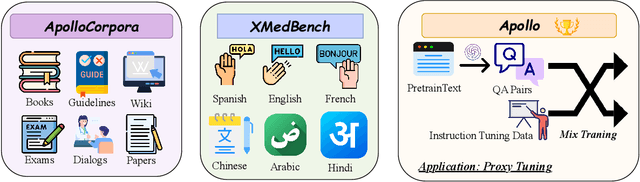


Despite the vast repository of global medical knowledge predominantly being in English, local languages are crucial for delivering tailored healthcare services, particularly in areas with limited medical resources. To extend the reach of medical AI advancements to a broader population, we aim to develop medical LLMs across the six most widely spoken languages, encompassing a global population of 6.1 billion. This effort culminates in the creation of the ApolloCorpora multilingual medical dataset and the XMedBench benchmark. In the multilingual medical benchmark, the released Apollo models, at various relatively-small sizes (i.e., 0.5B, 1.8B, 2B, 6B, and 7B), achieve the best performance among models of equivalent size. Especially, Apollo-7B is the state-of-the-art multilingual medical LLMs up to 70B. Additionally, these lite models could be used to improve the multi-lingual medical capabilities of larger models without fine-tuning in a proxy-tuning fashion. We will open-source training corpora, code, model weights and evaluation benchmark.

Fine-Grained Quantitative Emotion Editing for Speech Generation
Mar 04, 2024It remains a significant challenge how to quantitatively control the expressiveness of speech emotion in speech generation. In this work, we present a novel approach for manipulating the rendering of emotions for speech generation. We propose a hierarchical emotion distribution extractor, i.e. Hierarchical ED, that quantifies the intensity of emotions at different levels of granularity. Support vector machines (SVMs) are employed to rank emotion intensity, resulting in a hierarchical emotional embedding. Hierarchical ED is subsequently integrated into the FastSpeech2 framework, guiding the model to learn emotion intensity at phoneme, word, and utterance levels. During synthesis, users can manually edit the emotional intensity of the generated voices. Both objective and subjective evaluations demonstrate the effectiveness of the proposed network in terms of fine-grained quantitative emotion editing.
Event-Driven Learning for Spiking Neural Networks
Mar 01, 2024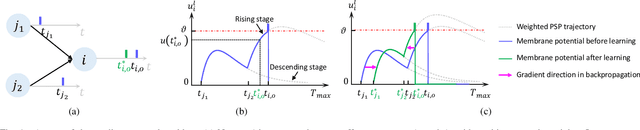
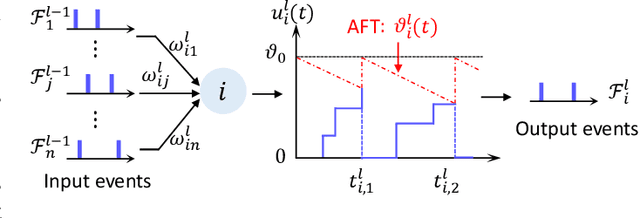
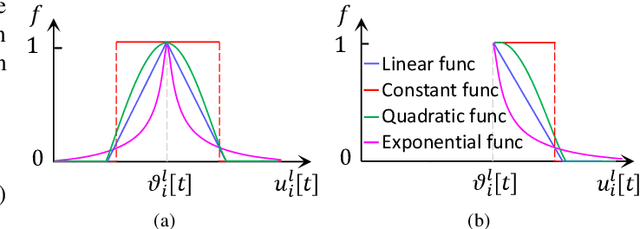
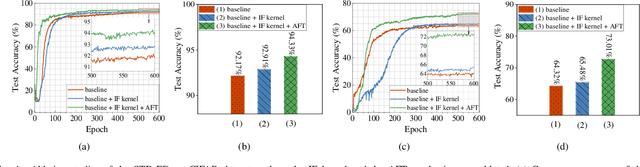
Brain-inspired spiking neural networks (SNNs) have gained prominence in the field of neuromorphic computing owing to their low energy consumption during feedforward inference on neuromorphic hardware. However, it remains an open challenge how to effectively benefit from the sparse event-driven property of SNNs to minimize backpropagation learning costs. In this paper, we conduct a comprehensive examination of the existing event-driven learning algorithms, reveal their limitations, and propose novel solutions to overcome them. Specifically, we introduce two novel event-driven learning methods: the spike-timing-dependent event-driven (STD-ED) and membrane-potential-dependent event-driven (MPD-ED) algorithms. These proposed algorithms leverage precise neuronal spike timing and membrane potential, respectively, for effective learning. The two methods are extensively evaluated on static and neuromorphic datasets to confirm their superior performance. They outperform existing event-driven counterparts by up to 2.51% for STD-ED and 6.79% for MPD-ED on the CIFAR-100 dataset. In addition, we theoretically and experimentally validate the energy efficiency of our methods on neuromorphic hardware. On-chip learning experiments achieved a remarkable 30-fold reduction in energy consumption over time-step-based surrogate gradient methods. The demonstrated efficiency and efficacy of the proposed event-driven learning methods emphasize their potential to significantly advance the fields of neuromorphic computing, offering promising avenues for energy-efficiency applications.
Text-guided HuBERT: Self-Supervised Speech Pre-training via Generative Adversarial Networks
Feb 28, 2024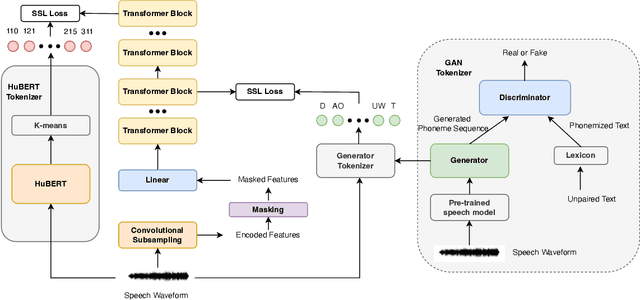
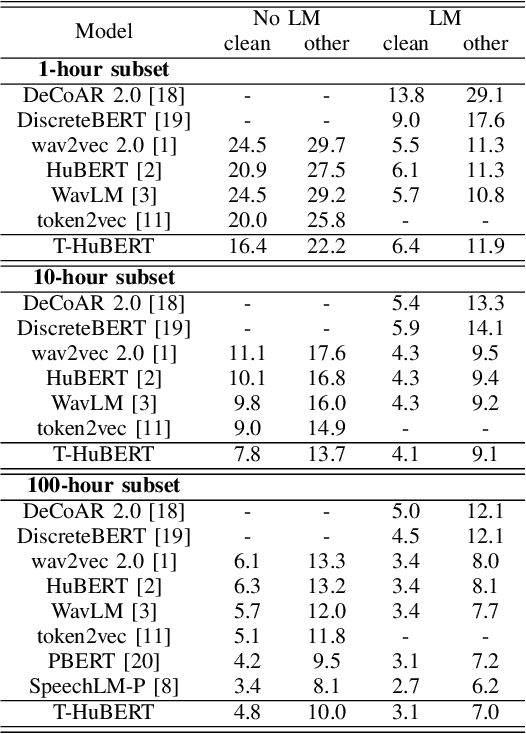
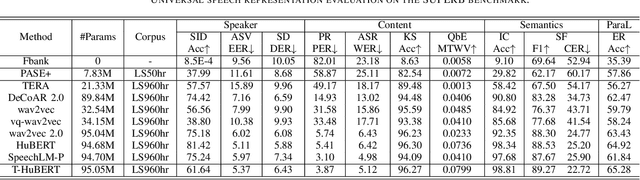
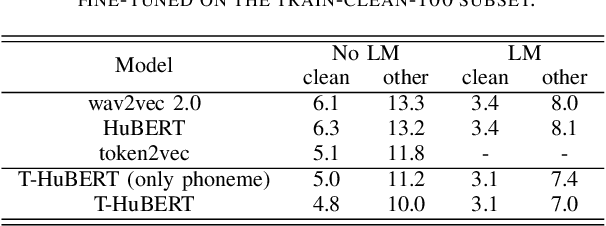
Human language can be expressed in either written or spoken form, i.e. text or speech. Humans can acquire knowledge from text to improve speaking and listening. However, the quest for speech pre-trained models to leverage unpaired text has just started. In this paper, we investigate a new way to pre-train such a joint speech-text model to learn enhanced speech representations and benefit various speech-related downstream tasks. Specifically, we propose a novel pre-training method, text-guided HuBERT, or T-HuBERT, which performs self-supervised learning over speech to derive phoneme-like discrete representations. And these phoneme-like pseudo-label sequences are firstly derived from speech via the generative adversarial networks (GAN) to be statistically similar to those from additional unpaired textual data. In this way, we build a bridge between unpaired speech and text in an unsupervised manner. Extensive experiments demonstrate the significant superiority of our proposed method over various strong baselines, which achieves up to 15.3% relative Word Error Rate (WER) reduction on the LibriSpeech dataset.
Computation and Parameter Efficient Multi-Modal Fusion Transformer for Cued Speech Recognition
Feb 08, 2024Cued Speech (CS) is a pure visual coding method used by hearing-impaired people that combines lip reading with several specific hand shapes to make the spoken language visible. Automatic CS recognition (ACSR) seeks to transcribe visual cues of speech into text, which can help hearing-impaired people to communicate effectively. The visual information of CS contains lip reading and hand cueing, thus the fusion of them plays an important role in ACSR. However, most previous fusion methods struggle to capture the global dependency present in long sequence inputs of multi-modal CS data. As a result, these methods generally fail to learn the effective cross-modal relationships that contribute to the fusion. Recently, attention-based transformers have been a prevalent idea for capturing the global dependency over the long sequence in multi-modal fusion, but existing multi-modal fusion transformers suffer from both poor recognition accuracy and inefficient computation for the ACSR task. To address these problems, we develop a novel computation and parameter efficient multi-modal fusion transformer by proposing a novel Token-Importance-Aware Attention mechanism (TIAA), where a token utilization rate (TUR) is formulated to select the important tokens from the multi-modal streams. More precisely, TIAA firstly models the modality-specific fine-grained temporal dependencies over all tokens of each modality, and then learns the efficient cross-modal interaction for the modality-shared coarse-grained temporal dependencies over the important tokens of different modalities. Besides, a light-weight gated hidden projection is designed to control the feature flows of TIAA. The resulting model, named Economical Cued Speech Fusion Transformer (EcoCued), achieves state-of-the-art performance on all existing CS datasets, compared with existing transformer-based fusion methods and ACSR fusion methods.
LitE-SNN: Designing Lightweight and Efficient Spiking Neural Network through Spatial-Temporal Compressive Network Search and Joint Optimization
Jan 26, 2024Spiking Neural Networks (SNNs) mimic the information-processing mechanisms of the human brain and are highly energy-efficient, making them well-suited for low-power edge devices. However, the pursuit of accuracy in current studies leads to large, long-timestep SNNs, conflicting with the resource constraints of these devices. In order to design lightweight and efficient SNNs, we propose a new approach named LitESNN that incorporates both spatial and temporal compression into the automated network design process. Spatially, we present a novel Compressive Convolution block (CompConv) to expand the search space to support pruning and mixed-precision quantization while utilizing the shared weights and pruning mask to reduce the computation. Temporally, we are the first to propose a compressive timestep search to identify the optimal number of timesteps under specific computation cost constraints. Finally, we formulate a joint optimization to simultaneously learn the architecture parameters and spatial-temporal compression strategies to achieve high performance while minimizing memory and computation costs. Experimental results on CIFAR10, CIFAR100, and Google Speech Command datasets demonstrate our proposed LitESNNs can achieve competitive or even higher accuracy with remarkably smaller model sizes and fewer computation costs. Furthermore, we validate the effectiveness of our LitESNN on the trade-off between accuracy and resource cost and show the superiority of our joint optimization. Additionally, we conduct energy analysis to further confirm the energy efficiency of LitESNN
CoAVT: A Cognition-Inspired Unified Audio-Visual-Text Pre-Training Model for Multimodal Processing
Jan 22, 2024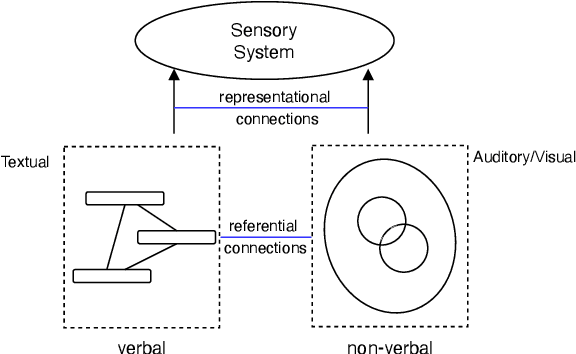
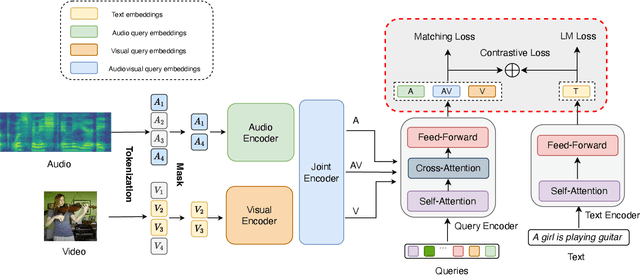
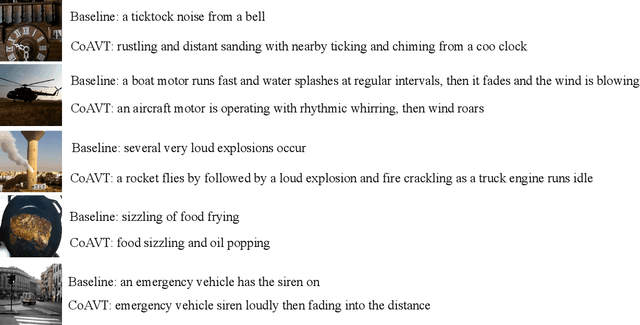
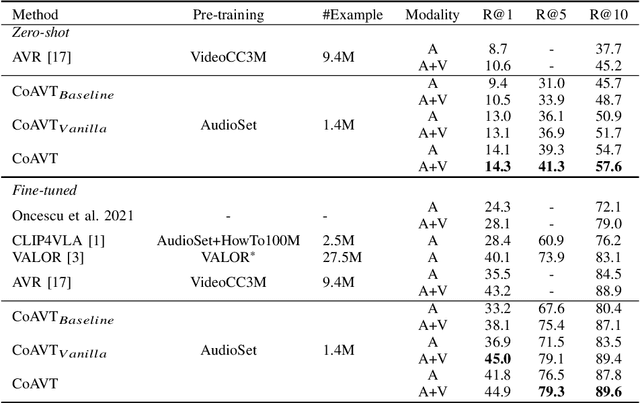
There has been a long-standing quest for a unified audio-visual-text model to enable various multimodal understanding tasks, which mimics the listening, seeing and reading process of human beings. Humans tends to represent knowledge using two separate systems: one for representing verbal (textual) information and one for representing non-verbal (visual and auditory) information. These two systems can operate independently but can also interact with each other. Motivated by this understanding of human cognition, in this paper, we introduce CoAVT -- a novel cognition-inspired Correlated Audio-Visual-Text pre-training model to connect the three modalities. It contains a joint audio-visual encoder that learns to encode audio-visual synchronization information together with the audio and visual content for non-verbal information, and a text encoder to handle textual input for verbal information. To bridge the gap between modalities, CoAVT employs a query encoder, which contains a set of learnable query embeddings, and extracts the most informative audiovisual features of the corresponding text. Additionally, to leverage the correspondences between audio and vision with language respectively, we also establish the audio-text and visual-text bi-modal alignments upon the foundational audiovisual-text tri-modal alignment to enhance the multimodal representation learning. Finally, we jointly optimize CoAVT model with three multimodal objectives: contrastive loss, matching loss and language modeling loss. Extensive experiments show that CoAVT can learn strong multimodal correlations and be generalized to various downstream tasks. CoAVT establishes new state-of-the-art performance on text-video retrieval task on AudioCaps for both zero-shot and fine-tuning settings, audio-visual event classification and audio-visual retrieval tasks on AudioSet and VGGSound.
An Empirical Study on the Impact of Positional Encoding in Transformer-based Monaural Speech Enhancement
Jan 18, 2024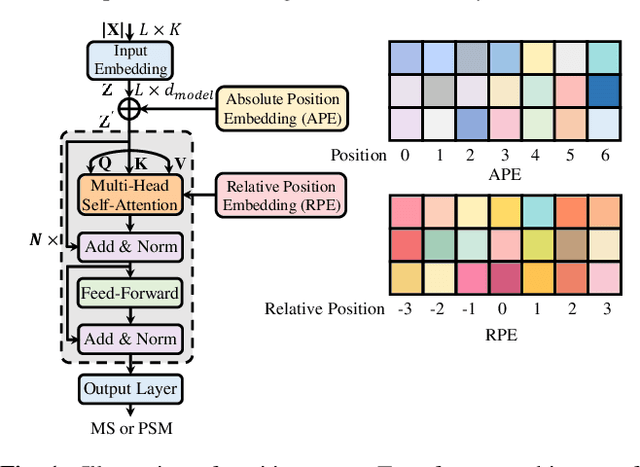
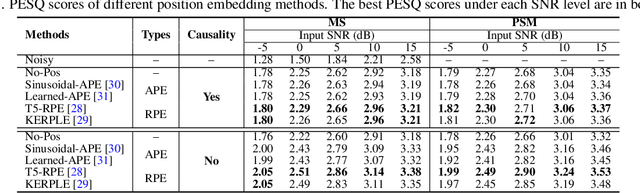
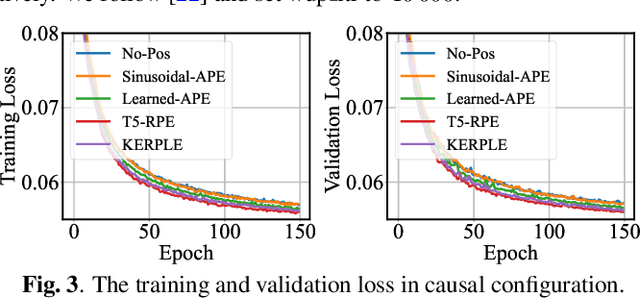
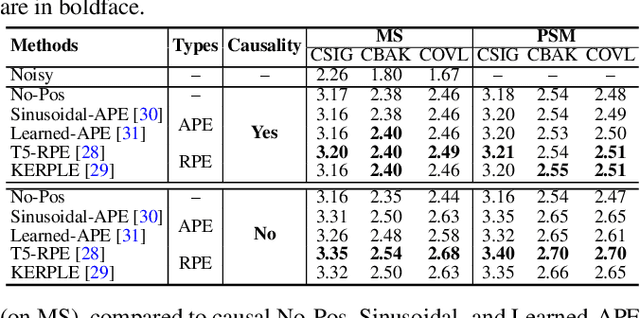
Transformer architecture has enabled recent progress in speech enhancement. Since Transformers are position-agostic, positional encoding is the de facto standard component used to enable Transformers to distinguish the order of elements in a sequence. However, it remains unclear how positional encoding exactly impacts speech enhancement based on Transformer architectures. In this paper, we perform a comprehensive empirical study evaluating five positional encoding methods, i.e., Sinusoidal and learned absolute position embedding (APE), T5-RPE, KERPLE, as well as the Transformer without positional encoding (No-Pos), across both causal and noncausal configurations. We conduct extensive speech enhancement experiments, involving spectral mapping and masking methods. Our findings establish that positional encoding is not quite helpful for the models in a causal configuration, which indicates that causal attention may implicitly incorporate position information. In a noncausal configuration, the models significantly benefit from the use of positional encoding. In addition, we find that among the four position embeddings, relative position embeddings outperform APEs.
Bridging Research and Readers: A Multi-Modal Automated Academic Papers Interpretation System
Jan 17, 2024In the contemporary information era, significantly accelerated by the advent of Large-scale Language Models, the proliferation of scientific literature is reaching unprecedented levels. Researchers urgently require efficient tools for reading and summarizing academic papers, uncovering significant scientific literature, and employing diverse interpretative methodologies. To address this burgeoning demand, the role of automated scientific literature interpretation systems has become paramount. However, prevailing models, both commercial and open-source, confront notable challenges: they often overlook multimodal data, grapple with summarizing over-length texts, and lack diverse user interfaces. In response, we introduce an open-source multi-modal automated academic paper interpretation system (MMAPIS) with three-step process stages, incorporating LLMs to augment its functionality. Our system first employs the hybrid modality preprocessing and alignment module to extract plain text, and tables or figures from documents separately. It then aligns this information based on the section names they belong to, ensuring that data with identical section names are categorized under the same section. Following this, we introduce a hierarchical discourse-aware summarization method. It utilizes the extracted section names to divide the article into shorter text segments, facilitating specific summarizations both within and between sections via LLMs with specific prompts. Finally, we have designed four types of diversified user interfaces, including paper recommendation, multimodal Q\&A, audio broadcasting, and interpretation blog, which can be widely applied across various scenarios. Our qualitative and quantitative evaluations underscore the system's superiority, especially in scientific summarization, where it outperforms solutions relying solely on GPT-4.
Gradient weighting for speaker verification in extremely low Signal-to-Noise Ratio
Jan 05, 2024Speaker verification is hampered by background noise, particularly at extremely low Signal-to-Noise Ratio (SNR) under 0 dB. It is difficult to suppress noise without introducing unwanted artifacts, which adversely affects speaker verification. We proposed the mechanism called Gradient Weighting (Grad-W), which dynamically identifies and reduces artifact noise during prediction. The mechanism is based on the property that the gradient indicates which parts of the input the model is paying attention to. Specifically, when the speaker network focuses on a region in the denoised utterance but not on the clean counterpart, we consider it artifact noise and assign higher weights for this region during optimization of enhancement. We validate it by training an enhancement model and testing the enhanced utterance on speaker verification. The experimental results show that our approach effectively reduces artifact noise, improving speaker verification across various SNR levels.